Koźlenia Dawid, Domaradzki Jarosaw
Faculty of Physical Education and Sport, Biostructure Unit, University School of Physical Education in Wrocaw, Wrocaw, Dolnolskie, Polska.
PeerJ. 2021 May 18;9:e11399. doi: 10.7717/peerj.11399. eCollection 2021.
Physical activity has many health benefits but also carries a risk of injury. Some universal factors are connected with an increased risk regardless of the type of sport. Identifying these factors may help predict injuries and aid in their prevention.
The aim of this study is to determine the level of injury risk and the accuracy of injury prediction during a prospective 6-month period based on the quality of movement patterns and level of flexibility among average physically active young adults.
A group of 123 young, physically active adults were recruited for this study. The International Physical Activity Questionnaire (IPAQ) was used to determine their level of physical activity. The authors own Injury History Questionnaire (IHQ) was used to retrospectively collect injury data from the 12 months before the study and prospectively collect data during the six month observation period. The Functional Movement Screen (FMS) test was conducted to assess the movement patterns quality and a sit-and-reach test was conducted to measure lower back and hamstrings flexibility.
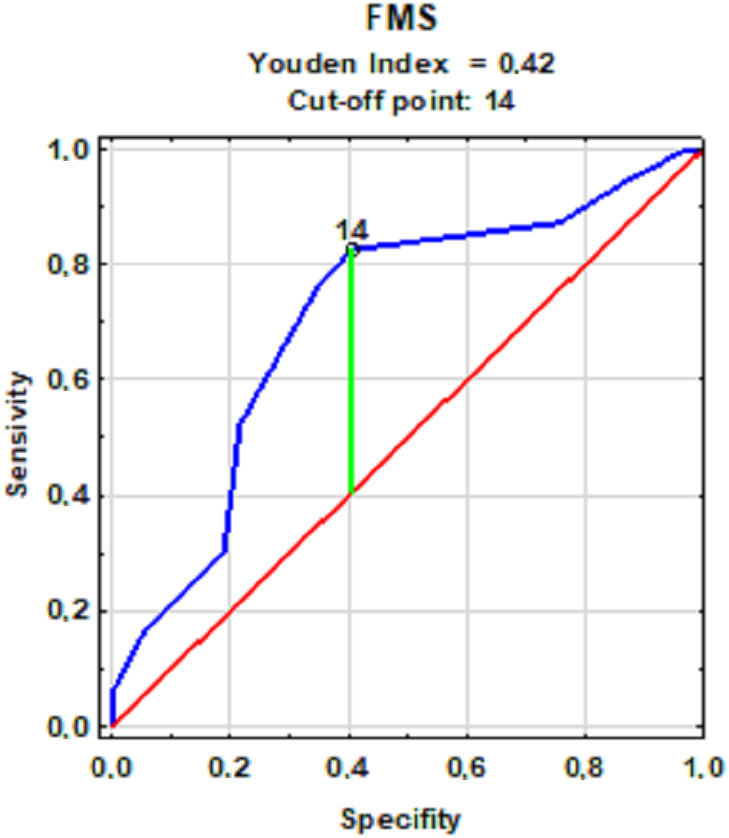
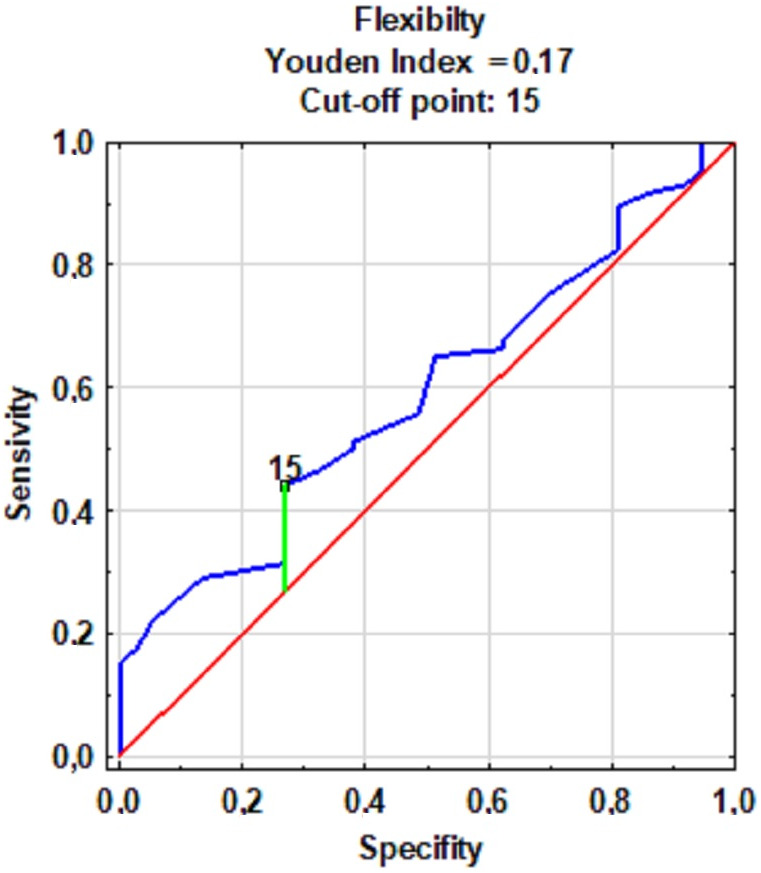
Low-quaility movement patterns (14 FMS) increased the injury risk level sevenfold. A level of flexibility reduced by one cm increased the risk of injury by 6%. Previous injuries also increased the risk of injury reccurence 6.4 times. Predicting injury occurrence based on the quality of movement patterns allows for an accuracy of 73%, whereas flexibility allows for a 41% accuracy. The simultaneous use of these two factors did not improve injury prediction accuracy.
The risk of an injury increases with low-quality movement patterns, a low level of flexibility, and previous injuries. Preventative strategies should include shaping high-quality movement patterns, the right level of flexibility, and the full healing of injuries before resuming activities. The quality of movement patterns is an accurate predictor of injury risk, but lower back and hamstrings flexibility is not a reliable predictor of injury.
体育活动对健康有诸多益处,但也存在受伤风险。无论运动类型如何,一些普遍因素都与受伤风险增加有关。识别这些因素可能有助于预测损伤并协助预防。
本研究的目的是基于一般体育活动水平的年轻人的运动模式质量和柔韧性水平,在前瞻性的6个月期间确定损伤风险水平和损伤预测的准确性。
招募了一组123名年轻的、有体育活动的成年人参与本研究。使用国际体育活动问卷(IPAQ)确定他们的体育活动水平。作者自己设计的损伤史问卷(IHQ)用于回顾性收集研究前12个月的损伤数据,并前瞻性收集6个月观察期内的数据。进行功能性动作筛查(FMS)测试以评估运动模式质量,并进行坐位体前屈测试以测量下背部和腘绳肌的柔韧性。
低质量的运动模式(FMS得分为14分)使损伤风险水平增加了7倍。柔韧性每降低1厘米,受伤风险增加6%。既往损伤也使损伤复发风险增加了6.4倍。基于运动模式质量预测损伤发生的准确率为73%,而柔韧性的准确率为41%。同时使用这两个因素并没有提高损伤预测的准确性。
损伤风险会随着低质量的运动模式、低柔韧性水平和既往损伤而增加。预防策略应包括塑造高质量的运动模式、达到适当的柔韧性水平,以及在恢复活动前使损伤完全愈合。运动模式质量是损伤风险的准确预测指标,但下背部和腘绳肌的柔韧性不是损伤的可靠预测指标。