Department of Molecular Biology and Microbiology, Tufts University School of Medicine, Boston, Massachusetts, USA.
Broad Institute of MIT and Harvard, Cambridge, Massachusetts, USA.
mSphere. 2021 Jun 30;6(3):e0021121. doi: 10.1128/mSphere.00211-21. Epub 2021 May 28.
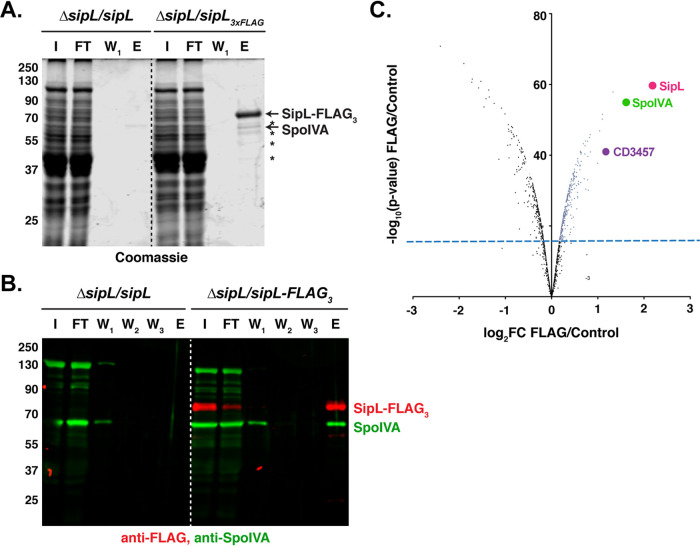
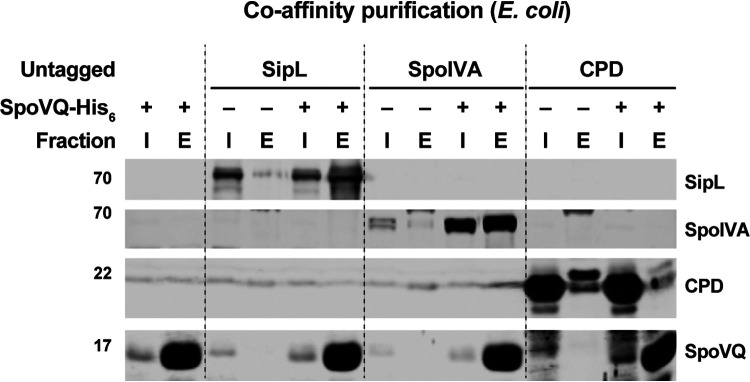
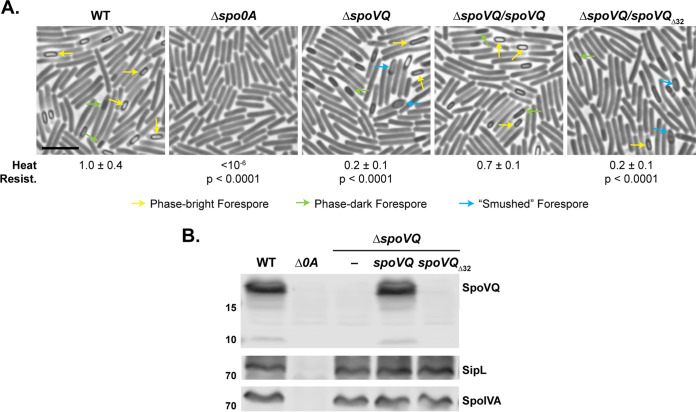
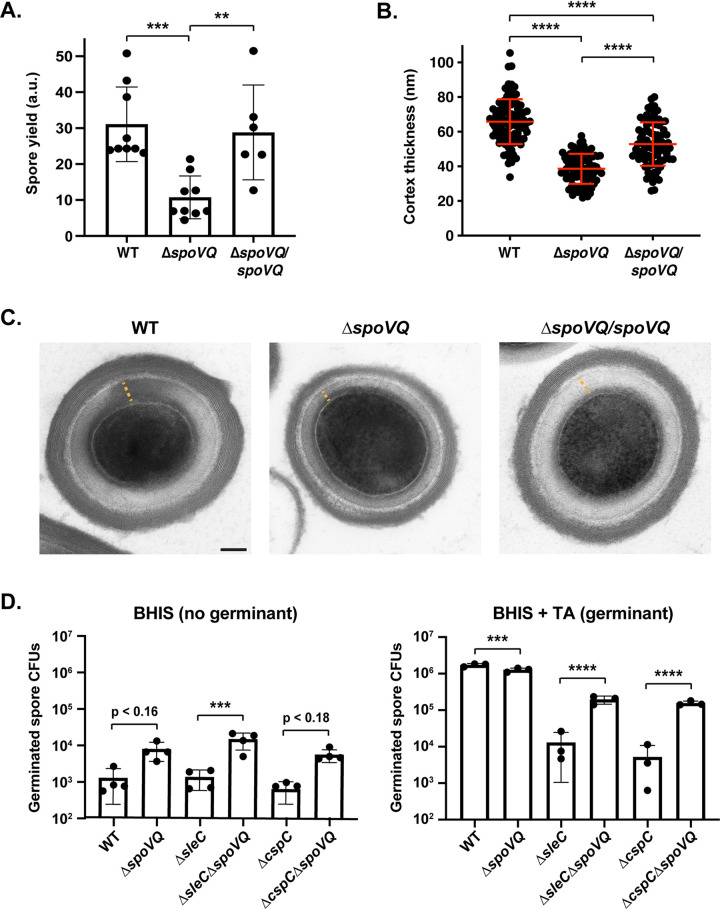
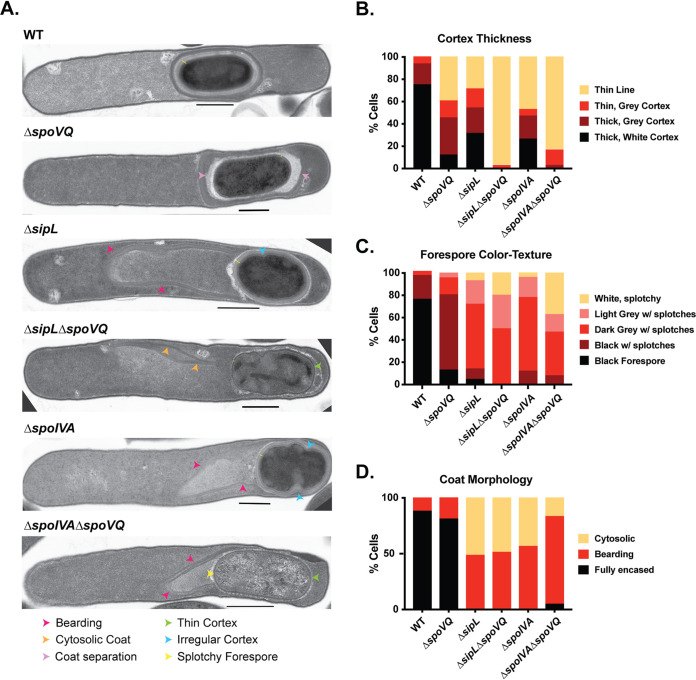
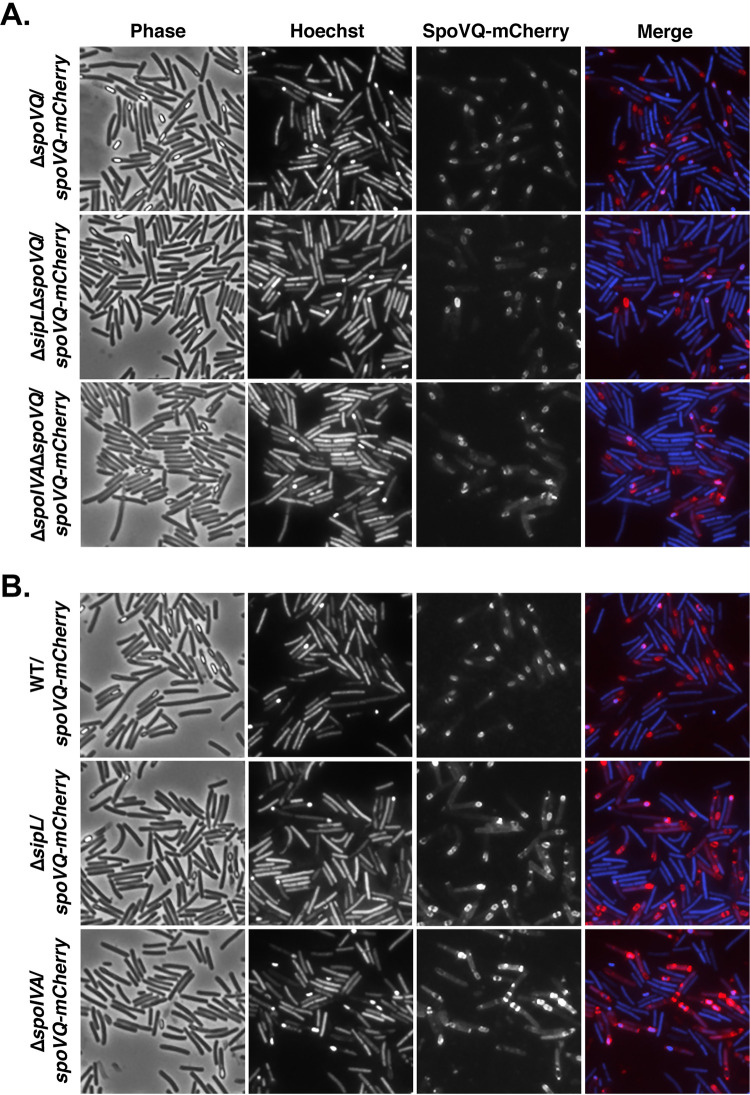
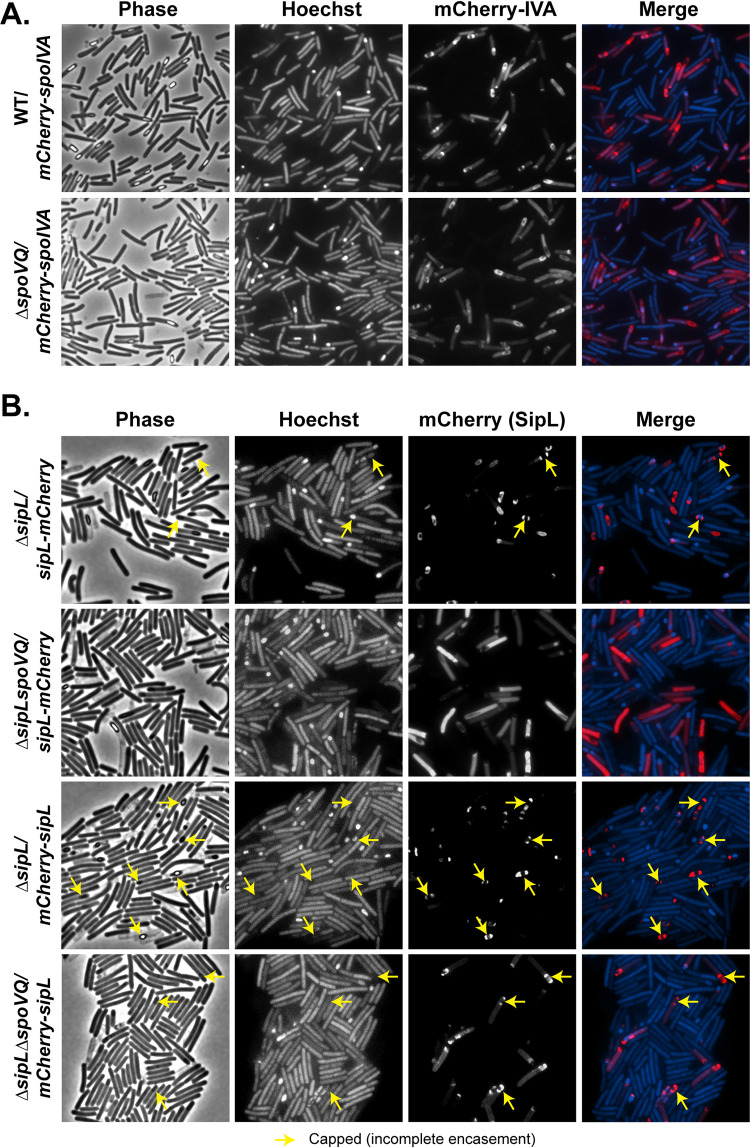
Clostridioides difficile is a leading cause of health care-associated infections worldwide. These infections are transmitted by C. difficile's metabolically dormant, aerotolerant spore form. Functional spore formation depends on the assembly of two protective layers, a thick layer of modified peptidoglycan known as the cortex layer and a multilayered proteinaceous meshwork known as the coat. We previously identified two spore morphogenetic proteins, SpoIVA and SipL, that are essential for recruiting coat proteins to the developing forespore and making functional spores. While SpoIVA and SipL directly interact, the identities of the proteins they recruit to the forespore remained unknown. Here, we used mass spectrometry-based affinity proteomics to identify proteins that interact with the SpoIVA-SipL complex. These analyses identified the family-specific, sporulation-induced bitopic membrane protein CD3457 (renamed SpoVQ) as a protein that interacts with SipL and SpoIVA. Loss of SpoVQ decreased heat-resistant spore formation by ∼5-fold and reduced cortex thickness ∼2-fold; the thinner cortex layer of Δ spores correlated with higher levels of spontaneous germination (i.e., in the absence of germinant). Notably, loss of SpoVQ in either or mutants prevented cortex synthesis altogether and greatly impaired the localization of a SipL-mCherry fusion protein around the forespore. Thus, SpoVQ is a novel regulator of C. difficile cortex synthesis that appears to link cortex and coat formation. The identification of SpoVQ as a spore morphogenetic protein further highlights how family-specific mechanisms control spore formation in C. difficile. The Centers for Disease Control has designated Clostridioides difficile as an urgent threat because of its intrinsic antibiotic resistance. C. difficile persists in the presence of antibiotics in part because it makes metabolically dormant spores. While recent work has shown that preventing the formation of infectious spores can reduce C. difficile disease recurrence, more selective antisporulation therapies are needed. The identification of spore morphogenetic factors specific to C. difficile would facilitate the development of such therapies. In this study, we identified SpoVQ (CD3457) as a spore morphogenetic protein specific to the family that regulates the formation of C. difficile's protective spore cortex layer. SpoVQ acts in concert with the known spore coat morphogenetic factors, SpoIVA and SipL, to link formation of the protective coat and cortex layers. These data reveal a novel pathway that could be targeted to prevent the formation of infectious C. difficile spores.
艰难梭菌是全球医疗保健相关感染的主要原因。这些感染通过艰难梭菌代谢休眠、耐氧的孢子形式传播。功能性孢子形成取决于两层保护性结构的组装,一层厚厚的称为皮质层的修饰肽聚糖层和多层蛋白质网状结构称为外壳。我们之前确定了两种孢子形态发生蛋白,SpoIVA 和 SipL,它们对于招募外壳蛋白到发育中的前孢子并形成功能性孢子是必不可少的。虽然 SpoIVA 和 SipL 直接相互作用,但它们招募到前孢子的蛋白质的身份仍然未知。在这里,我们使用基于质谱的亲和蛋白质组学来鉴定与 SpoIVA-SipL 复合物相互作用的蛋白质。这些分析鉴定了家族特异性、孢子诱导的双位膜蛋白 CD3457(重新命名为 SpoVQ)作为与 SipL 和 SpoIVA 相互作用的蛋白质。SpoVQ 的缺失使耐热孢子形成减少了约 5 倍,皮质层厚度减少了约 2 倍;Δ 孢子的较薄皮质层与自发萌发的水平更高相关(即在没有发芽剂的情况下)。值得注意的是,在 或 突变体中缺失 SpoVQ 完全阻止了皮质层的合成,并极大地损害了 SipL-mCherry 融合蛋白在前孢子周围的定位。因此,SpoVQ 是一种新型的艰难梭菌皮质层合成调节剂,它似乎将皮质层和外壳形成联系起来。将 SpoVQ 鉴定为孢子形态发生蛋白进一步强调了 家族特异性机制如何控制艰难梭菌的孢子形成。由于其内在的抗生素耐药性,疾病控制中心已将艰难梭菌定为紧急威胁。艰难梭菌在抗生素存在的情况下持续存在,部分原因是它产生代谢休眠的孢子。虽然最近的工作表明,防止形成传染性孢子可以减少艰难梭菌疾病的复发,但需要更具选择性的抗孢子疗法。鉴定特定于艰难梭菌的孢子形态发生因子将有助于此类疗法的开发。在这项研究中,我们鉴定了 SpoVQ(CD3457)作为一种特定于 家族的孢子形态发生蛋白,它调节艰难梭菌保护性孢子皮质层的形成。SpoVQ 与已知的孢子外壳形态发生因子 SpoIVA 和 SipL 协同作用,将保护性外壳和皮质层的形成联系起来。这些数据揭示了一种新的途径,可用于靶向以防止形成传染性艰难梭菌孢子。