Department of Sociology and Criminology, University of Arkansas, Fayetteville, AR, 72701, USA.
J Racial Ethn Health Disparities. 2022 Aug;9(4):1315-1324. doi: 10.1007/s40615-021-01072-x. Epub 2021 May 28.
Despite increased attention on the links between poverty and the health and wellbeing of youth, few have attempted to understand the physiological consequences associated with different forms of economic disadvantage among Latina/o children. The present study begins to address this gap by (1) examining whether different forms of economic disadvantage were related to telomere length for Latina/o children and (2) determining whether parents' nativity shapes economic disadvantage-telomere length relationships.
Data were drawn from the Fragile Families and Child Wellbeing Study, a longitudinal, stratified multistage probability sample of couples and children in 20 large US cities. The sample consisted of 417 Latina/o children and their parents that were followed from birth to age 9. Ordinary least squares regressions were used to examine relationships between economic disadvantage and telomere length.
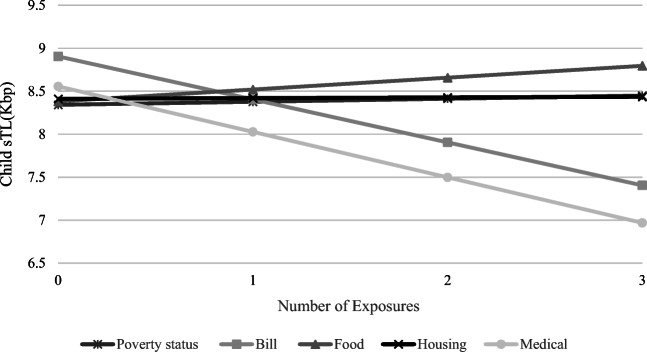
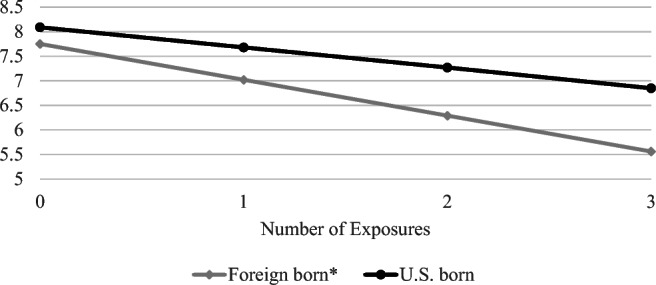
Findings revealed that poverty status was not significantly related to telomere length, whereas some forms of material hardship were shown to play a role in the risk of premature cellular aging. More specifically, medical hardship and difficulty paying bills were associated with shorter telomere length at age 9. Results also provide minimal evidence economic disadvantage-telomere length patterns varied by parents' nativity. Only medical hardship was related to shorter telomere length at age 9 for children with at least one foreign-born parent.
Overall, results indicate that the risk of premature cellular aging depends on the measure of economic disadvantage under investigation. Findings from this study can inform targeted strategies designed to reduce the deleterious consequences associated with economic deprivation.
尽管越来越多的人关注贫困与青少年健康和幸福感之间的联系,但很少有人试图了解拉丁裔儿童不同形式的经济劣势与生理后果之间的关系。本研究通过(1)检验不同形式的经济劣势是否与拉丁裔儿童的端粒长度有关,以及(2)确定父母的出生地是否影响经济劣势与端粒长度之间的关系,开始解决这一差距。
数据来自脆弱家庭与儿童福利研究,这是一项对 20 个美国大城市的夫妇和儿童进行的纵向、分层多阶段概率抽样研究。样本包括 417 名拉丁裔儿童及其父母,从出生到 9 岁进行跟踪。使用普通最小二乘法回归来检验经济劣势与端粒长度之间的关系。
研究结果表明,贫困状况与端粒长度没有显著关系,而某些形式的物质困难则与过早的细胞衰老风险有关。更具体地说,医疗困难和难以支付账单与 9 岁时端粒长度较短有关。结果还提供了有限的证据表明,经济劣势与端粒长度之间的模式因父母的出生地而异。只有医疗困难与至少有一位外国出生父母的儿童在 9 岁时端粒长度较短有关。
总体而言,研究结果表明,过早的细胞衰老风险取决于所研究的经济劣势的衡量标准。本研究的结果可以为旨在减少与经济贫困相关的有害后果的有针对性策略提供信息。