Department of Biological Chemistry, The Johns Hopkins University School of Medicine, Baltimore, Maryland, USA.
Department of Physiology, East Carolina Diabetes and Obesity Institute, East Carolina University, Greenville, North Carolina, USA.
J Biol Chem. 2021 Jul;297(1):100830. doi: 10.1016/j.jbc.2021.100830. Epub 2021 May 26.
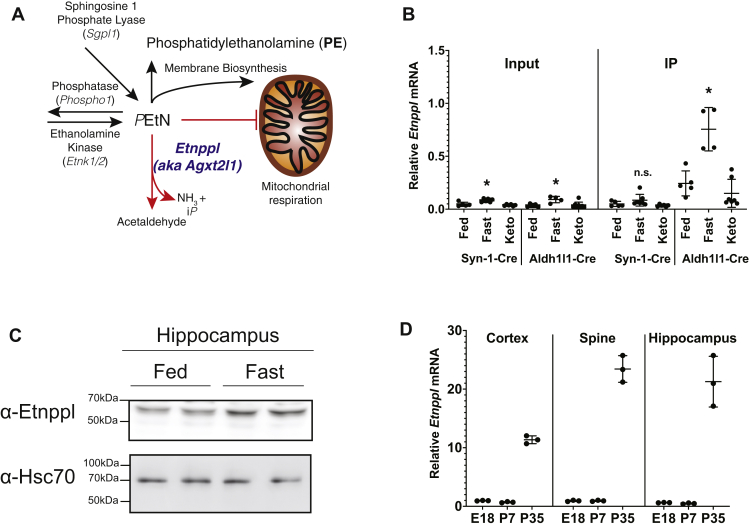
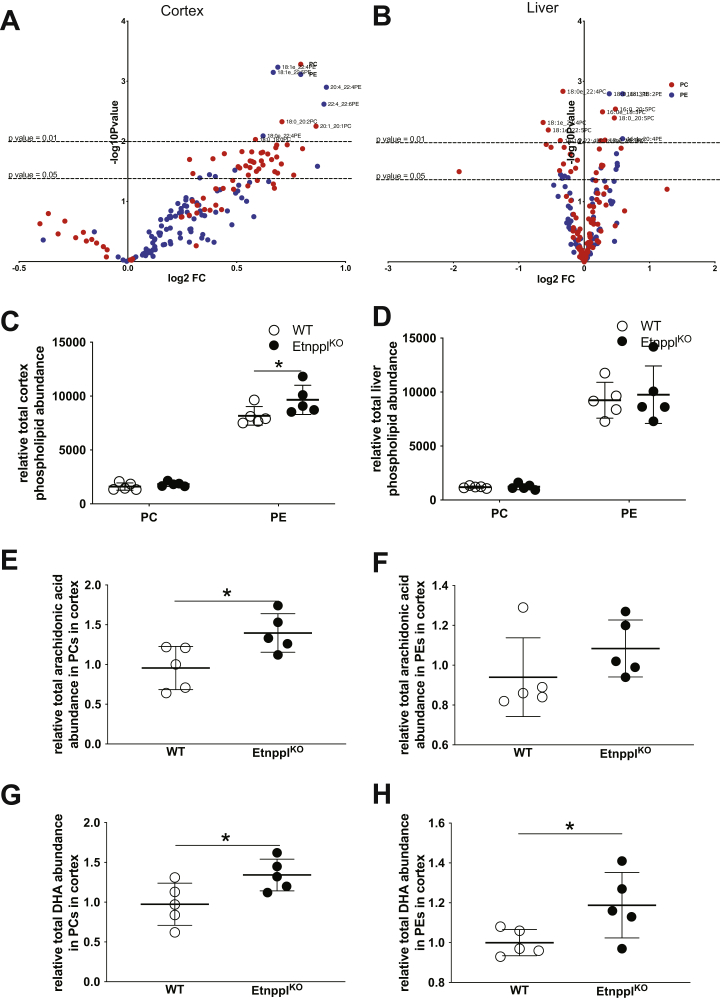
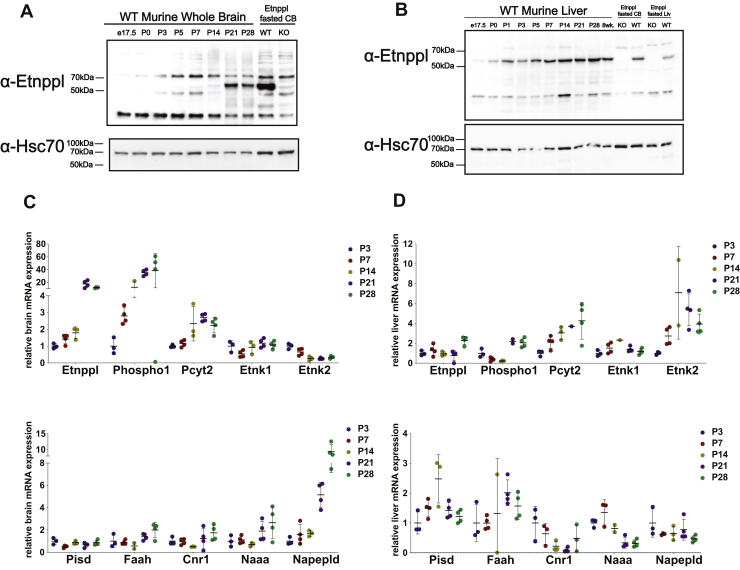
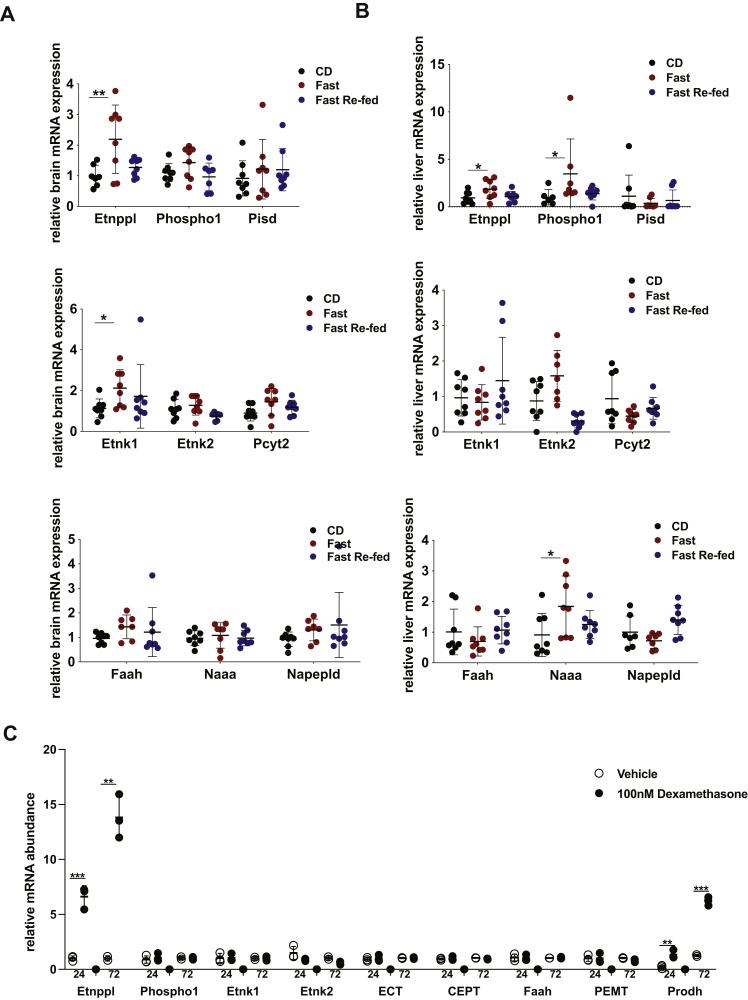
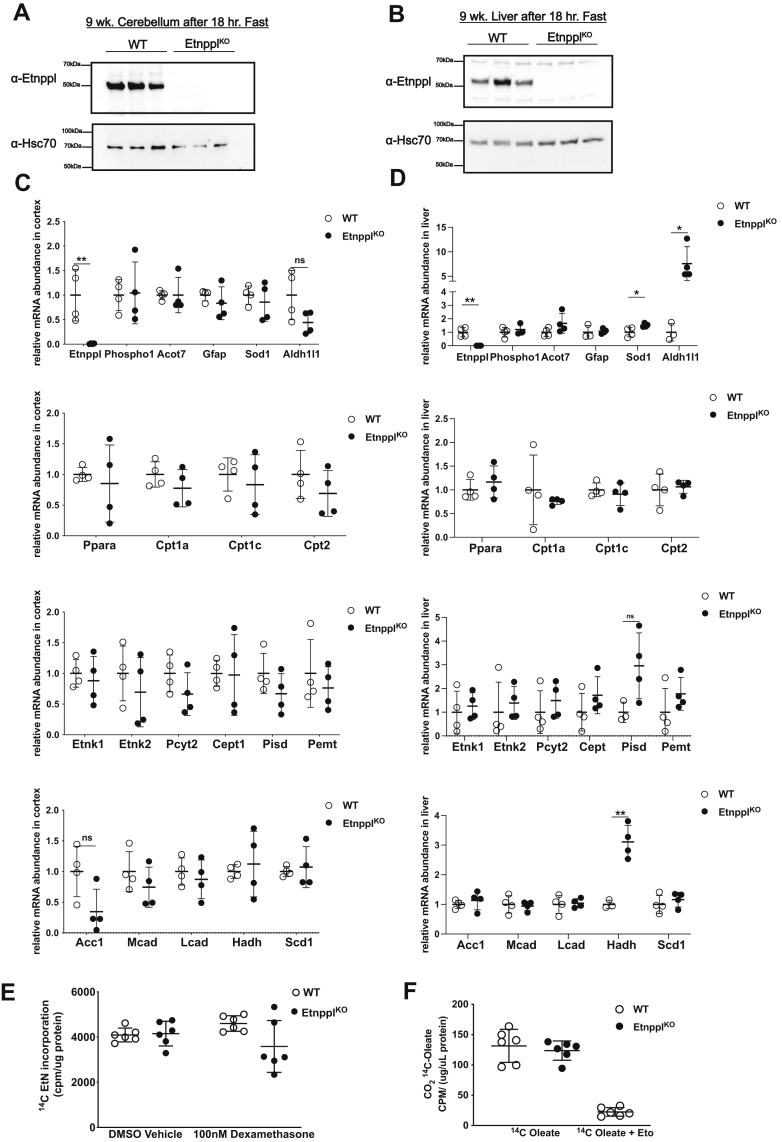
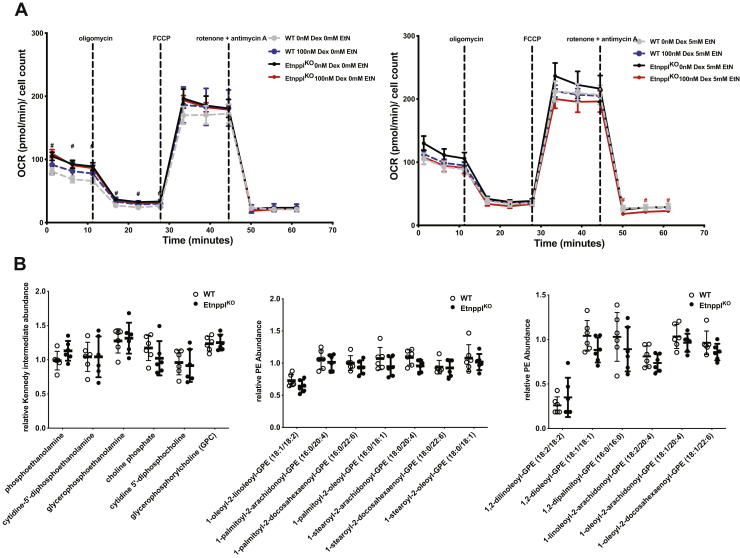
Dietary lipid composition has been shown to impact brain morphology, brain development, and neurologic function. However, how diet uniquely regulates brain lipid homeostasis compared with lipid homeostasis in peripheral tissues remains largely uncharacterized. To evaluate the lipid response to dietary changes in the brain, we assessed actively translating mRNAs in astrocytes and neurons across multiple diets. From this data, ethanolamine phosphate phospholyase (Etnppl) was identified as an astrocyte-specific fasting-induced gene. Etnppl catabolizes phosphoethanolamine (PEtN), a prominent headgroup precursor in phosphatidylethanolamine (PE) also found in other classes of neurologically relevant lipid species. Altered Etnppl expression has also previously been associated with humans with mood disorders. We evaluated the relevance of Etnppl in maintaining brain lipid homeostasis by characterizing Etnppl across development and in coregulation with PEtN-relevant genes, as well as determining the impact to the brain lipidome after Etnppl loss. We found that Etnppl expression dramatically increased during a critical window of early brain development in mice and was also induced by glucocorticoids. Using a constitutive knockout of Etnppl (Etnppl), we did not observe robust changes in expression of PEtN-related genes. However, loss of Etnppl altered the phospholipid profile in the brain, resulting in increased total abundance of PE and in polyunsaturated fatty acids within PE and phosphatidylcholine species in the brain. Together, these data suggest that brain phospholipids are regulated by the phospholyase action of the enzyme Etnppl, which is induced by dietary fasting in astrocytes.
膳食脂质组成已被证明会影响大脑形态、大脑发育和神经功能。然而,与外周组织的脂质稳态相比,饮食如何独特地调节大脑脂质稳态在很大程度上仍未得到充分描述。为了评估饮食变化对大脑脂质反应,我们评估了在多种饮食下星形胶质细胞和神经元中活跃翻译的 mRNA。从这些数据中,鉴定出乙醇胺磷酸磷酸酶(Etnppl)是一种星形胶质细胞特异性的禁食诱导基因。Etnppl 分解磷酸乙醇胺(PEtN),PEtN 是磷脂酰乙醇胺(PE)的主要头部基团前体,也存在于其他神经相关脂质种类中。Etnppl 表达的改变也与患有情绪障碍的人类有关。我们通过评估 Etnppl 在维持大脑脂质稳态中的相关性,来确定 Etnppl 在整个发育过程中的特征,以及与 PEtN 相关基因的核心调控,以及确定 Etnppl 缺失后对大脑脂质组的影响。我们发现,Etnppl 在小鼠大脑早期发育的关键窗口期表达显著增加,同时也被糖皮质激素诱导。使用 Etnppl 的组成性敲除(Etnppl),我们没有观察到 PEtN 相关基因的表达发生显著变化。然而,Etnppl 的缺失改变了大脑中的磷脂谱,导致 PE 的总丰度增加,并且在大脑中的 PE 和磷脂酰胆碱种类中的多不饱和脂肪酸增加。总之,这些数据表明,大脑磷脂受星形胶质细胞中酶 Etnppl 的磷酸酶作用调节,该作用通过饮食禁食诱导。