School of Laboratory Medicine, Weifang Medical University, Weifang, China.
State Key Laboratory of Infectious Disease Prevention and Control, National Institute for Viral Disease Control and Prevention, Chinese Center for Disease Control and Prevention, Beijing, China.
J Gene Med. 2021 Oct;23(10):e3368. doi: 10.1002/jgm.3368. Epub 2021 Jun 11.
Pre-existing immunities hamper the application of human adenovirus (HAdV) vectors in gene therapy or vaccine development. Fowl adenovirus (FAdV)-based vector might represent an alternative.
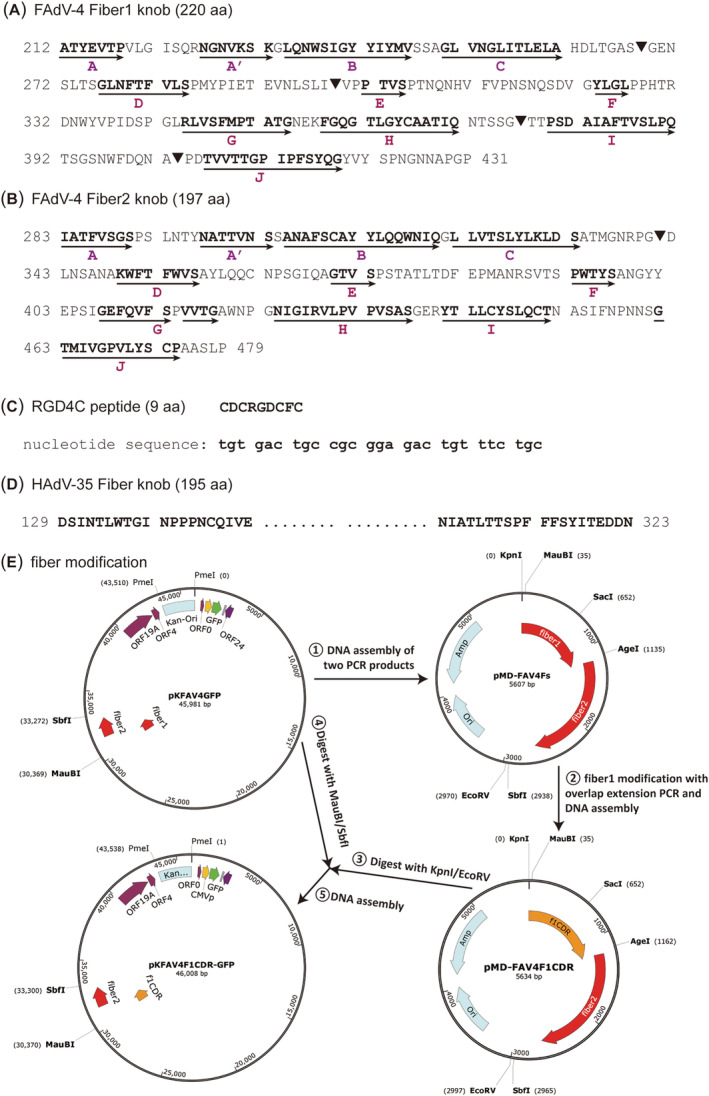
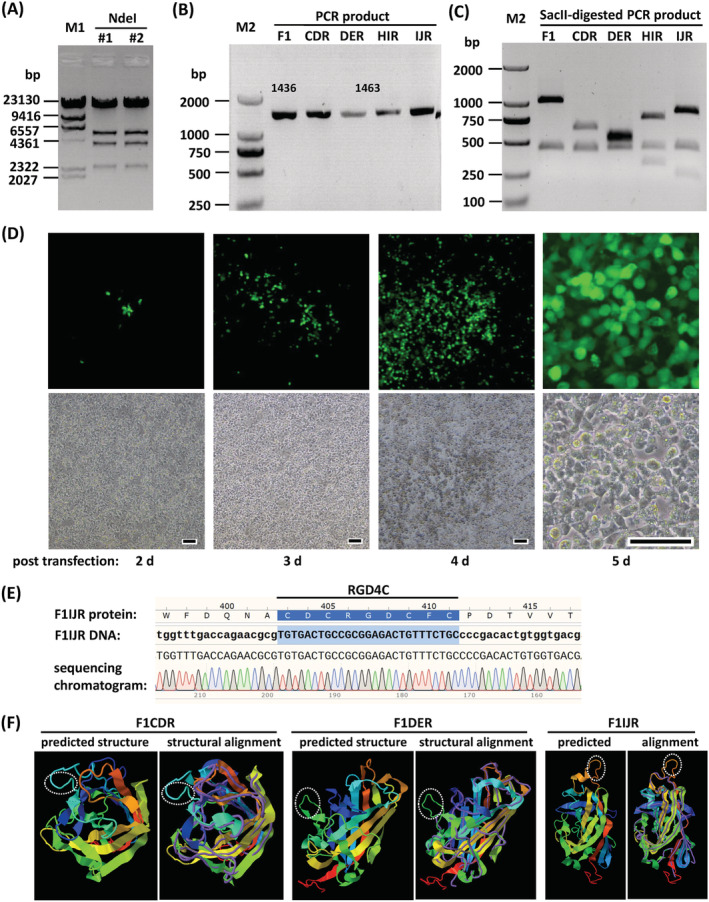
An intermediate plasmid containing FAdV-4 fiber genes, pMD-FAV4Fs, was separated from FAdV-4 adenoviral plasmid pKFAV4GFP. An overlap extension polymerase chain reaction (PCR) was employed for fiber modification in pMD-FAV4Fs, and the modified fibers were restored to generate new adenoviral plasmids through restriction-assembly. FAdV-4 vectors were rescued and amplified in chicken LMH cells. Fluorescence microscopy and flow cytometry were used to evaluate the gene transfer efficiency. The amount of viruses binding to cells was determined by a real-time PCR. A plaque-forming assay and one-step growth curve were used to evaluate virus growth.
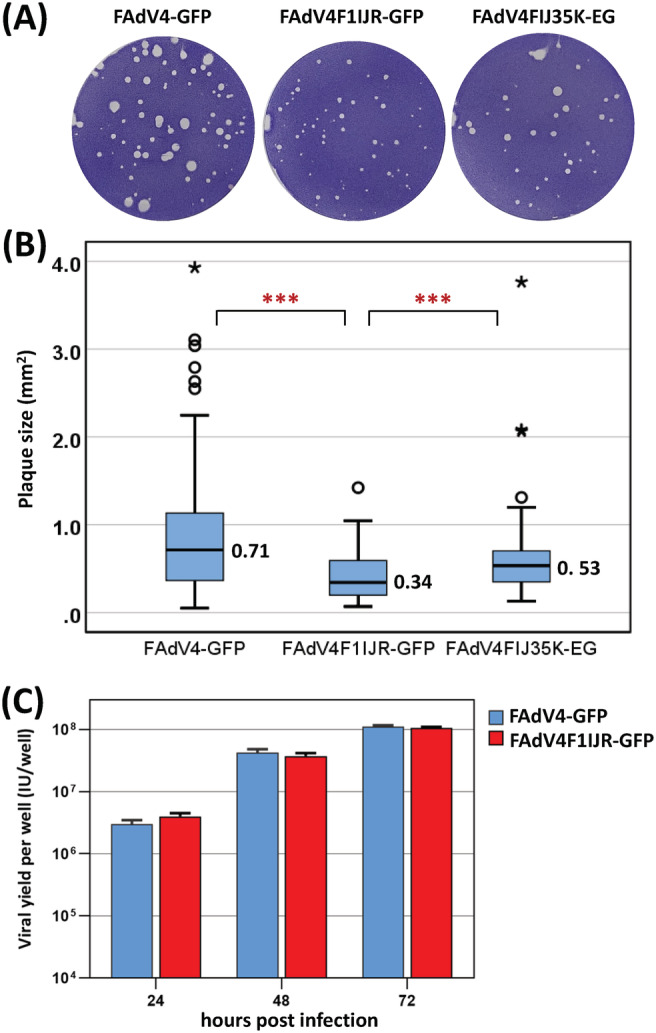
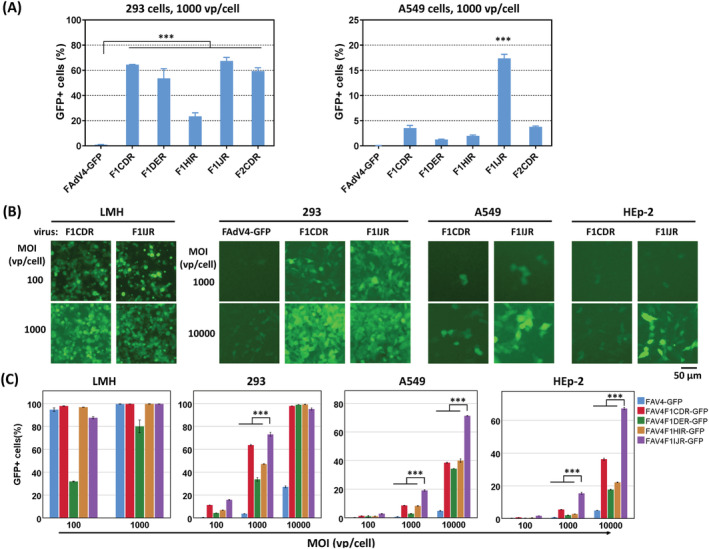
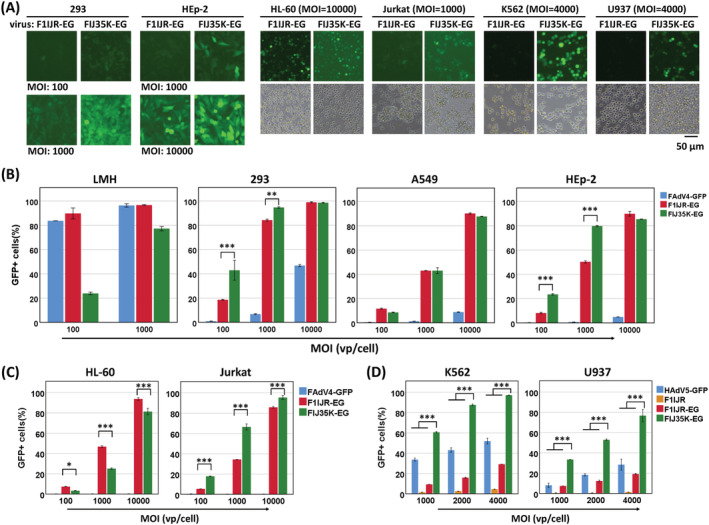
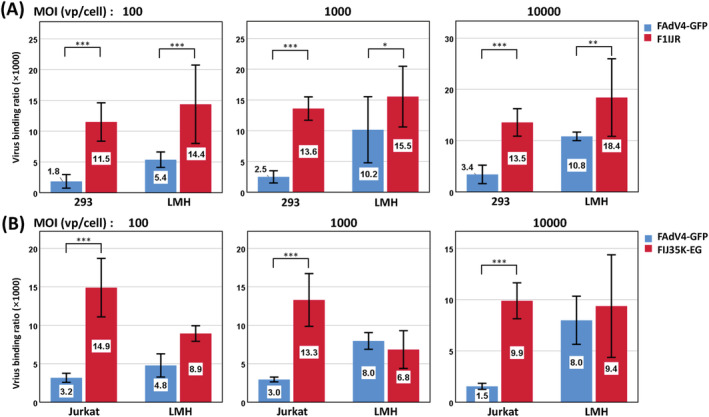
Four sites in the CD-, DE-, HI- and IJ-loop of fiber1 knob could tolerate the insertion of exogenous peptide. The insertion of RGD4C peptide in the fiber1 knob significantly promoted FAdV-4 transduction to human adherent cells such as 293, A549 and HEp-2, and the insertion to the IJ-loop demonstrated the best performance. The replacement of the fiber2 knob of FAdV-4 with that of HAdV-35 improved the gene transfer to human suspension cells such as Jurkat, K562 and U937. Fiber-modified FAdV-4 vectors could transduce approximately 80% human cells at an acceptable multiplicity of infection. Enhanced gene transfer mainly resulted from increased virus binding. Fiber modifications did not significantly influence the growth of recombinant FAdV-4 in packaging cells.
As a proof of principle, it was feasible to enhance gene transduction of FAdV-4 vectors to human cells by modifying the fibers.
先前存在的免疫会阻碍人腺病毒(HAdV)载体在基因治疗或疫苗开发中的应用。禽腺病毒(FAdV)载体可能是一种替代方法。
从 FAdV-4 腺病毒质粒 pKFAV4GFP 中分离出含有 FAdV-4 纤维基因的中间质粒 pMD-FAV4Fs。采用重叠延伸聚合酶链反应(PCR)对 pMD-FAV4Fs 中的纤维进行修饰,通过限制性组装将修饰的纤维恢复,从而生成新的腺病毒质粒。FAdV-4 载体在鸡 LMH 细胞中被拯救和扩增。荧光显微镜和流式细胞术用于评估基因转移效率。通过实时 PCR 测定病毒结合细胞的量。通过空斑形成试验和一步生长曲线评估病毒生长。
纤维 1 knob 的 CD、DE、HI 和 IJ 环中的 4 个位点可以容纳外源肽的插入。纤维 1 knob 中的 RGD4C 肽的插入显著促进了 FAdV-4 对人贴壁细胞如 293、A549 和 HEp-2 的转导,而插入 IJ 环则表现出最佳性能。用 HAdV-35 的纤维 2 knob 替换 FAdV-4 的纤维 2 knob 可提高对人悬浮细胞如 Jurkat、K562 和 U937 的基因转移。修饰后的 FAdV-4 载体可以在可接受的感染复数下转导约 80%的人细胞。增强的基因转移主要是由于病毒结合的增加。纤维修饰对包装细胞中重组 FAdV-4 的生长没有显著影响。
作为原理的证明,通过修饰纤维可以增强 FAdV-4 载体对人细胞的基因转导。