Wang Xueping P, Wen Bo, Zhang Xiao J, Ma Lei, Liang Xiu L, Zhang Ming L
Henan Joint International Research Laboratory of Veterinary Biologics Research and Application, Anyang Institute of Technology, Anyang, China.
College of Veterinary Medicine, Northwest A&F University, Xianyang, China.
Front Vet Sci. 2022 Jun 14;9:871038. doi: 10.3389/fvets.2022.871038. eCollection 2022.
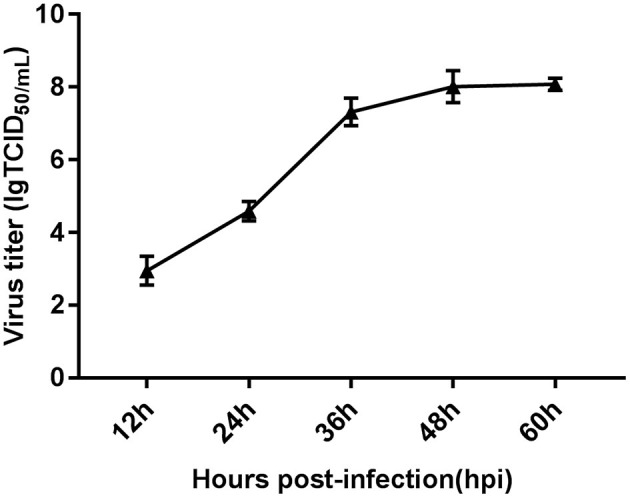
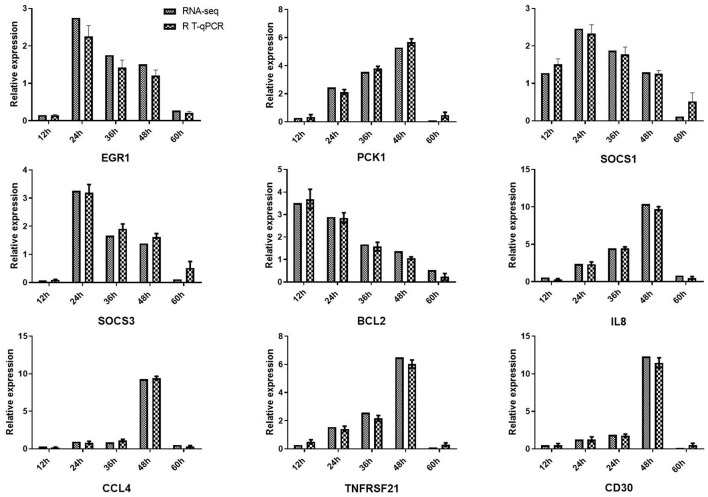
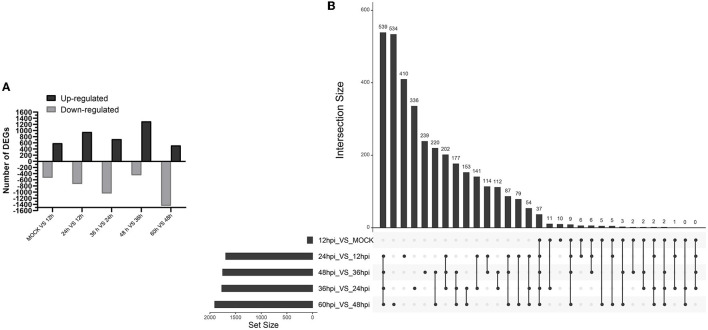
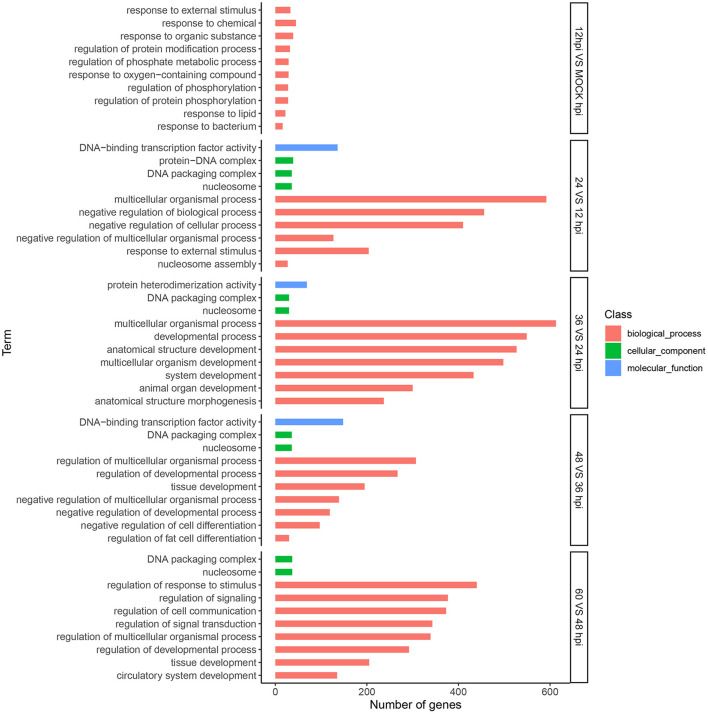
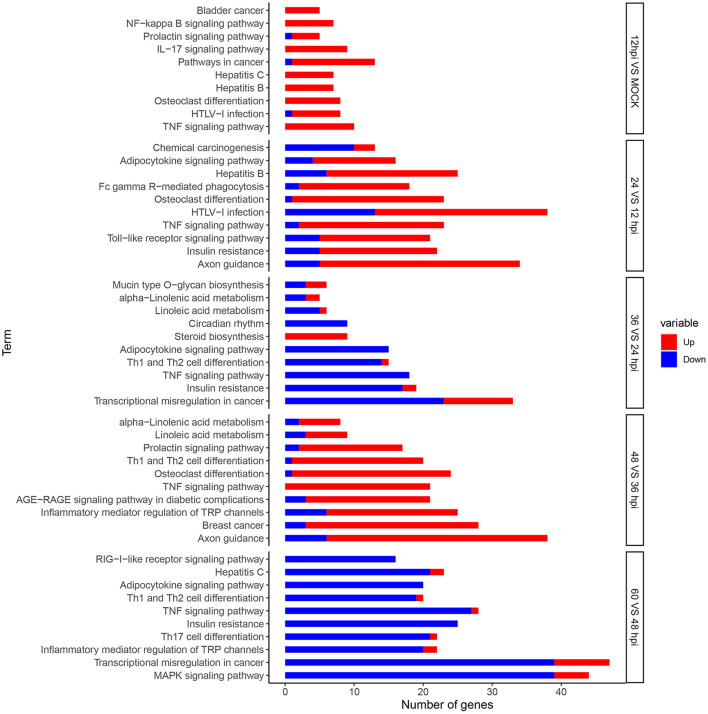
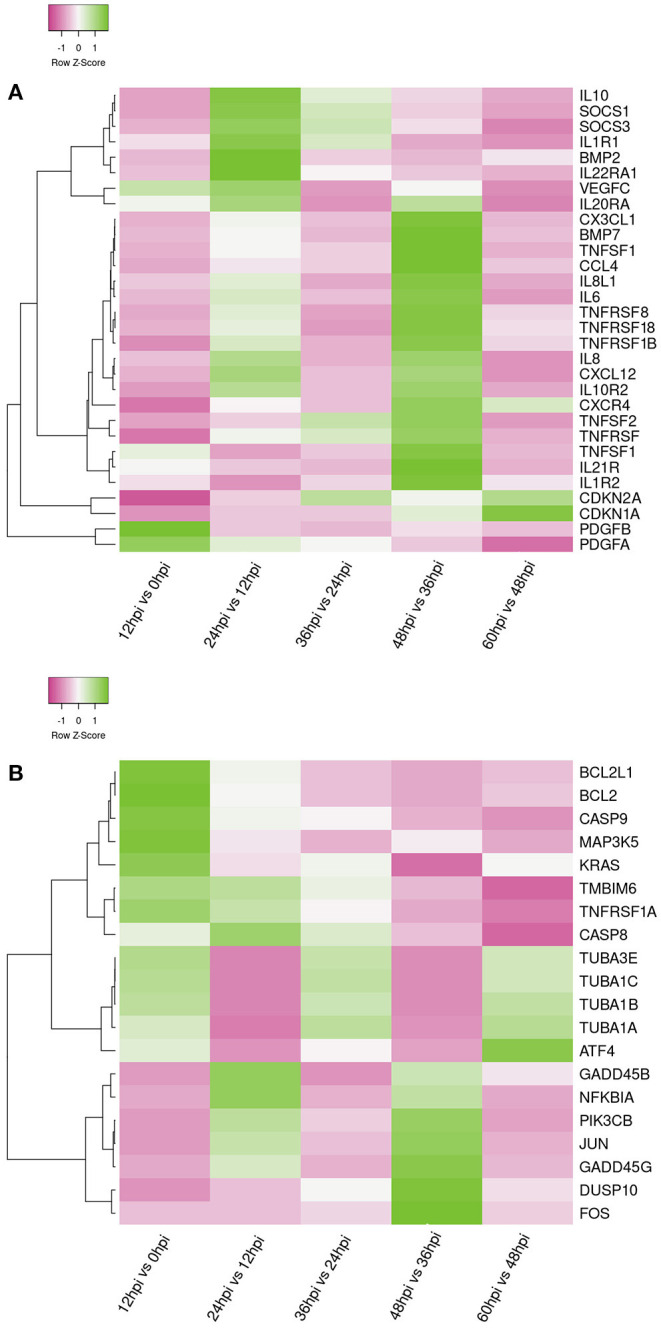
Fowl adenovirus serotype 4 (FAdV-4) is a highly pathogenic virus with a broad host range that causes huge economic losses for the poultry industry worldwide. RNA sequencing has provided valuable and important mechanistic clues regarding FAdV-4-host interactions. However, the pathogenic mechanism and host's responses after FAdV-4 infection remains limited. In this study, we used transcriptome analysis to identify dynamic changes in differentially expressed genes (DEGs) at five characteristic stages (12, 24, 36, 48, and 60 h) post infection (hpi) with FAdV-4. A total of 8,242 DEGs were identified based on comparison of five infection stages: 0 and 12, 12 and 24, 24 and 36, 36 and 48, and 48 and 60 hpi. In addition, at these five important time points, we found 37 common upregulated or downregulated DEGs, suggesting a common role for these genes in host response to viral infection. The predicted function of these DEGs using Gene Ontology and Kyoto Encyclopedia of Genes and Genomes analyses revealed that these DEGs were associated with viral invasion, host metabolic pathways and host immunosuppression. Interestingly, genes involved in viral invasion, probably , and , were related to FAdV-4 infection. Validation of nine randomly selected DEGs using quantitative reverse-transcription PCR produced results that were highly consistent with those of RNA sequencing. This transcriptomic profiling provides valuable information for investigating the molecular mechanisms underlying host-FAdV-4 interactions. These data support the current molecular knowledge regarding FAdV-4 infection and chicken defense mechanisms.
禽腺病毒4型(FAdV - 4)是一种具有广泛宿主范围的高致病性病毒,给全球家禽业造成了巨大经济损失。RNA测序为FAdV - 4与宿主相互作用提供了有价值且重要的机制线索。然而,FAdV - 4感染后的致病机制和宿主反应仍然有限。在本研究中,我们利用转录组分析来鉴定感染FAdV - 4后五个特征阶段(感染后12、24、36、48和60小时)差异表达基因(DEG)的动态变化。基于五个感染阶段(感染后0和12小时、12和24小时、24和36小时、36和48小时以及48和60小时)的比较,共鉴定出8242个DEG。此外,在这五个重要时间点,我们发现了37个共同上调或下调的DEG,表明这些基因在宿主对病毒感染的反应中具有共同作用。使用基因本体论和京都基因与基因组百科全书分析对这些DEG的预测功能表明,这些DEG与病毒入侵、宿主代谢途径和宿主免疫抑制有关。有趣的是,参与病毒入侵的基因,可能是 和 ,与FAdV - 4感染有关。使用定量逆转录PCR对九个随机选择的DEG进行验证,结果与RNA测序结果高度一致。这种转录组分析为研究宿主与FAdV - 4相互作用的分子机制提供了有价值的信息。这些数据支持了目前关于FAdV - 4感染和鸡防御机制的分子知识。