Kim Hee Jung, Kim Byeonggwan, Auh Yanghyun, Kim Eunkyoung
Department of Chemical and Biomolecular Engineering, Yonsei University, 50 Yonsei-ro, Seodaemun-gu, Seoul, 03722, South Korea.
Adv Mater. 2021 Nov;33(47):e2005940. doi: 10.1002/adma.202005940. Epub 2021 May 29.
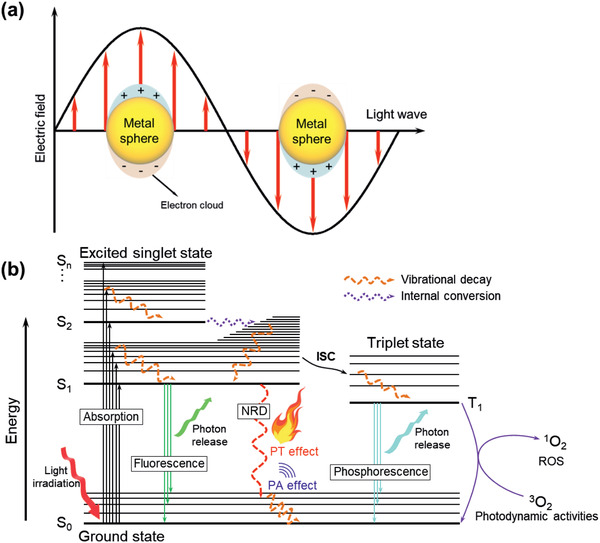
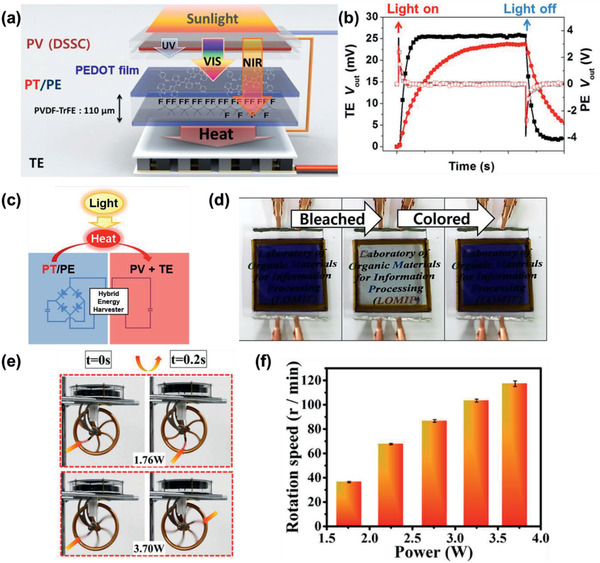
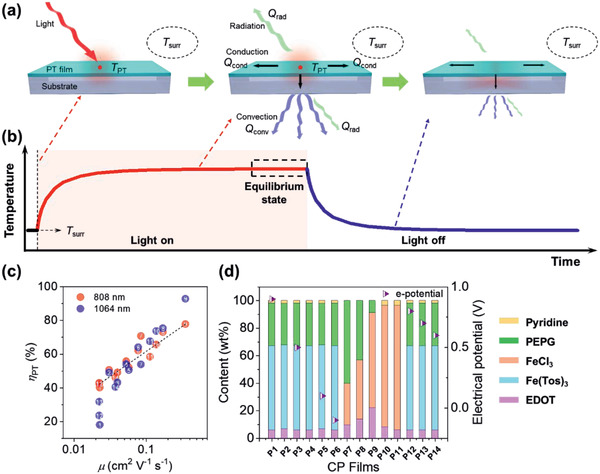
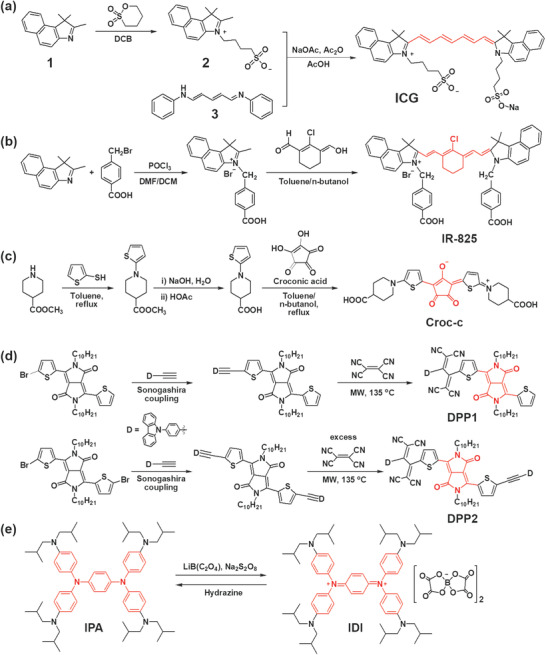
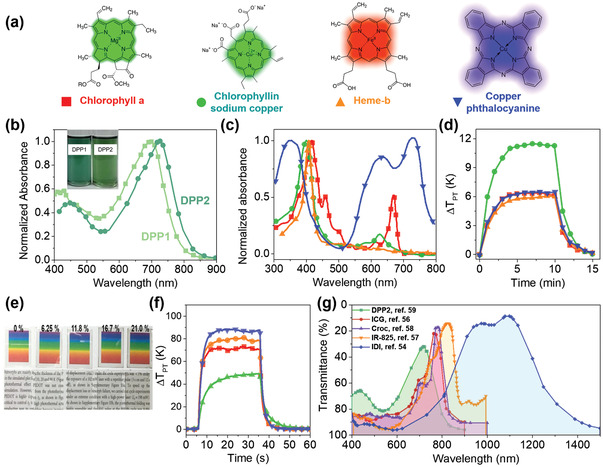
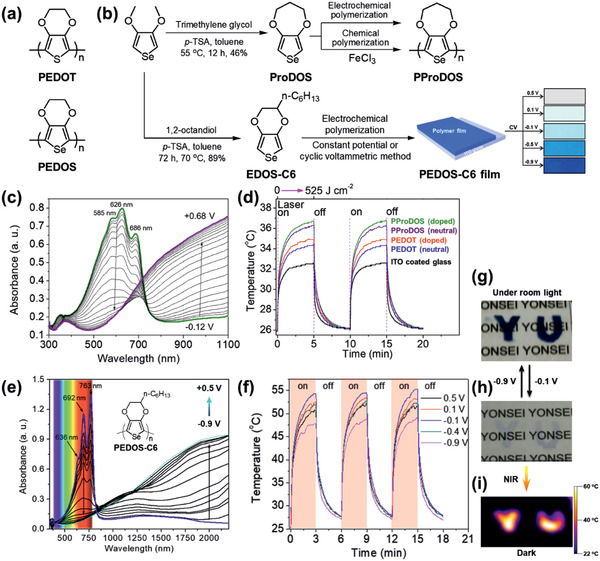
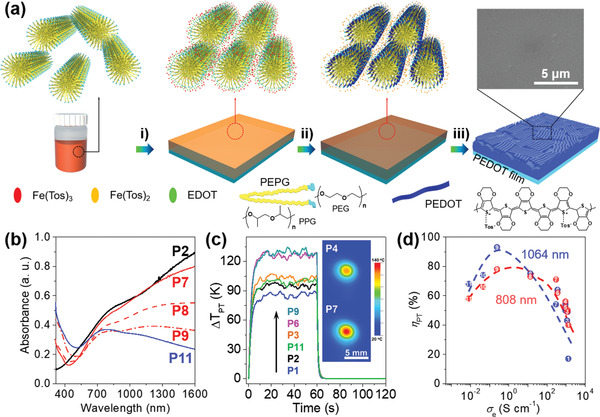
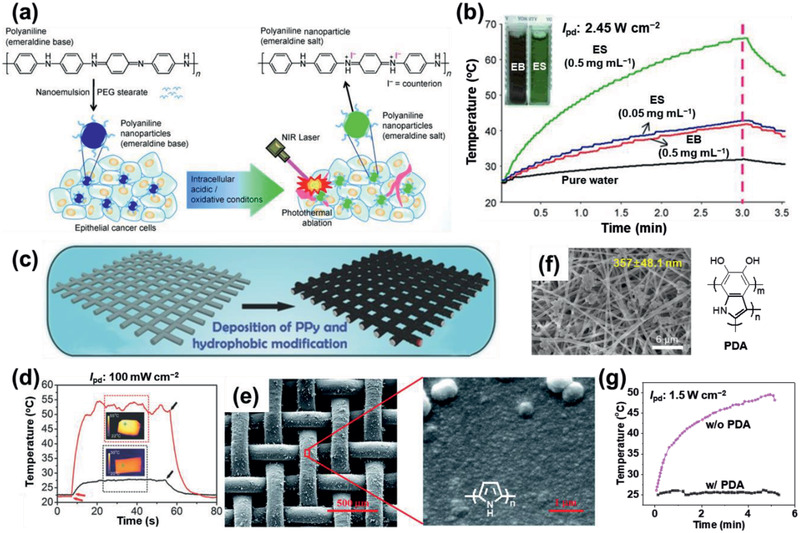
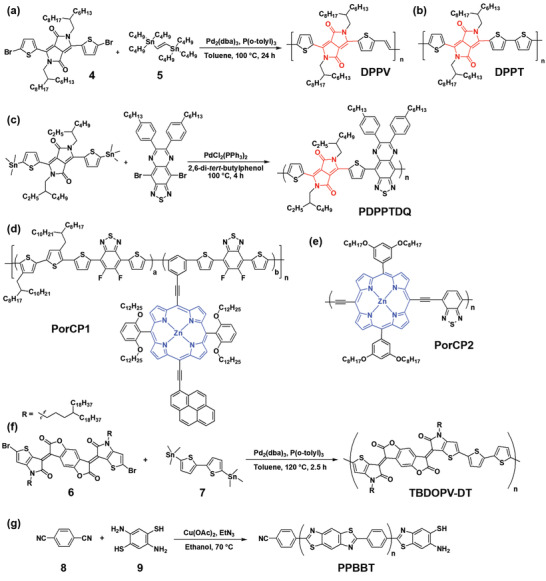
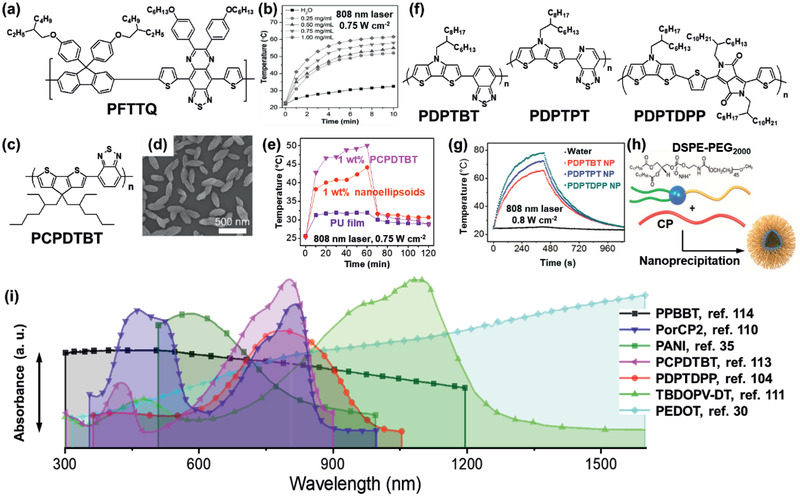
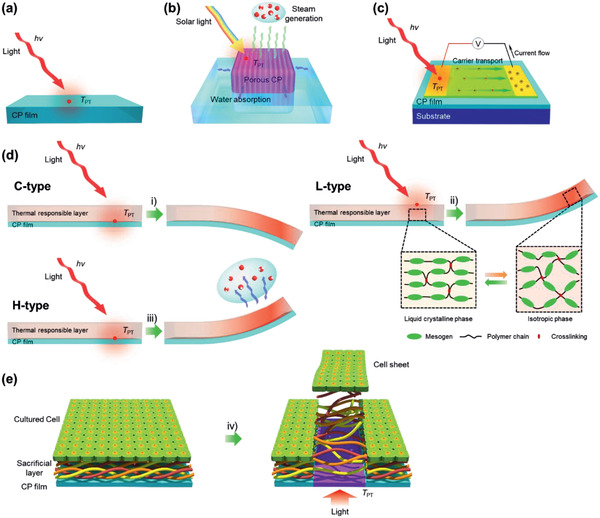
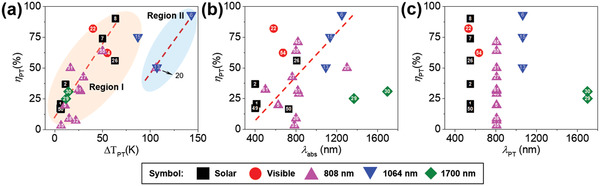
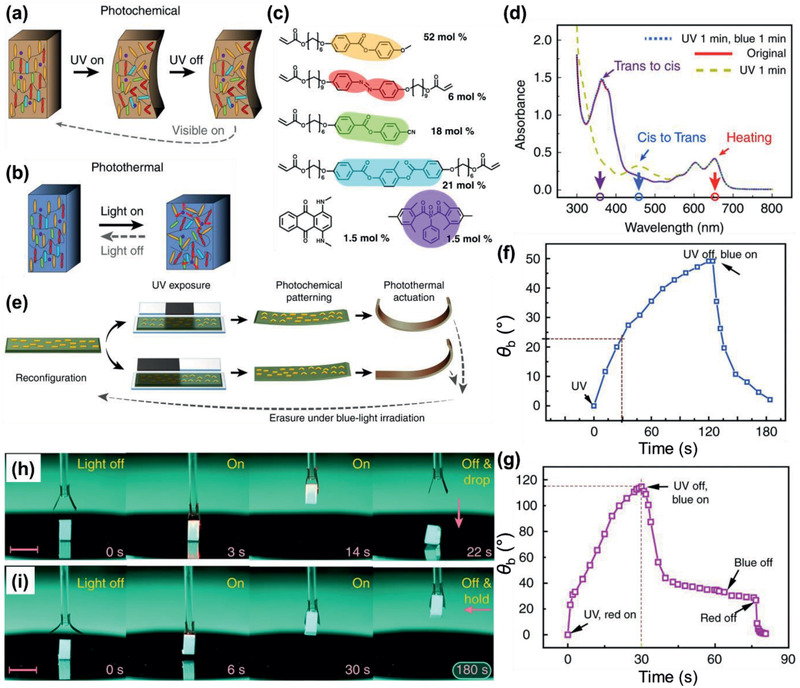
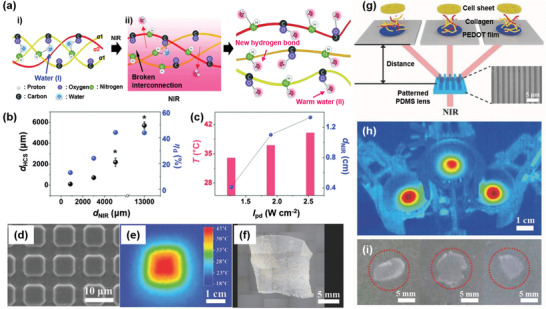
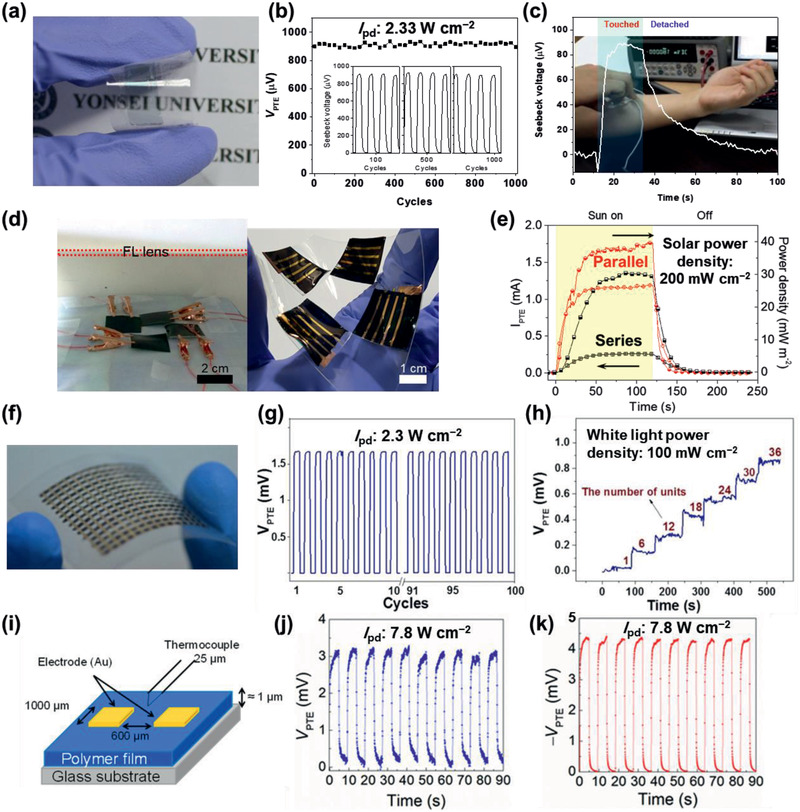
With the growth of photoenergy harvesting and thermal engineering, photothermal materials (PTMs) have attracted substantial interest due to their unique functions such as localized heat generation, spatiotemporal thermal controllability, invisibility, and light harvesting capabilities. In particular, π-conjugated organic PTMs show advantages over inorganic or metallic PTMs in thin film applications due to their large light absorptivity, ease of synthesis and tunability of molecular structures for realizing high NIR absorption, flexibility, and solution processability. This review is intended to provide an overview of organic PTMs, including both molecular and polymeric PTMs. A description of the photothermal (PT) effect and conversion efficiency (η ) for organic films is provided. After that, the chemical structure and optical properties of organic PTMs are discussed. Finally, emerging applications of organic PT films from the perspective of spatiotemporal thermal engineering principles are illustrated.
随着光能量收集和热工程的发展,光热材料(PTMs)因其独特功能,如局部产热、时空热可控性、隐身性和光捕获能力而备受关注。特别是,π共轭有机光热材料在薄膜应用中比无机或金属光热材料更具优势,这是由于它们具有高吸光率、易于合成以及可通过调整分子结构实现高近红外吸收、柔韧性和溶液可加工性。本综述旨在概述有机光热材料,包括分子型和聚合物型光热材料。文中还介绍了有机薄膜的光热(PT)效应和转换效率(η)。之后,讨论了有机光热材料的化学结构和光学性质。最后,从时空热工程原理的角度阐述了有机光热薄膜的新兴应用。