Brain Health Institute, Rutgers Biomedical Health Sciences, Rutgers University, Piscataway, New Jersey, USA.
Department of Kinesiology and Health, Rutgers University, New Brunswick, New Jersey, USA.
Front Neurol Neurosci. 2021;45:117-127. doi: 10.1159/000514965. Epub 2021 May 28.
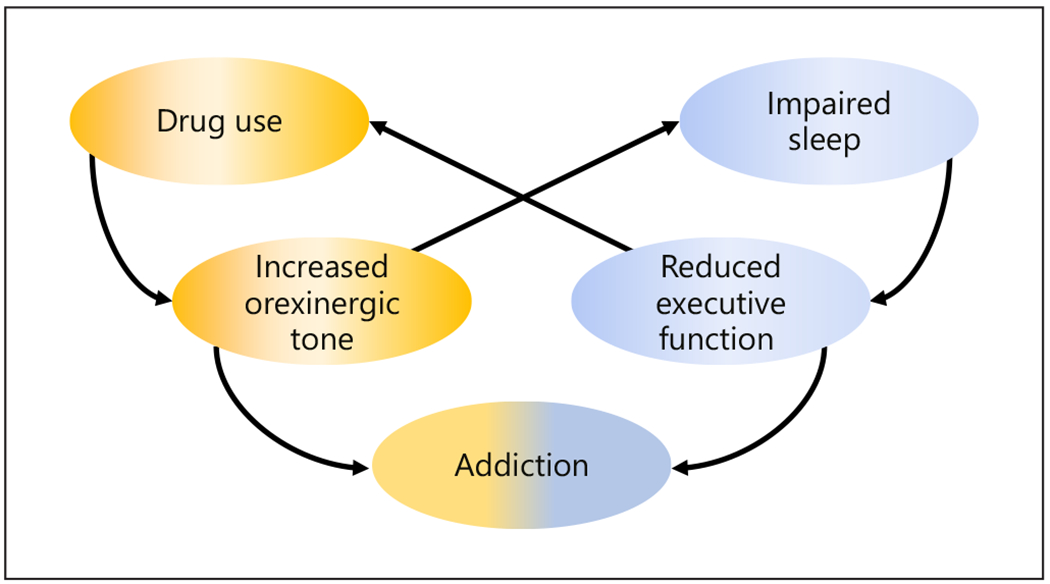
Significant sleep impairments often accompany substance use disorders (SUDs). Sleep disturbances in SUD patients are associated with poor clinical outcomes and treatment adherence, emphasizing the importance of normalizing sleep when treating SUDs. Orexins (hypocretins) are neuropeptides exclusively produced by neurons in the posterior hypothalamus that regulate various behavioral and physiological processes, including sleep-wakefulness and motivated drug taking. Given its dual role in sleep and addiction, the orexin system represents a promising therapeutic target for treating SUDs and their comorbid sleep deficits. Here, we review the literature on the role of the orexin system in sleep and drug addiction and discuss the therapeutic potential of orexin receptor antagonists for SUDs. We argue that orexin receptor antagonists may be effective therapeutics for treating addiction because they target orexin's regulation of sleep (top-down) and motivation (bottom-up) pathways.
物质使用障碍(SUD)常伴有显著的睡眠障碍。SUD 患者的睡眠障碍与不良的临床结局和治疗依从性有关,这强调了在治疗 SUD 时使睡眠正常化的重要性。食欲素(下丘脑泌素)是一种由下丘脑后部神经元特异性产生的神经肽,调节各种行为和生理过程,包括睡眠-觉醒和动机性药物摄取。鉴于其在睡眠和成瘾中的双重作用,食欲素系统代表了治疗 SUD 及其共病性睡眠缺陷的有前途的治疗靶点。在这里,我们回顾了关于食欲素系统在睡眠和药物成瘾中的作用的文献,并讨论了食欲素受体拮抗剂治疗 SUD 的治疗潜力。我们认为,食欲素受体拮抗剂可能是治疗成瘾的有效治疗方法,因为它们针对的是食欲素对睡眠(自上而下)和动机(自下而上)途径的调节。