Department of Neuroimaging, King's College London, London, UK.
Experimental Therapeutics and Pathophysiology Branch, NIMH, NIH, Bethesda, MD, USA.
Transl Psychiatry. 2021 May 29;11(1):335. doi: 10.1038/s41398-021-01442-3.
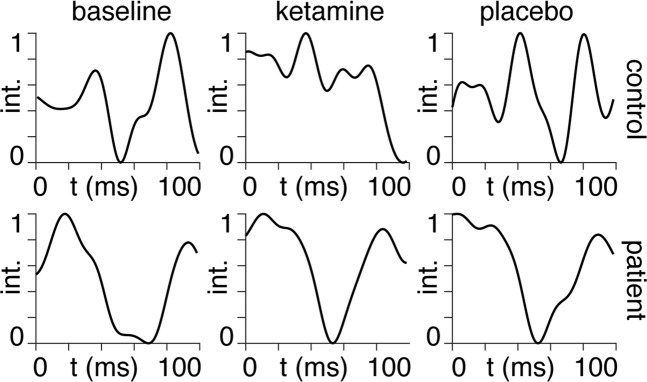
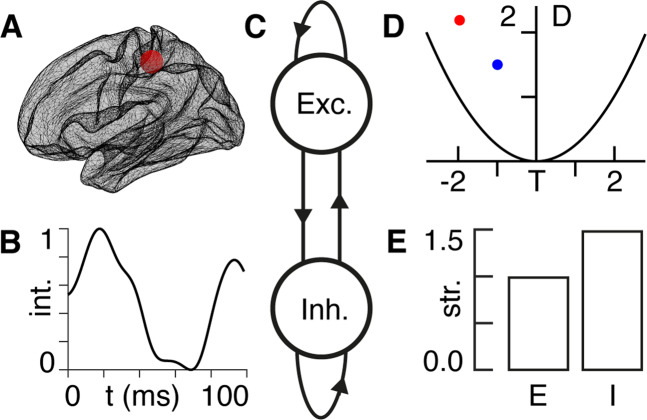
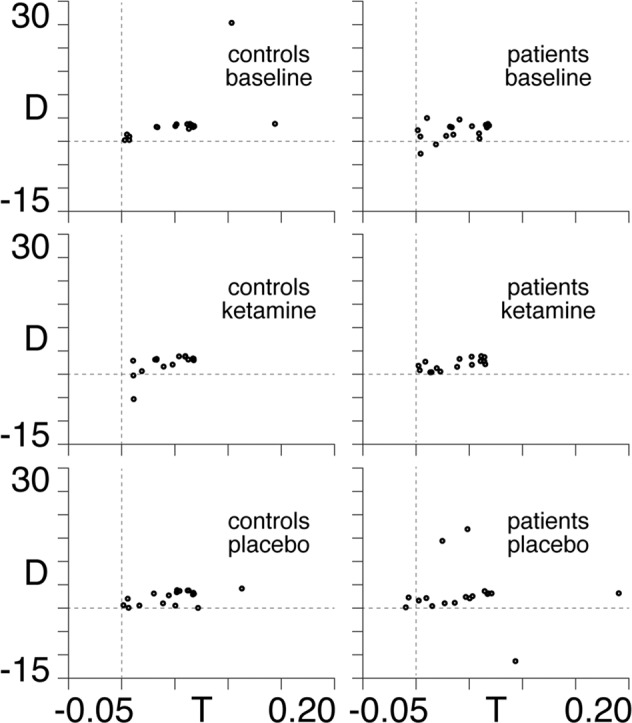
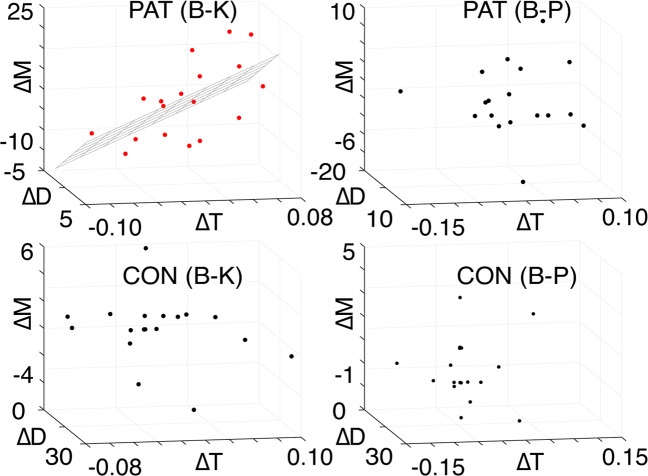
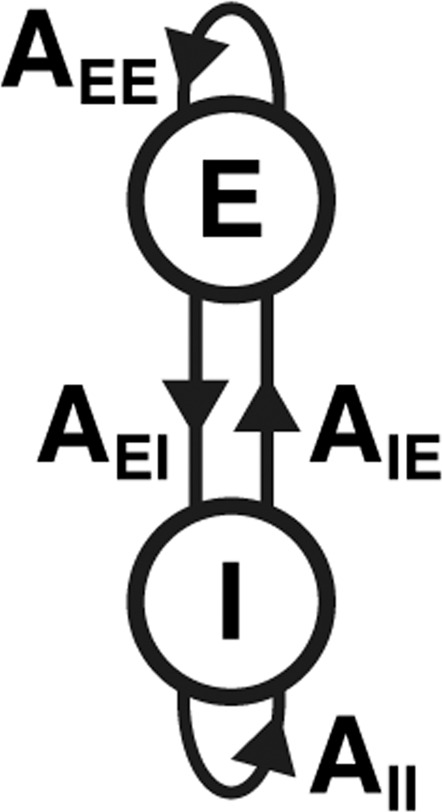
The glutamatergic modulator ketamine has been shown to rapidly reduce depressive symptoms in patients with treatment-resistant major depressive disorder (TRD). Although its mechanisms of action are not fully understood, changes in cortical excitation/inhibition (E/I) following ketamine administration are well documented in animal models and could represent a potential biomarker of treatment response. Here, we analyse neuromagnetic virtual electrode time series collected from the primary somatosensory cortex in 18 unmedicated patients with TRD and in an equal number of age-matched healthy controls during a somatosensory 'airpuff' stimulation task. These two groups were scanned as part of a clinical trial of ketamine efficacy under three conditions: (a) baseline; (b) 6-9 h following subanesthetic ketamine infusion; and (c) 6-9 h following placebo-saline infusion. We obtained estimates of E/I interaction strengths by using dynamic causal modelling (DCM) on the time series, thereby allowing us to pinpoint, under each scanning condition, where each subject's dynamics lie within the Poincaré diagram-as defined in dynamical systems theory. We demonstrate that the Poincaré diagram offers classification capability for TRD patients, in that the further the patients' coordinates were shifted (by virtue of ketamine) toward the stable (top-left) quadrant of the Poincaré diagram, the more their depressive symptoms improved. The same relationship was not observed by virtue of a placebo effect-thereby verifying the drug-specific nature of the results. We show that the shift in neural dynamics required for symptom improvement necessitates an increase in both excitatory and inhibitory coupling. We present accompanying MATLAB code made available in a public repository, thereby allowing for future studies to assess individually tailored treatments of TRD.
谷氨酸调节剂氯胺酮已被证明可迅速减轻治疗抵抗性重度抑郁症(TRD)患者的抑郁症状。尽管其作用机制尚未完全阐明,但在动物模型中,氯胺酮给药后皮质兴奋/抑制(E/I)的变化得到了充分的证明,这可能代表治疗反应的潜在生物标志物。在这里,我们分析了 18 名未经治疗的 TRD 患者和 18 名年龄匹配的健康对照者在接受躯体感觉“空气喷射”刺激任务期间在初级躯体感觉皮层中采集的神经磁虚拟电极时间序列。这两组患者作为氯胺酮疗效临床试验的一部分进行了扫描,该临床试验有三种条件:(a)基线;(b)亚麻醉剂量氯胺酮输注后 6-9 小时;(c)安慰剂-生理盐水输注后 6-9 小时。我们通过对时间序列进行动态因果建模(DCM)获得 E/I 相互作用强度的估计值,从而可以在每个扫描条件下确定每个被试者的动力学位于 Poincaré 图中的位置,即动力系统理论中定义的 Poincaré 图。我们证明了 Poincaré 图可为 TRD 患者提供分类能力,即由于氯胺酮,患者的坐标向 Poincaré 图的稳定(左上角)象限移动的程度越大,其抑郁症状改善的程度越大。由于安慰剂效应,并未观察到这种关系-从而验证了结果的药物特异性。我们表明,改善症状所需的神经动力学变化需要增加兴奋和抑制耦合。我们展示了伴随的 MATLAB 代码,该代码在公共存储库中提供,从而允许将来的研究评估针对 TRD 的个体化治疗。