Zhu Jiayue, Yang Xinwei, Li Xiao, Han Shuo, Zhu Yanbo, Xu Liping
School of Traditional Chinese Medicine, Capital Medical University, Beijing, China.
Beijing Key Lab of TCM Collateral Diasease Theory Research, Capital Medical University, Beijing, China.
Front Pharmacol. 2021 May 14;12:650448. doi: 10.3389/fphar.2021.650448. eCollection 2021.
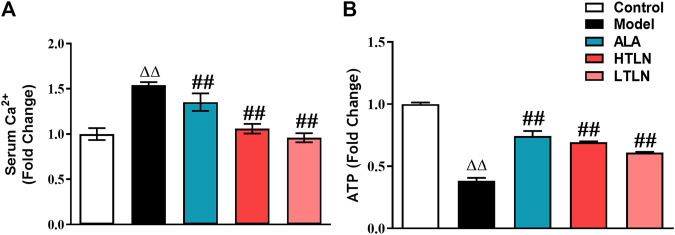
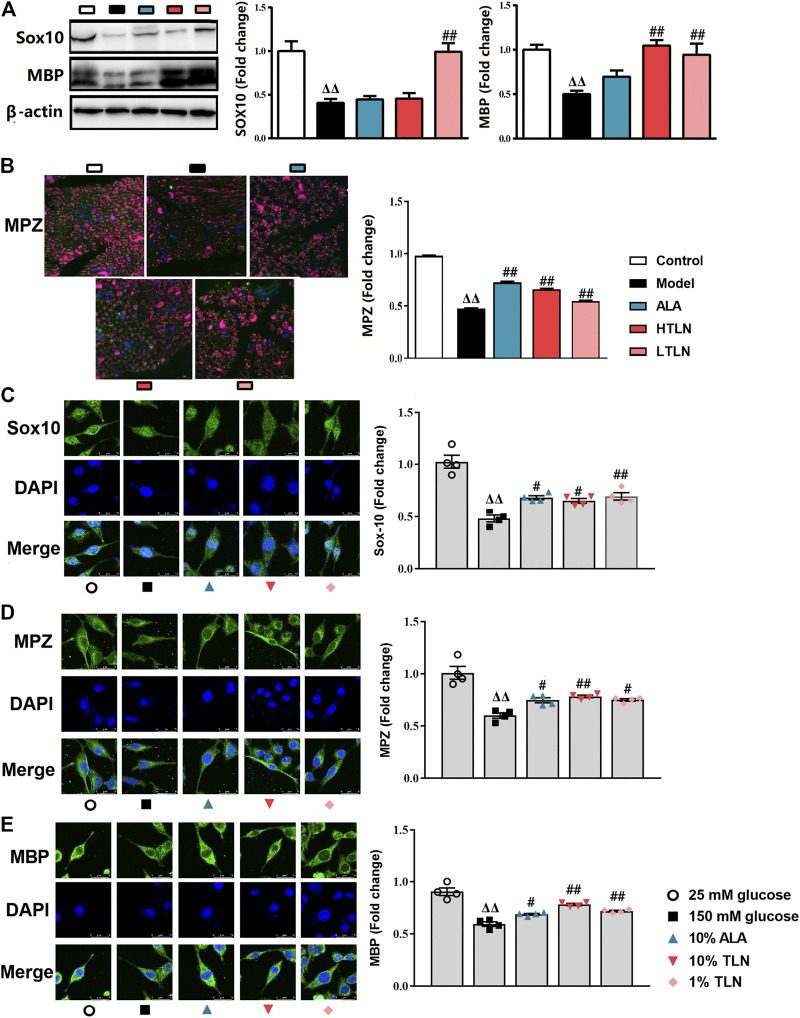
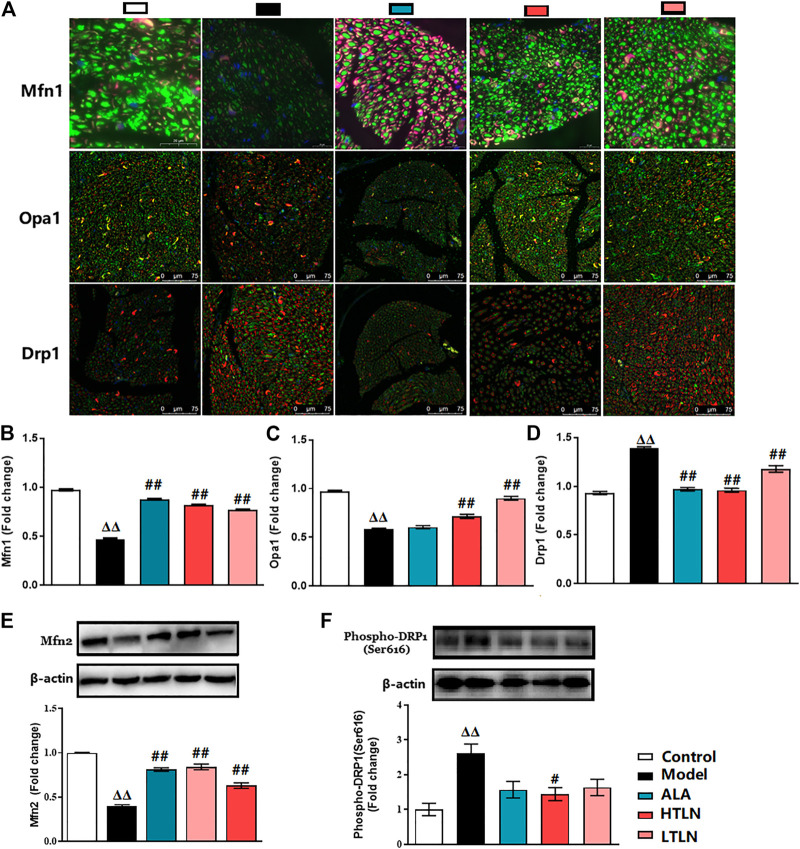
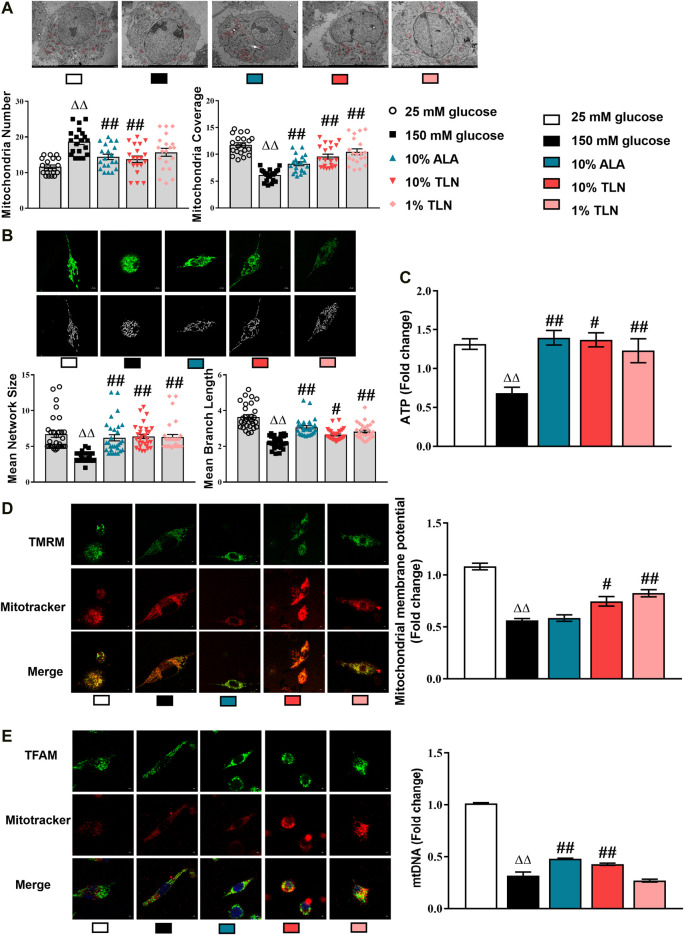
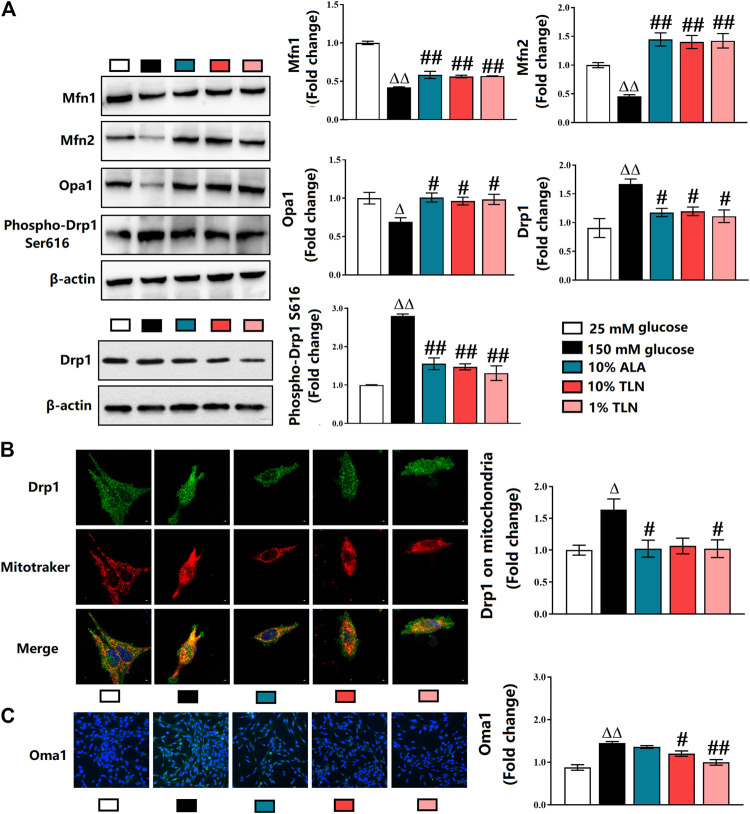
Tang Luo Ning (TLN), a traditional Chinese compound prescription, has been used clinically to treat diabetic peripheral neuropathy (DPN) in China. However, the exact mechanisms remain unclear. The objective of this study is to unravel the effects of TLN on mitochondrial dynamics of DPN in streptozotocin-induced rat models and Schwann cells cultured in 150 mM glucose. Mitochondrial function was determined by Ca and ATP levels of streptozotocin (STZ)-induced DPN rats and mitochondria structure, mitochondrial membrane potential (MMP), and mtDNA of high glucose incubated SCs. Mitochondrial dynamics protein including mitofusin 1 (Mfn1), mitofusin 2 (Mfn2), optic atrophy 1 (Opa1), and dynamin-related protein 1 (Drp1) were investigated using Western blot or immunofluorescence. Myelin basic protein (MBP), myelin protein zero (MPZ), and sex-determining region Y (SRY)-box 10 (Sox10) were measured to represent schwannopathy. Our results showed that TLN increased ATP levels (0.38 of model, 0.69 of HTLN, 0.61 of LTLN, <0.01; 0.52 of 150 mM glucose, 1.00 of 10% TLN, <0.01, 0.94 of 1% TLN, <0.05), MMP (0.56 of 150 mM glucose, <0.01, 0.75 of 10% TLN, <0.05, 0.83 of 1% TLN, <0.01), and mtDNA (0.32 of 150 mM glucose, 0.43 of 10% TLN, <0.01) while decreased Ca (1.54 of model, 1.06 of HTLN, 0.96 of LTLN, <0.01) to improve mitochondrial function and . TLN helps maintain balance of mitochondrial dynamics: it reduces the mitochondria number (1.60 of 150 mM glucose, 1.10 of 10% TLN, <0.01) and increases the mitochondria coverage (0.51 of 150 mM glucose, 0.80 of 10% TLN, 0.87 of 1% TLN, <0.01), mitochondrial network size (0.51 of 150 mM glucose, 0.95 of 10% TLN, 0.94 of 1% TLN, <0.01), and branch length (0.63 of 150 mM glucose, <0.01, 0.73 of 10% TLN, <0.05, 0.78 of 1% TLN, <0.01). Further, mitochondrial dynamics-related Mfn1 (0.47 of model, 0.82 of HTLN, 0.77 of LTLN, <0.01; 0.42 of 150 mM glucose, 0.56 of 10% TLN, 0.57 of 1% TLN, <0.01), Mfn2 (0.40 of model, 0.84 of HTLN, 0.63 of LTLN, <0.01; 0.46 of 150 mM glucose, 1.40 of 10% TLN, 1.40 of 1% TLN, <0.01), and Opa1 (0.58 of model, 0.71 of HTLN, 0.90 of LTLN, <0.01; 0.69 of 150 mM glucose, 0.96 of 10% TLN, 0.98 of 1% TLN, <0.05) were increased, while Drp1 (1.39 of model, 0.96 of HTLN, 1.18 of LTLN, <0.01; 1.70 of 150 mM glucose, 1.20 of 10% TLN, 1.10 of 1% TLN, <0.05), phosphorylated Drp1 (2.61 of model, 1.44 of HTLN, <0.05; 2.80 of 150 mM glucose, 1.50 of 10% TLN, 1.30 of 1% TLN, <0.01), and Drp1 located in mitochondria (1.80 of 150 mM glucose, 1.00 of 10% TLN, <0.05) were decreased after treatment with TLN. Additionally, TLN improved schwannopathy by increasing MBP (0.50 of model, 1.05 of HTLN, 0.94 of HTLN, <0.01; 0.60 of 150 mM glucose, 0.78 of 10% TLN, <0.01, 0.72 of 1% TLN, <0.05), Sox101 (0.41 of model, 0.99 of LTLN, <0.01; 0.48 of 150 mM glucose, 0.65 of 10% TLN, <0.05, 0.69 of 1% TLN, <0.01), and MPZ (0.48 of model, 0.66 of HTLN, 0.55 of HTLN, <0.01; 0.60 of 150 mM glucose, 0.78 of 10% TLN, <0.01, 0.75 of 1% TLN, <0.05) expressions. In conclusion, our study indicated that TLN's function on DPN may link to the improvement of the mitochondrial dynamics, which provides scientific evidence for the clinical application.
糖络宁(TLN)是一种中药复方制剂,在中国临床上用于治疗糖尿病周围神经病变(DPN)。然而,其确切机制尚不清楚。本研究的目的是揭示TLN对链脲佐菌素诱导的大鼠模型和在150 mM葡萄糖中培养的雪旺细胞中DPN线粒体动力学的影响。通过链脲佐菌素(STZ)诱导的DPN大鼠的钙和ATP水平以及高糖孵育的雪旺细胞的线粒体结构、线粒体膜电位(MMP)和线粒体DNA来确定线粒体功能。使用蛋白质免疫印迹法或免疫荧光法研究线粒体动力学蛋白,包括线粒体融合蛋白1(Mfn1)、线粒体融合蛋白2(Mfn2)、视神经萎缩蛋白1(Opa1)和动力相关蛋白1(Drp1)。测量髓鞘碱性蛋白(MBP)、髓鞘蛋白零(MPZ)和性别决定区Y(SRY)-盒10(Sox10)以代表雪旺细胞病变。我们的结果表明,TLN增加了ATP水平(模型组为0.38,高剂量TLN组为0.69,低剂量TLN组为0.61,P<0.01;150 mM葡萄糖组为0.52,10%TLN组为1.00,P<0.01,1%TLN组为0.94,P<0.05)、MMP(150 mM葡萄糖组为0.56,P<0.01,10%TLN组为0.75,P<0.05,1%TLN组为0.83,P<0.01)和线粒体DNA(150 mM葡萄糖组为0.32,10%TLN组为0.43,P<0.01),同时降低了钙水平(模型组为1.54,高剂量TLN组为1.06,低剂量TLN组为0.96,P<0.01),以改善线粒体功能。TLN有助于维持线粒体动力学的平衡:它减少了线粒体数量(150 mM葡萄糖组为1.60,10%TLN组为1.10,P<0.01),增加了线粒体覆盖率(150 mM葡萄糖组为0.51,10%TLN组为0.80,1%TLN组为0.87,P<0.01)、线粒体网络大小(150 mM葡萄糖组为0.51,10%TLN组为0.95,1%TLN组为0.94,P<0.01)和分支长度(150 mM葡萄糖组为0.63,P<0.01,10%TLN组为0.73,P<0.05,1%TLN组为0.78,P<0.01)。此外,与线粒体动力学相关的Mfn1(模型组为0.47,高剂量TLN组为0.82,低剂量TLN组为0.77,P<0.01;150 mM葡萄糖组为0.42,10%TLN组为0.56,1%TLN组为0.57,P<0.01)、Mfn2(模型组为0.40,高剂量TLN组为0.84,低剂量TLN组为0.63,P<0.01;150 mM葡萄糖组为0.46,10%TLN组为1.40,1%TLN组为1.40,P<0.01)和Opa1(模型组为0.58,高剂量TLN组为0.71,低剂量TLN组为0.90,P<0.01;150 mM葡萄糖组为0.69,10%TLN组为0.96,1%TLN组为0.98,P<0.05)增加,而Drp1(模型组为1.39,高剂量TLN组为0.96,低剂量TLN组为1.18,P<0.01;150 mM葡萄糖组为1.70,10%TLN组为1.20,1%TLN组为1.10,P<0.05)、磷酸化Drp1(模型组为2.61,高剂量TLN组为1.44,P<0.05;150 mM葡萄糖组为2.80،10%TLN组为1.50,1%TLN组为1.30,P<0.01)和位于线粒体中的Drp1(150 mM葡萄糖组为1.80,10%TLN组为1.00,P<0.05)在TLN处理后降低。此外,TLN通过增加MBP(模型组为0.50,高剂量TLN组为1.05,低剂量TLN组为0.94,P<0.01;150 mM葡萄糖组为0.60,10%TLN组为0.78,P<0.01,1%TLN组为0.72,P<0.05)、Sox10(模型组为0.41,低剂量TLN组为0.99,P<0.01;150 mM葡萄糖组为0.48,10%TLN组为0.65,P<0.05,1%TLN组为0.69,P<0.01)和MPZ(模型组为0.48,高剂量TLN组为0.66,低剂量TLN组为0.55,P<)的表达来改善雪旺细胞病变。总之,我们的研究表明,TLN对DPN的作用可能与线粒体动力学的改善有关,这为其临床应用提供了科学依据。