Division of Internal Medicine, University of Zurich, Zurich, Switzerland.
Institute of Anesthesiology, University of Zurich, Zurich, Switzerland.
Front Immunol. 2021 May 12;12:680855. doi: 10.3389/fimmu.2021.680855. eCollection 2021.
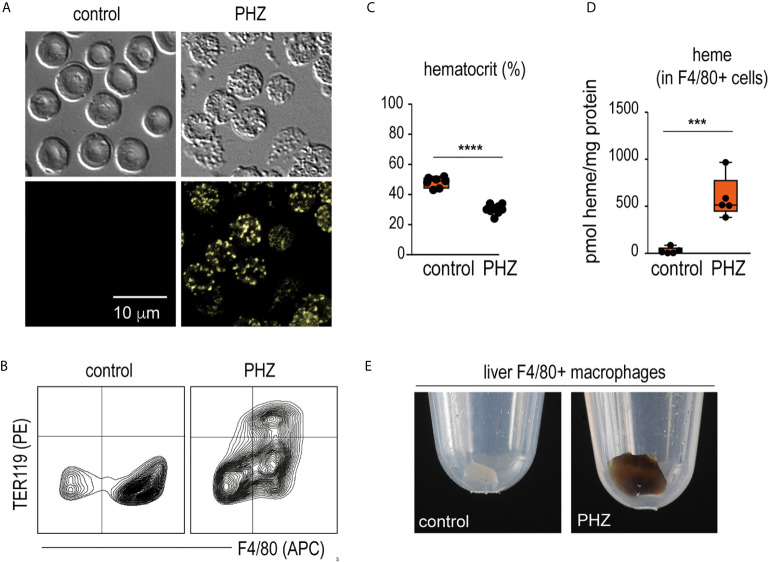
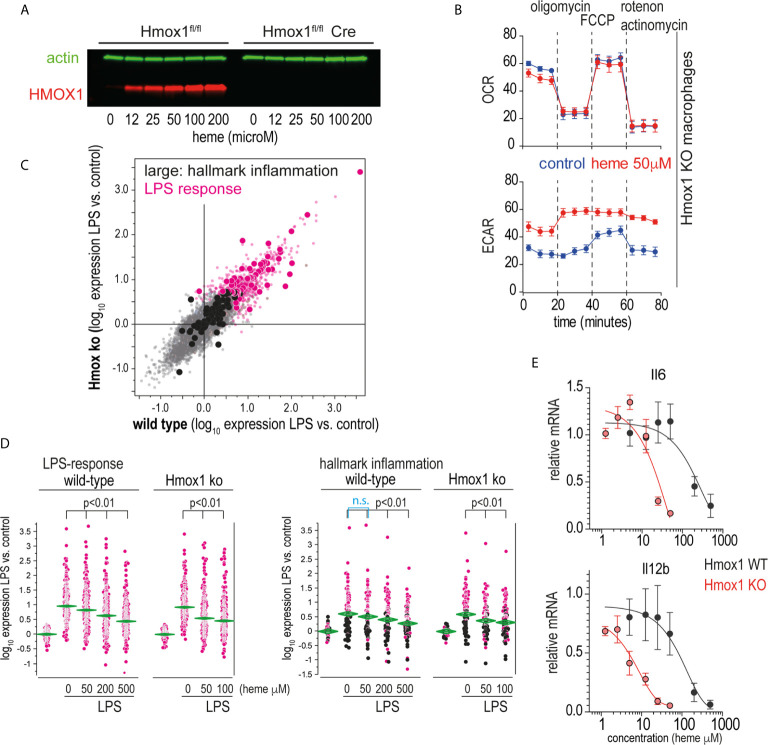
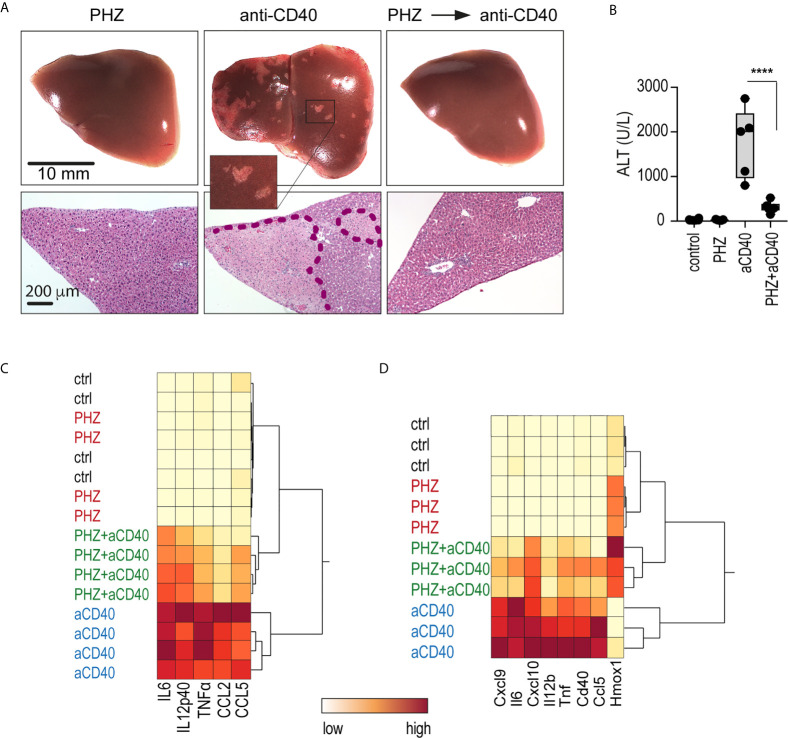
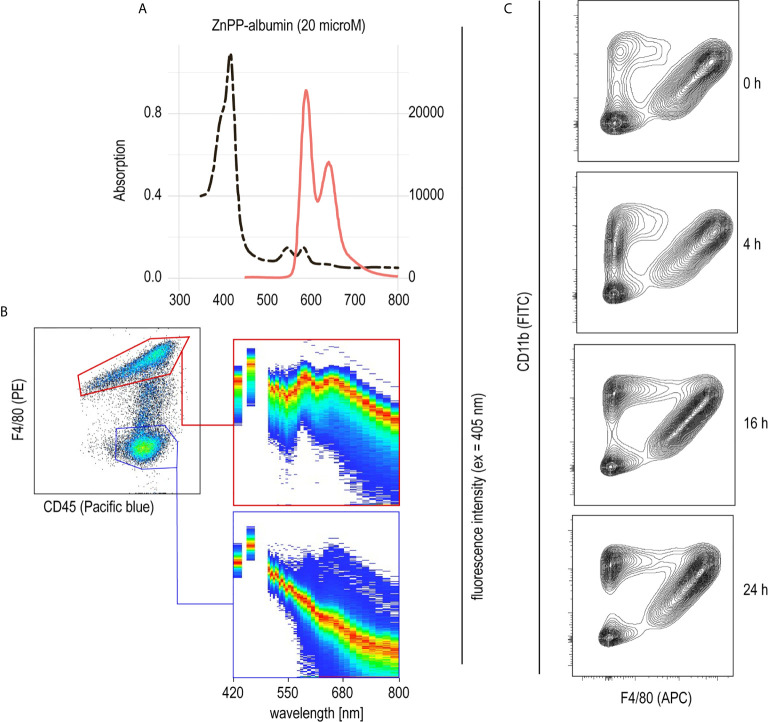
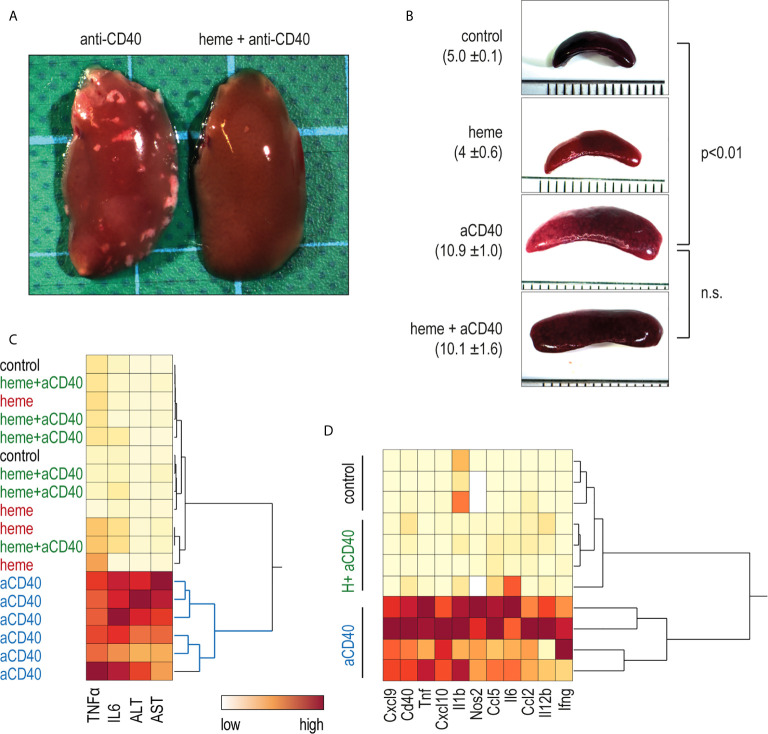
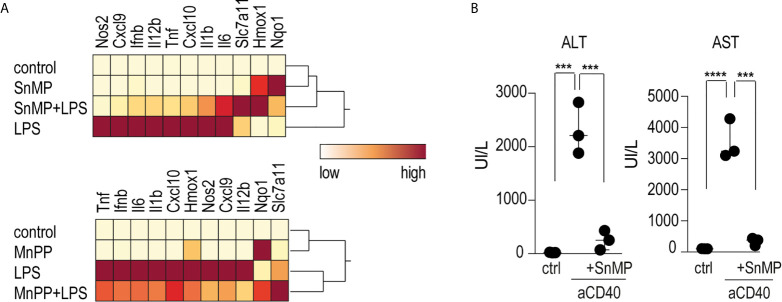
Clearance of red blood cells and hemoproteins is a key metabolic function of macrophages during hemolytic disorders and following tissue injury. Through this archetypical phagocytic function, heme is detoxified and iron is recycled to support erythropoiesis. Reciprocal interaction of heme metabolism and inflammatory macrophage functions may modify disease outcomes in a broad range of clinical conditions. We hypothesized that acute hemolysis and heme induce acute anti-inflammatory signals in liver macrophages. Using a macrophage-driven model of sterile liver inflammation, we showed that phenylhydrazine (PHZ)-mediated acute erythrophagocytosis blocked the anti-CD40 antibody-induced pathway of macrophage activation. This process attenuated the inflammatory cytokine release syndrome and necrotizing hepatitis induced by anti-CD40 antibody treatment of mice. We further established that administration of heme-albumin complexes specifically delivered heme to liver macrophages and replicated the anti-inflammatory effect of hemolysis. The anti-inflammatory heme-signal was induced in macrophages by an increased intracellular concentration of the porphyrin independently of iron. Overall, our work suggests that induction of heme-signaling strongly suppresses inflammatory macrophage function, providing protection against sterile liver inflammation.
红细胞和血红素的清除是巨噬细胞在溶血性疾病和组织损伤后的关键代谢功能。通过这种典型的吞噬功能,血红素被解毒,铁被回收以支持红细胞生成。血红素代谢和炎症性巨噬细胞功能的相互作用可能会在广泛的临床情况下改变疾病的结局。我们假设急性溶血和血红素会在肝巨噬细胞中诱导急性抗炎信号。使用无菌性肝炎症的巨噬细胞驱动模型,我们表明苯肼(PHZ)介导的急性红细胞吞噬作用阻断了抗 CD40 抗体诱导的巨噬细胞活化途径。这一过程减弱了抗 CD40 抗体治疗小鼠引起的炎症细胞因子释放综合征和坏死性肝炎。我们进一步证实,血红素-白蛋白复合物的给药可特异性地将血红素递送至肝巨噬细胞,并复制了溶血的抗炎作用。卟啉的细胞内浓度增加可在巨噬细胞中诱导抗炎血红素信号,而与铁无关。总的来说,我们的工作表明,血红素信号的诱导强烈抑制了炎症性巨噬细胞的功能,为无菌性肝炎症提供了保护。