Yin Fangliu, Zeng Youling, Ji Jieyun, Wang Pengju, Zhang Yufang, Li Wenhui
Xinjiang Key Laboratory of Biological Resources and Genetic Engineering, College of Life Science and Technology, Xinjiang University, Urumqi, China.
Front Plant Sci. 2021 May 13;12:638788. doi: 10.3389/fpls.2021.638788. eCollection 2021.
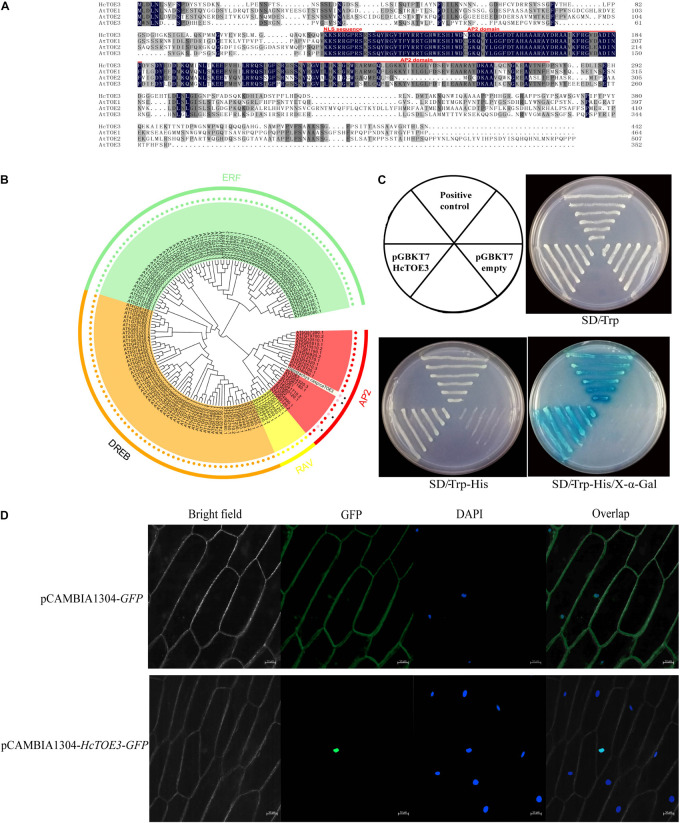
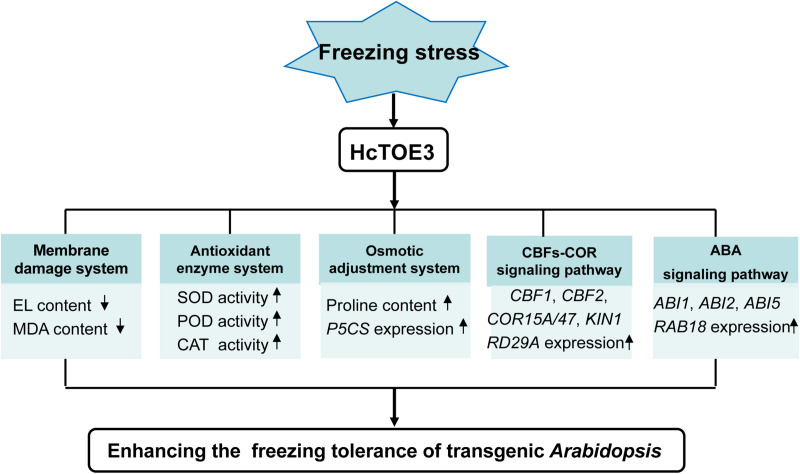
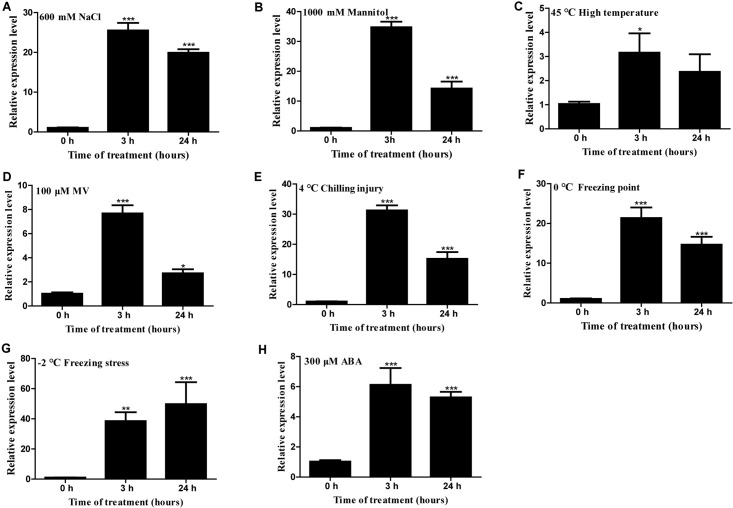
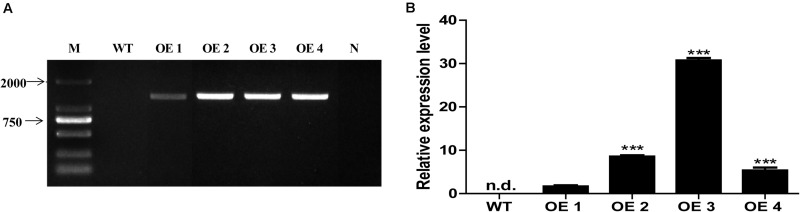
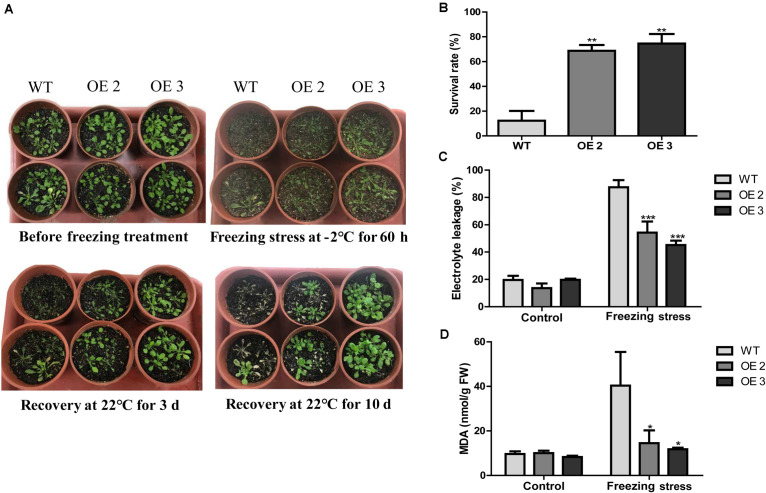
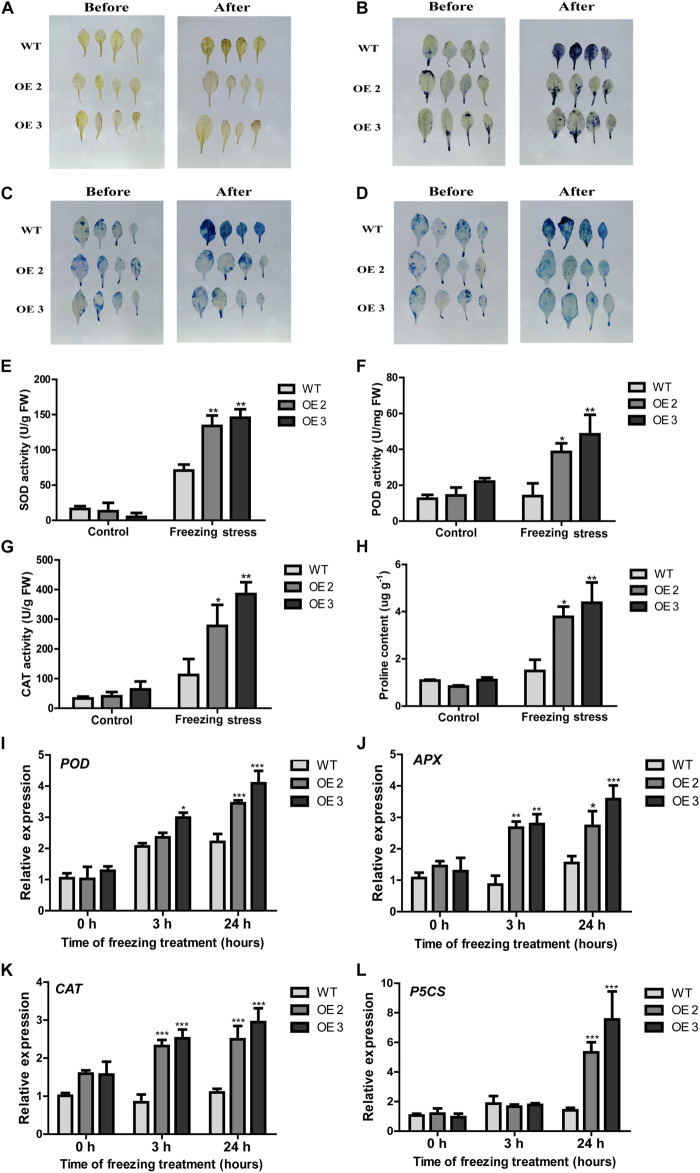
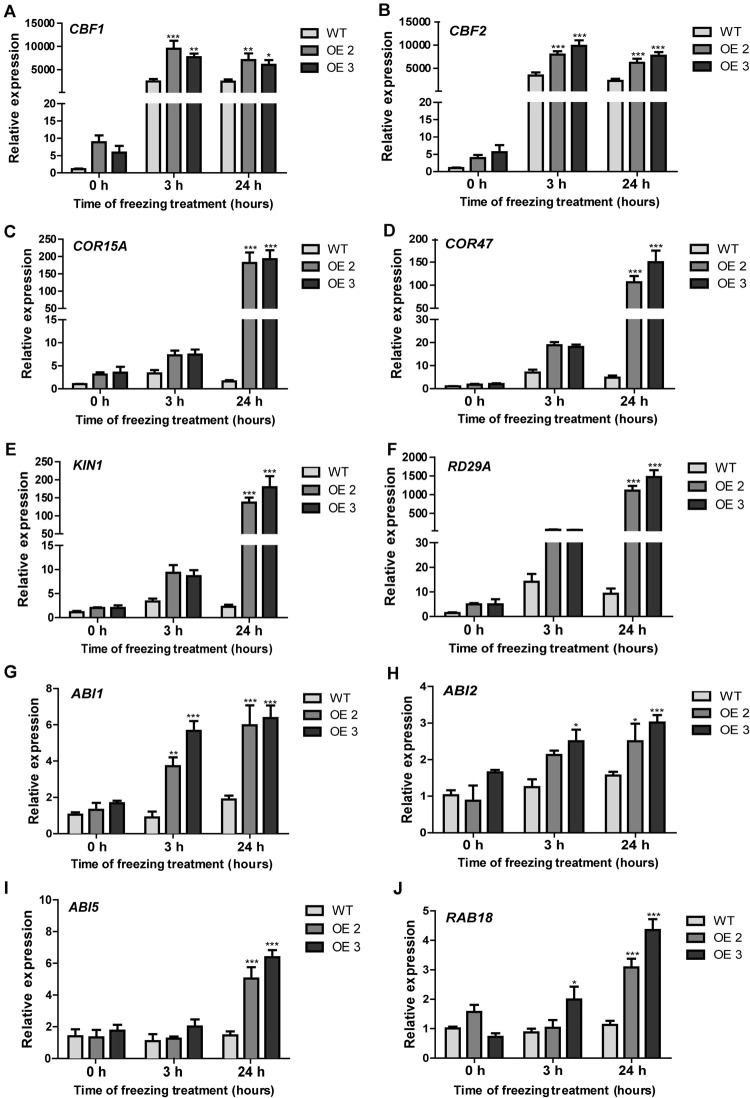
The APETALA2 (AP2) and ethylene-responsive element-binding factor (ERF) gene family is one of the largest plant-specific transcription factor gene families, which plays a critical role in plant development and evolution, as well as response to various stresses. () gene is derived from and belongs to the AP2 subfamily with two AP2 DNA-binding domains. Currently, AP2 family mainly plays crucial roles in plant growth and evolution, yet there are few reports about the role of AP2 in abiotic stress tolerance. Here, we report , a new cold-regulated transcription factor gene, which has an important contribution to freezing tolerance. The main results showed that the expression of in the assimilating branches was strongly induced by different abiotic stresses, including high salinity, drought, and extreme temperature (heat, chilling, and freezing), as well as abscisic acid and methyl viologen treatments. Overexpressing gene (OE) induced transgenic plant tolerance to freezing stress. Under freezing treatment, the OE lines showed lower content of malondialdehyde and electrolyte leakage and less accumulation of reactive oxygen species compared with the wild type. However, the survival rates, antioxidant enzyme activities, and contents of osmotic adjustment substance proline were enhanced in transgenic plants. Additionally, the OE lines increased freezing tolerance by up-regulating the transcription level of cold responsive genes (, , , , , and ) and abscisic acid signal transduction pathway genes (, , , and ). Our results suggested that HcTOE3 positively regulated freezing stress and has a great potential as a candidate gene to improve plant freezing tolerance.
APETALA2(AP2)和乙烯响应元件结合因子(ERF)基因家族是最大的植物特异性转录因子基因家族之一,在植物发育、进化以及对各种胁迫的响应中起着关键作用。()基因源自并属于具有两个AP2 DNA结合结构域的AP2亚家族。目前,AP2家族主要在植物生长和进化中发挥关键作用,然而关于AP2在非生物胁迫耐受性方面的作用报道较少。在此,我们报道了一个新的冷调节转录因子基因,其对冻害耐受性有重要贡献。主要结果表明,在同化枝中的表达受到不同非生物胁迫的强烈诱导,包括高盐、干旱和极端温度(热、冷和冻),以及脱落酸和甲基紫精处理。过表达基因(OE)诱导转基因植物对冻害胁迫具有耐受性。在冻害处理下,与野生型相比,OE株系的丙二醛含量和电解质渗漏较低,活性氧积累较少。然而,转基因植物的存活率、抗氧化酶活性和渗透调节物质脯氨酸含量有所提高。此外,OE株系通过上调冷响应基因(、、、、和)和脱落酸信号转导途径基因(、、、和)的转录水平来提高冻害耐受性。我们的结果表明,HcTOE3正向调节冻害胁迫,作为提高植物冻害耐受性的候选基因具有很大潜力。