Matsumoto Makiya, Yoshida Masahide, Jayathilake Buddhini Wimarsha, Inutsuka Ayumu, Nishimori Katsuhiko, Takayanagi Yuki, Onaka Tatsushi
Division of Brain and Neurophysiology, Department of Physiology, Jichi Medical University, Shimotsuke-shi, Tochigi-ken, Japan.
Department of Obesity and Inflammation Research, Fukushima Medical University, Fukushima-shi, Fukushima-ken, Japan.
J Neuroendocrinol. 2021 May 14;33(6):e12980. doi: 10.1111/jne.12980.
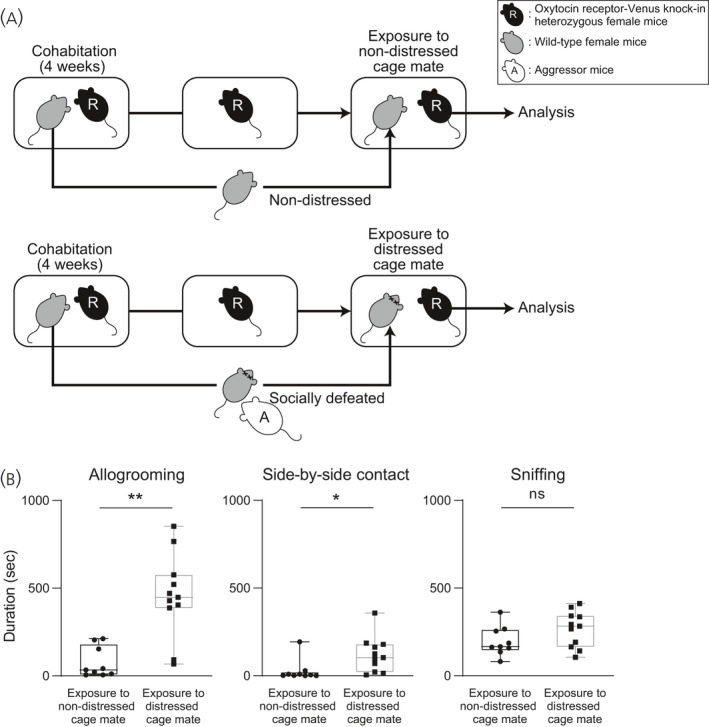
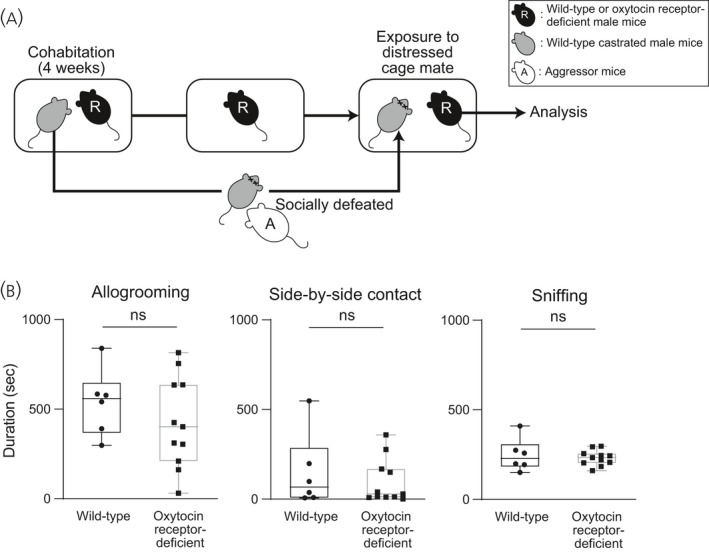
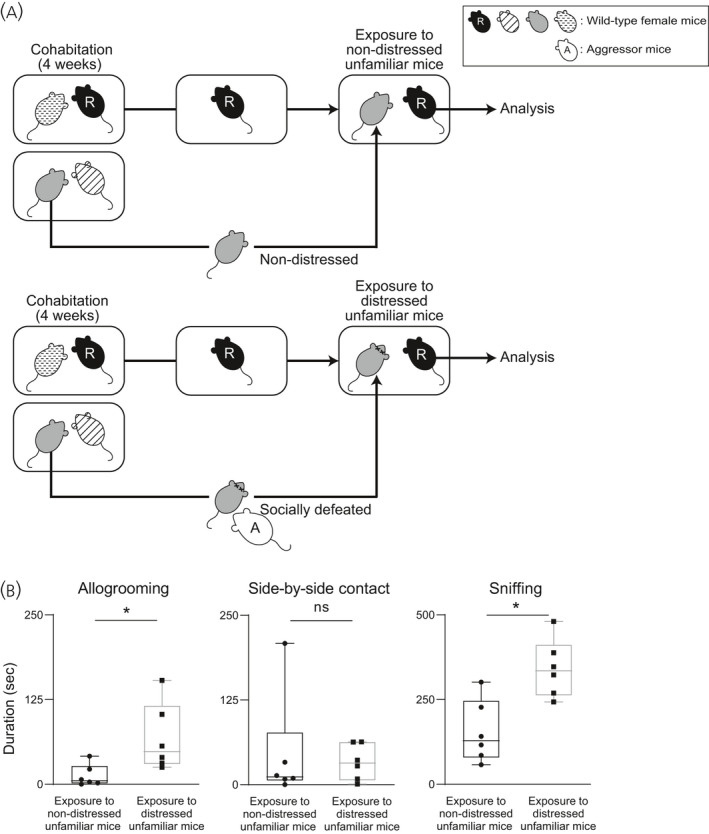
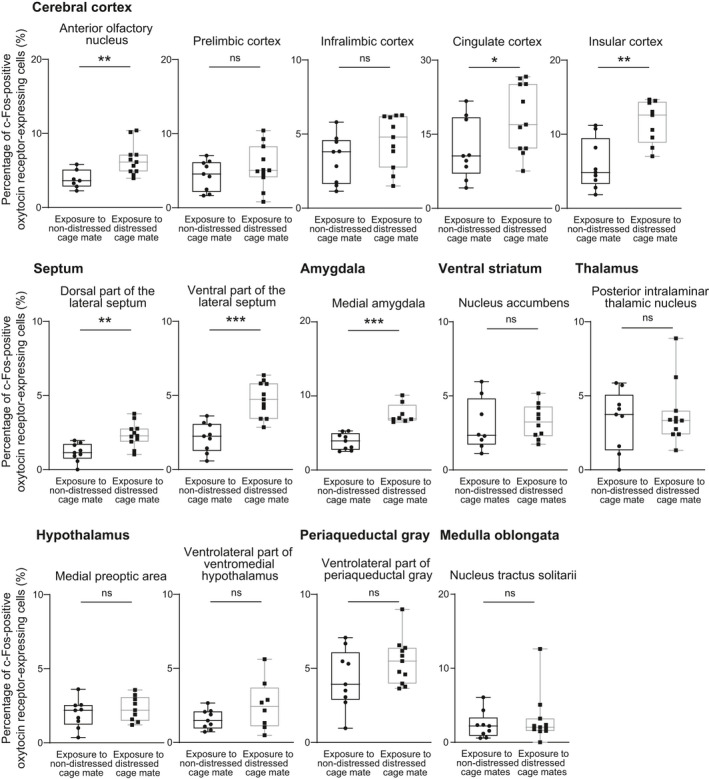
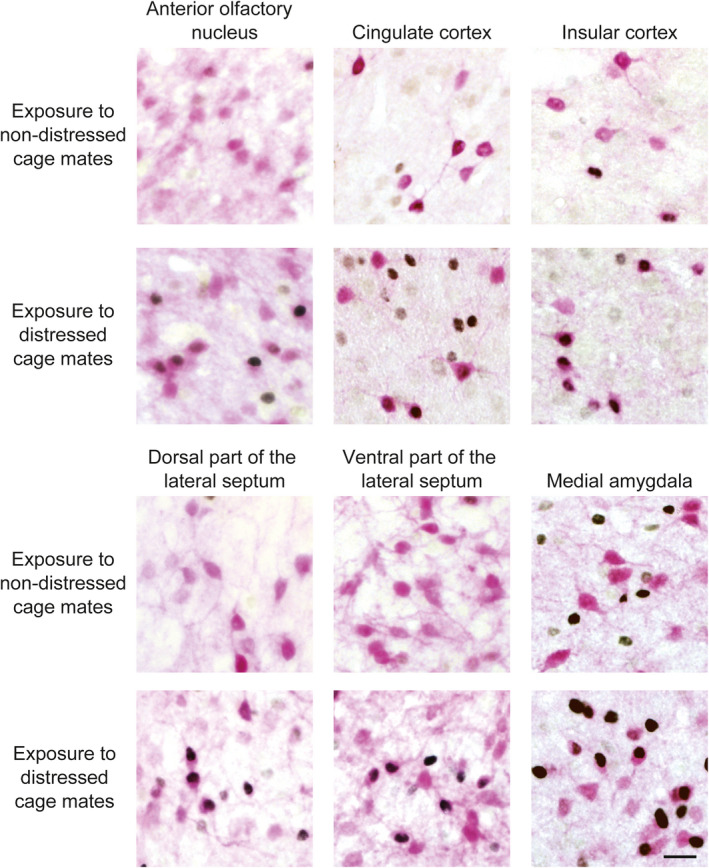
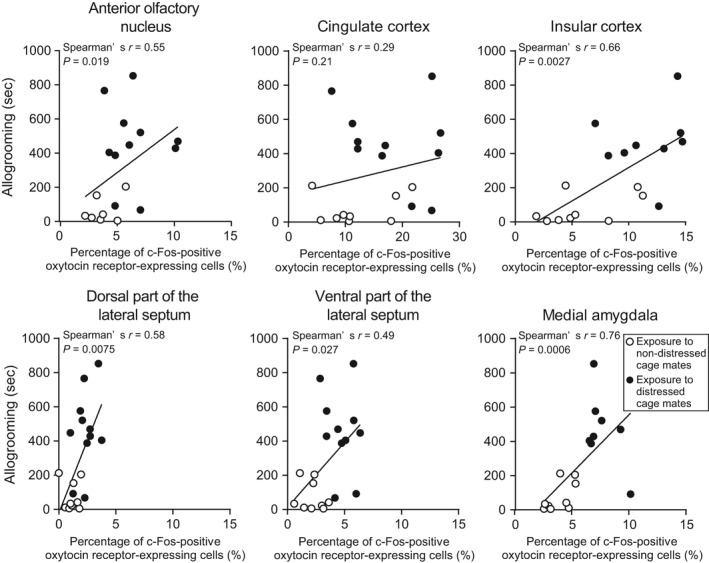
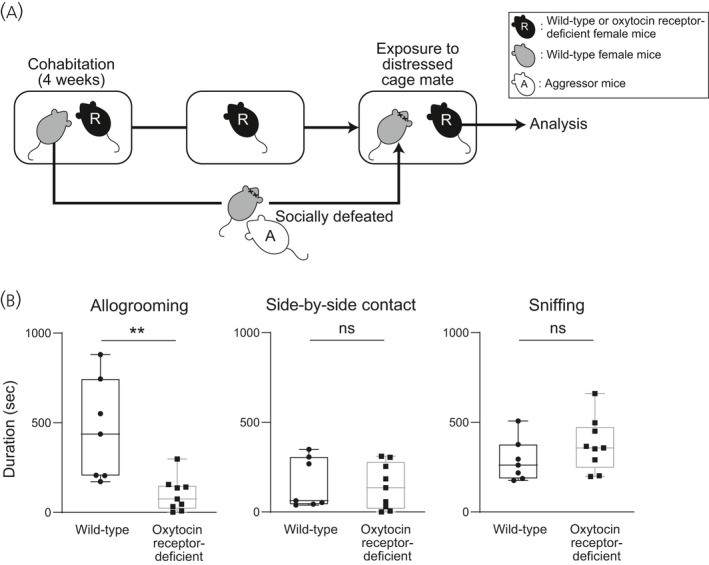
Social contact reduces stress responses in social animals. Mice have been shown to show allogrooming behaviour toward distressed conspecifics. However, the precise neuronal mechanisms underlying allogrooming behaviour remain unclear. In the present study, we examined whether mice show allogrooming behaviour towards distressed conspecifics in a social defeat model and we also determined whether oxytocin receptor-expressing neurons were activated during allogrooming by examining the expression of c-Fos protein, a marker of neurone activation. Mice showed allogrooming behaviour toward socially defeated conspecifics. After allogrooming behaviour, the percentages of oxytocin receptor-expressing neurones expressing c-Fos protein were significantly increased in the anterior olfactory nucleus, cingulate cortex, insular cortex, lateral septum and medial amygdala of female mice, suggesting that oxytocin receptor-expressing neurones in these areas were activated during allogrooming behaviour toward distressed conspecifics. The duration of allogrooming was correlated with the percentages of oxytocin receptor-expressing neurones expressing c-Fos protein in the anterior olfactory nucleus, insular cortex, lateral septum and medial amygdala. In oxytocin receptor-deficient mice, allogrooming behaviour toward socially defeated cage mates was markedly reduced in female mice but not in male mice, indicating the importance of the oxytocin receptor for allogrooming behaviour in female mice toward distressed conspecifics. The results suggest that the oxytocin receptor, possibly in the anterior olfactory nucleus, insular cortex, lateral septum and/or medial amygdala, facilitates allogrooming behaviour toward socially distressed familiar conspecifics in female mice.
社交接触可降低群居动物的应激反应。已有研究表明,小鼠会对处于困境的同种个体表现出相互梳理毛发的行为。然而,相互梳理毛发行为背后的确切神经机制仍不清楚。在本研究中,我们检测了在社会挫败模型中小鼠是否会对处于困境的同种个体表现出相互梳理毛发的行为,并且我们还通过检测神经元激活标记物c-Fos蛋白的表达,来确定在相互梳理毛发过程中催产素受体表达神经元是否被激活。小鼠对遭受社会挫败的同种个体表现出相互梳理毛发的行为。在相互梳理毛发行为之后,雌性小鼠的前嗅核、扣带回皮质、岛叶皮质、外侧隔区和内侧杏仁核中表达c-Fos蛋白的催产素受体表达神经元的百分比显著增加,这表明在对处于困境的同种个体进行相互梳理毛发行为期间,这些区域中表达催产素受体的神经元被激活。相互梳理毛发的持续时间与前嗅核、岛叶皮质、外侧隔区和内侧杏仁核中表达c-Fos蛋白的催产素受体表达神经元的百分比相关。在催产素受体缺陷型小鼠中,雌性小鼠对遭受社会挫败的笼内同伴的相互梳理毛发行为明显减少,而雄性小鼠则没有,这表明催产素受体对雌性小鼠针对处于困境的同种个体的相互梳理毛发行为很重要。结果表明,可能在前嗅核、岛叶皮质、外侧隔区和/或内侧杏仁核中的催产素受体,促进了雌性小鼠对遭受社会困境的熟悉同种个体的相互梳理毛发行为。