Wang Shuxia, Xu Shuhang, Zhou Jing, Zhang Li, Mao Xiaodong, Yao Xiaoming, Liu Chao
Clinical Laboratory, Affiliated Hospital of Integrated Traditional Chinese and Western Medicine, Nanjing University of Chinese Medicine, No. 100 Hongshan Road, Nanjing, 210028, China.
Jiangsu Province Academy of Traditional Chinese Medicine, Nanjing, 210028, Jiangsu, China.
J Inflamm (Lond). 2021 May 31;18(1):21. doi: 10.1186/s12950-021-00285-5.
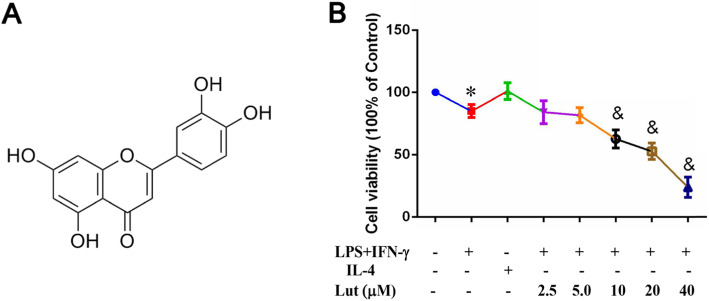
Macrophages are indispensable regulators of inflammatory responses. Macrophage polarisation and their secreted inflammatory factors have an association with the outcome of inflammation. Luteolin, a flavonoid abundant in plants, has anti-inflammatory activity, but whether luteolin can manipulate M1/M2 polarisation of bone marrow-derived macrophages (BMDMs) to suppress inflammation is still unclear. This study aimed to observe the effects of luteolin on the polarity of BMDMs derived from C57BL/6 mice and the expression of inflammatory factors, to explore the mechanism by which luteolin regulates the BMDM polarity.
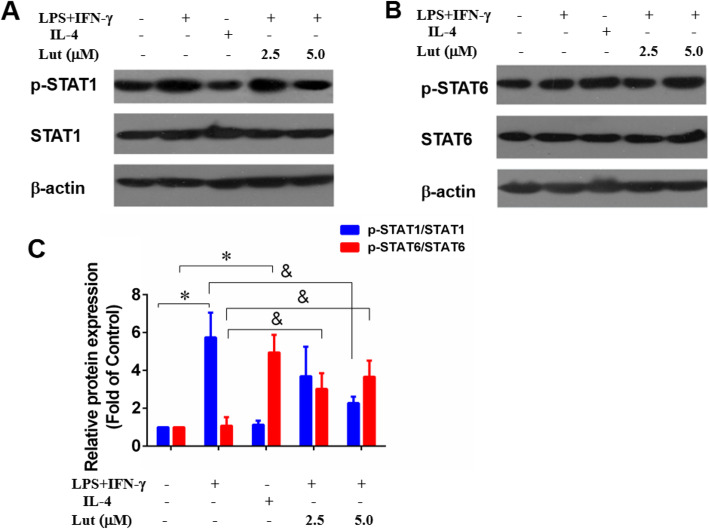
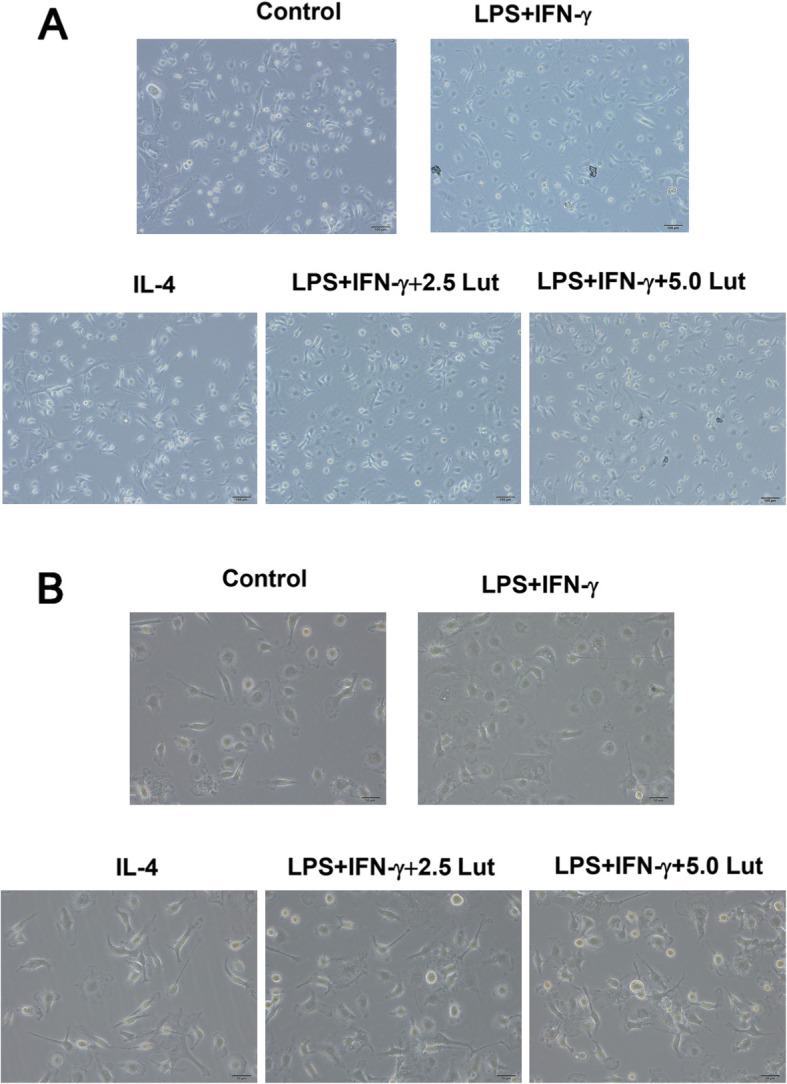
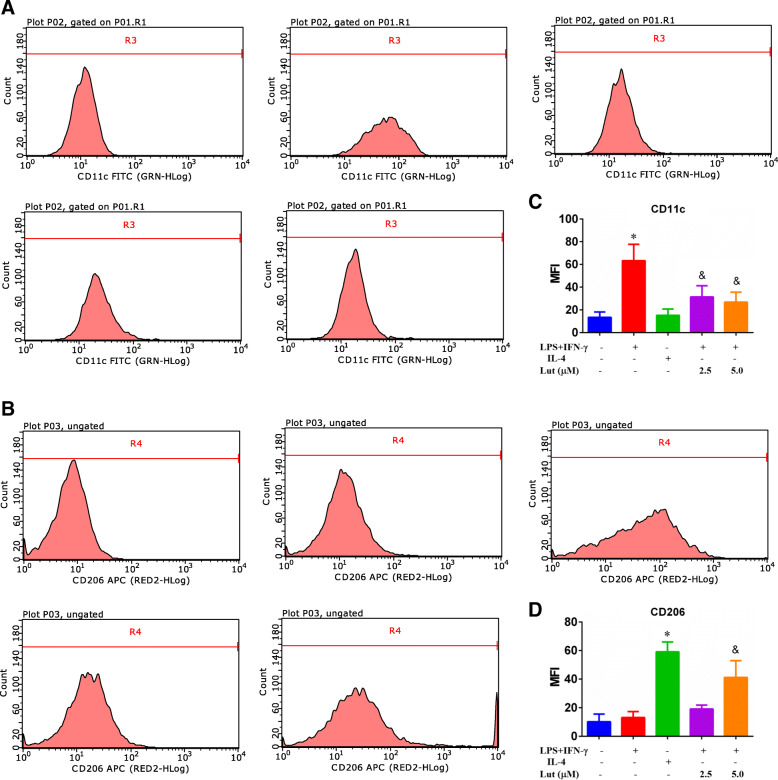
M1-polarised BMDMs were induced by lipopolysaccharide (LPS) + interferon (IFN)-γ and M2-polarisation were stimulated with interleukin (IL)-4. BMDM morphology and phagocytosis were observed by laser confocal microscopy; levels of BMDM differentiation and cluster of differentiation (CD)11c or CD206 on the membrane surface were assessed by flow cytometry (FCM); mRNA and protein levels of M1/M2-type inflammatory factors were performed by qPCR and ELISA, respectively; and the expression of p-STAT1 and p-STAT6 protein pathways was detected by Western-blotting.
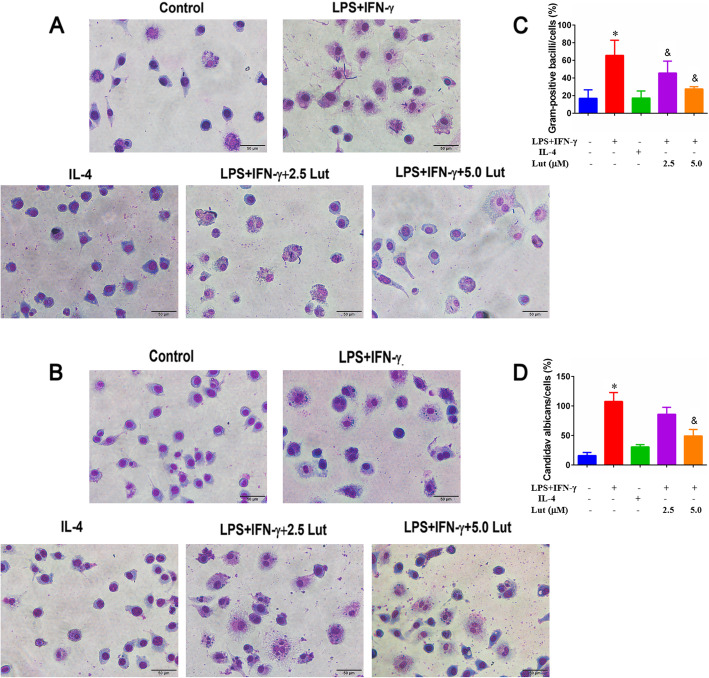
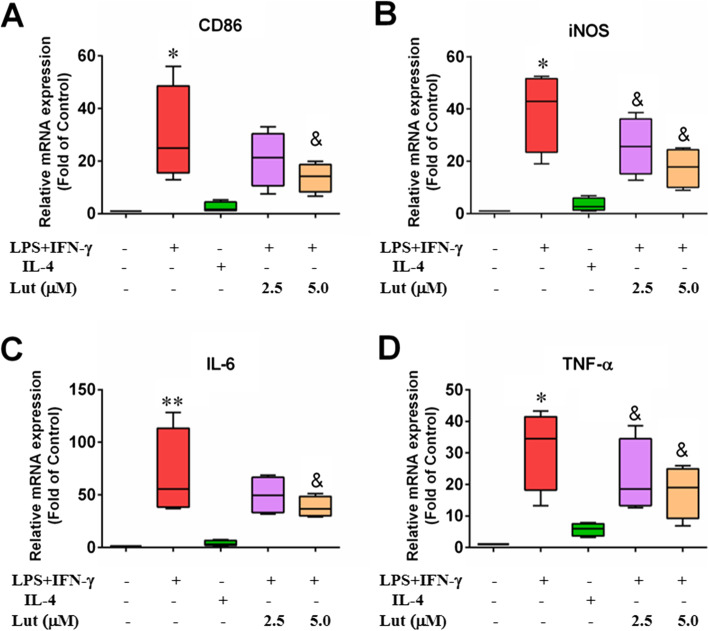
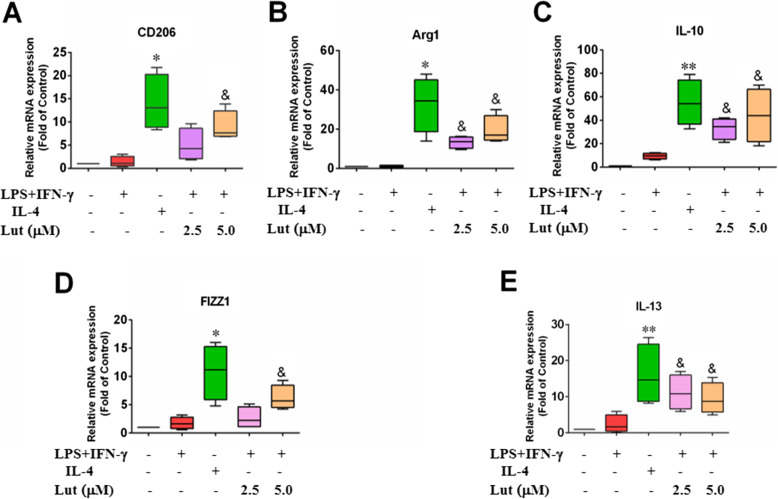
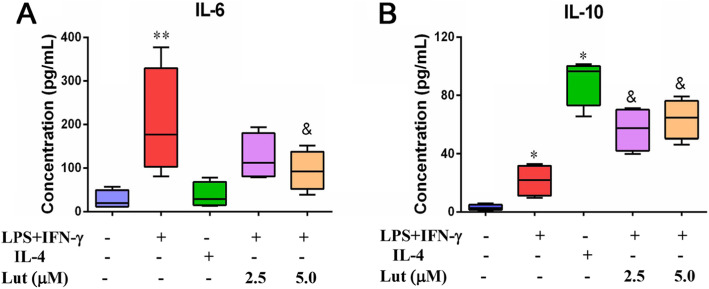
The isolated mouse bone marrow cells were successfully differentiated into BMDMs, LPS + IFN-γ induced BMDM M1-phenotype polarisation, and IL-4 induced M2-phenotype polarisation. After M1-polarised BMDMs were treated with luteolin, the phagocytosis of M1-polarized BMDMs was reduced, and the M1-type pro-inflammatory factors including IL-6, tumour necrosis factor (TNF)-α, inducible nitric oxide synthase (iNOS), and CD86 were downregulated while the M2-type anti-inflammatory factors including IL-10, IL-13, found in inflammatory zone (FIZZ)1, Arginase (Arg)1 and CD206 were upregulated. Additionally, the expression of M1-type surface marker CD11c decreased. Nevertheless, the M2-type marker CD206 increased; and the levels of inflammatory signalling proteins phosphorylated signal transducer and activator of transcription (p-STAT)1 and p-STAT6 were attenuated and enhanced, respectively.
Our study suggests that luteolin may transform BMDM polarity through p-STAT1/6 to regulate the expression of inflammatory mediators, thereby inhibiting inflammation. Naturally occurring luteolin holds promise as an anti-inflammatory and immunomodulatory agent.
巨噬细胞是炎症反应中不可或缺的调节因子。巨噬细胞极化及其分泌的炎症因子与炎症结局相关。木犀草素是一种在植物中含量丰富的黄酮类化合物,具有抗炎活性,但木犀草素是否能调控骨髓来源巨噬细胞(BMDMs)的M1/M2极化以抑制炎症仍不清楚。本研究旨在观察木犀草素对C57BL/6小鼠来源的BMDMs极性及炎症因子表达的影响,探讨木犀草素调节BMDM极性的机制。
用脂多糖(LPS)+干扰素(IFN)-γ诱导M1极化的BMDMs,用白细胞介素(IL)-4刺激M2极化。通过激光共聚焦显微镜观察BMDM形态和吞噬作用;采用流式细胞术(FCM)评估BMDM分化水平及膜表面分化抗原(CD)11c或CD206;分别用qPCR和ELISA检测M1/M2型炎症因子的mRNA和蛋白水平;通过蛋白质印迹法检测p-STAT1和p-STAT6蛋白通路的表达。
分离的小鼠骨髓细胞成功分化为BMDMs,LPS+IFN-γ诱导BMDM向M1表型极化,IL-4诱导M2表型极化。木犀草素处理M1极化的BMDMs后,M1极化的BMDMs吞噬作用降低,包括IL-6、肿瘤坏死因子(TNF)-α、诱导型一氧化氮合酶(iNOS)和CD86在内的M1型促炎因子下调,而包括IL-10、IL-13、炎症区域发现的蛋白(FIZZ)1、精氨酸酶(Arg)1和CD206在内的M2型抗炎因子上调。此外,M1型表面标志物CD11c表达降低,而M2型标志物CD206增加;炎症信号蛋白磷酸化信号转导子和转录激活子(p-STAT)1和p-STAT6的水平分别减弱和增强。
我们的研究表明,木犀草素可能通过p-STAT1/6改变BMDM极性,调节炎症介质的表达,从而抑制炎症。天然存在的木犀草素有望成为一种抗炎和免疫调节药物。