Department of Molecular and Clinical Medicine, Institute of Medicine, Gothenburg, Västra Götaland, Sweden.
Region Västra Götaland, Sahlgrenska University Hospital, Goteborg, Sweden.
BMJ Open Diabetes Res Care. 2021 May;9(1). doi: 10.1136/bmjdrc-2021-002187.
In type 1 diabetes, potential loss of life-years is greatest in those who are youngest at the time of onset. Using data from a nationwide cohort of patients with type 1 diabetes, we aimed to study risk factor trajectories by age at diagnosis.
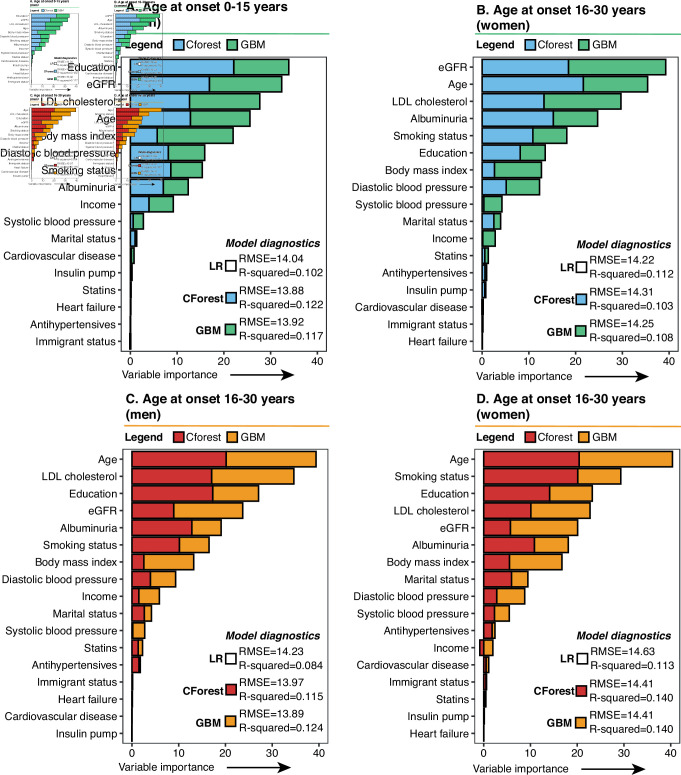
We stratified 30 005 patients with type 1 diabetes aged 18-75 years into categories based on age at onset: 0-10, 11-15, 16-20, 21-25, and 26-30 years. HbA1c, albuminuria, estimated glomerular filtration rate (eGFR), body mass index (BMI), low-denisty lipoprotein (LDL)-cholesterol, systolic blood pressure (SBP), and diastolic blood pressure trends were analyzed using mixed models. Variable importance for baseline HbA1c was analyzed using conditional random forest and gradient boosting machine approaches.
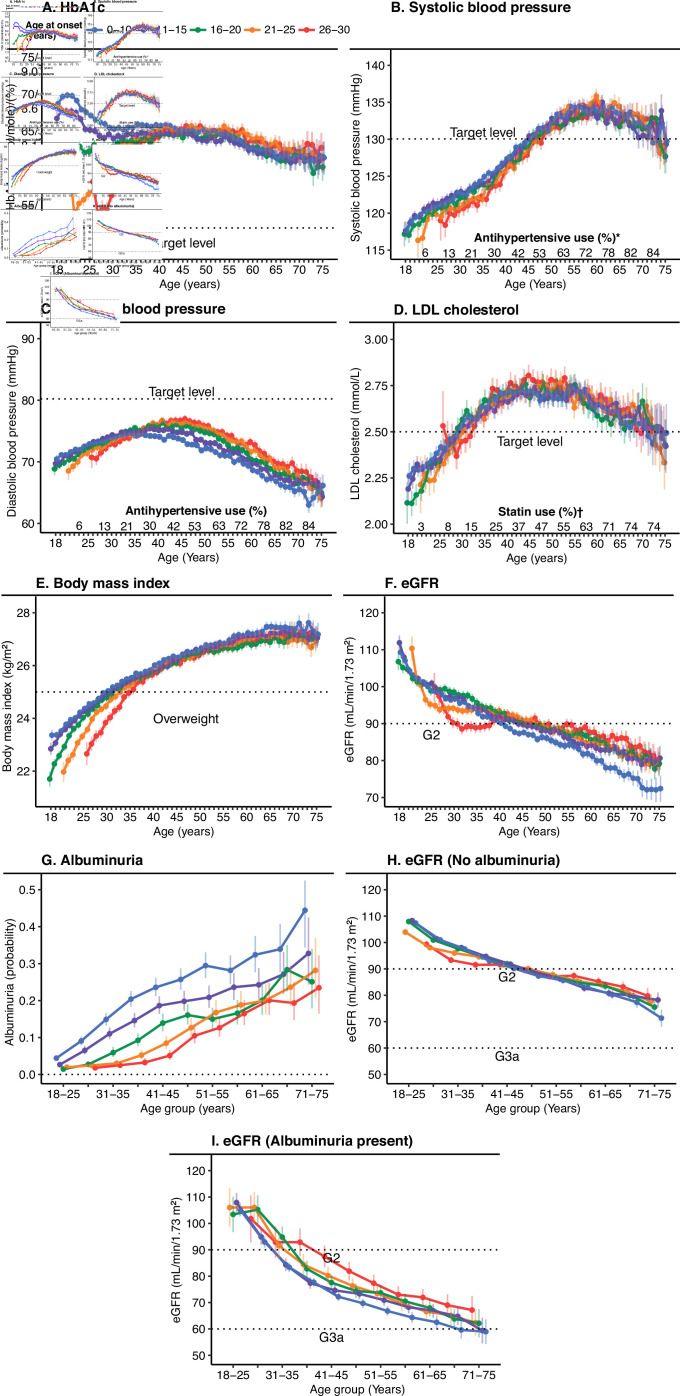
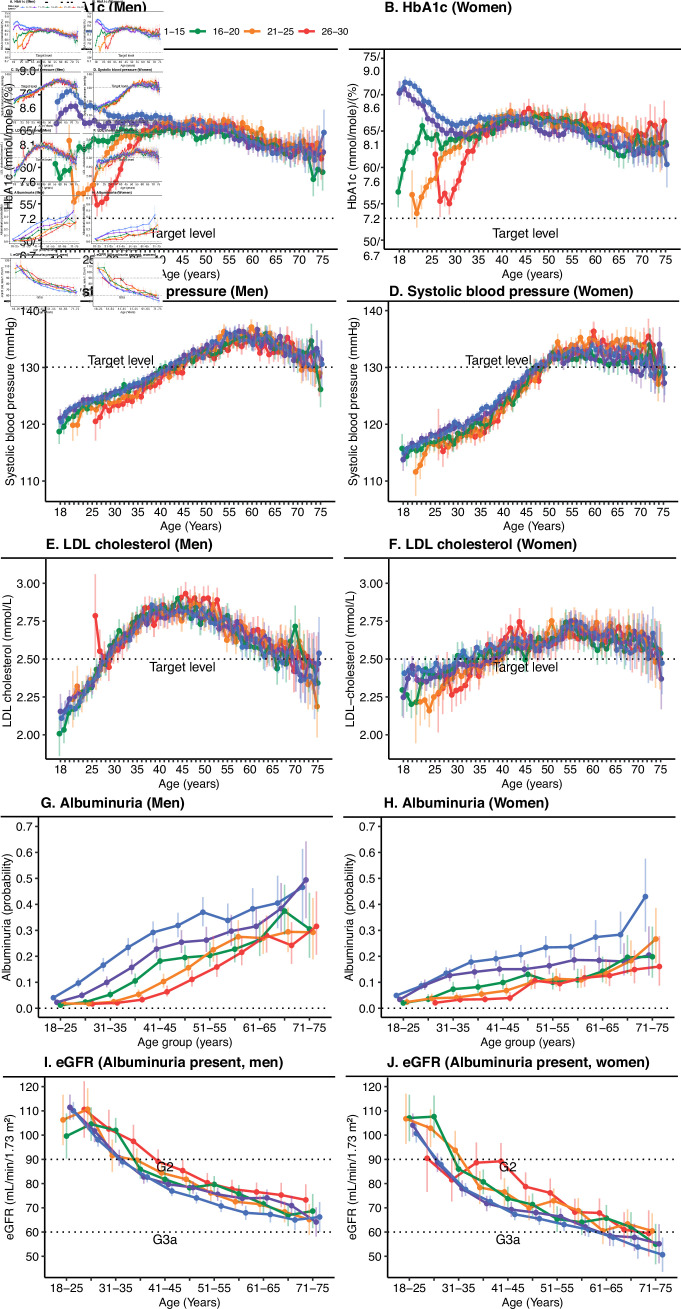
Individuals aged ≥16 years at onset displayed a relatively low mean HbA1c level (~55-57 mmol/mol) that gradually increased. In contrast, individuals diagnosed at ≤15 years old entered adulthood with a mean HbA1c of approximately 70 mmol/mol. For all groups, HbA1c levels stabilized at a mean of approximately 65 mmol/mol by about 40 years old. In patients who were young at the time of onset, albuminuria appeared at an earlier age, suggesting a more rapid decrease in eGFR, while there were no distinct differences in BMI, SBP, and LDL-cholesterol trajectories between groups. Low education, higher age, and poor risk factor control were associated with higher HbA1c levels.
Young age at the diabetes onset plays a substantial role in subsequent glycemic control and the presence of albuminuria, where patients with early onset may accrue a substantial glycemic load during this period.
在 1 型糖尿病中,发病时年龄最小的患者潜在寿命损失最大。本研究使用来自全国 1 型糖尿病患者队列的数据,旨在研究不同发病年龄的患者的危险因素轨迹。
我们将 30005 例年龄在 18-75 岁的 1 型糖尿病患者按发病年龄分为以下几类:0-10 岁、11-15 岁、16-20 岁、21-25 岁和 26-30 岁。使用混合模型分析 HbA1c、蛋白尿、估算肾小球滤过率(eGFR)、体重指数(BMI)、低密度脂蛋白胆固醇(LDL-C)、收缩压(SBP)和舒张压趋势。使用条件随机森林和梯度提升机方法分析基线 HbA1c 的变量重要性。
≥16 岁发病的患者显示出相对较低的平均 HbA1c 水平(~55-57mmol/mol),且逐渐升高。相比之下,≤15 岁发病的患者成年后平均 HbA1c 约为 70mmol/mol。所有组的 HbA1c 水平在大约 40 岁时稳定在约 65mmol/mol。在发病时年龄较小的患者中,蛋白尿更早出现,提示 eGFR 下降更快,而 BMI、SBP 和 LDL-C 轨迹在各组之间没有明显差异。低教育程度、更高的年龄和较差的危险因素控制与较高的 HbA1c 水平相关。
发病时的年龄对后续的血糖控制和蛋白尿的出现有很大影响,早期发病的患者在此期间可能会积累大量的血糖负荷。