Department of Oral and Molecular Microbiology, Osaka University Graduate School of Dentistry, Osaka, Japan.
Department of Oral Microbiology, Kagoshima University Graduate School of Medical and Dental Sciences, Kagoshima, Japan.
mBio. 2021 Jun 29;12(3):e0326920. doi: 10.1128/mBio.03269-20. Epub 2021 Jun 1.
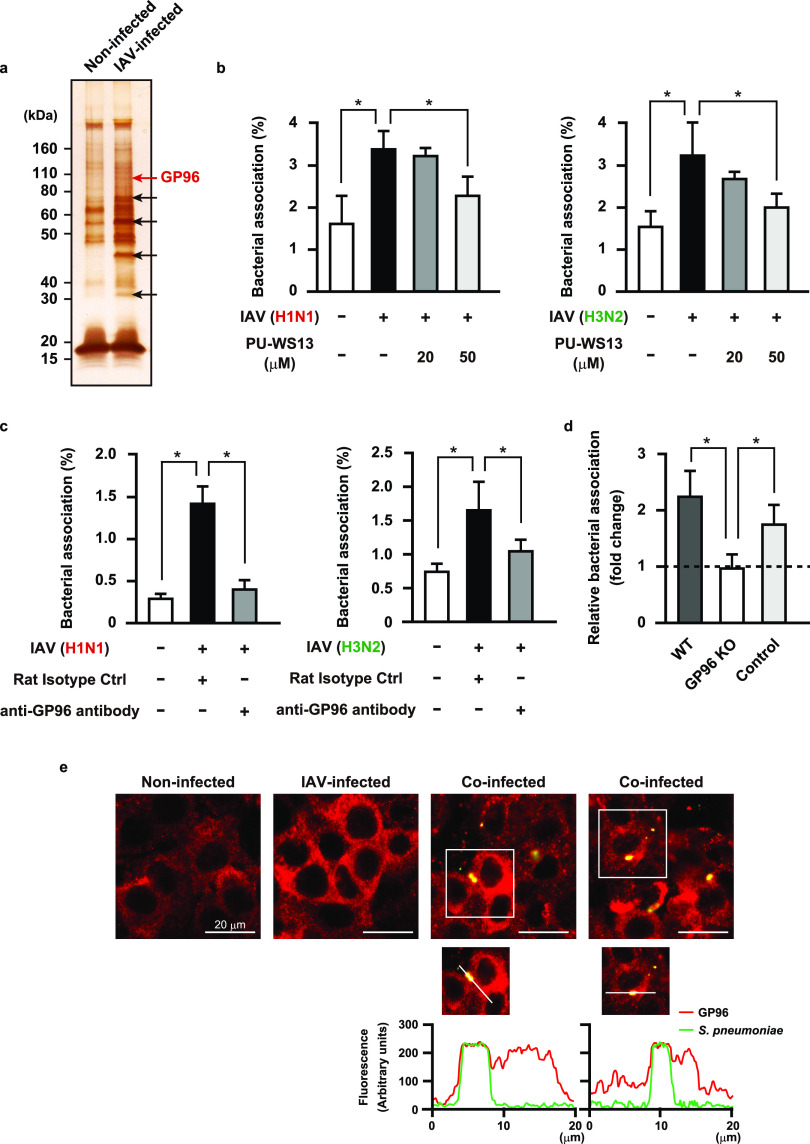
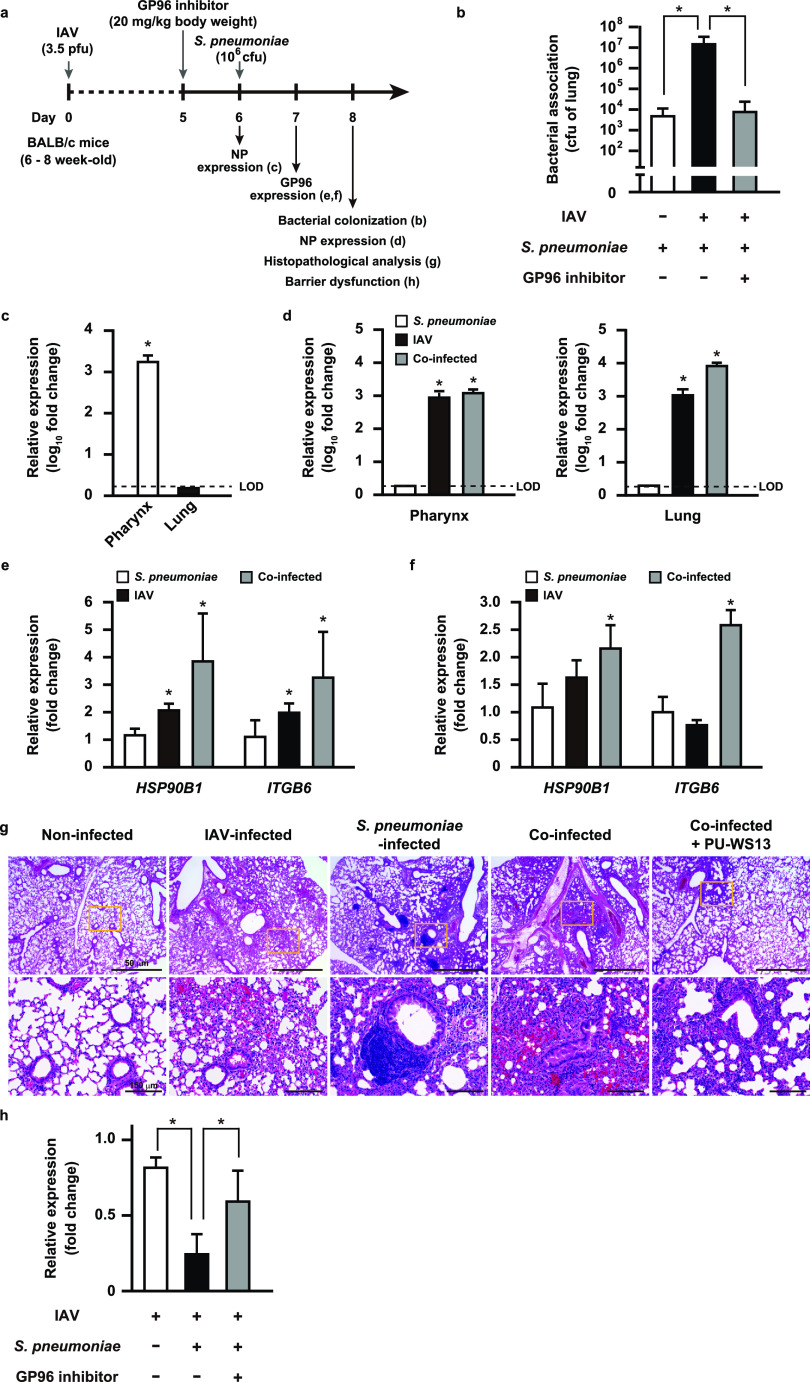
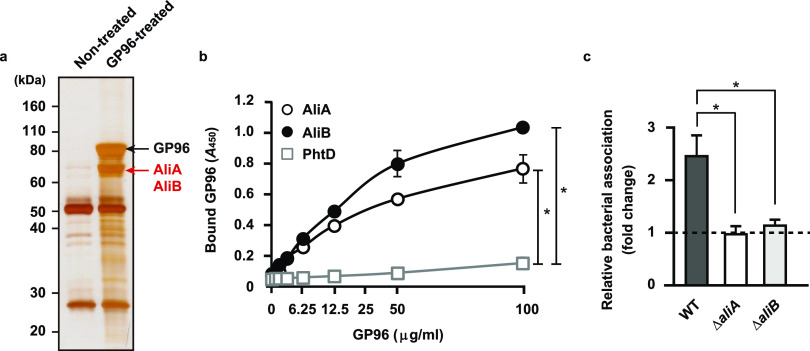
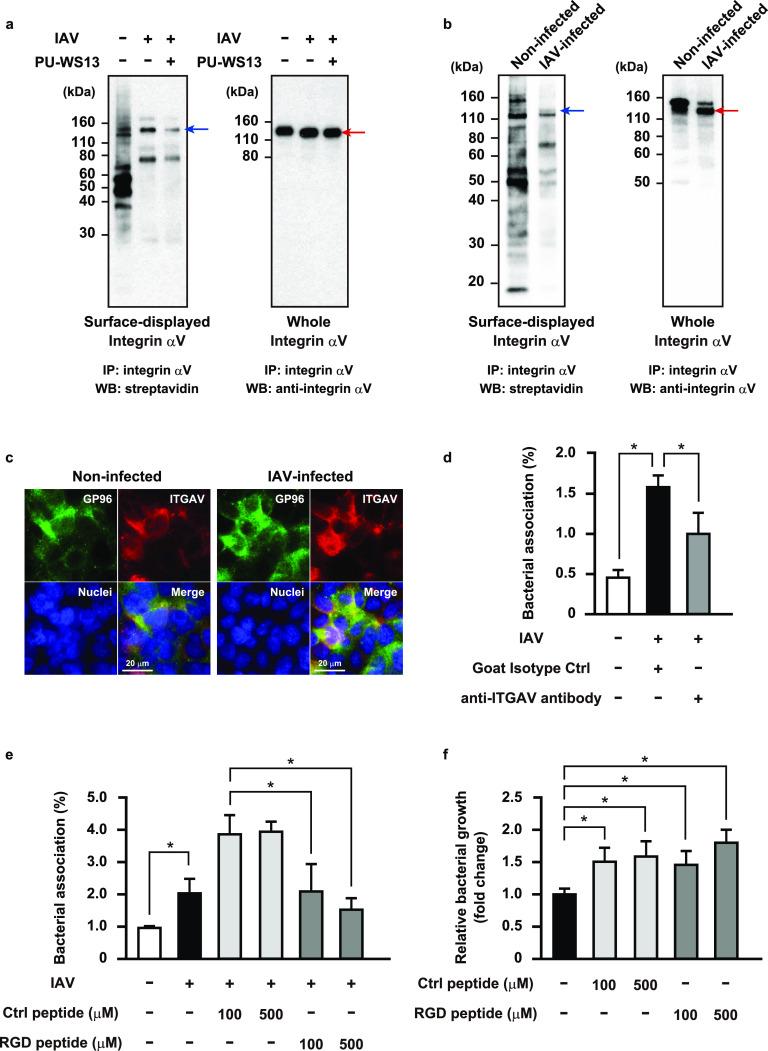
Influenza A virus (IAV) infection predisposes the host to secondary bacterial pneumonia, known as a major cause of morbidity and mortality during influenza virus epidemics. Analysis of interactions between IAV-infected human epithelial cells and Streptococcus pneumoniae revealed that infected cells ectopically exhibited the endoplasmic reticulum chaperone glycoprotein 96 (GP96) on the surface. Importantly, efficient pneumococcal adherence to epithelial cells was imparted by interactions with extracellular GP96 and integrin α, with the surface expression mediated by GP96 chaperone activity. Furthermore, abrogation of adherence was gained by chemical inhibition or genetic knockout of GP96 as well as addition of RGD peptide, an inhibitor of integrin-ligand interactions. Direct binding of extracellular GP96 and pneumococci was shown to be mediated by pneumococcal oligopeptide permease components. Additionally, IAV infection induced activation of calpains and Snail1, which are responsible for degradation and transcriptional repression of junctional proteins in the host, respectively, indicating increased bacterial translocation across the epithelial barrier. Notably, treatment of IAV-infected mice with the GP96 inhibitor enhanced pneumococcal clearance from lung tissues and ameliorated lung pathology. Taken together, the present findings indicate a viral-bacterial synergy in relation to disease progression and suggest a paradigm for developing novel therapeutic strategies tailored to inhibit pneumococcal colonization in an IAV-infected respiratory tract. Secondary bacterial pneumonia following an influenza A virus (IAV) infection is a major cause of morbidity and mortality. Although it is generally accepted that preceding IAV infection leads to increased susceptibility to secondary bacterial infection, details regarding the pathogenic mechanism during the early stage of superinfection remain elusive. Here, we focused on the interaction of IAV-infected cells and Streptococcus pneumoniae, which revealed that human epithelial cells infected with IAV exhibit a cell surface display of GP96, an endoplasmic reticulum chaperon. Notably, extracellular GP96 was shown to impart efficient adherence for secondary infection by S. pneumoniae, and GP96 inhibition ameliorated lung pathology of superinfected mice, indicating it to be a useful target for development of therapeutic strategies for patients with superinfection.
甲型流感病毒 (IAV) 感染使宿主易患继发性细菌性肺炎,这是流感病毒流行期间发病率和死亡率高的主要原因。对 IAV 感染的人上皮细胞与肺炎链球菌之间相互作用的分析表明,感染细胞在细胞表面异位表达内质网伴侣糖蛋白 96 (GP96)。重要的是,细胞外 GP96 与整合素 α 的相互作用赋予肺炎链球菌对上皮细胞的有效黏附作用,表面表达由 GP96 伴侣活性介导。此外,通过化学抑制或 GP96 的基因敲除以及添加 RGD 肽(整合素配体相互作用的抑制剂)来阻断黏附。已经表明,细胞外 GP96 和肺炎球菌之间的直接结合由肺炎球菌寡肽渗透酶成分介导。此外,IAV 感染诱导钙蛋白酶和 Snail1 的激活,钙蛋白酶和 Snail1 分别负责降解和转录抑制宿主中的连接蛋白,表明细菌穿过上皮屏障的易位增加。值得注意的是,用 GP96 抑制剂治疗 IAV 感染的小鼠增强了肺部组织中肺炎球菌的清除并改善了肺部病理学。总之,这些发现表明病毒-细菌协同作用与疾病进展有关,并为开发针对 IAV 感染呼吸道中肺炎球菌定植的新型治疗策略提供了范例。
甲型流感病毒 (IAV) 感染后发生的继发性细菌性肺炎是发病率和死亡率高的主要原因。尽管普遍认为先前的 IAV 感染会导致对继发性细菌感染的易感性增加,但关于超级感染早期阶段的致病机制的详细信息仍不清楚。在这里,我们专注于 IAV 感染的细胞与肺炎链球菌之间的相互作用,这表明 IAV 感染的人上皮细胞表现出内质网伴侣糖蛋白 96 (GP96) 的细胞表面展示。值得注意的是,细胞外 GP96 被证明赋予了肺炎链球菌继发性感染的有效黏附作用,并且 GP96 抑制改善了超级感染小鼠的肺部病理,表明它是开发超级感染患者治疗策略的有用靶点。