Department of Brain Biochemistry, Maj Institute of Pharmacology, Polish Academy of Sciences, Smętna 12, 31-343 Kraków, Poland.
Department of Medicinal Chemistry, Maj Institute of Pharmacology, Polish Academy of Sciences, Smętna 12, 31-343 Kraków, Poland.
Int J Mol Sci. 2021 May 1;22(9):4817. doi: 10.3390/ijms22094817.
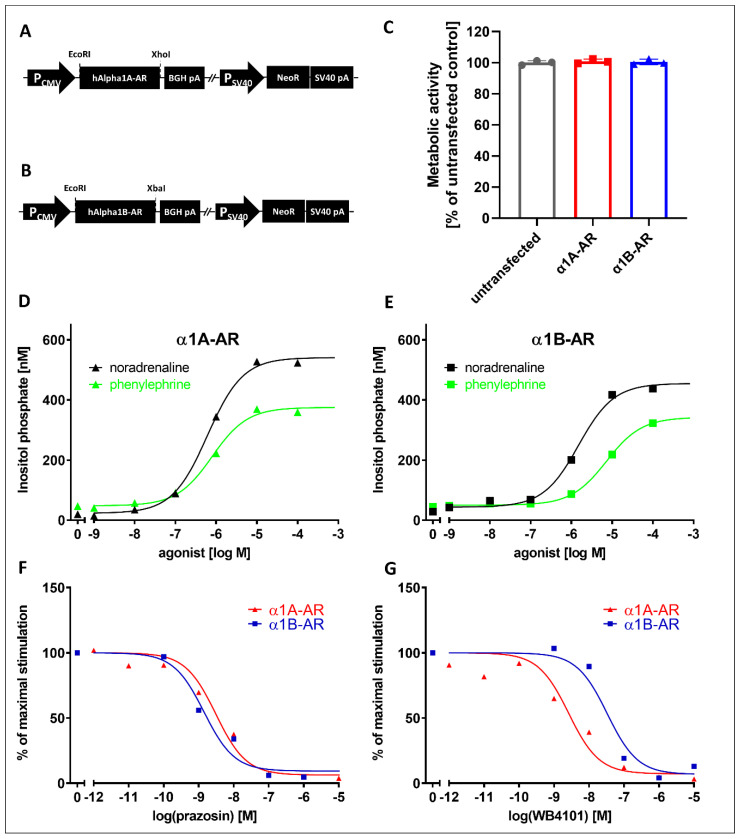
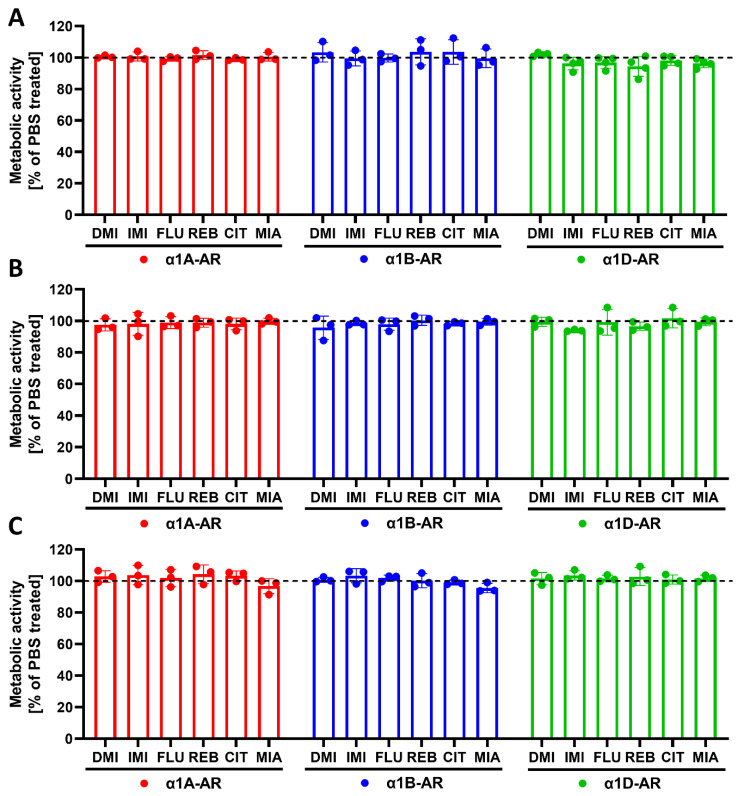
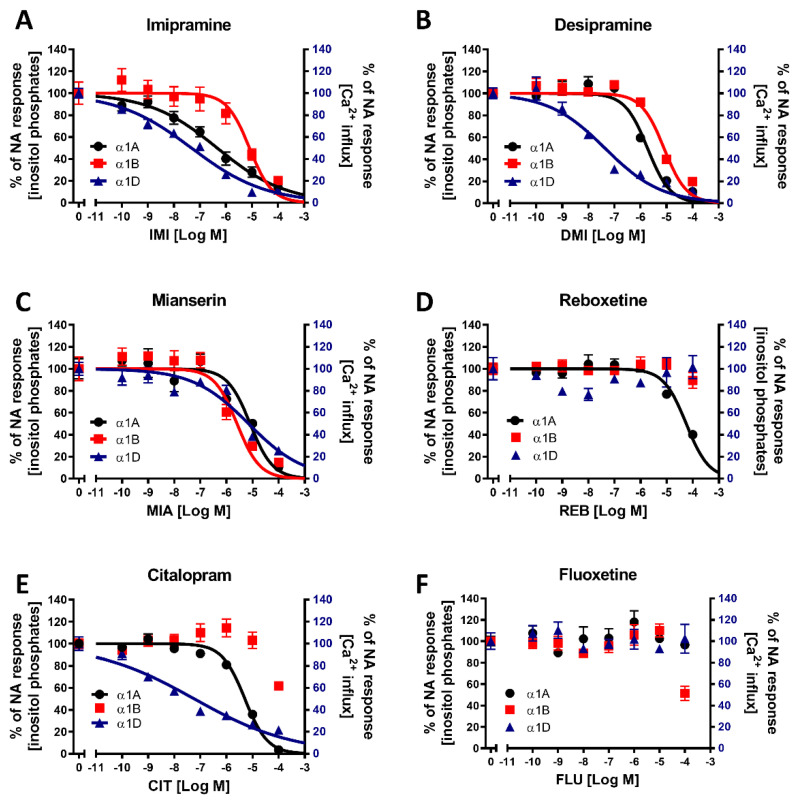
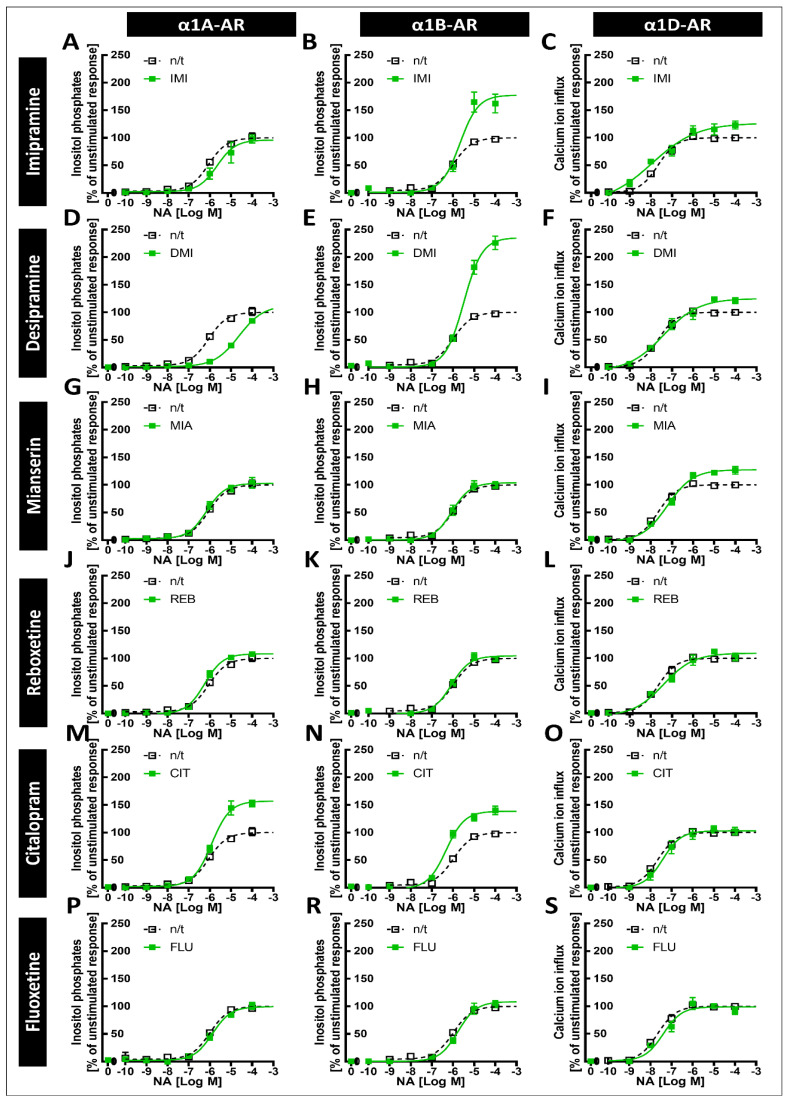
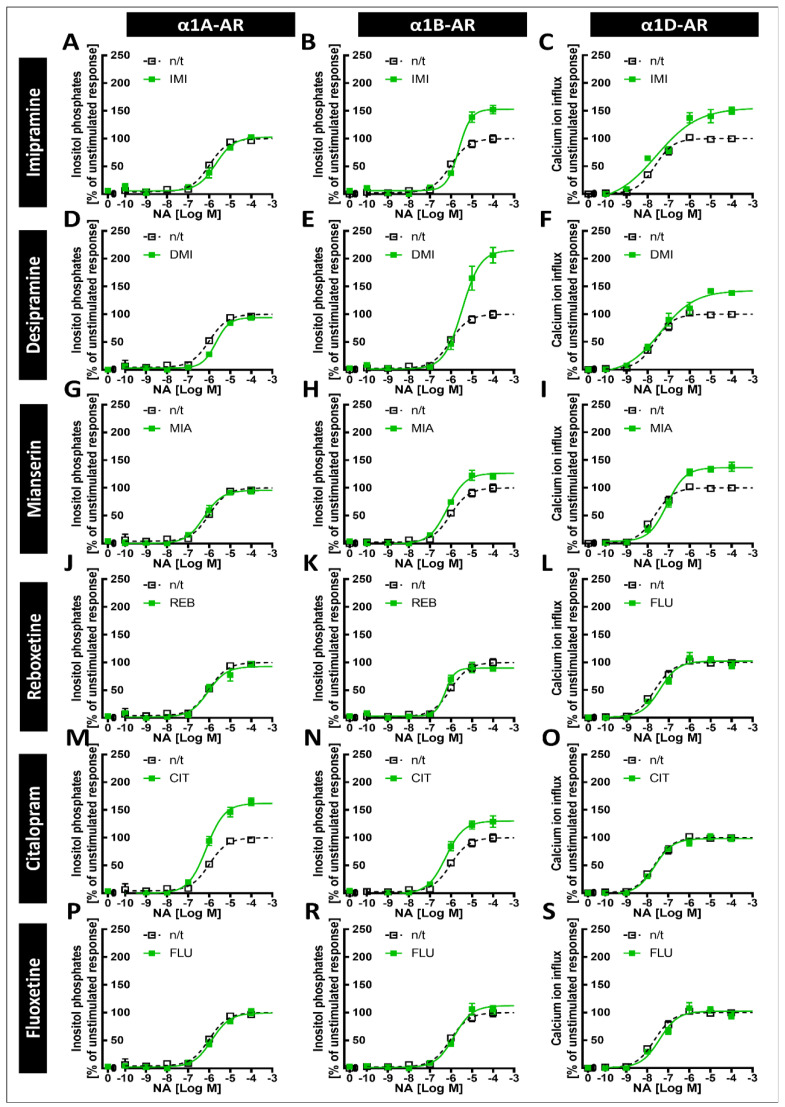
Currently utilized antidepressants have limited effectiveness and frequently incur undesired effects. Most antidepressants are thought to act via the inhibition of monoamine reuptake; however, direct binding to monoaminergic receptors has been proposed to contribute to both their clinical effectiveness and their side effects, or lack thereof. Among the target receptors of antidepressants, α1‑adrenergic receptors (ARs) have been implicated in depression etiology, antidepressant action, and side effects. However, differences in the direct effects of antidepressants on signaling from the three subtypes of α1-ARs, namely, α1A-, α1B- and α1D‑ARs, have been little explored. We utilized cell lines overexpressing α1A-, α1B- or α1D-ARs to investigate the effects of the antidepressants imipramine (IMI), desipramine (DMI), mianserin (MIA), reboxetine (REB), citalopram (CIT) and fluoxetine (FLU) on noradrenaline-induced second messenger generation by those receptors. We found similar orders of inhibition at α1A-AR (IMI < DMI < CIT < MIA < REB) and α1D‑AR (IMI = DMI < CIT < MIA), while the α1B-AR subtype was the least engaged subtype and was inhibited with low potency by three drugs (MIA < IMI = DMI). In contrast to their direct antagonistic effects, prolonged incubation with IMI and DMI increased the maximal response of the α1B-AR subtype, and the CIT of both the α1A- and the α1B-ARs. Our data demonstrate a complex, subtype-specific modulation of α1-ARs by antidepressants of different groups.
目前使用的抗抑郁药疗效有限,且常伴有不良反应。大多数抗抑郁药被认为通过抑制单胺再摄取起作用;然而,直接与单胺能受体结合被认为有助于其临床疗效及其不良反应或缺乏。在抗抑郁药的靶受体中,α1-肾上腺素能受体(ARs)与抑郁病因、抗抑郁作用和副作用有关。然而,抗抑郁药对α1-AR 三种亚型(α1A-、α1B-和α1D-AR)信号转导的直接作用差异尚未得到充分探索。我们利用过表达α1A-、α1B-或α1D-AR 的细胞系,研究了抗抑郁药丙咪嗪(IMI)、去甲丙咪嗪(DMI)、米氮平(MIA)、瑞波西汀(REB)、西酞普兰(CIT)和氟西汀(FLU)对这些受体的去甲肾上腺素诱导的第二信使产生的影响。我们发现,在α1A-AR(IMI < DMI < CIT < MIA < REB)和α1D-AR(IMI = DMI < CIT < MIA)中,抑制作用的顺序相似,而α1B-AR 亚型参与程度最低,三种药物对其抑制作用较弱(MIA < IMI = DMI)。与直接拮抗作用相反,长时间孵育 IMI 和 DMI 增加了α1B-AR 亚型的最大反应,以及 CIT 对两种α1A-和α1B-ARs 的作用。我们的数据表明,不同类别的抗抑郁药对α1-AR 表现出复杂的、亚型特异性的调节作用。