Krychowiak-Maśnicka Marta, Krauze-Baranowska Mirosława, Godlewska Sylwia, Kaczyński Zbigniew, Bielicka-Giełdoń Aleksandra, Grzegorczyk Natalia, Narajczyk Magdalena, Frackowiak Joanna E, Krolicka Aleksandra
Laboratory of Biologically Active Compounds, Intercollegiate Faculty of Biotechnology UG and MUG, University of Gdansk, 80-307 Gdansk, Poland.
Department of Pharmacognosy with Medicinal Plant Garden, Medical University of Gdansk, 80-416 Gdansk, Poland.
Int J Mol Sci. 2021 May 3;22(9):4849. doi: 10.3390/ijms22094849.
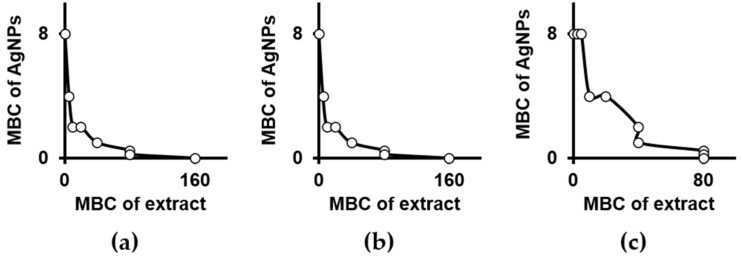
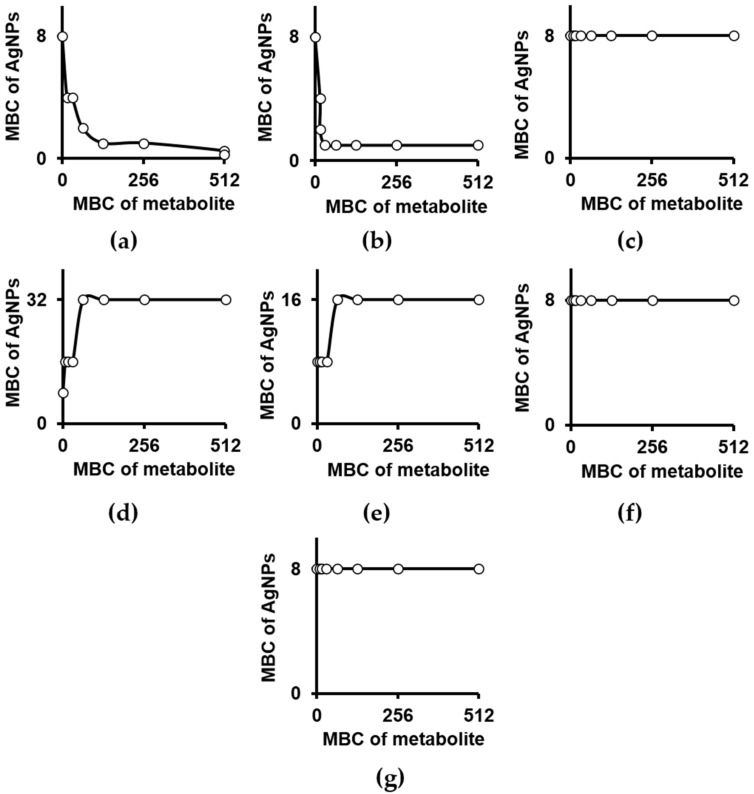
Carnivorous plants are exemplary natural sources of secondary metabolites with biological activity. However, the therapeutic antimicrobial potential of these compounds is limited due to intrinsic resistance of selected bacterial pathogens, among which represents an extreme example. The objective of the study was to overcome the intrinsic resistance of by combining silver nanoparticles (AgNPs) with secondary metabolites from selected carnivorous plant species. We employed the broth microdilution method, the checkerboard titration technique and comprehensive phytochemical analyses to define interactions between nanoparticles and active compounds from carnivorous plants. It has been confirmed that is resistant to a broad range of secondary metabolites from carnivorous plants, i.e., naphthoquinones, flavonoids, phenolic acids (MBC = 512 µg mL) and only weakly sensitive to their mixtures, i.e., extracts and extracts' fractions. However, it was shown that the antimicrobial activity of extracts and fractions with a significant level of naphthoquinone (plumbagin) was significantly enhanced by AgNPs. Our studies clearly demonstrated a crucial role of naphthoquinones in AgNPs and extract interaction, as well as depicted the potential of AgNPs to restore the bactericidal activity of naphthoquinones towards . Our findings indicate the significant potential of nanoparticles to modulate the activity of selected secondary metabolites and revisit their antimicrobial potential towards human pathogenic bacteria.
食虫植物是具有生物活性的次生代谢产物的典型天然来源。然而,由于某些细菌病原体的固有抗性,这些化合物的治疗抗菌潜力受到限制,其中[具体细菌名称]就是一个极端例子。本研究的目的是通过将银纳米颗粒(AgNPs)与选定食虫植物物种的次生代谢产物相结合,来克服[具体细菌名称]的固有抗性。我们采用肉汤微量稀释法、棋盘滴定技术和全面的植物化学分析来确定纳米颗粒与食虫植物活性化合物之间的相互作用。已证实[具体细菌名称]对食虫植物的多种次生代谢产物具有抗性,即萘醌、黄酮类化合物、酚酸(MBC = 512 µg/mL),并且仅对它们的混合物(即提取物和提取物馏分)有微弱敏感性。然而,结果表明,银纳米颗粒显著增强了含有大量萘醌(白花丹素)的提取物和馏分的抗菌活性。我们的研究清楚地证明了萘醌在银纳米颗粒与提取物相互作用中的关键作用,同时也描述了银纳米颗粒恢复萘醌对[具体细菌名称]杀菌活性的潜力。我们的研究结果表明,纳米颗粒在调节选定次生代谢产物的活性以及重新审视它们对人类病原菌的抗菌潜力方面具有巨大潜力。