Department of Medical Microbiology, School of Basic Medical Sciences, Central South University, Changsha 410013, China,
Department of Biochemistry and Molecular Biology, School of Life Sciences, Central South University, Changsha 410013, China.
Int J Nanomedicine. 2019 Feb 25;14:1469-1487. doi: 10.2147/IJN.S191340. eCollection 2019.
The threat of drug-resistant requires great efforts to develop highly effective and safe bactericide.
This study aimed to investigate the antibacterial activity and mechanism of silver nanoparticles (AgNPs) against multidrug-resistant .
The antimicrobial effect of AgNPs on clinical isolates of resistant was assessed by minimal inhibitory concentration (MIC) and minimal bactericidal concentration (MBC). In multidrug-resistant , the alterations of morphology and structure were observed by the transmission electron microscopy (TEM); the differentially expressed proteins were analyzed by quantitative proteomics; the production of reactive oxygen species (ROS) was assayed by HDCF-DA staining; the activity of superoxide dismutase (SOD), catalase (CAT) and peroxidase (POD) was chemically measured and the apoptosis-like effect was determined by flow cytometry.
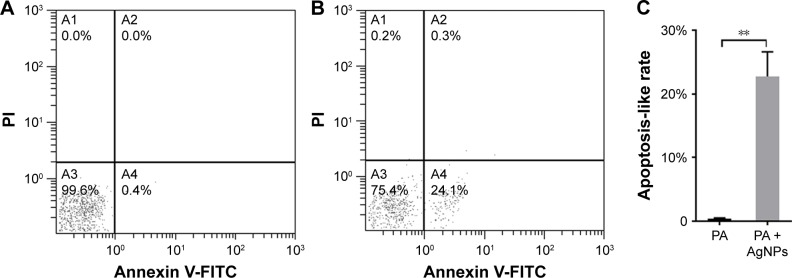
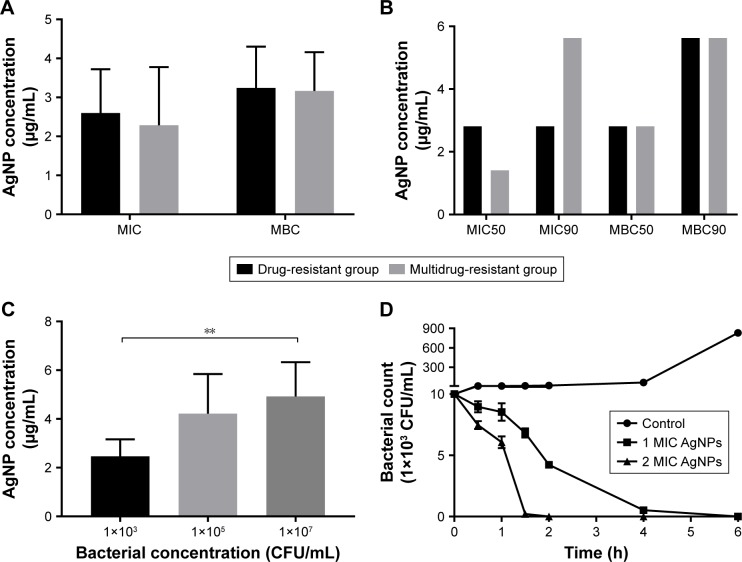
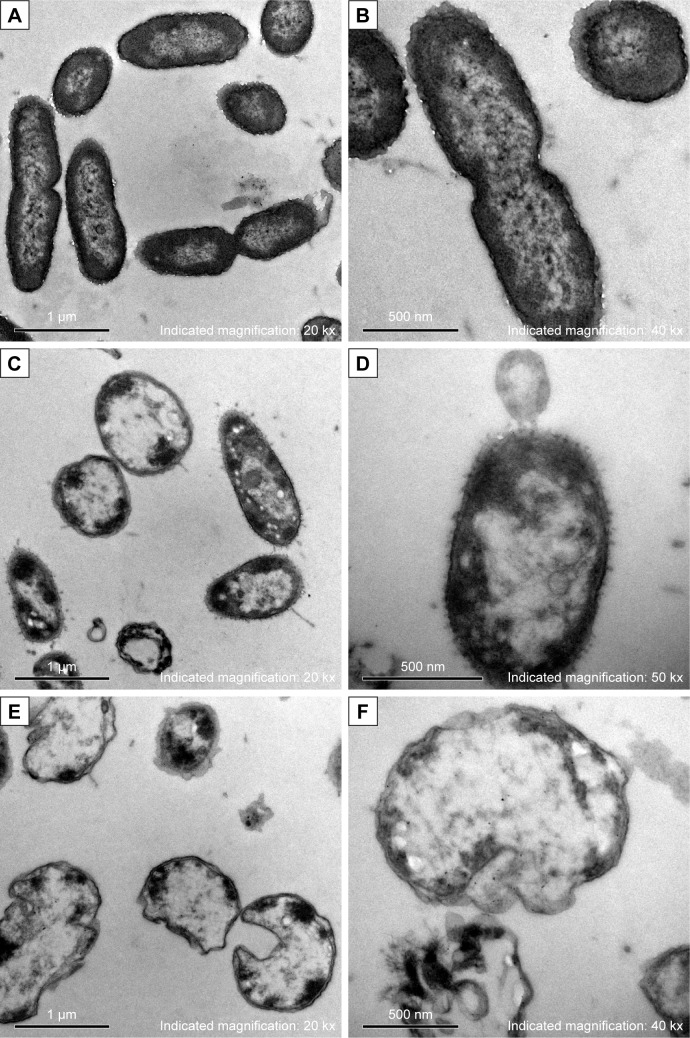
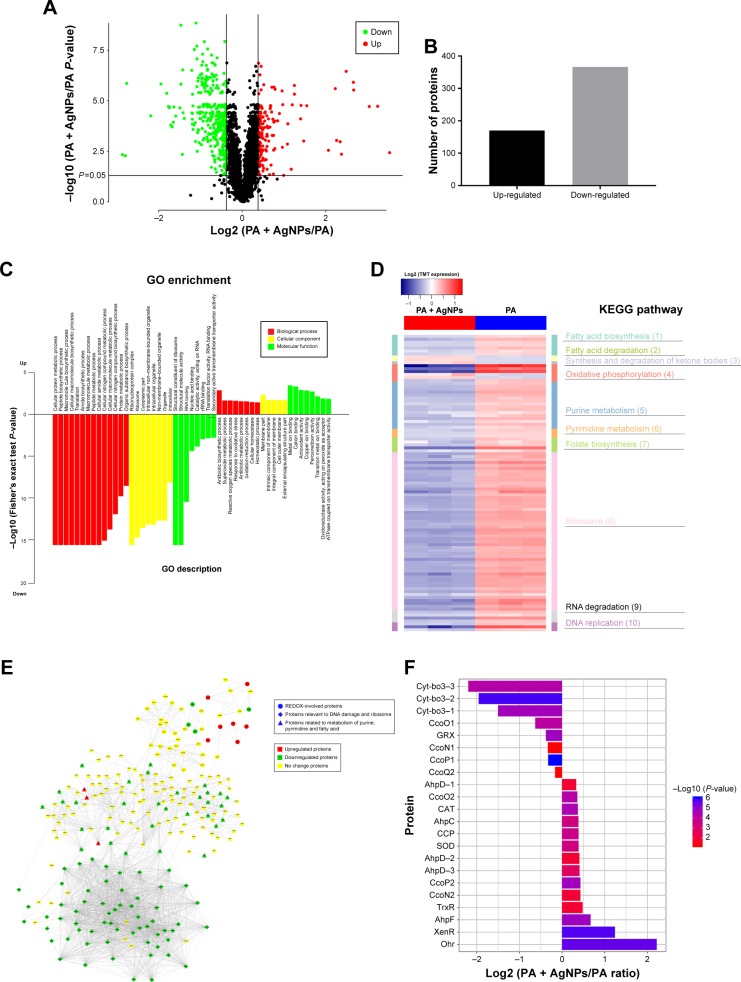
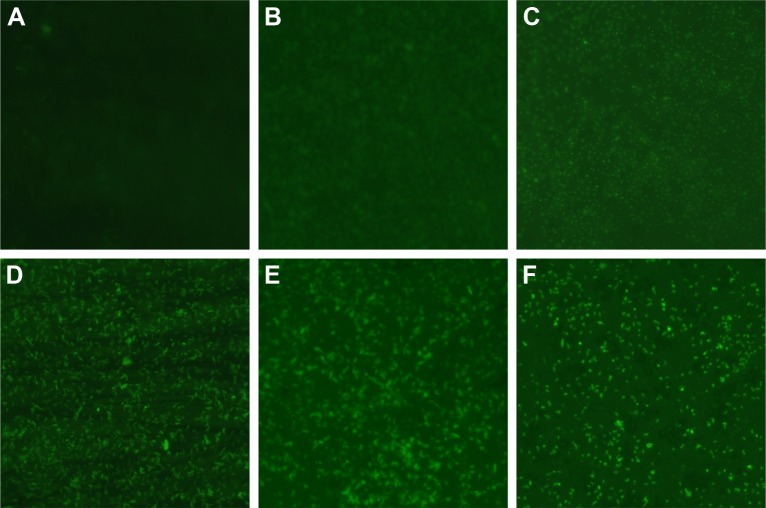
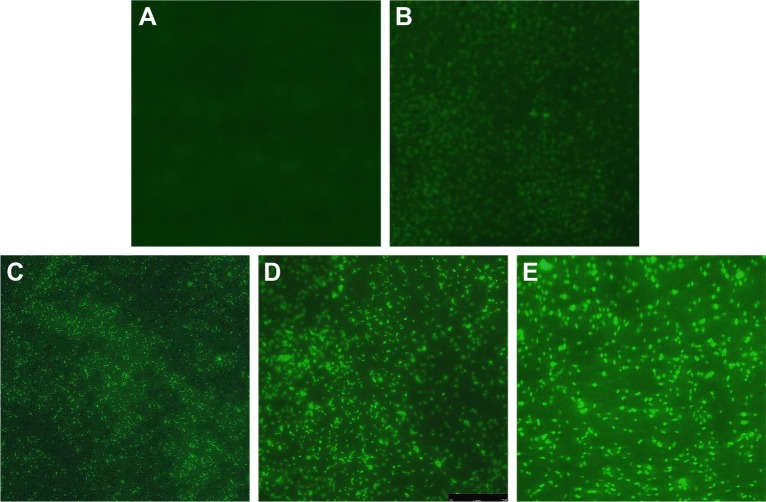
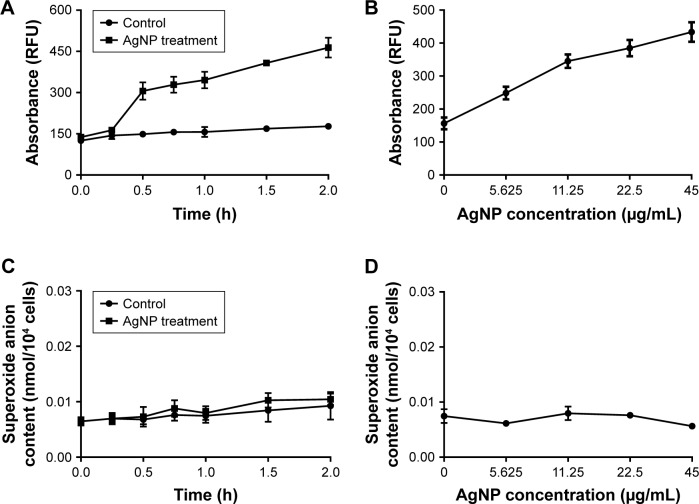
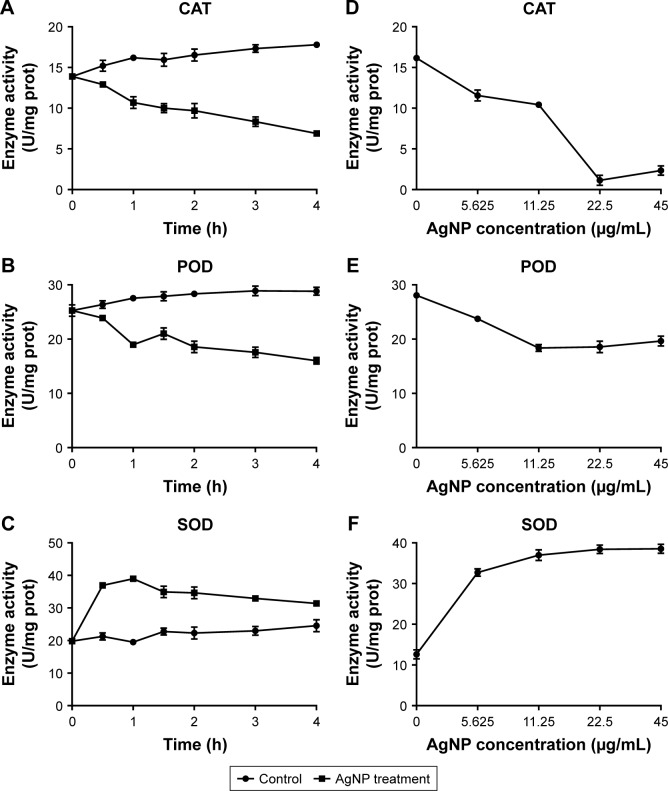
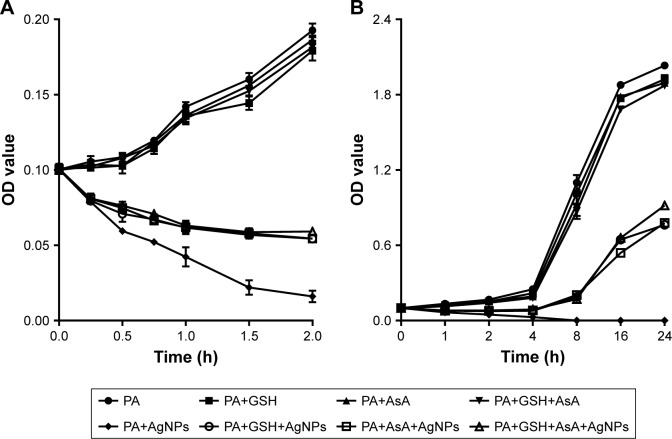
Antimicrobial tests revealed that AgNPs had highly bactericidal effect on the drug-resistant or multidrug-resistant with the MIC range of 1.406-5.625 µg/mL and the MBC range of 2.813-5.625 µg/mL. TEM showed that AgNPs could enter the multidrug-resistant bacteria and impair their morphology and structure. The proteomics quantified that, in the AgNP-treated bacteria, the levels of SOD, CAT, and POD, such as alkyl hydroperoxide reductase and organic hydroperoxide resistance protein, were obviously high, as well as the significant upregulation of low oxygen regulatory oxidases, including cbb3-type cytochrome c oxidase subunit P2, N2, and O2. Further results confirmed the excessive production of ROS. The antioxidants, reduced glutathione and ascorbic acid, partially antagonized the antibacterial action of AgNPs. The apoptosis-like rate of AgNP-treated bacteria was remarkably higher than that of the untreated bacteria (<0.01).
This study proved that AgNPs could play antimicrobial roles on the multidrug-resistant in a concentration- and time-dependent manner. The main mechanism involves the disequilibrium of oxidation and antioxidation processes and the failure to eliminate the excessive ROS.
耐药菌的威胁需要我们努力开发高效、安全的杀菌剂。
本研究旨在探讨银纳米粒子(AgNPs)对多重耐药菌的抗菌活性和作用机制。
采用微量肉汤稀释法(MIC)和微量肉汤杀菌法(MBC)评估 AgNPs 对临床耐药菌分离株的抗菌作用。在多重耐药菌中,通过透射电子显微镜(TEM)观察形态和结构的变化;采用定量蛋白质组学分析差异表达蛋白;通过 HDCF-DA 染色测定活性氧(ROS)的产生;通过化学方法测定超氧化物歧化酶(SOD)、过氧化氢酶(CAT)和过氧化物酶(POD)的活性,并通过流式细胞术测定凋亡样效应。
抗菌试验表明,AgNPs 对耐药或多重耐药菌具有很强的杀菌作用,MIC 范围为 1.406-5.625μg/ml,MBC 范围为 2.813-5.625μg/ml。TEM 显示 AgNPs 可以进入多重耐药菌并破坏其形态和结构。蛋白质组学定量分析表明,在 AgNP 处理的细菌中,SOD、CAT 和 POD 等烷基氢过氧化物还原酶和有机氢过氧化物抗性蛋白的水平明显升高,低氧调节氧化酶如 cbb3 型细胞色素 c 氧化酶亚基 P2、N2 和 O2 的表达也明显上调。进一步的结果证实了 ROS 的过度产生。抗氧化剂还原型谷胱甘肽和抗坏血酸部分拮抗了 AgNPs 的抗菌作用。AgNP 处理细菌的凋亡样率明显高于未处理细菌(<0.01)。
本研究证明 AgNPs 可在浓度和时间依赖的方式下对多重耐药菌发挥抗菌作用。主要机制涉及氧化和抗氧化过程的失衡以及不能消除过量的 ROS。