Su Miao, Zhang Zhe, Zhou Li, Han Chao, Huang Canhua, Nice Edouard C
State Key Laboratory of Biotherapy and Cancer Center, West China Hospital, and West China School of Basic Medical Sciences & Forensic Medicine, Sichuan University, and Collaborative Innovation Center for Biotherapy, Chengdu 610041, China.
Department of Biochemistry and Molecular Biology, Monash University, Clayton, VIC 3800, Australia.
Cancers (Basel). 2021 May 21;13(11):2512. doi: 10.3390/cancers13112512.
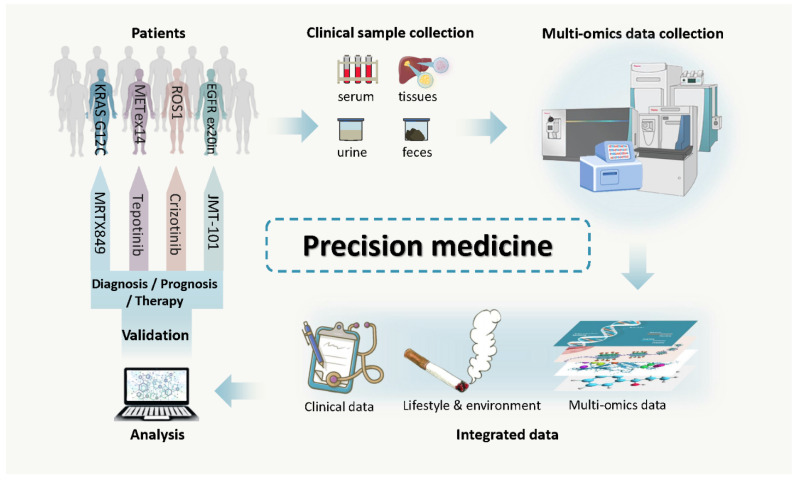
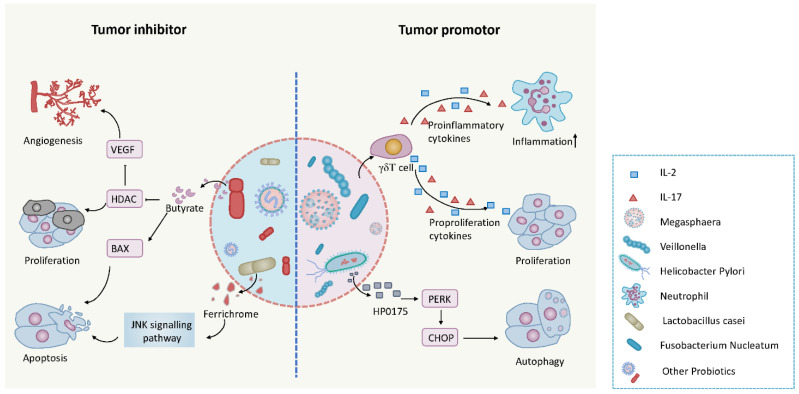
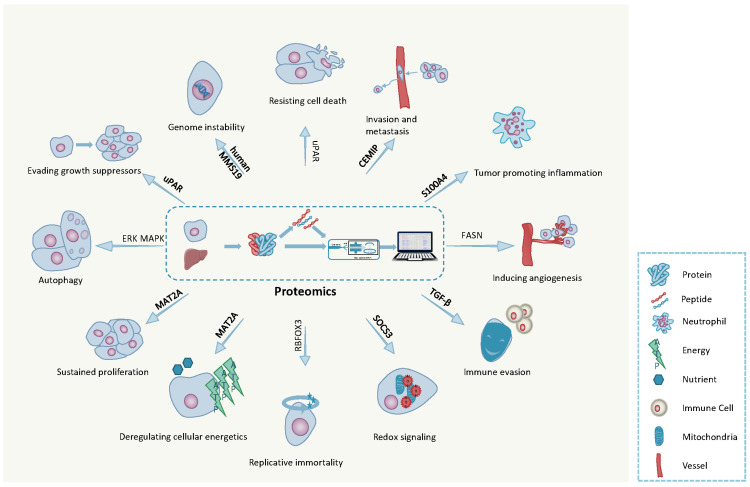
As of 2020 the human genome and proteome are both at >90% completion based on high stringency analyses. This has been largely achieved by major technological advances over the last 20 years and has enlarged our understanding of human health and disease, including cancer, and is supporting the current trend towards personalized/precision medicine. This is due to improved screening, novel therapeutic approaches and an increased understanding of underlying cancer biology. However, cancer is a complex, heterogeneous disease modulated by genetic, molecular, cellular, tissue, population, environmental and socioeconomic factors, which evolve with time. In spite of recent advances in treatment that have resulted in improved patient outcomes, prognosis is still poor for many patients with certain cancers (e.g., mesothelioma, pancreatic and brain cancer) with a high death rate associated with late diagnosis. In this review we overview key hallmarks of cancer (e.g., autophagy, the role of redox signaling), current unmet clinical needs, the requirement for sensitive and specific biomarkers for early detection, surveillance, prognosis and drug monitoring, the role of the microbiome and the goals of personalized/precision medicine, discussing how emerging omics technologies can further inform on these areas. Exemplars from recent onco-proteogenomic-related publications will be given. Finally, we will address future perspectives, not only from the standpoint of perceived advances in treatment, but also from the hurdles that have to be overcome.
截至2020年,基于高严格度分析,人类基因组和蛋白质组的完成度均超过90%。这在很大程度上得益于过去20年的重大技术进步,拓宽了我们对人类健康和疾病(包括癌症)的理解,并支持了当前个性化/精准医学的发展趋势。这归功于筛查的改进、新型治疗方法以及对癌症生物学基础认识的加深。然而,癌症是一种复杂的异质性疾病,受遗传、分子、细胞、组织、群体、环境和社会经济因素的调节,且会随时间演变。尽管近期治疗取得了进展,改善了患者预后,但对于许多特定癌症(如间皮瘤、胰腺癌和脑癌)患者来说,预后仍然很差,与晚期诊断相关的死亡率很高。在本综述中,我们概述了癌症的关键特征(如自噬、氧化还原信号传导的作用)、当前未满足的临床需求、早期检测、监测、预后和药物监测所需的敏感且特异的生物标志物、微生物组的作用以及个性化/精准医学的目标,讨论新兴的组学技术如何能在这些领域提供更多信息。还将给出近期肿瘤蛋白质基因组学相关出版物的实例。最后,我们将探讨未来的前景,不仅从治疗方面的预期进展角度,也从必须克服的障碍角度进行探讨。