Pham Tien Duc, Bui Viet Phuong, Pham Thuy Nga, Le Thi Mai Dung, Nguyen Kim Thuy, Bui Van Hoi, Nguyen The Dung
Faculty of Chemistry, University of Science, Vietnam National University-Hanoi, 19 Le Thanh Tong, Hoan Kiem, Hanoi 100000, Vietnam.
Faculty of Environmental Sciences, University of Science, Vietnam National University-Hanoi, 334 Nguyen Trai, Thanh Xuan, Hanoi 100000, Vietnam.
Polymers (Basel). 2021 May 11;13(10):1536. doi: 10.3390/polym13101536.
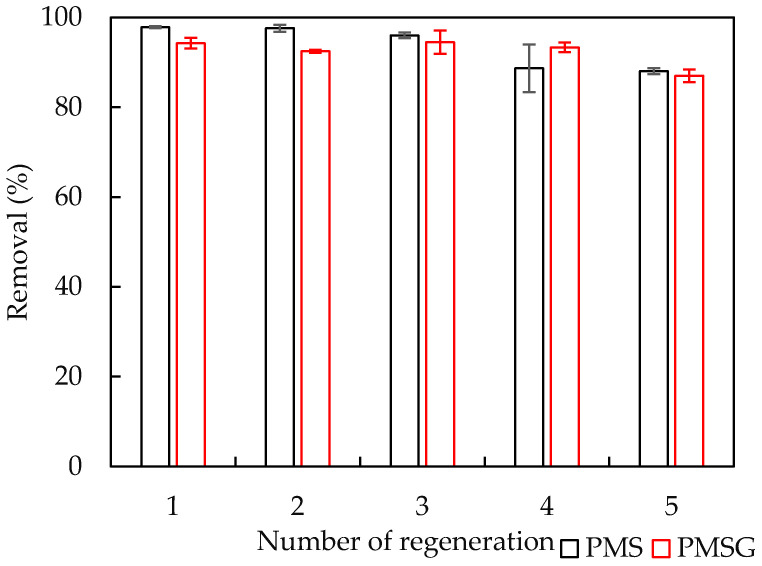
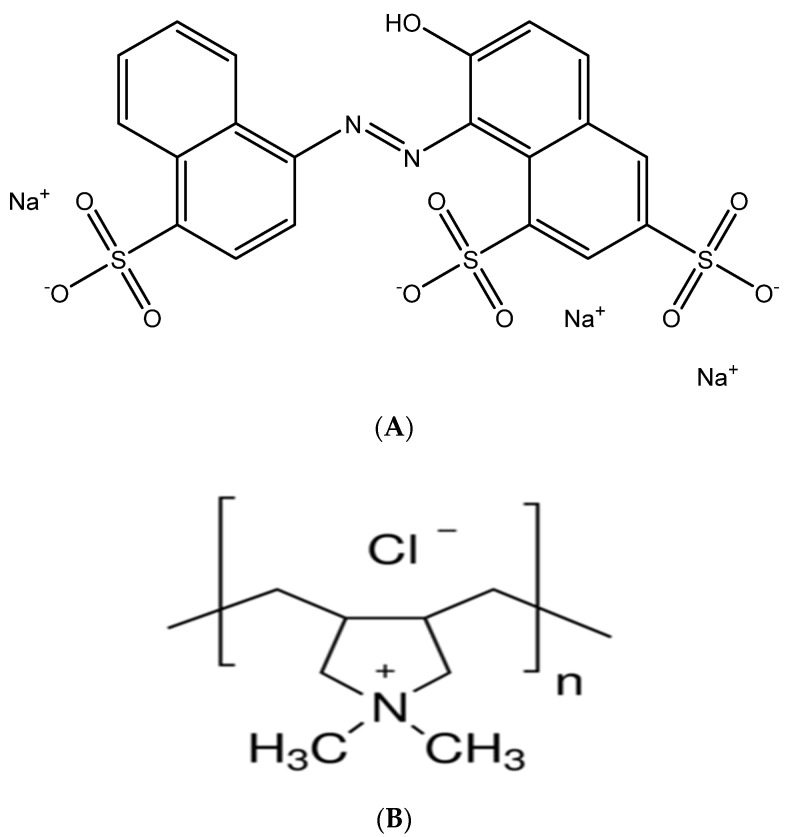
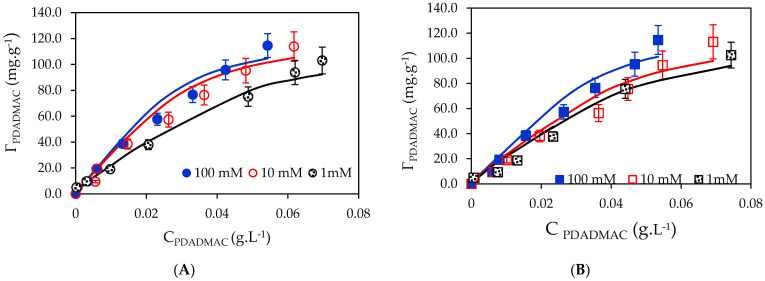
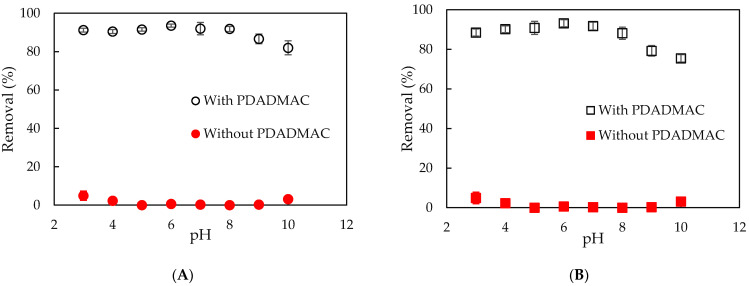
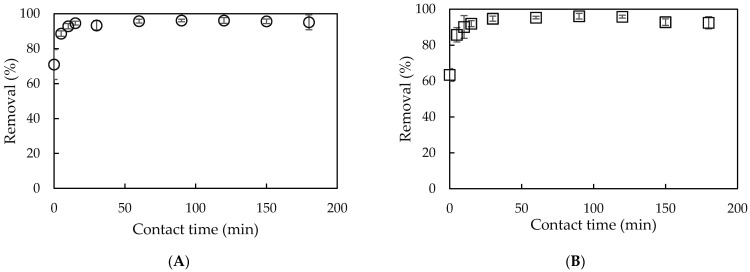
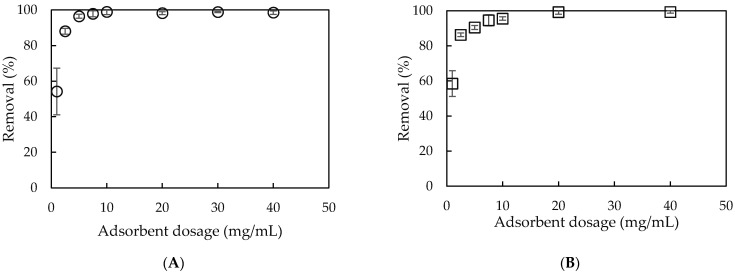
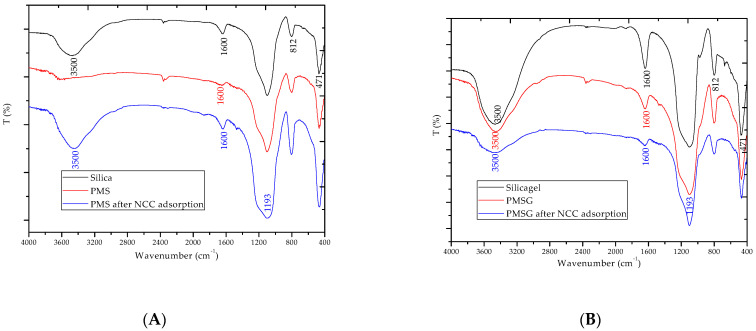
In the present work, adsorption of anionic azo dye, new coccine (NCC) on silica and silica-gel in an aquatic environment was discovered. Effective conditions such as adsorption time, pH, the influence of dosage on NCC adsorption using strong polycation, poly-diallyl-dimethylammonium chloride (PDADMAC) modified silica (PMS) and PDADMAC modified silica-gel (PMSG) were systematically studied. The removal of NCC using PMS and PMSG were much higher than that using raw silica and silica-gel without PDADMAC in all pH ranges from 3 to 10. The adsorption of NCC onto PMS and PMSG was achieved maxima at the same conditions of contact time 30 min, pH 6. The optimum adsorbent dosages of PMS and PMSG for NCC removal were 10 and 20 mg·mL, respectively. Experimental results of NCC adsorption isotherms onto PMS and PMSG at different ionic strength were fitted by Langmuir and Freundlich models. The NCC removal efficiencies using PMS and PMSG were higher than 87%, indicating that PMS and PMSG are novel and reusable adsorbents for removal of anionic dye. Based on adsorption isotherms, and surface group changes after PDADMAC modification and NCC adsorption examined by Fourier transform infrared spectroscopy (FTIR), we demonstrate that electrostatic interaction between positively charged adsorbents' surfaces and negative sulfonic groups of NCC are the main driving force for anionic azo dye adsorption onto PMS and PMGS adsorbents.
在本研究中,发现了阴离子偶氮染料新胭脂红(NCC)在水环境中于二氧化硅和硅胶上的吸附情况。系统研究了吸附时间、pH值等有效条件,以及使用强聚阳离子聚二烯丙基二甲基氯化铵(PDADMAC)改性二氧化硅(PMS)和PDADMAC改性硅胶(PMSG)时剂量对NCC吸附的影响。在pH值为3至10的所有范围内,使用PMS和PMSG去除NCC的效果远高于未使用PDADMAC的原始二氧化硅和硅胶。在接触时间30分钟、pH值为6的相同条件下,NCC在PMS和PMSG上的吸附达到最大值。去除NCC时,PMS和PMSG的最佳吸附剂剂量分别为10和20 mg·mL。用Langmuir和Freundlich模型拟合了不同离子强度下NCC在PMS和PMSG上的吸附等温线实验结果。使用PMS和PMSG去除NCC的效率高于87%,表明PMS和PMSG是用于去除阴离子染料的新型可重复使用吸附剂。基于吸附等温线,以及通过傅里叶变换红外光谱(FTIR)检测的PDADMAC改性和NCC吸附后的表面基团变化,我们证明带正电的吸附剂表面与NCC的负磺酸基团之间的静电相互作用是阴离子偶氮染料吸附到PMS和PMGS吸附剂上的主要驱动力。