• 文献检索
  • 文档翻译
  • 深度研究
  • 学术资讯
  • Suppr Zotero 插件Zotero 插件
  • 邀请有礼
  • 套餐&价格
  • 历史记录
应用&插件
Suppr Zotero 插件Zotero 插件浏览器插件Mac 客户端Windows 客户端微信小程序
定价
高级版会员购买积分包购买API积分包
服务
文献检索文档翻译深度研究API 文档MCP 服务
关于我们
关于 Suppr公司介绍联系我们用户协议隐私条款
关注我们

Suppr 超能文献

核心技术专利:CN118964589B侵权必究
粤ICP备2023148730 号-1Suppr @ 2026

文献检索

告别复杂PubMed语法,用中文像聊天一样搜索,搜遍4000万医学文献。AI智能推荐,让科研检索更轻松。

立即免费搜索

文件翻译

保留排版,准确专业,支持PDF/Word/PPT等文件格式,支持 12+语言互译。

免费翻译文档

深度研究

AI帮你快速写综述,25分钟生成高质量综述,智能提取关键信息,辅助科研写作。

立即免费体验

在 COVID-19 大流行期间的饮食变化:一项使用日本工作场所自助餐厅电子购买系统的客观连续饮食记录进行的纵向研究。

Dietary Changes during the COVID-19 Pandemic: A Longitudinal Study Using Objective Sequential Diet Records from an Electronic Purchase System in a Workplace Cafeteria in Japan.

机构信息

Department of Community Health and Preventive Medicine, Hamamatsu University School of Medicine, Hamamatsu 431-3192, Japan.

Department of Food and Nutritional Environment, Kinjo Gakuin University, Nagoya 463-8521, Japan.

出版信息

Nutrients. 2021 May 11;13(5):1606. doi: 10.3390/nu13051606.

DOI:10.3390/nu13051606
PMID:34064833
原文链接:https://pmc.ncbi.nlm.nih.gov/articles/PMC8150995/
Abstract

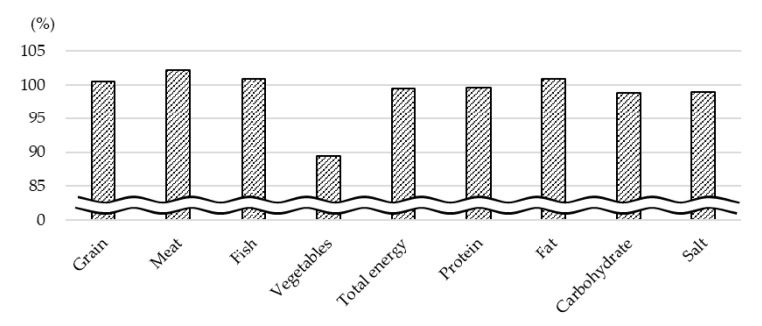
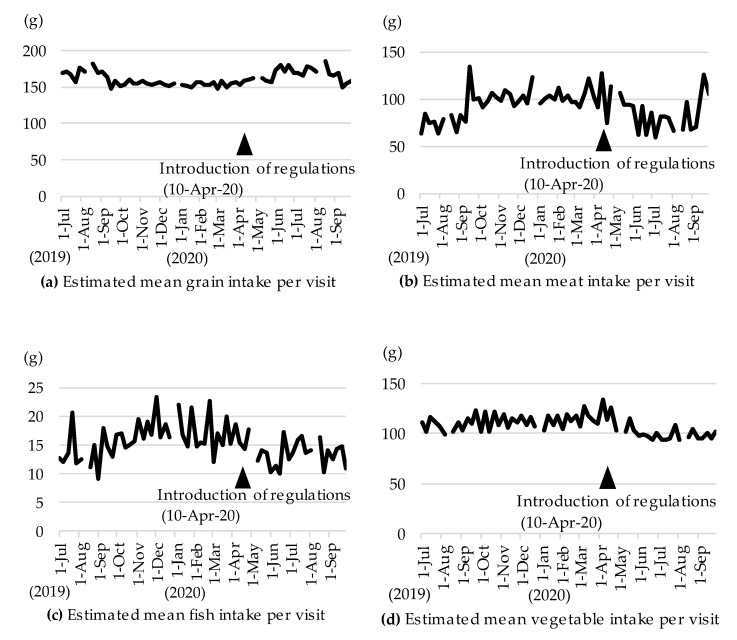
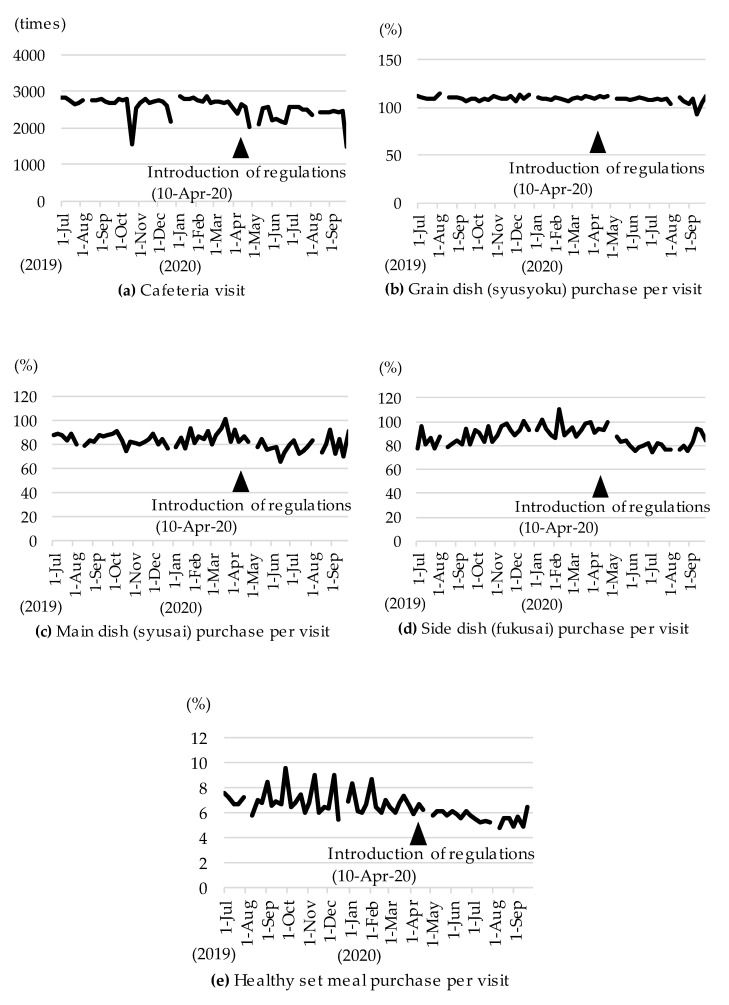
As a result of the coronavirus disease 2019 (COVID-19) pandemic-related restrictions, food systems have undergone unprecedented changes, with the potential to affect dietary behavior. We aimed to investigate workers' dietary changes resulting from the introduction of regulations to combat COVID-19 in a Japanese factory cafeteria. Objective data on daytime dietary intake were automatically collected from electronic purchase system records. The dataset included the weekly data of 890 men from 1 July 2019 to 30 September 2020. The cafeteria regulations came into effect on 10 April 2020; in this context, the purchase of dishes and estimated dietary intake were monitored. The number of cafeteria visits decreased slightly after the introduction of the regulations. The purchase of main and side dishes also decreased, but the purchase of grain dishes was less affected. When compared with summer 2019 (pre-pandemic, no regulations: 1 July to 29 September 2019), in summer 2020 (during the pandemic and with regulations: 29 June to 30 September 2020), the estimated mean grain, meat, fish, and total energy intake was stable; however, vegetable intake decreased by 11%. As the COVID-19 pandemic continues, workplace cafeteria regulations need to be monitored to avoid unfavorable dietary changes in employees.

摘要

由于 2019 年冠状病毒病(COVID-19)大流行相关限制,食品系统发生了前所未有的变化,有可能影响饮食行为。我们旨在研究日本工厂自助餐厅实施 COVID-19 防控措施后工人的饮食变化。通过电子购买系统记录自动收集日间饮食摄入的客观数据。该数据集包括 2019 年 7 月 1 日至 2020 年 9 月 30 日期间 890 名男性的每周数据。食堂规定于 2020 年 4 月 10 日生效;在此背景下,监测了菜肴的购买和估计饮食摄入情况。引入规定后,去食堂就餐的次数略有减少。主食和副菜的购买量也有所下降,但谷物菜肴的购买量受影响较小。与 2019 年夏季(大流行前,无规定:2019 年 7 月 1 日至 9 月 29 日)相比,2020 年夏季(大流行期间,有规定:2020 年 6 月 29 日至 9 月 30 日)期间,估计平均谷物、肉类、鱼类和总能量摄入量保持稳定;然而,蔬菜摄入量减少了 11%。随着 COVID-19 大流行的持续,需要监测工作场所自助餐厅的规定,以避免员工饮食的不利变化。
https://cdn.ncbi.nlm.nih.gov/pmc/blobs/7a51/8150995/4781afca0c63/nutrients-13-01606-g003.jpg
https://cdn.ncbi.nlm.nih.gov/pmc/blobs/7a51/8150995/67e2ec8be420/nutrients-13-01606-g001.jpg
https://cdn.ncbi.nlm.nih.gov/pmc/blobs/7a51/8150995/85c9f3e64668/nutrients-13-01606-g002.jpg
https://cdn.ncbi.nlm.nih.gov/pmc/blobs/7a51/8150995/4781afca0c63/nutrients-13-01606-g003.jpg
https://cdn.ncbi.nlm.nih.gov/pmc/blobs/7a51/8150995/67e2ec8be420/nutrients-13-01606-g001.jpg
https://cdn.ncbi.nlm.nih.gov/pmc/blobs/7a51/8150995/85c9f3e64668/nutrients-13-01606-g002.jpg
https://cdn.ncbi.nlm.nih.gov/pmc/blobs/7a51/8150995/4781afca0c63/nutrients-13-01606-g003.jpg

相似文献

1
Dietary Changes during the COVID-19 Pandemic: A Longitudinal Study Using Objective Sequential Diet Records from an Electronic Purchase System in a Workplace Cafeteria in Japan.在 COVID-19 大流行期间的饮食变化:一项使用日本工作场所自助餐厅电子购买系统的客观连续饮食记录进行的纵向研究。
Nutrients. 2021 May 11;13(5):1606. doi: 10.3390/nu13051606.
2
Differences in Adolescents' Food Habits Checklist (AFHC) Scores before and during Pandemic in a Population-Based Sample: Polish Adolescents' COVID-19 Experience (PLACE-19) Study.基于人群样本的青少年食品习惯清单(AFHC)评分在大流行前后的差异:波兰青少年 COVID-19 体验(PLACE-19)研究。
Nutrients. 2021 May 14;13(5):1663. doi: 10.3390/nu13051663.
3
The Relationship between Food Security Status and Fruit and Vegetable Intake during the COVID-19 Pandemic.**译文**:**新冠疫情期间食品安全状况与果蔬摄入的关系**。
Nutrients. 2021 Feb 24;13(3):712. doi: 10.3390/nu13030712.
4
Use of Food Services by Consumers in the SARS-CoV-2 Pandemic. How the Eating Habits of Consumers Changed in View of the New Disease Risk Factors?消费者在 SARS-CoV-2 大流行期间对食品服务的使用。鉴于新的疾病风险因素,消费者的饮食习惯发生了哪些变化?
Nutrients. 2021 Aug 11;13(8):2760. doi: 10.3390/nu13082760.
5
Working from home and dietary changes during the COVID-19 pandemic: A longitudinal study of health app (CALO mama) users.新冠疫情期间居家办公和饮食变化:健康应用程序(CALO mama)用户的纵向研究。
Appetite. 2021 Oct 1;165:105323. doi: 10.1016/j.appet.2021.105323. Epub 2021 May 15.
6
Composition and Nutritional Quality of the Diet in Spanish Households during the First Wave of the COVID-19 Pandemic.西班牙家庭在 COVID-19 大流行第一波期间的饮食构成和营养质量。
Nutrients. 2021 Apr 24;13(5):1443. doi: 10.3390/nu13051443.
7
Did social isolation during the SARS-CoV-2 epidemic have an impact on the lifestyles of citizens?在 SARS-CoV-2 疫情期间,社交隔离是否对公民的生活方式产生了影响?
Epidemiol Prev. 2020 Sep-Dec;44(5-6 Suppl 2):353-362. doi: 10.19191/EP20.5-6.S2.137.
8
Exploring the Impact of COVID-19 Pandemic on Eating and Purchasing Behaviours of People Living in England.探讨新冠疫情对英国居民饮食和购买行为的影响。
Nutrients. 2021 Apr 29;13(5):1499. doi: 10.3390/nu13051499.
9
Association between functional foods and cardiometabolic health in a real-life setting: a longitudinal observational study using objective diet records from an electronic purchase system.在现实生活环境中,功能性食品与心脏代谢健康之间的关联:一项使用电子购买系统中的客观饮食记录的纵向观察性研究。
Food Funct. 2022 Feb 21;13(4):1751-1761. doi: 10.1039/d1fo02434e.
10
Adjusting working conditions and evaluating the risk of infection during the COVID-19 pandemic in different workplace settings in Germany: a study protocol for an explorative modular mixed methods approach.调整工作条件并评估德国不同工作场所环境中 COVID-19 大流行期间的感染风险:一项探索性模块化混合方法研究方案。
BMJ Open. 2020 Nov 18;10(11):e043908. doi: 10.1136/bmjopen-2020-043908.

引用本文的文献

1
The use of internet-based smartphone apps consistently improved consumers' healthy eating behaviors: a systematic review of randomized controlled trials.使用基于互联网的智能手机应用程序持续改善了消费者的健康饮食行为:一项随机对照试验的系统评价。
Front Digit Health. 2024 Jan 12;6:1282570. doi: 10.3389/fdgth.2024.1282570. eCollection 2024.
2
Dietary trends among Polish women in 2011-2022-cross-sectional study of food consumption frequency among women aged 20-50 in Silesia region, Poland.2011 - 2022年波兰女性的饮食趋势——波兰西里西亚地区20 - 50岁女性食物消费频率的横断面研究
Front Nutr. 2023 Jun 27;10:1219704. doi: 10.3389/fnut.2023.1219704. eCollection 2023.
3

本文引用的文献

1
Comparison of seroprevalence of SARS-CoV-2 infections with cumulative and imputed COVID-19 cases: Systematic review.与累计和推断的 COVID-19 病例相比,SARS-CoV-2 感染的血清流行率比较:系统评价。
PLoS One. 2021 Apr 2;16(4):e0248946. doi: 10.1371/journal.pone.0248946. eCollection 2021.
2
Have Lifestyle Habits and Psychological Well-Being Changed among Adolescents and Medical Students Due to COVID-19 Lockdown in Croatia?由于克罗地亚的 COVID-19 封锁,青少年和医学生的生活习惯和心理健康是否发生了变化?
Nutrients. 2020 Dec 30;13(1):97. doi: 10.3390/nu13010097.
3
Reported Changes in Dietary Habits During the COVID-19 Lockdown in the Danish Population: The Danish COVIDiet Study.
A Study on the Factors Affecting Customer Satisfaction with Institutional Foodservice during COVID-19.
新冠疫情期间影响机构餐饮服务顾客满意度的因素研究
Foods. 2022 Apr 6;11(7):1053. doi: 10.3390/foods11071053.
4
Nutritional behaviors of women and men in Poland during confinement related to the SARS-CoV-2 epidemic.波兰人在新冠疫情隔离期间的营养行为,男女有别。
Sci Rep. 2021 Oct 7;11(1):19984. doi: 10.1038/s41598-021-99561-w.
5
Body Mass Index, Practice of Physical Activity and Lifestyle of Students During COVID-19 Lockdown.新冠疫情封锁期间学生的体重指数、体育活动习惯及生活方式
J Multidiscip Healthc. 2021 Jul 21;14:1901-1910. doi: 10.2147/JMDH.S325269. eCollection 2021.
丹麦人群在新冠疫情封锁期间饮食习惯的报告变化:丹麦COVIDiet研究
Front Nutr. 2020 Dec 8;7:592112. doi: 10.3389/fnut.2020.592112. eCollection 2020.
4
Self-Reported Impact of the COVID-19 Pandemic on Nutrition and Physical Activity Behaviour in Dutch Older Adults Living Independently.荷兰独立生活的老年人报告的 COVID-19 大流行对营养和身体活动行为的影响。
Nutrients. 2020 Nov 30;12(12):3708. doi: 10.3390/nu12123708.
5
Behavioral Changes During COVID-19 Confinement in France: A Web-Based Study.《COVID-19 封城期间法国民众行为变化:一项基于网络的研究》
Int J Environ Res Public Health. 2020 Nov 14;17(22):8444. doi: 10.3390/ijerph17228444.
6
Relationship between Dietary Habits, Food Attitudes and Food Security Status among Adults Living within the United States Three Months Post-Mandated Quarantine: A Cross-Sectional Study.美国强制隔离三个月后成年人的饮食习惯、食物态度和粮食安全状况之间的关系:一项横断面研究。
Nutrients. 2020 Nov 12;12(11):3468. doi: 10.3390/nu12113468.
7
Dietary Behaviors in the Post-Lockdown Period and Its Effects on Dietary Diversity: The Second Stage of a Nutrition Survey in a Longitudinal Chinese Study in the COVID-19 Era.后 lockdown 时期的饮食行为及其对饮食多样性的影响:COVID-19 时代中国一项纵向研究中营养调查的第二阶段。
Nutrients. 2020 Oct 26;12(11):3269. doi: 10.3390/nu12113269.
8
Associations between Changes in Health Behaviours and Body Weight during the COVID-19 Quarantine in Lithuania: The Lithuanian COVIDiet Study.立陶宛 COVID-19 隔离期间健康行为和体重变化的关联:立陶宛 COVIDiet 研究。
Nutrients. 2020 Oct 13;12(10):3119. doi: 10.3390/nu12103119.
9
Evaluation of the effect of the state of emergency for the first wave of COVID-19 in Japan.日本第一波新冠疫情紧急状态的效果评估。
Infect Dis Model. 2020;5:580-587. doi: 10.1016/j.idm.2020.08.004. Epub 2020 Aug 17.
10
Cluster-Based Approach to Coronavirus Disease 2019 (COVID-19) Response in Japan, from February to April 2020.2020年2月至4月日本基于聚集性疫情的新型冠状病毒肺炎(COVID-19)应对措施
Jpn J Infect Dis. 2020 Nov 24;73(6):491-493. doi: 10.7883/yoken.JJID.2020.363. Epub 2020 Jun 30.