University of Angers, INSERM U1083, CNRS UMR 6015, MITOVASC, SFR ICAT, 49000 Angers, France.
Theoretical Biochemistry Laboratory, Institute of Physico-Chemical Biology, CNRS UPR 9080, University of Paris Diderot Sorbonne Paris Cité, 75005 Paris, France.
Int J Mol Sci. 2021 May 12;22(10):5106. doi: 10.3390/ijms22105106.
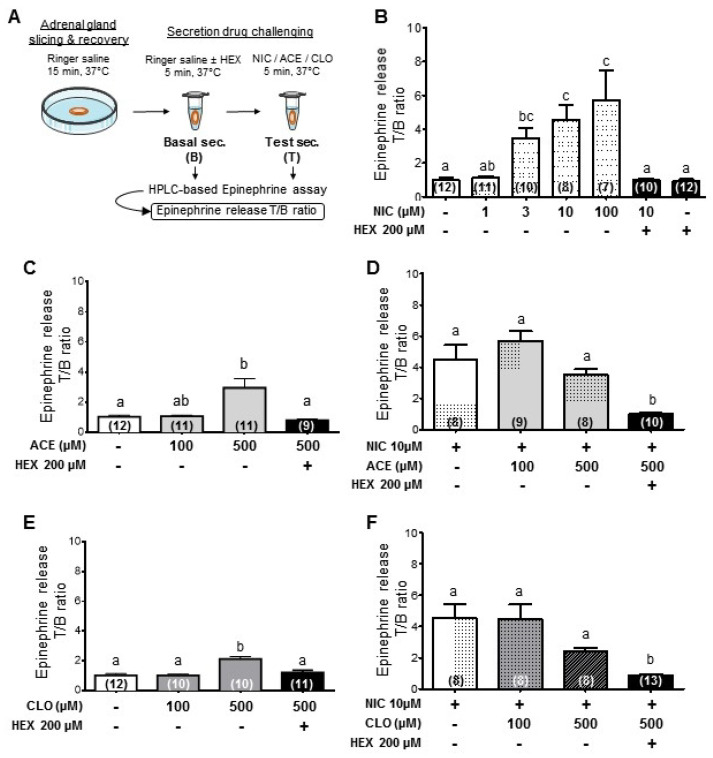
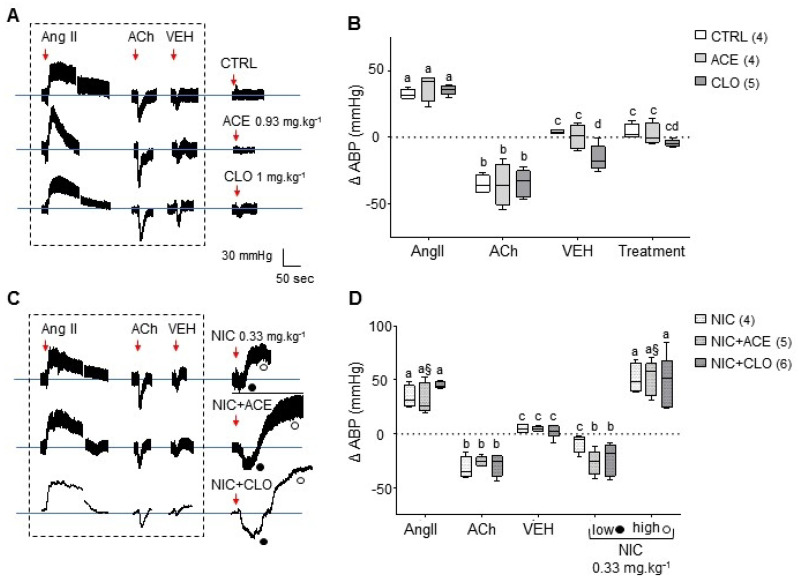
Neonicotinoid insecticides are nicotine-derived molecules which exert acute neurotoxic effects over the insect central nervous system by activating nicotinic acetylcholine receptors (nAChRs). However, these receptors are also present in the mammalian central and peripheral nervous system, where the effects of neonicotinoids are faintly known. In mammals, cholinergic synapses are crucial for the control of vascular tone, blood pressure and skeletal muscle contraction. We therefore hypothesized that neonicotinoids could affect cholinergic networks in mammals and sought to highlight functional consequences of acute intoxication in rats with sub-lethal concentrations of the highly used acetamiprid (ACE) and clothianidin (CLO). In this view, we characterized their electrophysiological effects on rat α3β4 nAChRs, knowing that it is predominantly expressed in ganglia of the vegetative nervous system and the adrenal medulla, which initiates catecholamine secretion. Both molecules exhibited a weak agonist effect on α3β4 receptors. Accordingly, their influence on epinephrine secretion from rat adrenal glands was also weak at 100 μM, but it was stronger at 500 μM. Challenging ACE or CLO together with nicotine (NIC) ended up with paradoxical effects on secretion. In addition, we measured the rat arterial blood pressure (ABP) in vivo by arterial catheterization. As expected, NIC induced a significant increase in ABP. ACE and CLO did not affect the ABP in the same conditions. However, simultaneous exposure of rats to both NIC and ACE/CLO promoted an increase of ABP and induced a biphasic response. Modeling the interaction of ACE or CLO on α3β4 nAChR is consistent with a binding site located in the agonist pocket of the receptor. We present a transversal experimental approach of mammal intoxication with neonicotinoids at different scales, including in vitro, ex vivo, in vivo and in silico. It paves the way of the acute and chronic toxicity for this class of insecticides on mammalian organisms.
新烟碱类杀虫剂是尼古丁衍生的分子,通过激活烟碱型乙酰胆碱受体(nAChRs)对昆虫中枢神经系统产生急性神经毒性作用。然而,这些受体也存在于哺乳动物的中枢和外周神经系统中,对于新烟碱类在哺乳动物中的作用知之甚少。在哺乳动物中,胆碱能突触对于控制血管张力、血压和骨骼肌收缩至关重要。因此,我们假设新烟碱类可能会影响哺乳动物中的胆碱能网络,并试图强调用高浓度使用的乙酰甲胺磷(ACE)和噻虫嗪(CLO)对大鼠进行亚致死浓度急性中毒的功能后果。在这种情况下,我们对大鼠α3β4 nAChRs 的电生理效应进行了特征描述,因为它主要在植物性神经系统和肾上腺髓质的神经节中表达,而这些神经节会引发儿茶酚胺的分泌。这两种分子对α3β4 受体均表现出较弱的激动剂作用。因此,它们在 100 μM 时对大鼠肾上腺分泌肾上腺素的影响也较弱,但在 500 μM 时则更强。用尼古丁(NIC)挑战 ACE 或 CLO 会导致分泌产生矛盾的效果。此外,我们通过动脉导管插入术在体内测量大鼠的动脉血压(ABP)。正如预期的那样,NIC 会引起 ABP 的显著升高。在相同条件下,ACE 和 CLO 不会影响 ABP。然而,同时暴露于大鼠体内的 NIC 和 ACE/CLO 会促进 ABP 的升高并引起双相反应。ACE 或 CLO 对α3β4 nAChR 的相互作用建模与位于受体激动剂口袋中的结合位点一致。我们提出了一种在不同尺度上用新烟碱类对哺乳动物进行中毒的横向实验方法,包括体外、离体、体内和计算。它为这一类杀虫剂对哺乳动物生物体的急性和慢性毒性开辟了道路。