Vaccine Research Center, National Institute of Allergy and Infectious Diseases, National Institutes of Health, Bethesda, MD 20892, USA.
Viruses. 2021 May 6;13(5):843. doi: 10.3390/v13050843.
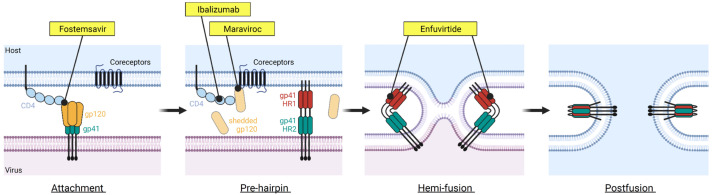
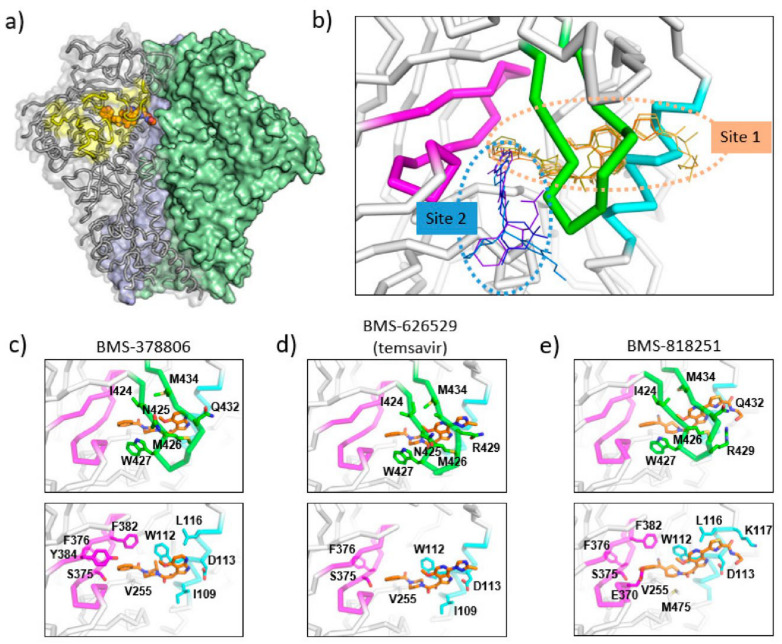
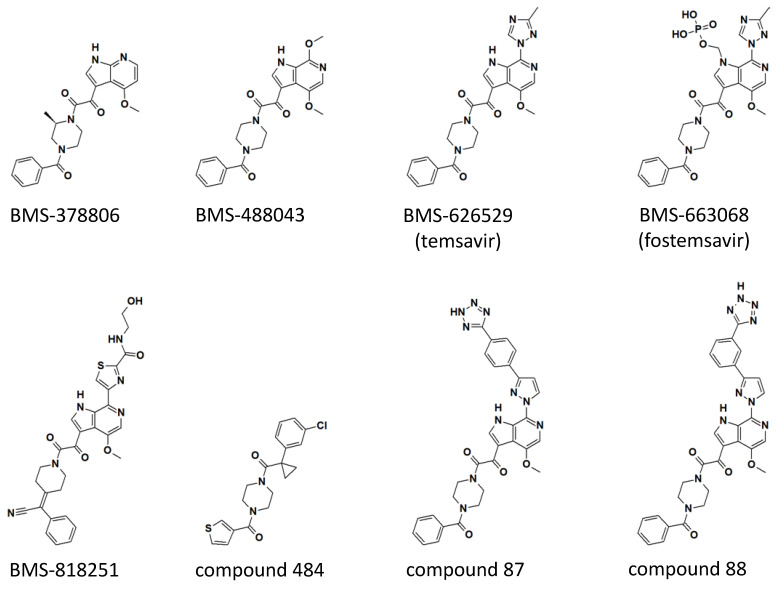
Viral entry into host cells is a critical step in the viral life cycle. HIV-1 entry is mediated by the sole surface envelope glycoprotein Env and is initiated by the interaction between Env and the host receptor CD4. This interaction, referred to as the attachment step, has long been considered an attractive target for inhibitor discovery and development. Fostemsavir, recently approved by the FDA, represents the first-in-class drug in the attachment inhibitor class. This review focuses on the discovery of temsavir (the active compound of fostemsavir) and analogs, mechanistic studies that elucidated the mode of action, and structural studies that revealed atomic details of the interaction between HIV-1 Env and attachment inhibitors. Challenges associated with emerging resistance mutations to the attachment inhibitors and the development of next-generation attachment inhibitors are also highlighted.
病毒进入宿主细胞是病毒生命周期中的关键步骤。HIV-1 的进入是由唯一的表面包膜糖蛋白 Env 介导的,由 Env 与宿主受体 CD4 之间的相互作用启动。这种相互作用,称为附着步骤,长期以来一直被认为是抑制剂发现和开发的有吸引力的目标。FDA 最近批准的 fostemsavir 代表了附着抑制剂类别的首个同类药物。本综述重点介绍了 temsavir(fostemsavir 的活性化合物)及其类似物的发现、阐明作用机制的机制研究以及揭示 HIV-1 Env 与附着抑制剂相互作用原子细节的结构研究。还强调了与附着抑制剂出现的耐药突变相关的挑战以及下一代附着抑制剂的开发。