Morgan Jonathan J, Crawford Lisa J
Patrick G Johnston Centre for Cancer Research, Queen's University Belfast, Belfast BT9 7BL, UK.
Cancers (Basel). 2021 May 6;13(9):2235. doi: 10.3390/cancers13092235.
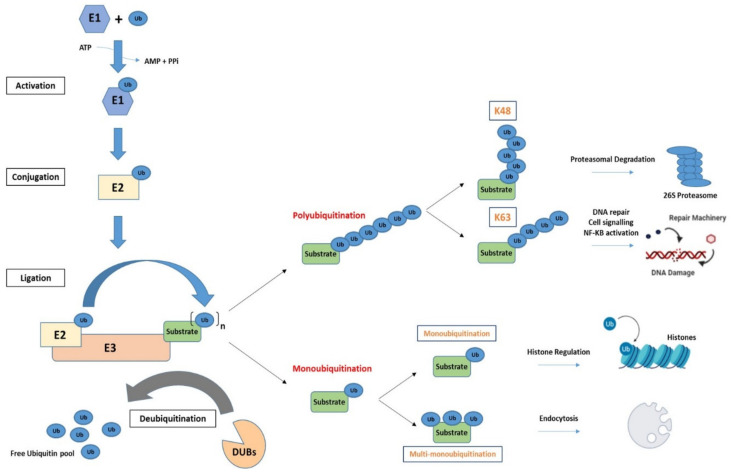
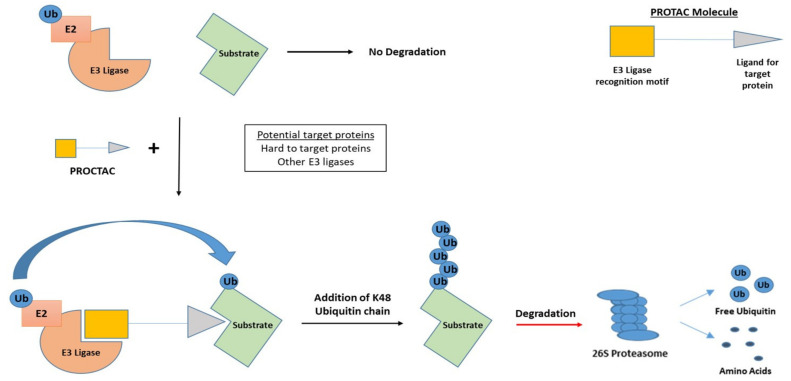
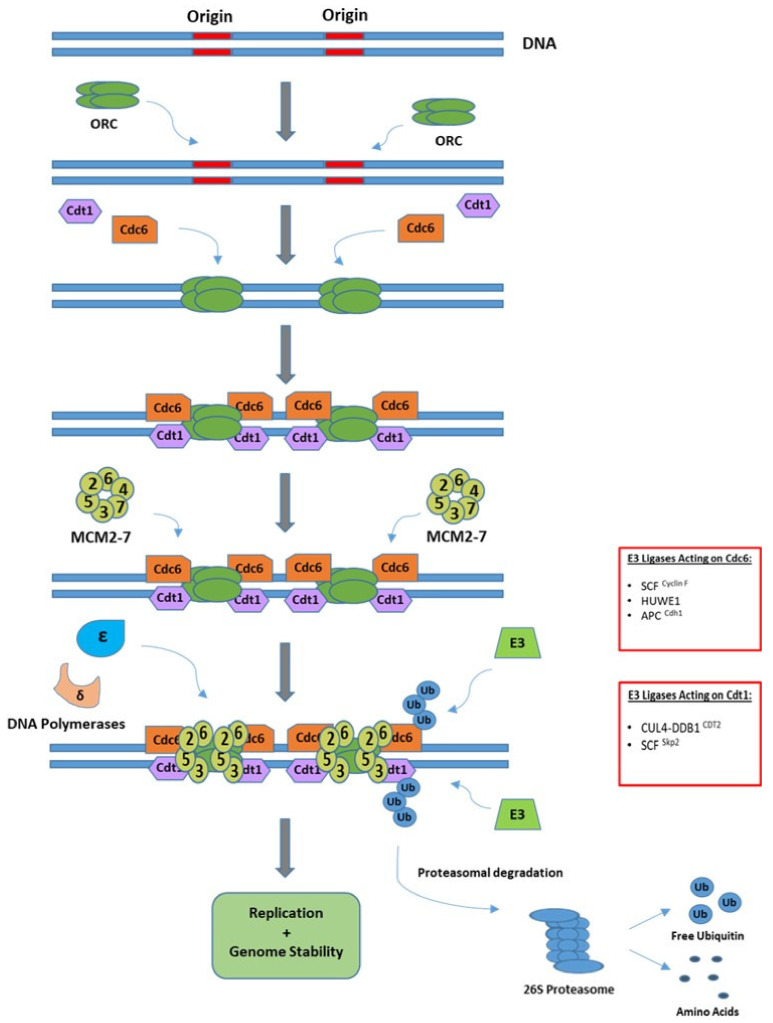
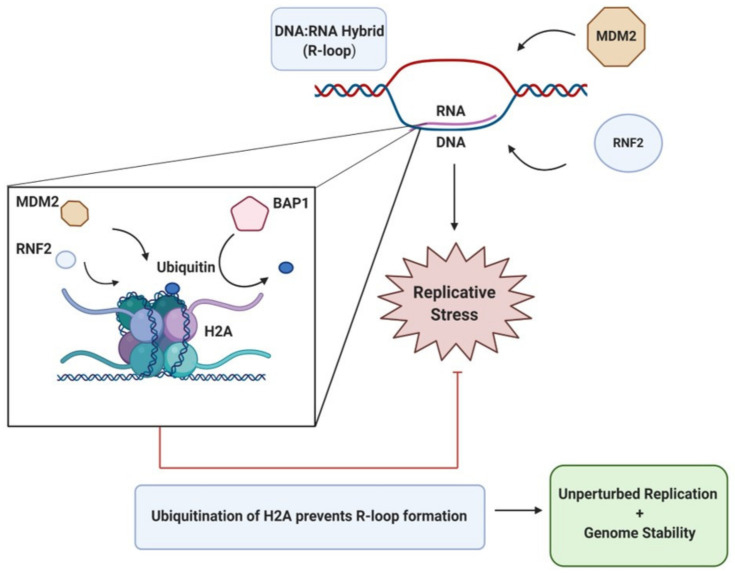
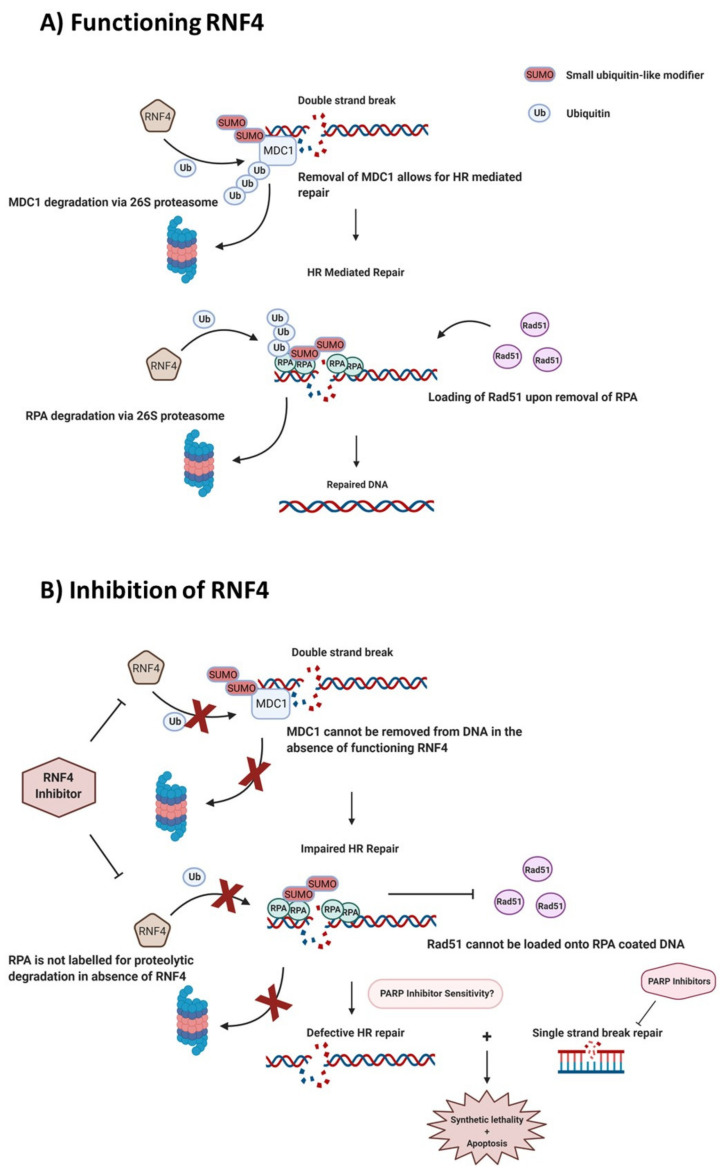
Faithful DNA replication during cellular division is essential to maintain genome stability and cells have developed a sophisticated network of regulatory systems to ensure its integrity. Disruption of these control mechanisms can lead to loss of genomic stability, a key hallmark of cancer. Ubiquitination is one of the most abundant regulatory post-translational modifications and plays a pivotal role in controlling replication progression, repair of DNA and genome stability. Dysregulation of the ubiquitin proteasome system (UPS) can contribute to the initiation and progression of neoplastic transformation. In this review we provide an overview of the UPS and summarize its involvement in replication and replicative stress, along with DNA damage repair. Finally, we discuss how the UPS presents as an emerging source for novel therapeutic interventions aimed at targeting genomic instability, which could be utilized in the treatment and management of cancer.
细胞分裂过程中忠实的DNA复制对于维持基因组稳定性至关重要,细胞已形成一套复杂的调节系统网络来确保其完整性。这些控制机制的破坏会导致基因组稳定性丧失,这是癌症的一个关键特征。泛素化是最丰富的调节性翻译后修饰之一,在控制复制进程、DNA修复和基因组稳定性方面发挥着关键作用。泛素蛋白酶体系统(UPS)的失调可能有助于肿瘤转化的起始和进展。在这篇综述中,我们概述了UPS,并总结了其在复制和复制应激以及DNA损伤修复中的作用。最后,我们讨论了UPS如何成为针对基因组不稳定的新型治疗干预措施的新兴来源,这些干预措施可用于癌症的治疗和管理。