Noguerol Ana Teresa, Igual Marta, Pagán-Moreno M Jesús
Investigation and Innovation Group, Food Technology Department, Universitat Politècnica de València, Camino de Vera s/n, 46022 Valencia, Spain.
Foods. 2021 May 7;10(5):1017. doi: 10.3390/foods10051017.
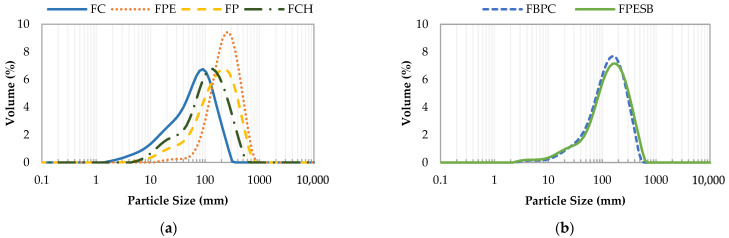
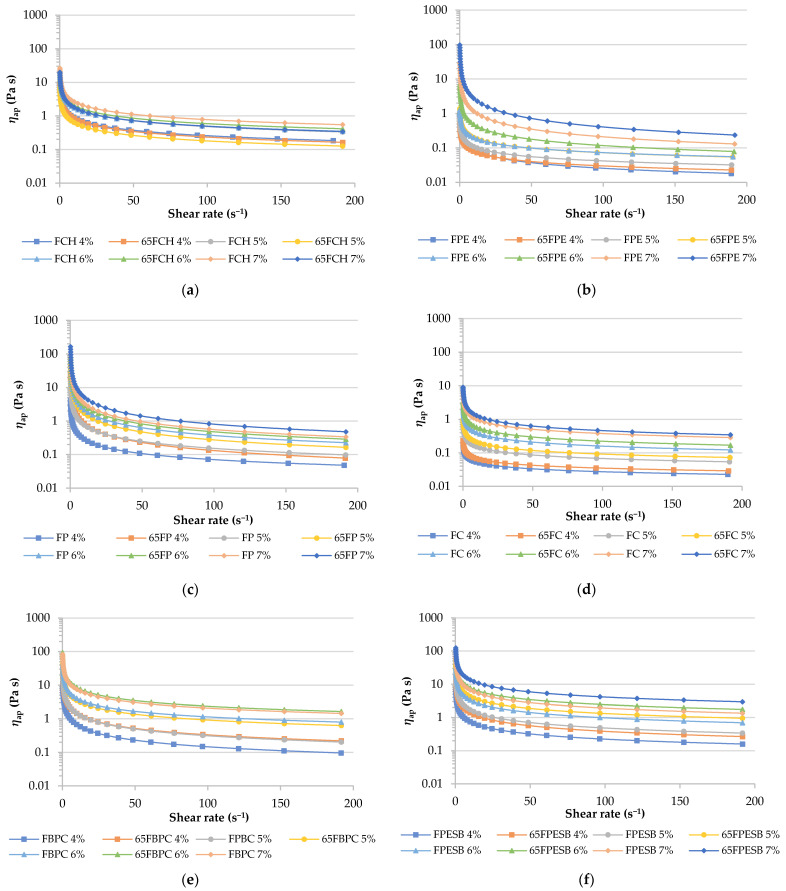
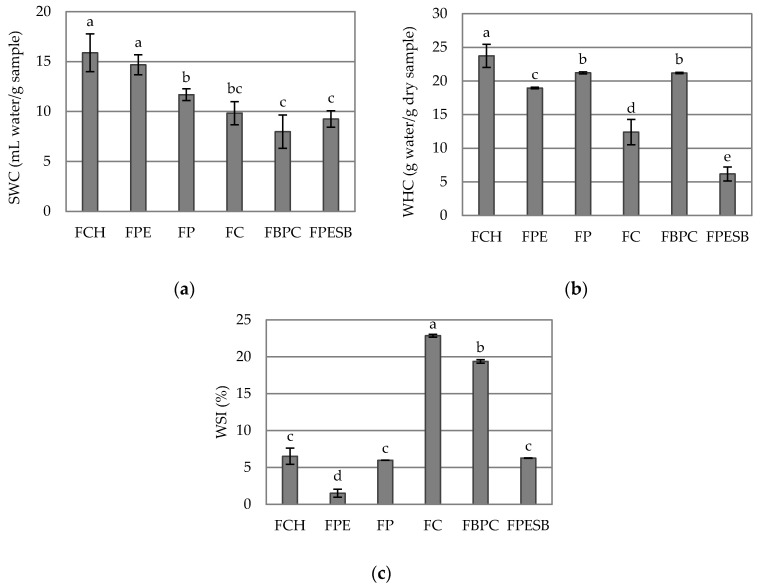
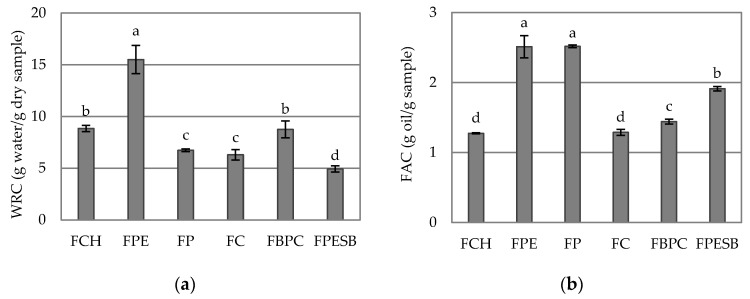
The aim of this research was to evaluate the nutritional and physico-chemical properties of six different vegetable fibers and explore the possibility of using them as a thickener or gelling agent in food. To determine the technological, nutritional and physical parameters, the following analyses were carried out: water-holding capacity, water retention capacity, swelling, fat absorption capacity, solubility, particle size, moisture, hygroscopicity, pH, water activity, bulk density, porosity, antioxidant activity, phenolic compounds and mineral content. Gels were prepared at concentrations from 4% to 7% at 5 °C and analyzed at 25 °C before and after treatment at 65 °C for 20 min. A back extrusion test, texture profile analysis and rheology were performed and the pH value, water content and color were analyzed. As a result, all the samples generally showed significant differences in all the tested parameters. Hydration properties were different in all the tested samples, but the high values found for chia flour and citrus fiber are highlighted in functional terms. Moreover, chia flour was a source of minerals with high Fe, Mn and Cu contents. In gels, significant differences were found in the textural and rheological properties among the samples, and also due to the heat treatment used (65 °C, 20 min). As a result, chia flour, citrus, potato and pea fibers showed more appropriate characteristics for thickening. Moreover, potato fiber at high concentrations and both combinations of fibers (pea, cane sugar and bamboo fiber and bamboo, psyllium and citric fiber) were more suitable for gelling agents to be used in food products.
本研究的目的是评估六种不同植物纤维的营养和理化性质,并探索将它们用作食品增稠剂或胶凝剂的可能性。为了确定工艺、营养和物理参数,进行了以下分析:持水能力、保水能力、膨胀性、脂肪吸收能力、溶解度、粒度、水分、吸湿性、pH值、水分活度、堆积密度、孔隙率、抗氧化活性、酚类化合物和矿物质含量。在5℃下以4%至7%的浓度制备凝胶,并在65℃处理20分钟前后于25℃进行分析。进行了反向挤压试验、质地剖面分析和流变学分析,并分析了pH值、含水量和颜色。结果,所有样品在所有测试参数上普遍显示出显著差异。所有测试样品的水化性质各不相同,但从功能角度来看,奇亚籽粉和柑橘纤维的高值较为突出。此外,奇亚籽粉是铁、锰和铜含量高的矿物质来源。在凝胶中,样品之间在质地和流变性质方面存在显著差异,并且也由于所使用的热处理(65℃,20分钟)。结果,奇亚籽粉、柑橘、土豆和豌豆纤维表现出更适合增稠的特性。此外,高浓度的土豆纤维以及两种纤维组合(豌豆、甘蔗渣和竹纤维以及竹、车前草和柑橘纤维)更适合用作食品中的胶凝剂。