Onyango Isaac G, Jauregui Gretsen V, Čarná Mária, Bennett James P, Stokin Gorazd B
Centre for Translational Medicine International Clinical Research Centre, St. Anne's University Hospital, CZ-65691 Brno, Czech Republic.
Neurodegeneration Therapeutics, 3050A Berkmar Drive, Charlottesville, VA 22901, USA.
Biomedicines. 2021 May 7;9(5):524. doi: 10.3390/biomedicines9050524.
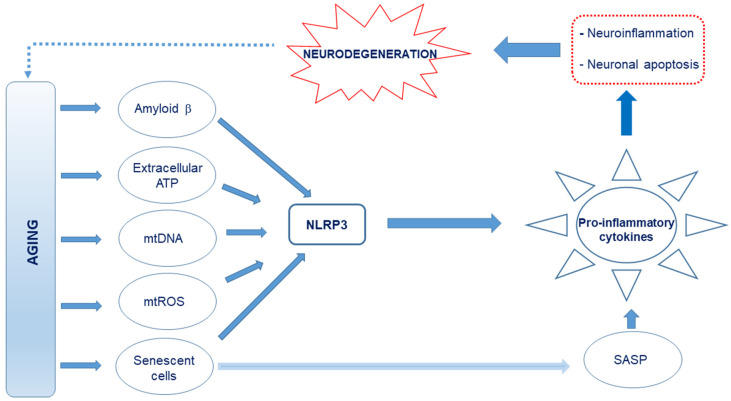
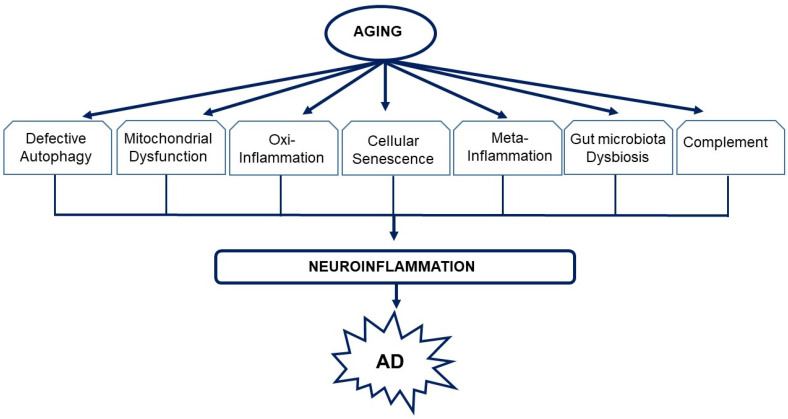
Alzheimer's disease (AD) is a neurodegenerative disease associated with human aging. Ten percent of individuals over 65 years have AD and its prevalence continues to rise with increasing age. There are currently no effective disease modifying treatments for AD, resulting in increasingly large socioeconomic and personal costs. Increasing age is associated with an increase in low-grade chronic inflammation (inflammaging) that may contribute to the neurodegenerative process in AD. Although the exact mechanisms remain unclear, aberrant elevation of reactive oxygen and nitrogen species (RONS) levels from several endogenous and exogenous processes in the brain may not only affect cell signaling, but also trigger cellular senescence, inflammation, and pyroptosis. Moreover, a compromised immune privilege of the brain that allows the infiltration of peripheral immune cells and infectious agents may play a role. Additionally, meta-inflammation as well as gut microbiota dysbiosis may drive the neuroinflammatory process. Considering that inflammatory/immune pathways are dysregulated in parallel with cognitive dysfunction in AD, elucidating the relationship between the central nervous system and the immune system may facilitate the development of a safe and effective therapy for AD. We discuss some current ideas on processes in inflammaging that appear to drive the neurodegenerative process in AD and summarize details on a few immunomodulatory strategies being developed to selectively target the detrimental aspects of neuroinflammation without affecting defense mechanisms against pathogens and tissue damage.
阿尔茨海默病(AD)是一种与人类衰老相关的神经退行性疾病。65岁以上的人群中有10%患有AD,且其患病率随着年龄的增长持续上升。目前尚无有效的疾病改善治疗方法,导致社会经济和个人成本不断增加。年龄增长与低度慢性炎症(炎症衰老)增加有关,这可能促成了AD中的神经退行性过程。尽管确切机制尚不清楚,但大脑中多种内源性和外源性过程导致的活性氧和氮物种(RONS)水平异常升高,不仅可能影响细胞信号传导,还可能引发细胞衰老、炎症和细胞焦亡。此外,大脑免疫特权受损,使得外周免疫细胞和病原体得以浸润,这可能也起到了一定作用。另外,元炎症以及肠道微生物群失调可能会推动神经炎症过程。鉴于AD中炎症/免疫途径与认知功能障碍同时失调,阐明中枢神经系统与免疫系统之间的关系可能有助于开发出安全有效的AD治疗方法。我们讨论了一些关于炎症衰老过程中似乎促成AD神经退行性过程的当前观点,并总结了一些正在开发的免疫调节策略的细节,这些策略旨在选择性地针对神经炎症的有害方面,同时不影响针对病原体和组织损伤的防御机制。