Bakhmet Igor, Fokina Natalia, Ruokolainen Tatiana
Karelian Research Center of RAS, Institute of Biology, Pushkinskaya St., 11, 185910 Petrozavodsk, Russia.
J Xenobiot. 2021 May 14;11(2):46-60. doi: 10.3390/jox11020004.
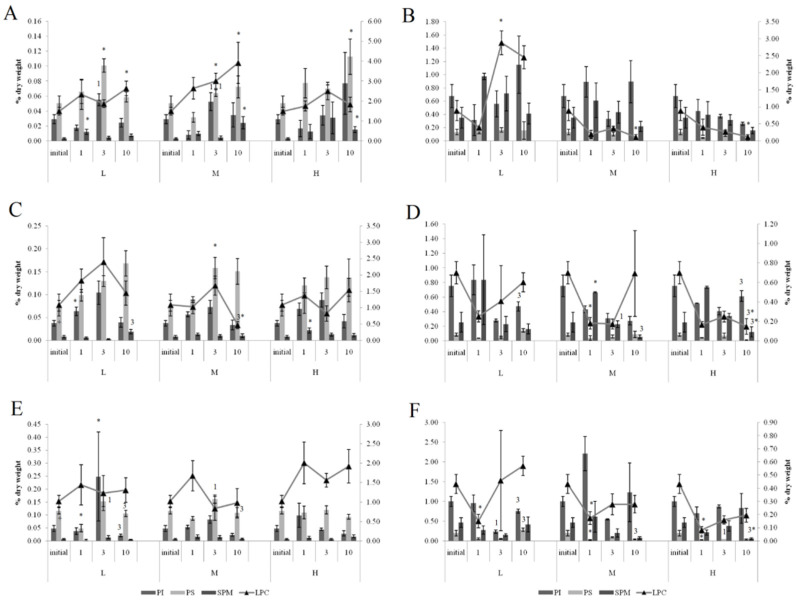
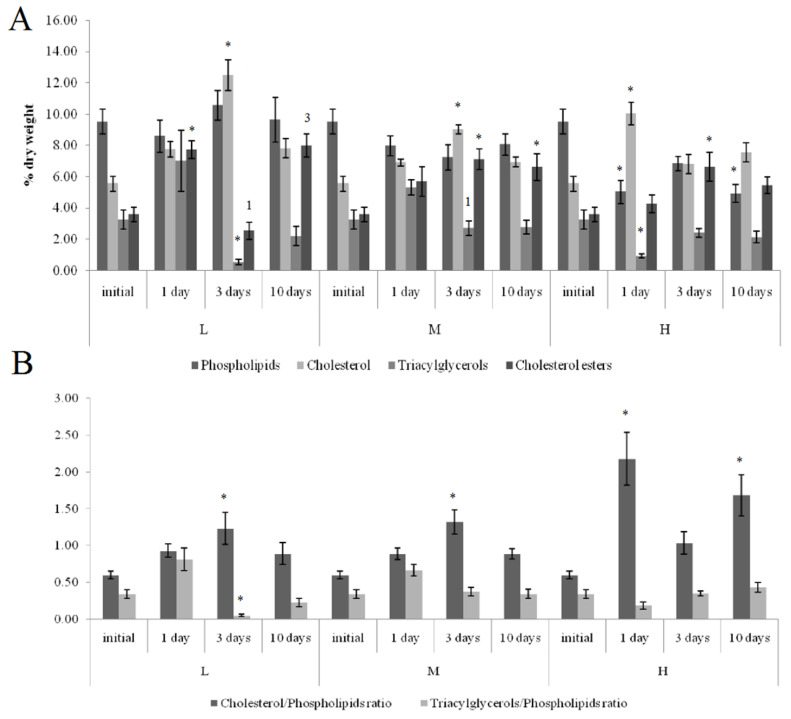
Blue mussels, , inhabiting tidal zones, are naturally exposed to fluctuating environmental conditions (e.g., fluctuations in temperature and salinities), while horse mussels, , live under relatively invariable shelf water conditions. The present investigation tested the hypothesis: blue mussels, in comparison to horse mussels, have an increased ability to tolerate the stress of pollution combined with low salinity. To assess the response of blue mussels and horse mussels to oil pollution at seawater salinities of 25 psu (normal) and 15 psu (low), we used a combination of heart rate and lipid composition as physiological and biochemical indicators, respectively. A sharp decrease in heart rate as well as important fluctuations in cardiac activity was observed under all oil concentrations. Modifications in the concentrations of the main membrane lipid classes (phosphatidylcholine, phosphatidylethanolamine, and cholesterol) and storage lipids (primarily triacylglycerols) in response to different crude oil concentrations were time- and dose-dependent. Both chosen indicators showed a high sensitivity to crude oil contamination. Furthermore, both bivalve species showed similar responses to oil pollution, suggesting a universal mechanism for biochemical adaptation to crude oil pollution.
紫贻贝栖息于潮间带,自然会受到波动的环境条件(如温度和盐度的波动)影响,而翡翠贻贝则生活在相对稳定的陆架水条件下。本研究检验了以下假设:与翡翠贻贝相比,紫贻贝耐受污染与低盐度胁迫的能力更强。为了评估紫贻贝和翡翠贻贝在海水盐度为25 psu(正常)和15 psu(低)时对油污的反应,我们分别使用心率和脂质组成作为生理和生化指标。在所有油浓度下均观察到心率急剧下降以及心脏活动的重要波动。主要膜脂类(磷脂酰胆碱、磷脂酰乙醇胺和胆固醇)和储存脂质(主要是三酰甘油)的浓度响应不同原油浓度的变化具有时间和剂量依赖性。所选的两个指标对原油污染均表现出高敏感性。此外,两种双壳贝类对油污表现出相似的反应,表明存在一种对原油污染进行生化适应的普遍机制。