Shanghai Key Laboratory of Plant Molecular Sciences, College of Life Sciences, Shanghai Normal University, Shanghai 200234, China.
Biomolecules. 2021 May 14;11(5):732. doi: 10.3390/biom11050732.
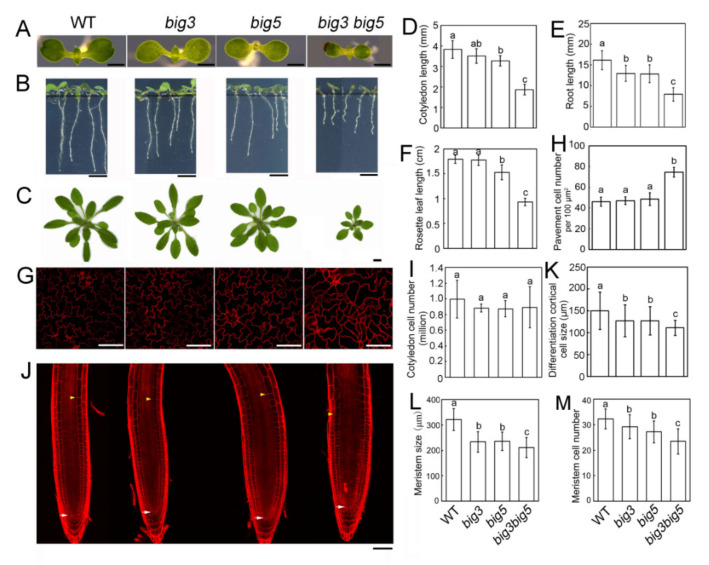
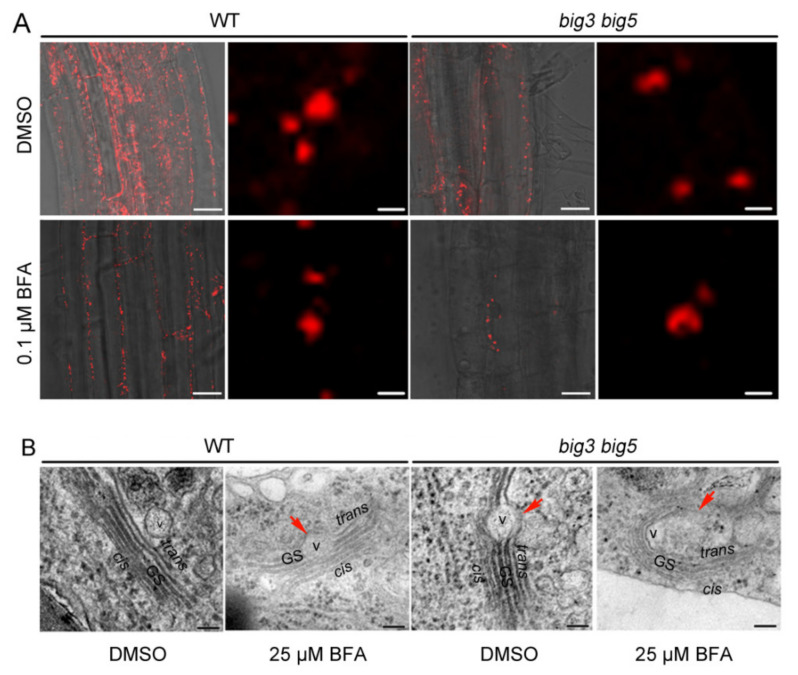
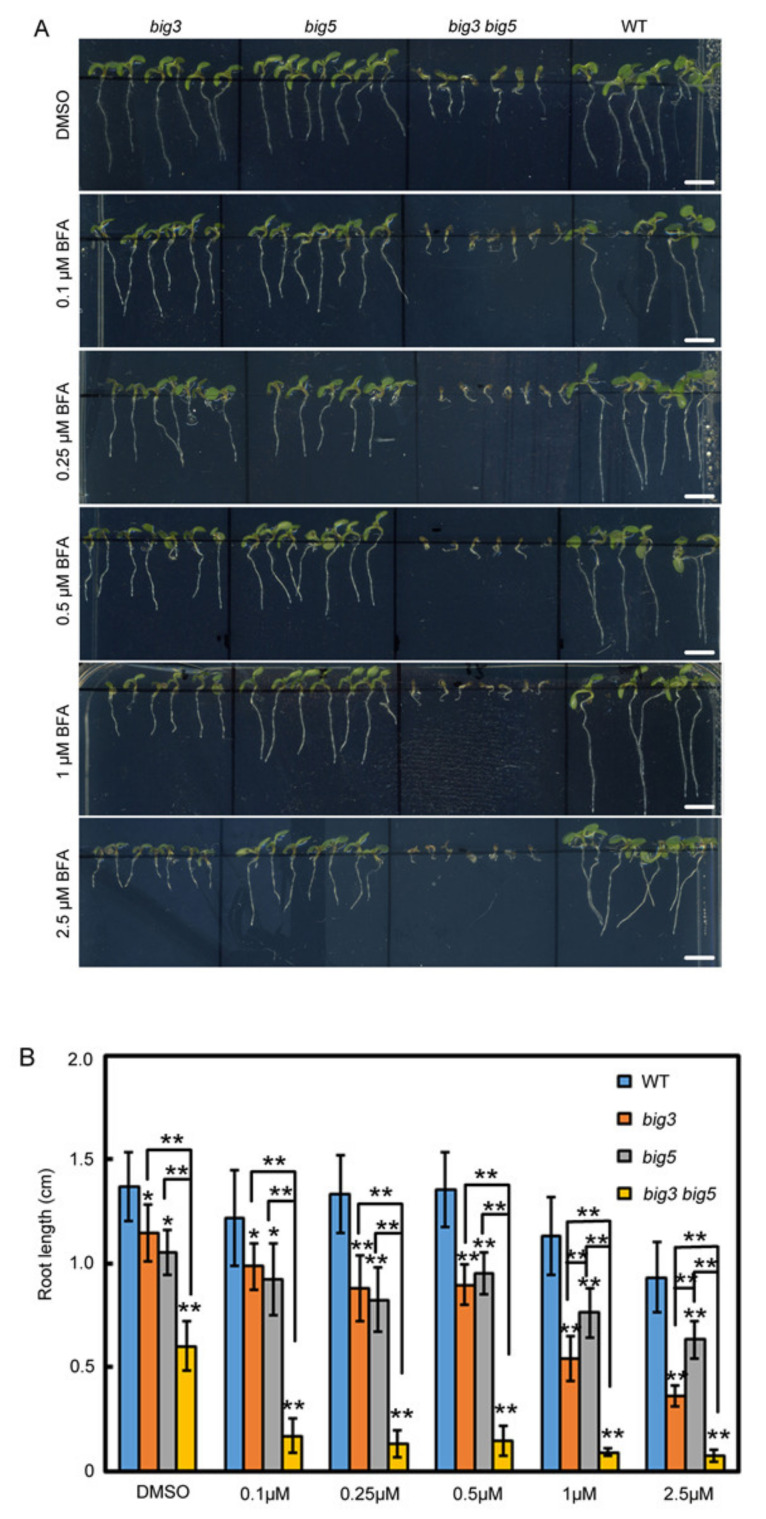
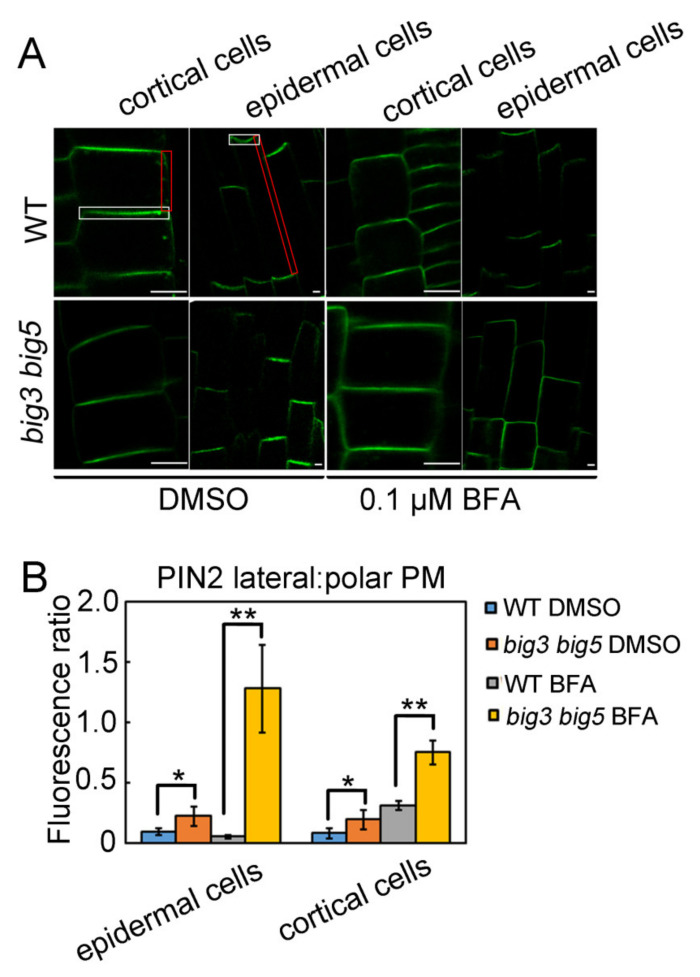
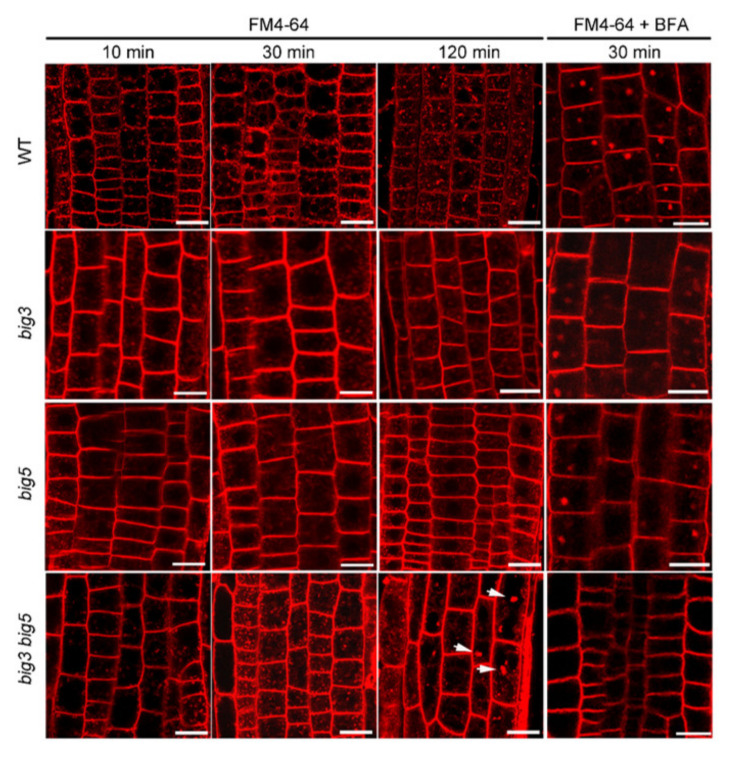
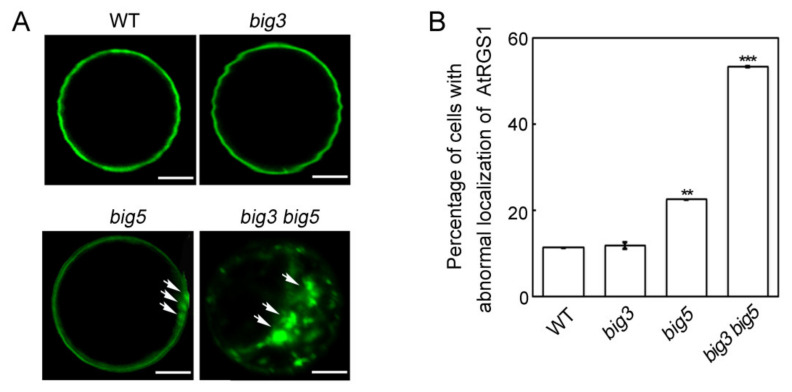
Vesicle trafficking plays an important role in delivering a diverse range of cargoes between different membranous systems in eukaryotes. It is well documented that the brefeldin A (BFA)-inhibited guanine nucleotide exchange factor (GEF), named BIG, regulates vesicle budding at the Golgi network (TGN) and recycling endosomes through activating the ADP-ribosylation factor (ARFs). Among the five BIGs in , BIG5 is characterized to mediate ARF-dependent trafficking at the plasma membrane or endosomes while the members from BIG1 to BIG4 (BIG1-BIG4) at the TGN in the secretory pathway. However, evidence is increasing to suggest that BIG5 can function redundantly with BIG1-BIG4 to regulate vesicular trafficking in response to various intra- and extra-cellular stimuli. In this study, our genetic analysis showed that BIG5 played an overlapping role at least with BIG3 in cell proliferation. To elucidate molecular mechanisms underlying the BIG5- and BIG3-regulated biological processes, we examined the effect of BIGs on expression patterns of the two transmembrane proteins, PINFORMED 2 (PIN2) epically localized in root epidermal cells and the regulator of G protein signaling 1 (RGS1) localized in the plasma membrane. Our data showed that the PIN2 polar distribution was slightly reduced in in the absence of BFA, and it was significantly reduced by the treatment of 0.1 µM BFA in . Further analysis revealed that BFA bodies derived from the plasma membrane were only observed in wild type (WT), and cells, but not in the cells. These results indicate that BIG5 and BIG3 are functionally redundant in the endosome recycling pathway from the plasma membrane to TGN. On the other hand, the single or mutation had no effect on the plasma membrane expression of RGS1, whereas the double mutations in and led to a significant amount of RGS1 retained in the vesicle, indicating that BIG3 and BIG5 act redundantly in mediating protein trafficking. Furthermore, transmission electron microscopy assays showed that Golgi ultrastructure in cells was abnormal and similar to that in BFA-treated WT cells. Taken together, our data provide several new lines of evidence supporting that BIGs play a redundant role in vesicular trafficking and probably also in maintaining the Golgi structural integrity in .
小泡运输在真核生物不同膜系统之间输送各种货物中起着重要作用。有大量文献记载,布雷菲德菌素 A(BFA)抑制的鸟嘌呤核苷酸交换因子(GEF),称为 BIG,通过激活 ADP-核糖基化因子(ARF)调节高尔基体网络(TGN)和再循环内体中的小泡出芽。在 BIG 的五个成员中,BIG5 的特征是在质膜或内体中调节 ARF 依赖性运输,而 BIG1-BIG4(BIG1-BIG4)则在分泌途径中的 TGN 中起作用。然而,越来越多的证据表明,BIG5 可以与 BIG1-BIG4 冗余地发挥作用,以响应各种细胞内和细胞外刺激调节小泡运输。在这项研究中,我们的遗传分析表明,BIG5 在细胞增殖中至少与 BIG3 发挥重叠作用。为了阐明 BIG5 和 BIG3 调节的生物学过程的分子机制,我们检查了 BIGs 对两种跨膜蛋白表达模式的影响,PINFORMED 2(PIN2)特异性定位于根表皮细胞,以及 G 蛋白信号调节因子 1(RGS1)定位于质膜。我们的数据表明,在没有 BFA 的情况下,缺失 BIG5 会导致 PIN2 的极性分布略有减少,而在 0.1µM BFA 处理下,减少更为明显。进一步的分析表明,只有在野生型(WT)、和 细胞中观察到源自质膜的 BFA 体,但在 细胞中没有观察到。这些结果表明,BIG5 和 BIG3 在质膜到 TGN 的内体再循环途径中是功能冗余的。另一方面,单独的 或 突变对 RGS1 在质膜上的表达没有影响,而 和 的双突变导致大量 RGS1 保留在囊泡中,表明 BIG3 和 BIG5 以冗余的方式介导蛋白运输。此外,透射电子显微镜检测表明,细胞中的高尔基体超微结构异常,与 BFA 处理的 WT 细胞相似。综上所述,我们的数据提供了几条新的证据,支持 BIGs 在小泡运输中发挥冗余作用,并且可能在维持中高尔基体结构完整性方面也发挥作用。