Flynn Loren L, Mitrpant Chalermchai, Adams Abbie, Pitout Ianthe L, Stirnweiss Anja, Fletcher Sue, Wilton Steve D
Centre for Molecular Medicine and Innovative Therapeutics, Health Futures Institute, Murdoch University, Murdoch, WA 6150, Australia.
Perron Institute for Neurological and Translational Science, Nedlands, WA 6009, Australia.
Biomedicines. 2021 May 14;9(5):552. doi: 10.3390/biomedicines9050552.
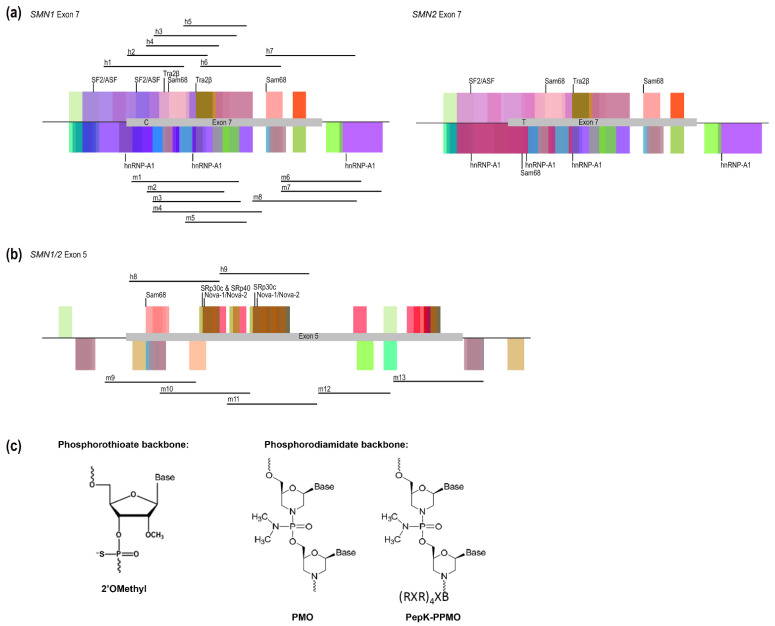
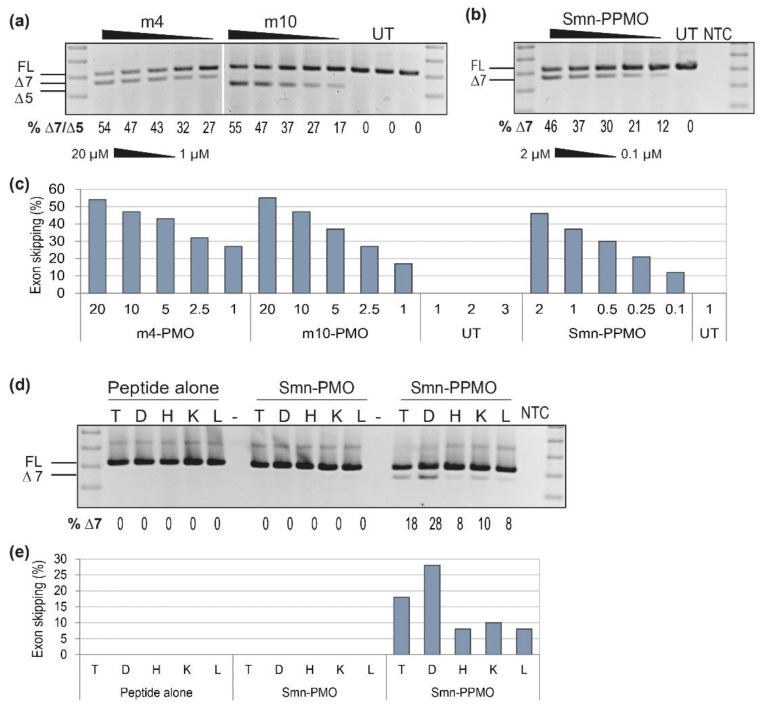
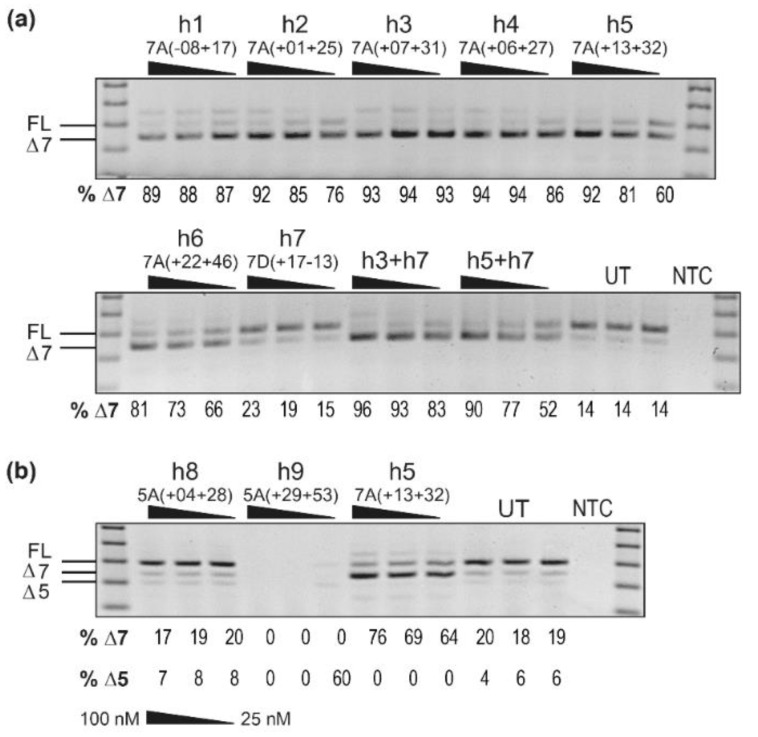
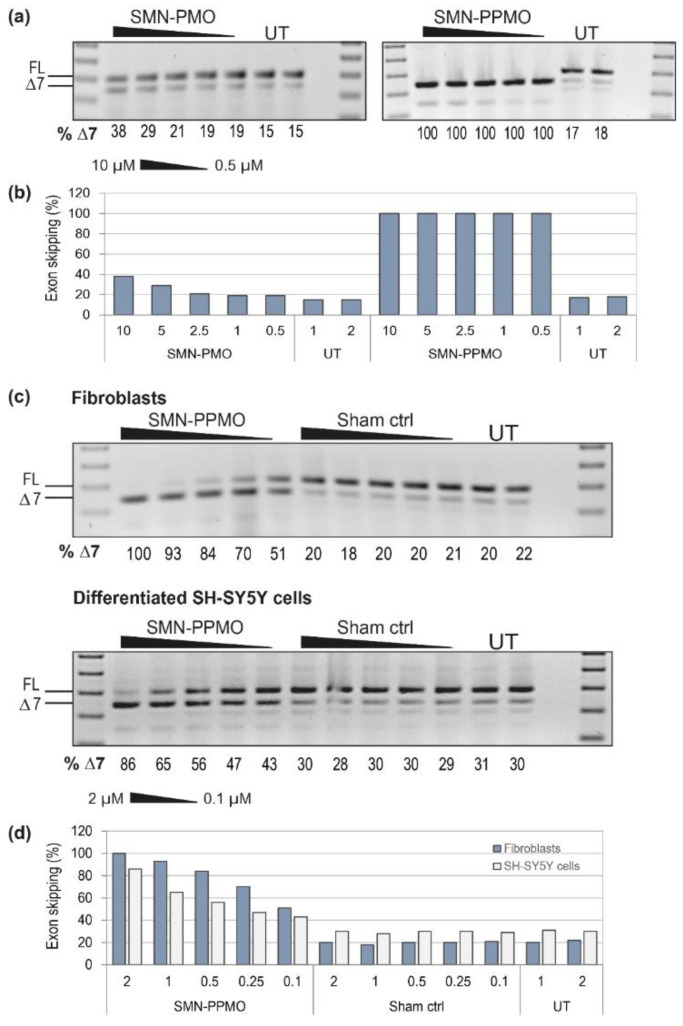
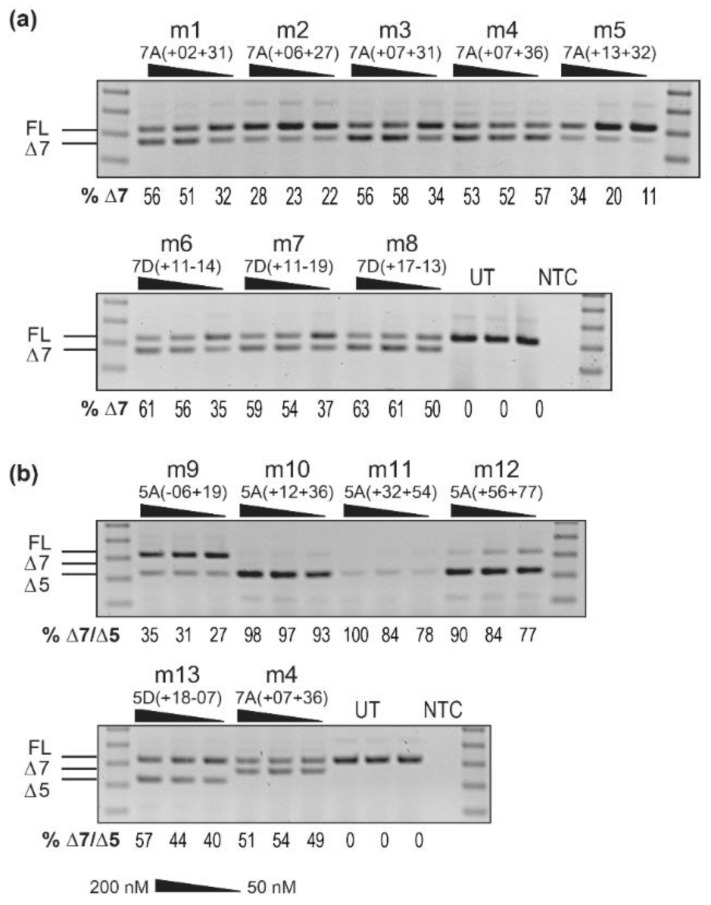
The literature surrounding the use of antisense oligonucleotides continues to grow, with new disease and mechanistic applications constantly evolving. Furthermore, the discovery and advancement of novel chemistries continues to improve antisense delivery, stability and effectiveness. For each new application, a rational sequence design is recommended for each oligomer, as is chemistry and delivery optimization. To confirm oligomer delivery and antisense activity, a positive control AO sequence with well characterized target-specific effects is recommended. Here, we describe splice-switching antisense oligomer sequences targeting the ubiquitously expressed human and mouse and genes for use as control AOs for this purpose. We report two AO sequences that induce targeted skipping of SMN1/SMN2 exon 7 and two sequences targeting the gene, that induce skipping of exon 5 and exon 7. These antisense sequences proved effective in inducing alternative splicing in both in vitro and in vivo models and are therefore broadly applicable as controls. Not surprisingly, we discovered a number of differences in efficiency of exon removal between the two species, further highlighting the differences in splice regulation between species.
围绕反义寡核苷酸使用的文献不断增加,新的疾病和机制应用也在不断发展。此外,新型化学方法的发现和进步持续改善反义寡核苷酸的递送、稳定性和有效性。对于每个新应用,建议对每个寡聚物进行合理的序列设计,同时进行化学和递送优化。为了确认寡聚物的递送和反义活性,推荐使用具有明确特征的靶标特异性效应的阳性对照反义寡核苷酸序列。在此,我们描述了针对普遍表达的人类和小鼠基因的剪接转换反义寡核苷酸序列,用作此目的的对照反义寡核苷酸。我们报告了两条诱导SMN1/SMN2外显子7靶向跳跃的反义寡核苷酸序列,以及两条靶向基因、诱导外显子5和外显子7跳跃的序列。这些反义序列在体外和体内模型中均有效诱导可变剪接,因此可广泛用作对照。不出所料,我们发现两个物种在外显子去除效率上存在一些差异,进一步突出了物种间剪接调控的差异。