Qiang Shirong, Li Zhengbin, Zhang Li, Luo Dongxia, Geng Rongyue, Zeng Xueli, Liang Jianjun, Li Ping, Fan Qiaohui
Key Laboratory of Preclinical Study for New Drugs of Gansu Province, Institute of Physiology, School of Basic Medical Sciences, Lanzhou University, Lanzhou 730000, China.
Northwest Institute of Eco-Environment and Resources, Chinese Academy of Sciences, Lanzhou 730000, China.
Nanomaterials (Basel). 2021 May 19;11(5):1339. doi: 10.3390/nano11051339.
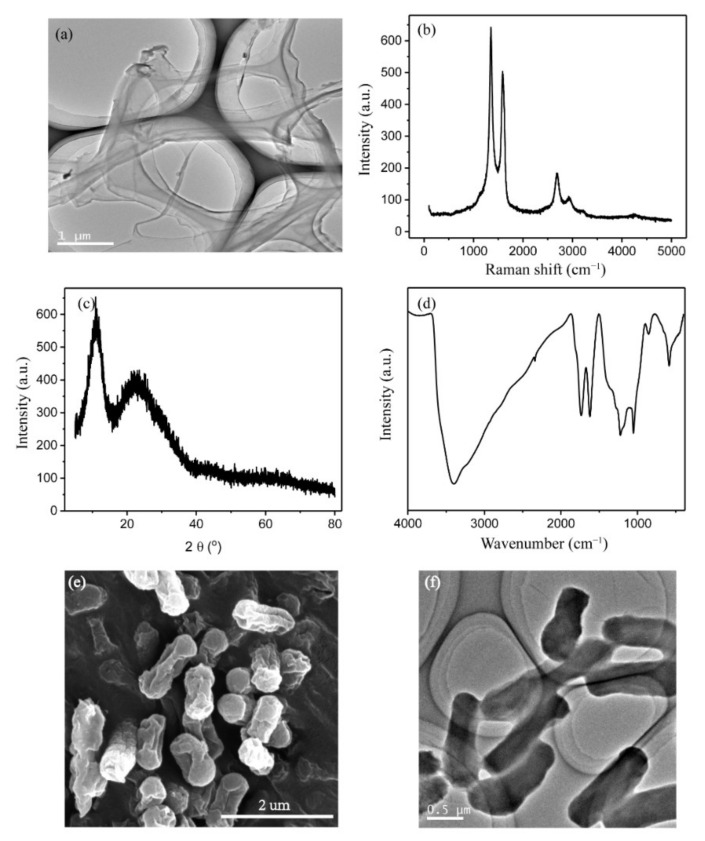
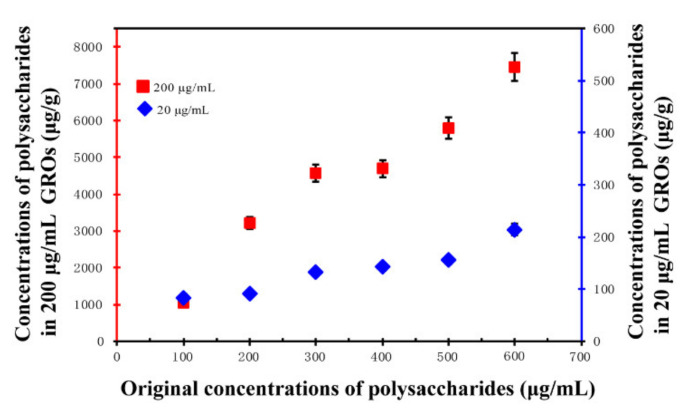
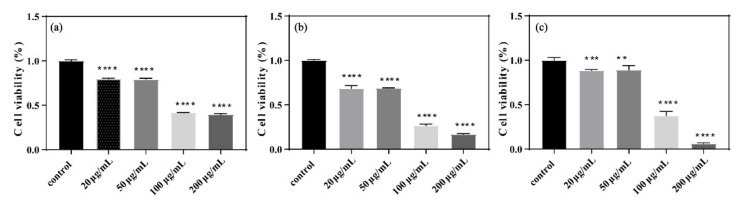
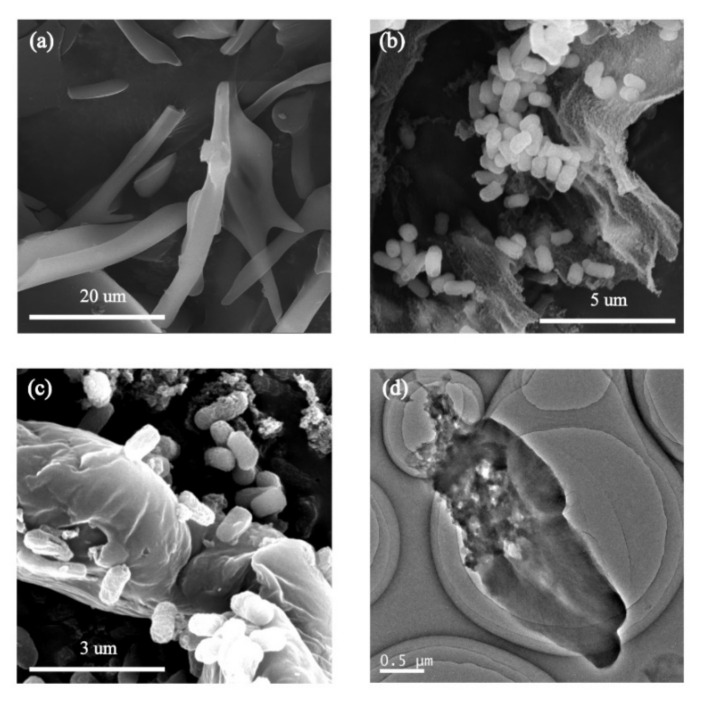
The biological and environmental toxicity of graphene and graphene derivatives have attracted great research interest due to their increasing applications. However, the cytotoxic mechanism is poorly understood. Here, we investigated the cytotoxic effect of graphene oxide nanoribbons (GORs) on () in an in vitro method. The fabricated GORs formed long ribbons, 200 nm wide. Based on the results of the MTT assay and plate-culture experiments, GORs significantly inhibited the growth and reproduction of in a concentration-dependent manner. We found that GORs stimulated to secrete reactive oxygen species, which then oxidized and damaged the bacterial cell membrane. Moreover, interaction between GORs and cytomembrane resulted in polysaccharide adsorption by GORs and the release of lactic dehydrogenase. Furthermore, GORs effectively depleted the metal ions as nutrients in the culture medium by adsorption. Notably, mechanical cutting by GORs was not obvious, which is quite different from the case of graphene oxide sheets to .
由于石墨烯及其衍生物的应用日益广泛,其生物和环境毒性已引起了极大的研究兴趣。然而,细胞毒性机制却知之甚少。在此,我们采用体外方法研究了氧化石墨烯纳米带(GORs)对()的细胞毒性作用。制备的GORs形成了宽200nm的长带。基于MTT法和平板培养实验的结果,GORs以浓度依赖的方式显著抑制了()的生长和繁殖。我们发现GORs刺激()分泌活性氧,进而氧化并破坏细菌细胞膜。此外,GORs与()细胞膜之间的相互作用导致GORs吸附多糖并释放乳酸脱氢酶。此外,GORs通过吸附有效地耗尽了培养基中作为营养物质的金属离子。值得注意的是,GORs的机械切割作用并不明显,这与氧化石墨烯片对()的情况有很大不同。