Department of Microbiology and Molecular Genetics, Institute for Medical Research Israel Canada, Faculty of Medicine, Hebrew University of Jerusalem, Ein Kerem, Jerusalem 91120, Israel.
Int J Mol Sci. 2021 May 28;22(11):5814. doi: 10.3390/ijms22115814.
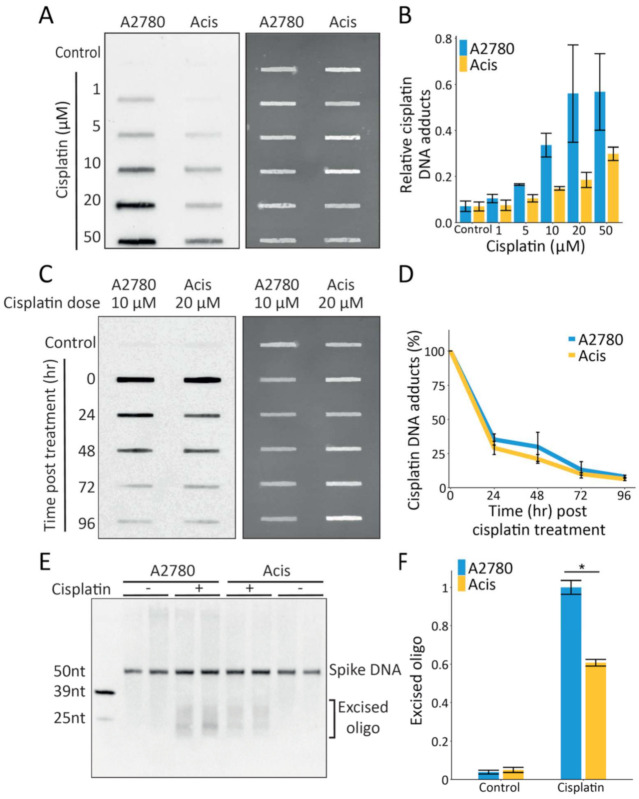
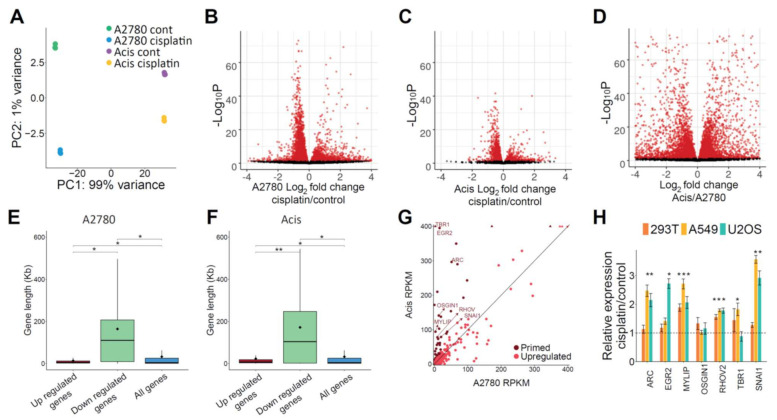
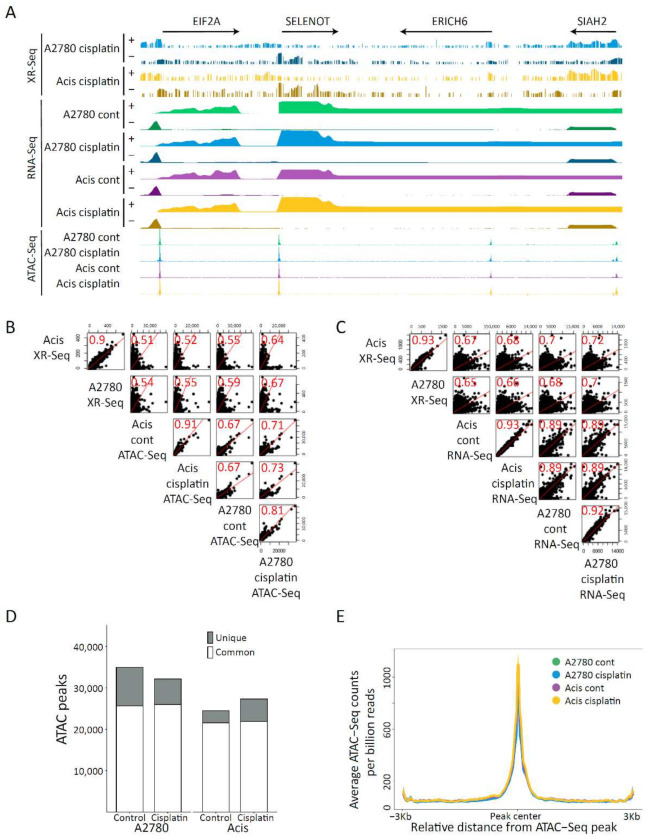
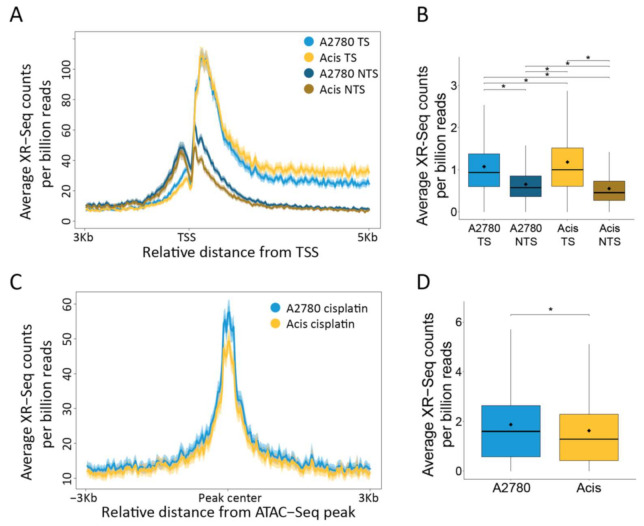
Cisplatin is a chemotherapy drug that kills cancer cells by damaging their DNA. In human cells, this damage is repaired primarily by nucleotide excision repair. While cisplatin is generally effective, many cancers exhibit initial or acquired resistance to it. Here, we studied cisplatin resistance in a defined cell line system. We conducted a comprehensive genomic characterization of the cisplatin-sensitive A2780 ovarian cancer cell line compared to A2780cis, its resistant derivative. The resistant cells acquired less damage, but had similar repair kinetics. Genome-wide mapping of nucleotide excision repair showed a shift in the resistant cells from global genome towards transcription-coupled repair. By mapping gene expression changes following cisplatin treatment, we identified 56 upregulated genes that have higher basal expression in the resistant cell line, suggesting they are primed for a cisplatin response. More than half of these genes are novel to cisplatin- or damage-response. Six out of seven primed genes tested were upregulated in response to cisplatin in additional cell lines, making them attractive candidates for future investigation. These novel candidates for cisplatin resistance could prove to be important prognostic markers or targets for tailored combined therapy in the future.
顺铂是一种通过破坏癌细胞 DNA 来杀死癌细胞的化疗药物。在人类细胞中,这种损伤主要通过核苷酸切除修复来修复。虽然顺铂通常有效,但许多癌症对其表现出初始或获得性耐药性。在这里,我们在一个明确的细胞系系统中研究了顺铂耐药性。我们对顺铂敏感的 A2780 卵巢癌细胞系与耐药衍生的 A2780cis 进行了全面的基因组特征分析。耐药细胞受到的损伤较少,但修复动力学相似。核苷酸切除修复的全基因组图谱显示,耐药细胞从全基因组转向转录偶联修复。通过对顺铂处理后基因表达变化的映射,我们鉴定出 56 个上调基因,这些基因在耐药细胞系中的基础表达水平更高,表明它们对顺铂反应有准备。这些基因中有一半以上是顺铂或损伤反应的新基因。在其他细胞系中,经测试的 7 个有准备基因中有 6 个对顺铂呈上调表达,这使它们成为未来进一步研究的有吸引力的候选基因。这些顺铂耐药的新候选基因可能成为未来靶向联合治疗的重要预后标志物或靶标。