Al-Quraishi Maged S, Elamvazuthi Irraivan, Tang Tong Boon, Al-Qurishi Muhammad, Adil Syed Hasan, Ebrahim Mansoor
Department of Electrical and Electronic Engineering, Universiti Teknologi PETRONAS, Bandar Seri Iskandar 32610, Malaysia.
Faculty of Engineering, Thamar University, Dhamar 87246, Yemen.
Brain Sci. 2021 May 27;11(6):713. doi: 10.3390/brainsci11060713.
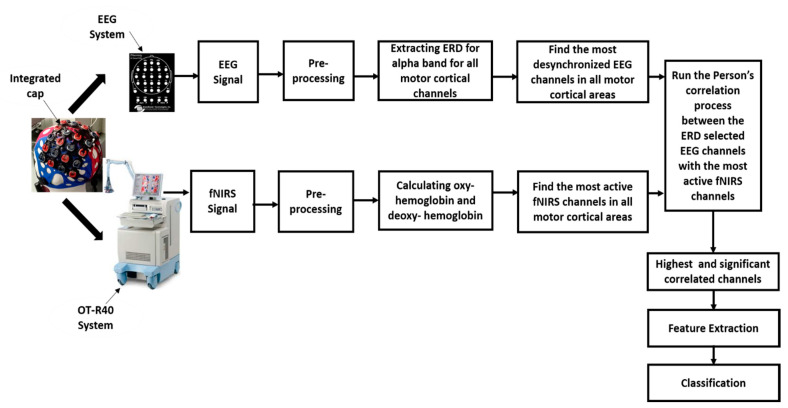
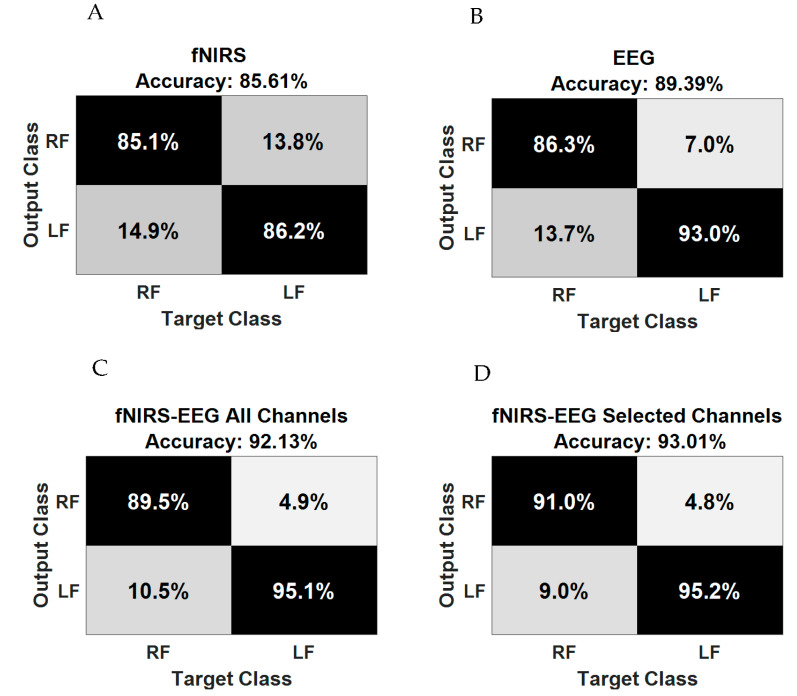
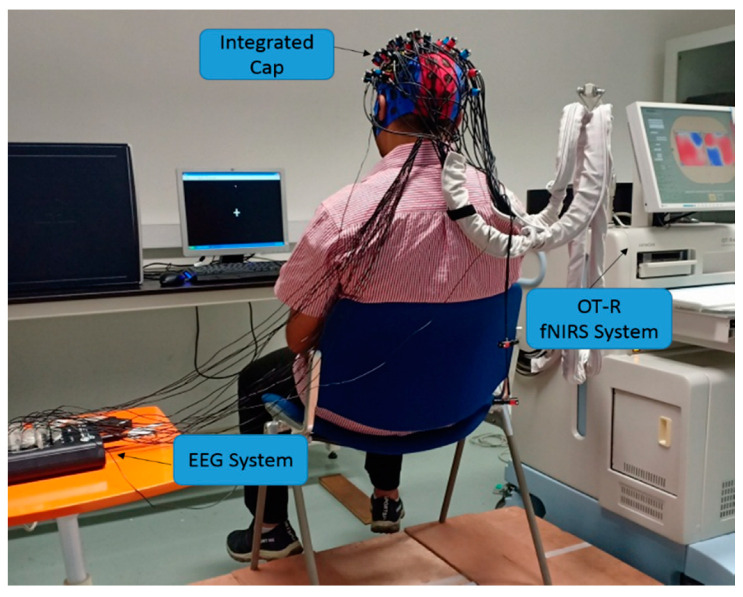
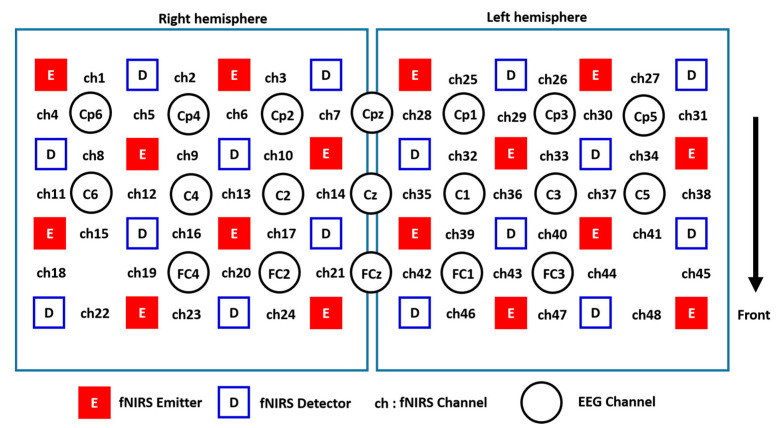
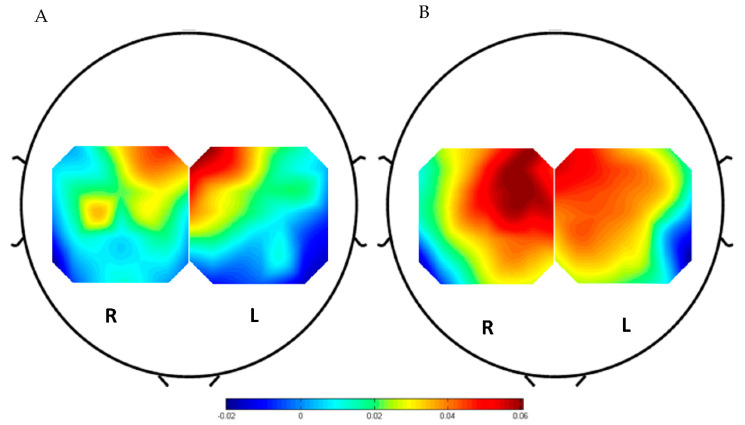
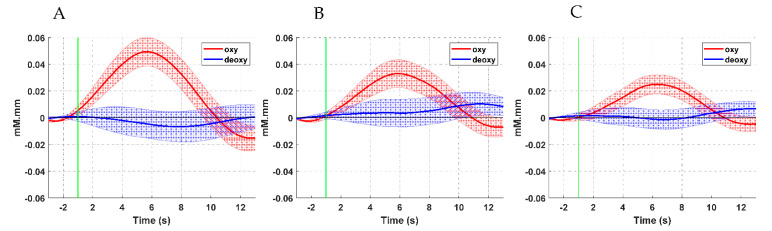
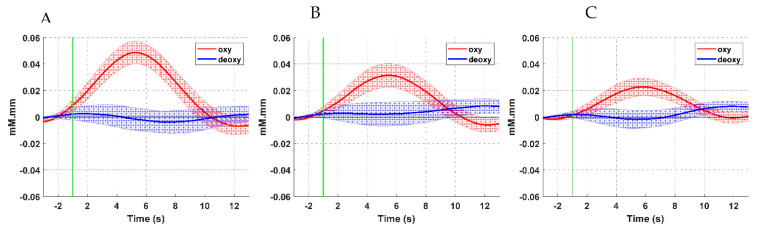
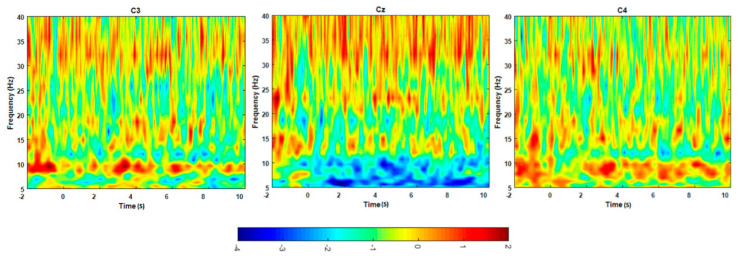
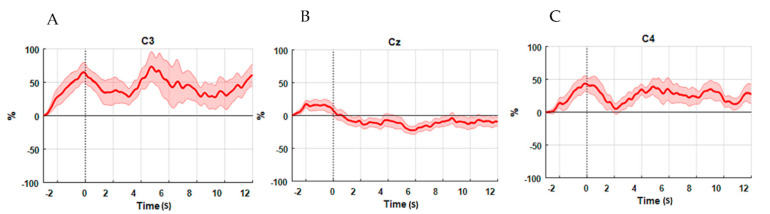
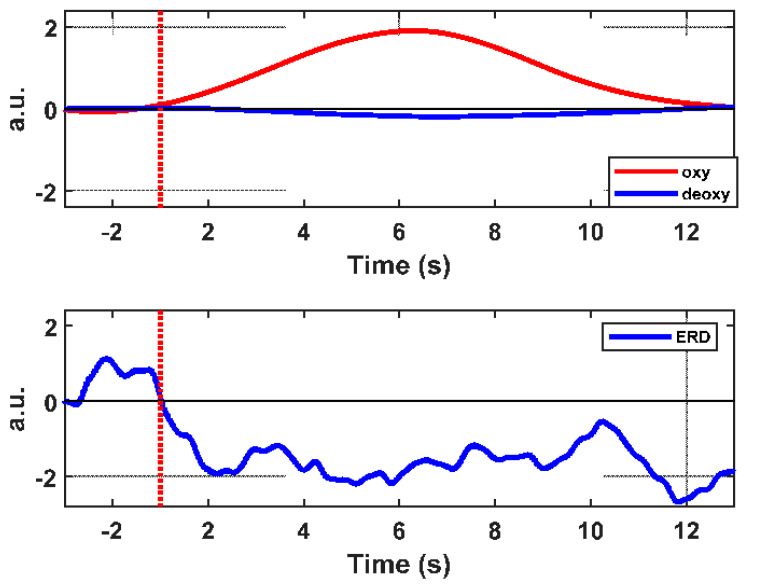
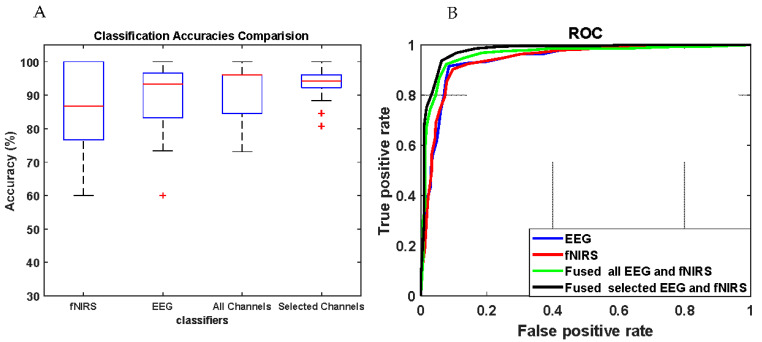
Electroencephalography (EEG) and functional near-infrared spectroscopy (fNIRS) have temporal and spatial characteristics that may complement each other and, therefore, pose an intriguing approach for brain-computer interaction (BCI). In this work, the relationship between the hemodynamic response and brain oscillation activity was investigated using the concurrent recording of fNIRS and EEG during ankle joint movements. Twenty subjects participated in this experiment. The EEG was recorded using 20 electrodes and hemodynamic responses were recorded using 32 optodes positioned over the motor cortex areas. The event-related desynchronization (ERD) feature was extracted from the EEG signal in the alpha band (8-11) Hz, and the concentration change of the oxy-hemoglobin (oxyHb) was evaluated from the hemodynamics response. During the motor execution of the ankle joint movements, a decrease in the alpha (8-11) Hz amplitude (desynchronization) was found to be correlated with an increase of the oxyHb (r = -0.64061, < 0.00001) observed on the Cz electrode and the average of the fNIRS channels (ch28, ch25, ch32, ch35) close to the foot area representation. Then, the correlated channels in both modalities were used for ankle joint movement classification. The result demonstrates that the integrated modality based on the correlated channels provides a substantial enhancement in ankle joint classification accuracy of 93.01 ± 5.60% ( < 0.01) compared with single modality. These results highlight the potential of the bimodal fNIR-EEG approach for the development of future BCI for lower limb rehabilitation.
脑电图(EEG)和功能性近红外光谱(fNIRS)具有时间和空间特征,二者可能互补,因此为脑机接口(BCI)提供了一种引人入胜的方法。在这项工作中,通过在踝关节运动期间同时记录fNIRS和EEG,研究了血液动力学反应与脑振荡活动之间的关系。20名受试者参与了该实验。使用20个电极记录EEG,并使用位于运动皮层区域的32个光极记录血液动力学反应。从α波段(8-11)Hz的EEG信号中提取事件相关去同步化(ERD)特征,并从血液动力学反应中评估氧合血红蛋白(oxyHb)的浓度变化。在踝关节运动的执行过程中,发现α(8-11)Hz振幅的降低(去同步化)与在Cz电极以及靠近足部区域表征的fNIRS通道(ch28、ch25、ch32、ch35)的平均值上观察到的oxyHb增加相关(r = -0.64061,<0.00001)。然后,将两种模式中的相关通道用于踝关节运动分类。结果表明,与单模式相比,基于相关通道的集成模式在踝关节分类准确率方面有显著提高,达到了93.01±5.60%(<0.01)。这些结果突出了双模式fNIR-EEG方法在未来用于下肢康复的BCI开发中的潜力。