Blumfield Michelle, Starck Carlene, Keighley Tim, Petocz Peter, Roesler Anna, Abbott Kylie, Cassettari Tim, Marshall Skye, Fayet-Moore Flavia
Department of Science, Nutrition Research Australia, Sydney, NSW 2000, Australia.
Department of Translational Science, Nutrition Research Australia, Sydney, NSW 2000, Australia.
Int J Environ Res Public Health. 2021 May 27;18(11):5771. doi: 10.3390/ijerph18115771.
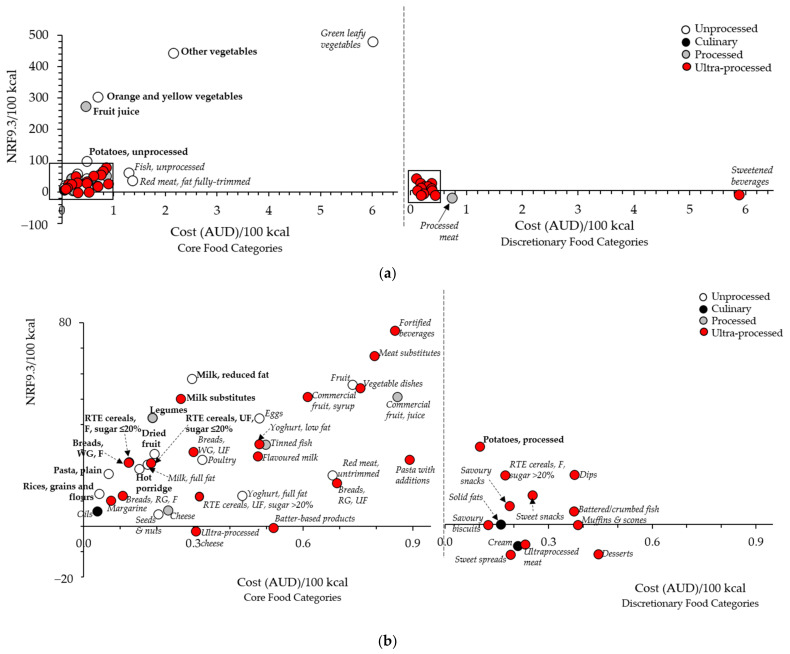
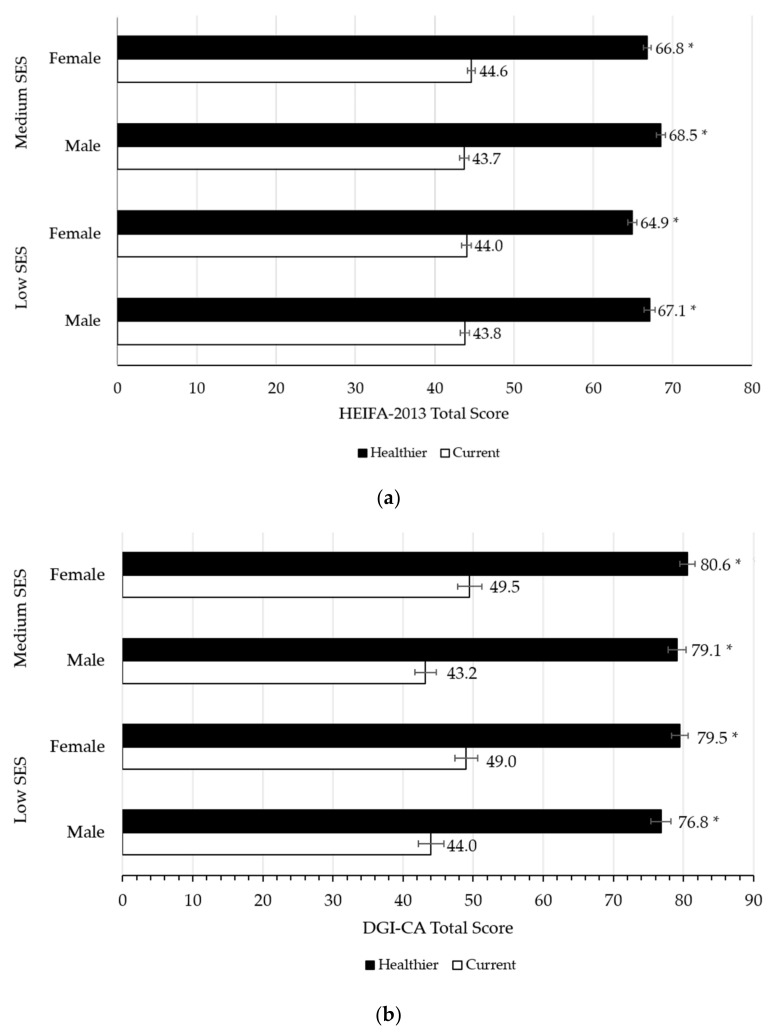
Food costs are a barrier to healthier diet selections, particularly for low socioeconomic households who regularly choose processed foods containing refined grains, added sugars, and added fats. In this study, the objectives were to: (i) identify the nutrient density-to-cost ratio of Australian foods; (ii) model the impact of substituting foods with lower nutrient density-to-cost ratio with those with the highest nutrient density-to-cost ratio for diet quality and affordability in low and medium socioeconomic households; and (iii) evaluate food processing levels. Foods were categorized, coded for processing level, analysed for nutrient density and cost, and ranked by nutrient density-to-cost ratio. The top quartile of nutrient dense, low-cost foods included 54% unprocessed (vegetables and reduced fat dairy), 33% ultra-processed (fortified wholegrain bread and breakfast cereals <20 g sugars/100 g), and 13% processed (fruit juice and canned legumes). Using substitution modelling, diet quality improved by 52% for adults and 71% for children across all households, while diet affordability improved by 25% and 27% for low and medium socioeconomic households, respectively. The results indicate that the quality and affordability of the Australian diet can be improved when nutritious, low-cost foods are selected. Processing levels in the healthier modelled diets suggest that some ultra-processed foods may provide a beneficial source of nutrition when consumed within national food group recommendations.
食品成本是选择更健康饮食的一个障碍,对于社会经济地位较低的家庭来说尤其如此,这些家庭经常选择含有精制谷物、添加糖和添加脂肪的加工食品。在本研究中,目标如下:(i) 确定澳大利亚食品的营养密度与成本之比;(ii) 模拟用营养密度与成本之比最高的食品替代营养密度与成本之比低的食品对中低收入社会经济家庭饮食质量和可承受性的影响;(iii) 评估食品加工水平。对食品进行分类,编码加工水平,分析营养密度和成本,并按营养密度与成本之比进行排名。营养丰富、低成本食品的前四分位数包括54%的未加工食品(蔬菜和低脂乳制品)、33%的超加工食品(强化全麦面包和早餐谷物,糖含量<20克/100克)和13%的加工食品(果汁和罐装豆类)。通过替代模型,所有家庭中成年人的饮食质量提高了52%,儿童提高了71%,而中低收入社会经济家庭的饮食可承受性分别提高了25%和27%。结果表明,选择营养丰富、低成本的食品可以提高澳大利亚饮食的质量和可承受性。在更健康的模拟饮食中的加工水平表明,一些超加工食品在按照国家食物类别建议食用时可能提供有益的营养来源。