Department of Translational Science, Nutrition Research Australia, Sydney, NSW 2000, Australia.
Riddet Institute, Massey University, Palmerston North 4474, New Zealand.
Int J Environ Res Public Health. 2021 Jul 27;18(15):7950. doi: 10.3390/ijerph18157950.
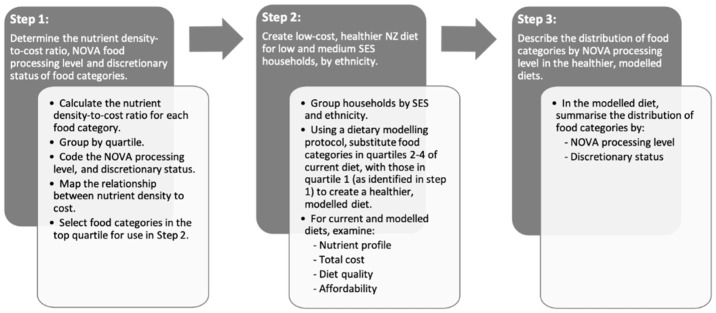
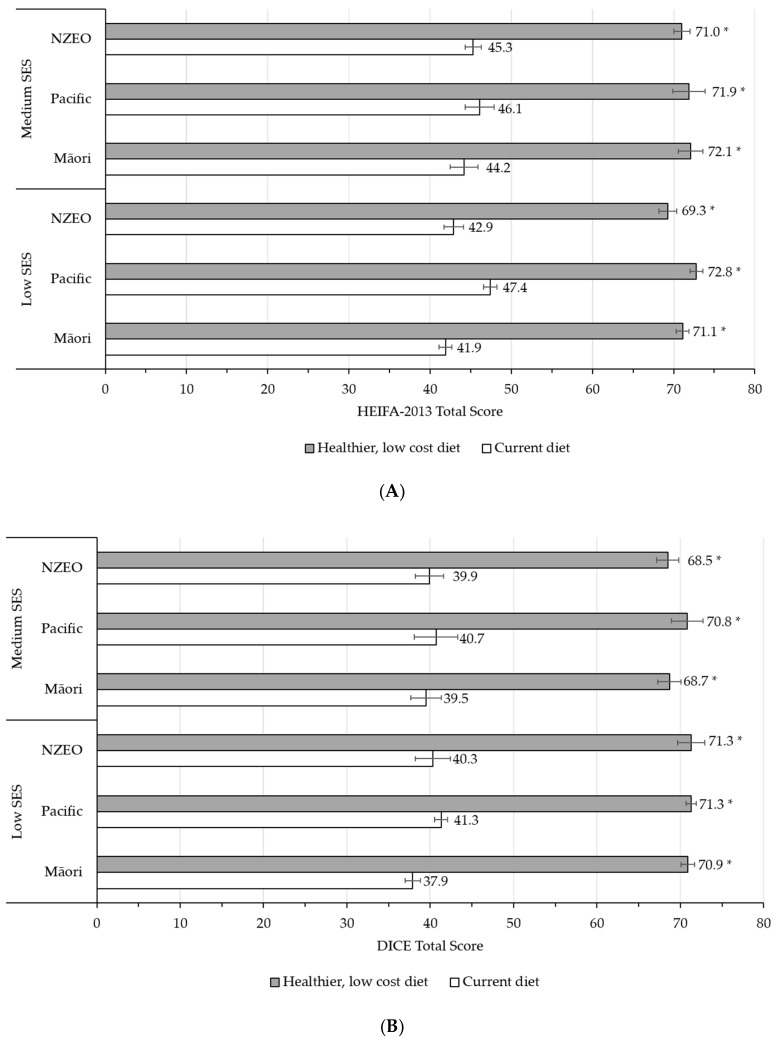
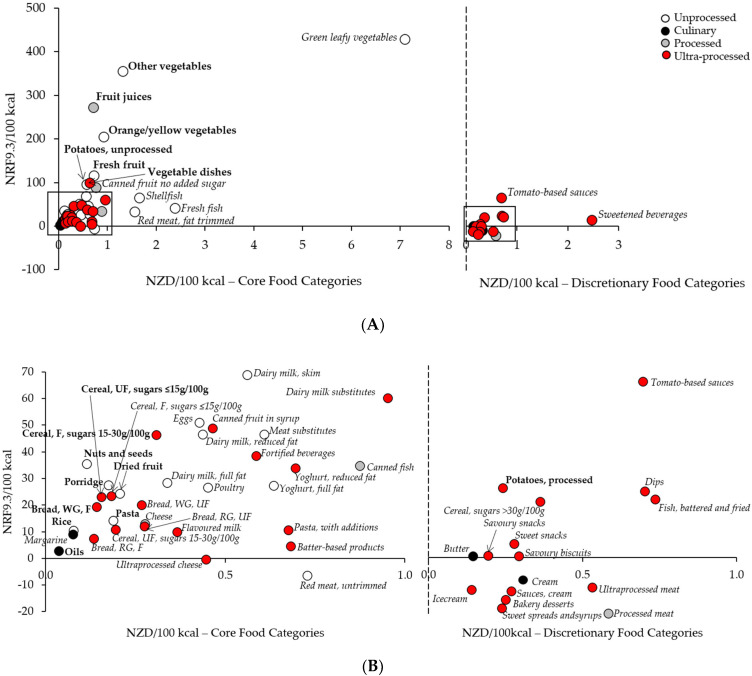
The high prevalence of non-communicable disease in New Zealand (NZ) is driven in part by unhealthy diet selections, with food costs contributing to an increased risk for vulnerable population groups. This study aimed to: (i) identify the nutrient density-to-cost ratio of NZ foods; (ii) model the impact of substituting foods with a lower nutrient density-to-cost ratio with those with a higher nutrient density-to-cost ratio on diet quality and affordability in representative NZ population samples for low and medium socioeconomic status (SES) households by ethnicity; and (iii) evaluate food processing level. Foods were categorized, coded for processing level and discretionary status, analyzed for nutrient density and cost, and ranked by nutrient density-to-cost ratio. The top quartile of nutrient dense, low-cost foods were 56% unprocessed (vegetables, fruit, porridge, pasta, rice, nuts/seeds), 31% ultra-processed (vegetable dishes, fortified bread, breakfast cereals unfortified <15 g sugars/100 g and fortified 15-30 g sugars/100 g), 6% processed (fruit juice), and 6% culinary processed (oils). Using substitution modeling, diet quality improved by 59% and 71% for adults and children, respectively, and affordability increased by 20-24%, depending on ethnicity and SES. The NZ diet can be made healthier and more affordable when nutritious, low-cost foods are selected. Processing levels in the healthier, modeled diet suggest that some non-discretionary ultra-processed foods may provide a valuable source of low-cost nutrition for food insecure populations.
新西兰(NZ)高发的非传染性疾病部分是由不健康的饮食选择导致的,而食品成本增加了弱势群体的风险。本研究旨在:(i)确定 NZ 食品的营养素密度与成本比;(ii)通过替代具有较低营养素密度与成本比的食物与具有较高营养素密度与成本比的食物,来模拟对代表性 NZ 人口样本中低和中等社会经济地位(SES)家庭的饮食质量和负担能力的影响,按族裔划分;和(iii)评估食品加工水平。对食物进行分类、编码,用于加工水平和可自由支配状态,分析营养素密度和成本,并按营养素密度与成本比进行排名。营养丰富、成本低的前四分之一食物分别为 56%未加工(蔬菜、水果、粥、意大利面、大米、坚果/种子)、31%超加工(蔬菜菜肴、强化面包、早餐谷物未经强化<15 g 糖/100 g 和强化 15-30 g 糖/100 g)、6%加工(果汁)和 6%烹饪加工(油)。通过替代模型,成年人和儿童的饮食质量分别提高了 59%和 71%,并且根据族裔和 SES,负担能力提高了 20-24%。当选择营养丰富、成本低的食物时,NZ 饮食可以变得更加健康和负担得起。更健康的模拟饮食中的加工水平表明,一些非自由选择的超加工食品可能为粮食不安全人群提供了一种有价值的低成本营养来源。