Jeong Yoo-Seong, Kim Min-Soo, Lee Nora, Lee Areum, Chae Yoon-Jee, Chung Suk-Jae, Lee Kyeong-Ryoon
College of Pharmacy and Research Institute of Pharmaceutical Sciences, Seoul National University, Seoul 08826, Korea.
Daewoong Pharmaceutical Co., Ltd., Seoul 06170, Korea.
Pharmaceutics. 2021 May 29;13(6):813. doi: 10.3390/pharmaceutics13060813.
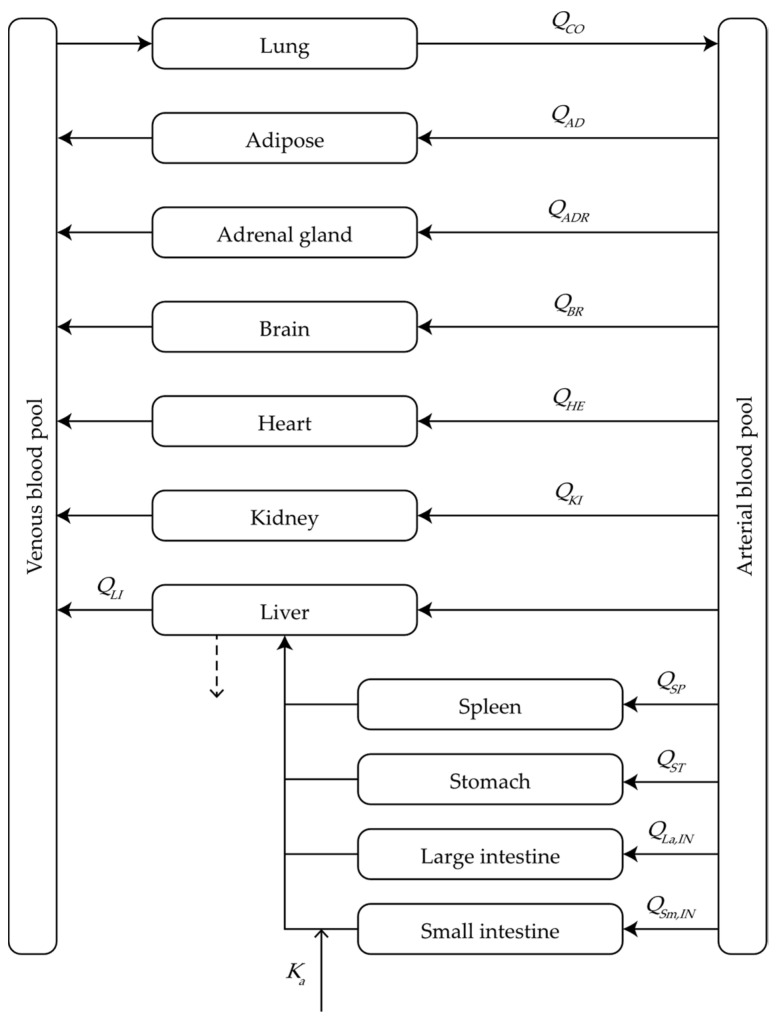
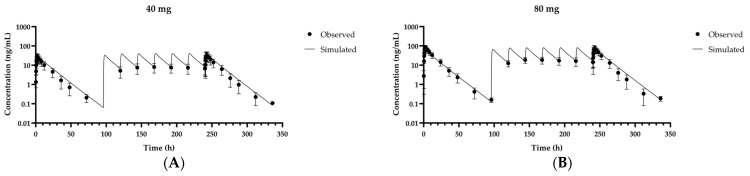
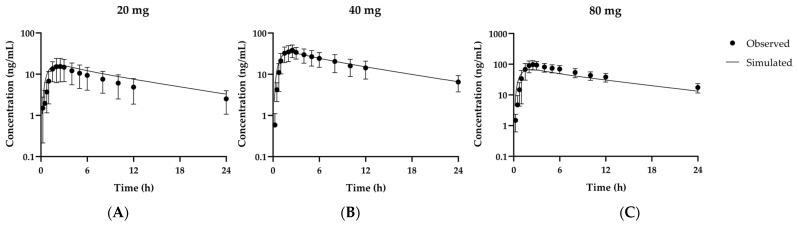
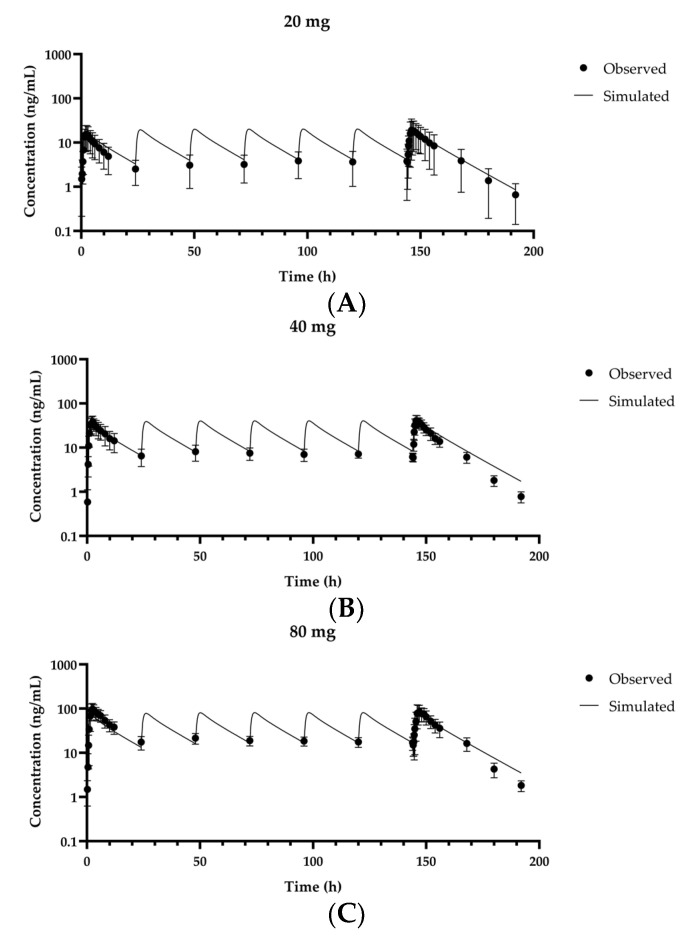
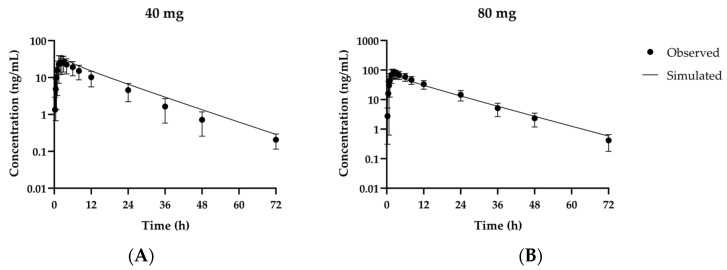
Fexuprazan is a new drug candidate in the potassium-competitive acid blocker (P-CAB) family. As proton pump inhibitors (PPIs), P-CABs inhibit gastric acid secretion and can be used to treat gastric acid-related disorders such as gastroesophageal reflux disease (GERD). Physiologically based pharmacokinetic (PBPK) models predict drug interactions as pharmacokinetic profiles in biological matrices can be mechanistically simulated. Here, we propose an optimized and validated PBPK model for fexuprazan by integrating in vitro, in vivo, and in silico data. The extent of fexuprazan tissue distribution in humans was predicted using tissue-to-plasma partition coefficients in rats and the allometric relationships of fexuprazan distribution volumes () among preclinical species. Urinary fexuprazan excretion was minimal (0.29-2.02%), and this drug was eliminated primarily by the liver and metabolite formation. The fraction absorbed () of 0.761, estimated from the PBPK modeling, was consistent with the physicochemical properties of fexuprazan, including its in vitro solubility and permeability. The predicted oral bioavailability of fexuprazan (38.4-38.6%) was within the range of the preclinical datasets. The C, AUC, and time-concentration profiles predicted by the PBPK model established by the learning set were accurately predicted for the validation sets.
非索拉唑是钾竞争性酸阻滞剂(P-CAB)家族中的一种新型候选药物。作为质子泵抑制剂(PPI),P-CAB可抑制胃酸分泌,可用于治疗胃酸相关疾病,如胃食管反流病(GERD)。基于生理的药代动力学(PBPK)模型可预测药物相互作用,因为生物基质中的药代动力学特征可通过机制进行模拟。在此,我们通过整合体外、体内和计算机模拟数据,提出了一种针对非索拉唑的优化且经过验证的PBPK模型。利用大鼠的组织-血浆分配系数以及临床前物种中非索拉唑分布容积()的异速生长关系,预测了非索拉唑在人体中的组织分布程度。非索拉唑经尿液排泄极少(0.29 - 2.02%),该药物主要通过肝脏代谢和形成代谢产物而消除。通过PBPK模型估算的吸收分数()为0.761,与非索拉唑的理化性质一致,包括其体外溶解度和渗透性。预测的非索拉唑口服生物利用度(38.4 - 38.6%)在临床前数据集范围内。由学习集建立的PBPK模型预测的C、AUC和时间-浓度曲线,在验证集中得到了准确预测。