Khanagar Sanjeev B, Naik Sachin, Al Kheraif Abdulaziz Abdullah, Vishwanathaiah Satish, Maganur Prabhadevi C, Alhazmi Yaser, Mushtaq Shazia, Sarode Sachin C, Sarode Gargi S, Zanza Alessio, Testarelli Luca, Patil Shankargouda
Preventive Dental Science Department, College of Dentistry, King Saud Bin Abdulaziz University for Health Sciences, Riyadh 11481, Saudi Arabia.
King Abdullah International Medical Research Center, Ministry of National Guard Health Affairs, Riyadh 11481, Saudi Arabia.
Diagnostics (Basel). 2021 May 31;11(6):1004. doi: 10.3390/diagnostics11061004.
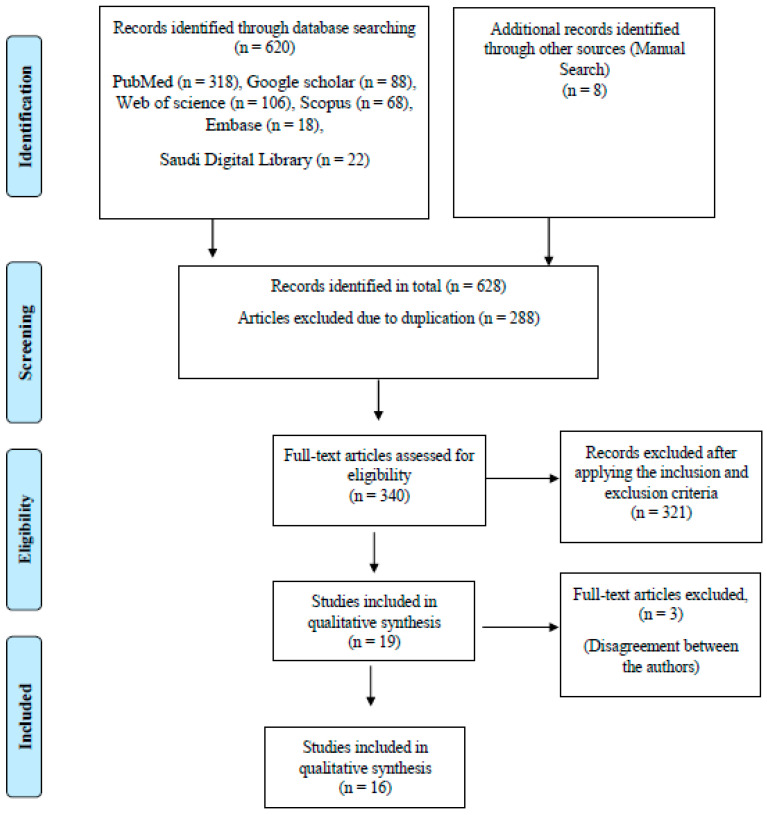
Oral cancer (OC) is a deadly disease with a high mortality and complex etiology. Artificial intelligence (AI) is one of the outstanding innovations in technology used in dental science. This paper intends to report on the application and performance of AI in diagnosis and predicting the occurrence of OC. In this study, we carried out data search through an electronic search in several renowned databases, which mainly included PubMed, Google Scholar, Scopus, Embase, Cochrane, Web of Science, and the Saudi Digital Library for articles that were published between January 2000 to March 2021. We included 16 articles that met the eligibility criteria and were critically analyzed using QUADAS-2. AI can precisely analyze an enormous dataset of images (fluorescent, hyperspectral, cytology, CT images, etc.) to diagnose OC. AI can accurately predict the occurrence of OC, as compared to conventional methods, by analyzing predisposing factors like age, gender, tobacco habits, and bio-markers. The precision and accuracy of AI in diagnosis as well as predicting the occurrence are higher than the current, existing clinical strategies, as well as conventional statistics like cox regression analysis and logistic regression.
口腔癌(OC)是一种死亡率高且病因复杂的致命疾病。人工智能(AI)是牙科科学中使用的杰出技术创新之一。本文旨在报告人工智能在口腔癌诊断和预测发生方面的应用及表现。在本研究中,我们通过在几个著名数据库进行电子检索来开展数据搜索,这些数据库主要包括PubMed、谷歌学术、Scopus、Embase、Cochrane、科学引文索引以及沙特数字图书馆,以查找2000年1月至2021年3月期间发表的文章。我们纳入了16篇符合纳入标准的文章,并使用QUADAS - 2进行了严格分析。人工智能可以精确分析大量图像数据集(荧光、高光谱、细胞学、CT图像等)以诊断口腔癌。与传统方法相比,人工智能通过分析年龄、性别、吸烟习惯和生物标志物等诱发因素,可以准确预测口腔癌的发生。人工智能在诊断以及预测发生方面的精度和准确性高于当前现有的临床策略以及诸如cox回归分析和逻辑回归等传统统计方法。