• 文献检索
  • 文档翻译
  • 深度研究
  • 学术资讯
  • Suppr Zotero 插件Zotero 插件
  • 邀请有礼
  • 套餐&价格
  • 历史记录
应用&插件
Suppr Zotero 插件Zotero 插件浏览器插件Mac 客户端Windows 客户端微信小程序
定价
高级版会员购买积分包购买API积分包
服务
文献检索文档翻译深度研究API 文档MCP 服务
关于我们
关于 Suppr公司介绍联系我们用户协议隐私条款
关注我们

Suppr 超能文献

核心技术专利:CN118964589B侵权必究
粤ICP备2023148730 号-1Suppr @ 2026

文献检索

告别复杂PubMed语法,用中文像聊天一样搜索,搜遍4000万医学文献。AI智能推荐,让科研检索更轻松。

立即免费搜索

文件翻译

保留排版,准确专业,支持PDF/Word/PPT等文件格式,支持 12+语言互译。

免费翻译文档

深度研究

AI帮你快速写综述,25分钟生成高质量综述,智能提取关键信息,辅助科研写作。

立即免费体验

基于迁移学习的改进型面部识别框架用于早期检测自闭症儿童。

Improved Transfer-Learning-Based Facial Recognition Framework to Detect Autistic Children at an Early Stage.

作者信息

Akter Tania, Ali Mohammad Hanif, Khan Md Imran, Satu Md Shahriare, Uddin Md Jamal, Alyami Salem A, Ali Sarwar, Azad Akm, Moni Mohammad Ali

机构信息

Department of Computer Science and Engineering, Jahangirnagar University, Savar, Dhaka 1342, Bangladesh.

Department of Computer Science and Engineering, Gono Bishwabidyalay, Savar, Dhaka 1344, Bangladesh.

出版信息

Brain Sci. 2021 May 31;11(6):734. doi: 10.3390/brainsci11060734.

DOI:10.3390/brainsci11060734
PMID:34073085
原文链接:https://pmc.ncbi.nlm.nih.gov/articles/PMC8230000/
Abstract

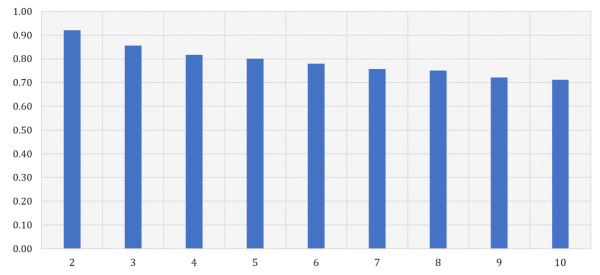
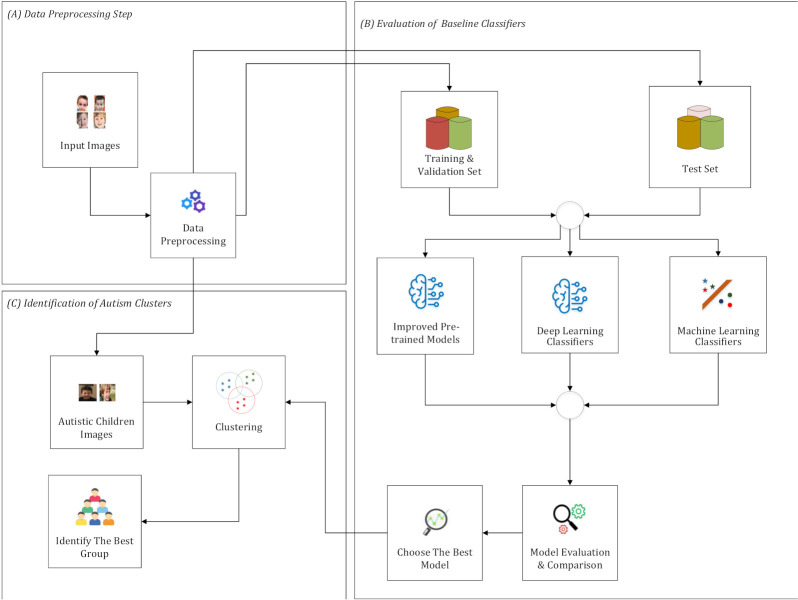
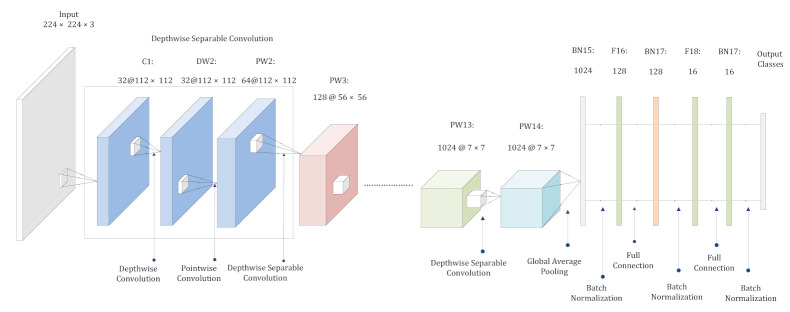
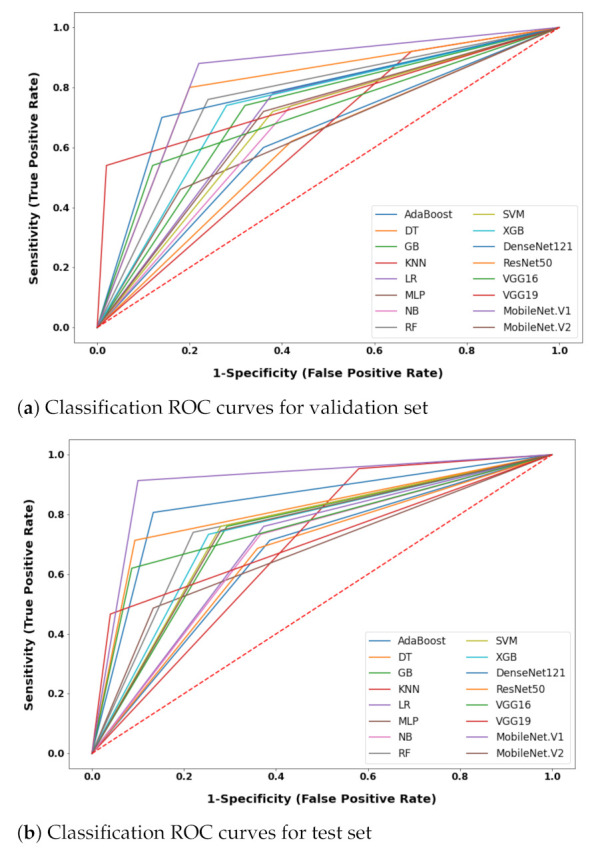
Autism spectrum disorder (ASD) is a complex neuro-developmental disorder that affects social skills, language, speech and communication. Early detection of ASD individuals, especially children, could help to devise and strategize right therapeutic plan at right time. Human faces encode important markers that can be used to identify ASD by analyzing facial features, eye contact, and so on. In this work, an improved transfer-learning-based autism face recognition framework is proposed to identify kids with ASD in the early stages more precisely. Therefore, we have collected face images of children with ASD from the Kaggle data repository, and various machine learning and deep learning classifiers and other transfer-learning-based pre-trained models were applied. We observed that our improved MobileNet-V1 model demonstrates the best accuracy of 90.67% and the lowest 9.33% value of both fall-out and miss rate compared to the other classifiers and pre-trained models. Furthermore, this classifier is used to identify different ASD groups investigating only autism image data using k-means clustering technique. Thus, the improved MobileNet-V1 model showed the highest accuracy (92.10%) for k = 2 autism sub-types. We hope this model will be useful for physicians to detect autistic children more explicitly at the early stage.

摘要

自闭症谱系障碍(ASD)是一种复杂的神经发育障碍,会影响社交技能、语言、言语和沟通能力。尽早发现ASD患者,尤其是儿童,有助于在恰当的时间制定并策划正确的治疗方案。人类面部蕴含重要特征,可通过分析面部特征、眼神交流等用于识别自闭症。在这项研究中,我们提出了一种改进的基于迁移学习的自闭症面部识别框架,以更精确地在早期阶段识别患有ASD的儿童。为此,我们从Kaggle数据存储库中收集了自闭症儿童的面部图像,并应用了各种机器学习和深度学习分类器以及其他基于迁移学习的预训练模型。我们观察到,与其他分类器和预训练模型相比,我们改进后的MobileNet-V1模型展现出了90.67%的最佳准确率,以及9.33%的最低误报率和漏报率。此外,该分类器还用于通过k均值聚类技术识别仅使用自闭症图像数据的不同ASD群体。因此,对于k = 2的自闭症子类型,改进后的MobileNet-V1模型显示出了最高的准确率(92.10%)。我们希望该模型能帮助医生在早期更准确地检测出自闭症儿童。
https://cdn.ncbi.nlm.nih.gov/pmc/blobs/af8e/8230000/f482ce83ea89/brainsci-11-00734-g004.jpg
https://cdn.ncbi.nlm.nih.gov/pmc/blobs/af8e/8230000/2ec56f2f67a1/brainsci-11-00734-g0A1.jpg
https://cdn.ncbi.nlm.nih.gov/pmc/blobs/af8e/8230000/58608ac0943c/brainsci-11-00734-g001.jpg
https://cdn.ncbi.nlm.nih.gov/pmc/blobs/af8e/8230000/d49ae4d99a83/brainsci-11-00734-g002.jpg
https://cdn.ncbi.nlm.nih.gov/pmc/blobs/af8e/8230000/b4096340650f/brainsci-11-00734-g003.jpg
https://cdn.ncbi.nlm.nih.gov/pmc/blobs/af8e/8230000/f482ce83ea89/brainsci-11-00734-g004.jpg
https://cdn.ncbi.nlm.nih.gov/pmc/blobs/af8e/8230000/2ec56f2f67a1/brainsci-11-00734-g0A1.jpg
https://cdn.ncbi.nlm.nih.gov/pmc/blobs/af8e/8230000/58608ac0943c/brainsci-11-00734-g001.jpg
https://cdn.ncbi.nlm.nih.gov/pmc/blobs/af8e/8230000/d49ae4d99a83/brainsci-11-00734-g002.jpg
https://cdn.ncbi.nlm.nih.gov/pmc/blobs/af8e/8230000/b4096340650f/brainsci-11-00734-g003.jpg
https://cdn.ncbi.nlm.nih.gov/pmc/blobs/af8e/8230000/f482ce83ea89/brainsci-11-00734-g004.jpg

相似文献

1
Improved Transfer-Learning-Based Facial Recognition Framework to Detect Autistic Children at an Early Stage.基于迁移学习的改进型面部识别框架用于早期检测自闭症儿童。
Brain Sci. 2021 May 31;11(6):734. doi: 10.3390/brainsci11060734.
2
Facial Features Detection System To Identify Children With Autism Spectrum Disorder: Deep Learning Models.面部特征检测系统用于识别自闭症谱系障碍儿童:深度学习模型。
Comput Math Methods Med. 2022 Apr 4;2022:3941049. doi: 10.1155/2022/3941049. eCollection 2022.
3
Deep Learning Approach for Screening Autism Spectrum Disorder in Children with Facial Images and Analysis of Ethnoracial Factors in Model Development and Application.基于面部图像筛查儿童自闭症谱系障碍的深度学习方法及模型开发与应用中的种族因素分析
Brain Sci. 2021 Oct 29;11(11):1446. doi: 10.3390/brainsci11111446.
4
The study of the differences between low-functioning autistic children and typically developing children in the processing of the own-race and other-race faces by the machine learning approach.采用机器学习方法研究低功能自闭症儿童与典型发展儿童在加工自身种族和其他种族面孔时的差异。
J Clin Neurosci. 2020 Nov;81:54-60. doi: 10.1016/j.jocn.2020.09.039. Epub 2020 Sep 28.
5
Detection of autism spectrum disorder (ASD) in children and adults using machine learning.使用机器学习检测儿童和成人的自闭症谱系障碍(ASD)。
Sci Rep. 2023 Jun 13;13(1):9605. doi: 10.1038/s41598-023-35910-1.
6
Training and Profiling a Pediatric Facial Expression Classifier for Children on Mobile Devices: Machine Learning Study.在移动设备上为儿童训练和分析儿科面部表情分类器:机器学习研究
JMIR Form Res. 2023 Mar 21;7:e39917. doi: 10.2196/39917.
7
Hybrid Techniques of Facial Feature Image Analysis for Early Detection of Autism Spectrum Disorder Based on Combined CNN Features.基于组合卷积神经网络特征的面部特征图像分析混合技术用于自闭症谱系障碍的早期检测
Diagnostics (Basel). 2023 Sep 14;13(18):2948. doi: 10.3390/diagnostics13182948.
8
Identification of Autism in Children Using Static Facial Features and Deep Neural Networks.利用静态面部特征和深度神经网络识别儿童自闭症
Brain Sci. 2022 Jan 12;12(1):94. doi: 10.3390/brainsci12010094.
9
A face image classification method of autistic children based on the two-phase transfer learning.一种基于两阶段迁移学习的自闭症儿童面部图像分类方法。
Front Psychol. 2023 Aug 31;14:1226470. doi: 10.3389/fpsyg.2023.1226470. eCollection 2023.
10
ASD-TL∗ GTO: Autism spectrum disorders detection via transfer learning with gorilla troops optimizer framework.ASD-TL∗ GTO:通过基于大猩猩群优化器框架的迁移学习进行自闭症谱系障碍检测
Heliyon. 2023 Nov 2;9(11):e21530. doi: 10.1016/j.heliyon.2023.e21530. eCollection 2023 Nov.

引用本文的文献

1
Data Mining-Based Model for Computer-Aided Diagnosis of Autism and Gelotophobia: Mixed Methods Deep Learning Approach.基于数据挖掘的自闭症和恐笑症计算机辅助诊断模型:混合方法深度学习途径
JMIR Form Res. 2025 Aug 13;9:e72115. doi: 10.2196/72115.
2
Personalization of Affective Models Using Classical Machine Learning: A Feasibility Study.使用经典机器学习实现情感模型的个性化:一项可行性研究。
Appl Sci (Basel). 2024 Feb 2;14(4). doi: 10.3390/app14041337. Epub 2024 Feb 6.
3
Automated identification of autism spectrum disorder from facial images using explainable deep learning models.

本文引用的文献

1
Facial expression recognition for monitoring neurological disorders based on convolutional neural network.基于卷积神经网络的用于监测神经疾病的面部表情识别
Multimed Tools Appl. 2019 Nov;78(22):31581-31603. doi: 10.1007/s11042-019-07959-6. Epub 2019 Jul 23.
2
TClustVID: A novel machine learning classification model to investigate topics and sentiment in COVID-19 tweets.TClustVID:一种用于研究新冠疫情推文主题和情感的新型机器学习分类模型。
Knowl Based Syst. 2021 Aug 17;226:107126. doi: 10.1016/j.knosys.2021.107126. Epub 2021 May 6.
3
A clustering approach for autistic trait classification.
使用可解释深度学习模型从面部图像自动识别自闭症谱系障碍。
Sci Rep. 2025 Jul 22;15(1):26682. doi: 10.1038/s41598-025-11847-5.
4
Application of artificial intelligence in modern healthcare for diagnosis of autism spectrum disorder.人工智能在现代医疗保健中用于自闭症谱系障碍诊断的应用。
Front Med (Lausanne). 2025 May 21;12:1569464. doi: 10.3389/fmed.2025.1569464. eCollection 2025.
5
A multi-filter deep transfer learning framework for image-based autism spectrum disorder detection.一种用于基于图像的自闭症谱系障碍检测的多滤波器深度迁移学习框架。
Sci Rep. 2025 Apr 24;15(1):14253. doi: 10.1038/s41598-025-97708-7.
6
A deep learning-based ensemble for autism spectrum disorder diagnosis using facial images.一种基于深度学习的集成方法,用于利用面部图像诊断自闭症谱系障碍。
PLoS One. 2025 Apr 22;20(4):e0321697. doi: 10.1371/journal.pone.0321697. eCollection 2025.
7
AI-assisted facial analysis in healthcare: From disease detection to comprehensive management.医疗保健中的人工智能辅助面部分析:从疾病检测到综合管理。
Patterns (N Y). 2025 Feb 4;6(2):101175. doi: 10.1016/j.patter.2025.101175. eCollection 2025 Feb 14.
8
Using Machine Learning to Diagnose Autism Based on Eye Tracking Technology.基于眼动追踪技术利用机器学习诊断自闭症
Diagnostics (Basel). 2024 Dec 30;15(1):66. doi: 10.3390/diagnostics15010066.
9
Can micro-expressions be used as a biomarker for autism spectrum disorder?微表情能否用作自闭症谱系障碍的生物标志物?
Front Neuroinform. 2024 Oct 3;18:1435091. doi: 10.3389/fninf.2024.1435091. eCollection 2024.
10
Utilizing deep learning models in an intelligent eye-tracking system for autism spectrum disorder diagnosis.在用于自闭症谱系障碍诊断的智能眼动追踪系统中运用深度学习模型。
Front Med (Lausanne). 2024 Jul 19;11:1436646. doi: 10.3389/fmed.2024.1436646. eCollection 2024.
自闭症特质分类的聚类方法。
Inform Health Soc Care. 2020 Sep;45(3):309-326. doi: 10.1080/17538157.2019.1687482. Epub 2020 Feb 3.
4
Association between Facial Emotion Recognition and Bullying Involvement among Adolescents with High-Functioning Autism Spectrum Disorder.高功能自闭症谱系障碍青少年的面部情绪识别与欺凌卷入之间的关联。
Int J Environ Res Public Health. 2019 Dec 15;16(24):5125. doi: 10.3390/ijerph16245125.
5
Clustering of co-occurring conditions in autism spectrum disorder during early childhood: A retrospective analysis of medical claims data.自闭症谱系障碍幼儿期共病情况聚类:医疗索赔数据分析的回顾性分析。
Autism Res. 2019 Aug;12(8):1272-1285. doi: 10.1002/aur.2128. Epub 2019 May 31.
6
Hybrid System for Engagement Recognition During Cognitive Tasks Using a CFS + KNN Algorithm.基于 CFS+KNN 算法的认知任务参与度识别混合系统。
Sensors (Basel). 2018 Oct 30;18(11):3691. doi: 10.3390/s18113691.
7
Temporal voice areas exist in autism spectrum disorder but are dysfunctional for voice identity recognition.颞叶语音区域存在于自闭症谱系障碍中,但在语音识别方面功能失调。
Soc Cogn Affect Neurosci. 2016 Nov;11(11):1812-1822. doi: 10.1093/scan/nsw089. Epub 2016 Jun 30.
8
Subgrouping siblings of people with autism: Identifying the broader autism phenotype.对自闭症患者的兄弟姐妹进行分组:识别更广泛的自闭症表型。
Autism Res. 2016 Jun;9(6):658-65. doi: 10.1002/aur.1544. Epub 2015 Sep 2.
9
Clustering autism: using neuroanatomical differences in 26 mouse models to gain insight into the heterogeneity.自闭症的聚类分析:利用26种小鼠模型的神经解剖学差异来深入了解其异质性。
Mol Psychiatry. 2015 Feb;20(1):118-25. doi: 10.1038/mp.2014.98. Epub 2014 Sep 9.
10
Visual social attention in autism spectrum disorder: insights from eye tracking studies.自闭症谱系障碍中的视觉社交注意力:来自眼动追踪研究的见解
Neurosci Biobehav Rev. 2014 May;42:279-97. doi: 10.1016/j.neubiorev.2014.03.013. Epub 2014 Mar 30.