Lingwood Clifford
Division of Molecular Medicine, Research Institute, Hospital for Sick Children, Toronto, ON M5G 1X8, Canada.
Departments of Laboratory Medicine & Pathobiology, and Biochemistry, University of Toronto, Toronto, ON M5S 1A8, Canada.
Toxins (Basel). 2021 May 26;13(6):378. doi: 10.3390/toxins13060378.
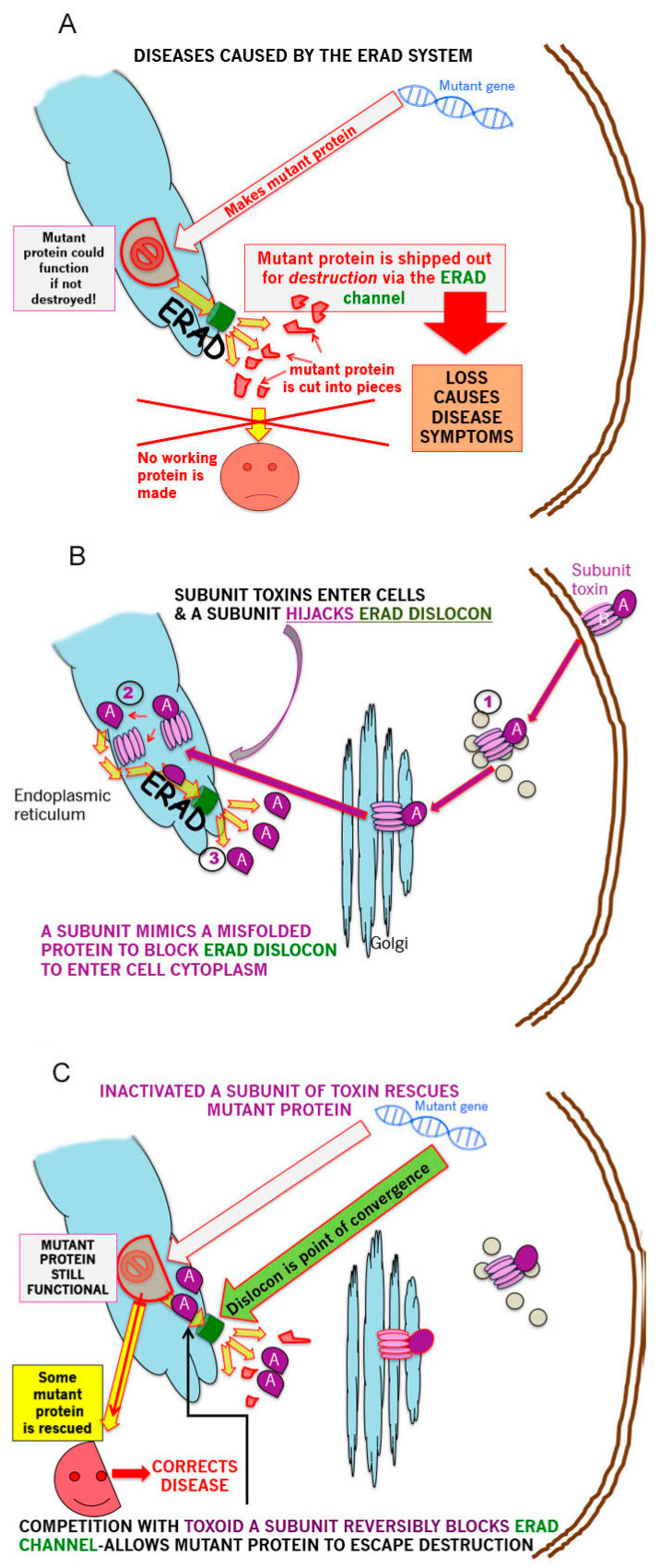
The B subunit pentamer verotoxin (VT aka Shiga toxin-Stx) binding to its cellular glycosphingolipid (GSL) receptor, globotriaosyl ceramide (Gb) mediates internalization and the subsequent receptor mediated retrograde intracellular traffic of the AB5 subunit holotoxin to the endoplasmic reticulum. Subunit separation and cytosolic A subunit transit via the ER retrotranslocon as a misfolded protein mimic, then inhibits protein synthesis to kill cells, which can cause hemolytic uremic syndrome clinically. This represents one of the most studied systems of prokaryotic hijacking of eukaryotic biology. Similarly, the interaction of cholera AB5 toxin with its GSL receptor, GM1 ganglioside, is the key component of the gastrointestinal pathogenesis of cholera and follows the same retrograde transport pathway for A subunit cytosol access. Although both VT and CT are the cause of major pathology worldwide, the toxin-receptor interaction is itself being manipulated to generate new approaches to control, rather than cause, disease. This arena comprises two areas: anti neoplasia, and protein misfolding diseases. CT/CTB subunit immunomodulatory function and anti-cancer toxin immunoconjugates will not be considered here. In the verotoxin case, it is clear that Gb (and VT targeting) is upregulated in many human cancers and that there is a relationship between GSL expression and cancer drug resistance. While both verotoxin and cholera toxin similarly hijack the intracellular ERAD quality control system of nascent protein folding, the more widespread cell expression of GM1 makes cholera the toxin of choice as the means to more widely utilise ERAD targeting to ameliorate genetic diseases of protein misfolding. Gb is primarily expressed in human renal tissue. Glomerular endothelial cells are the primary VT target but Gb is expressed in other endothelial beds, notably brain endothelial cells which can mediate the encephalopathy primarily associated with VT2-producing infection. The Gb levels can be regulated by cytokines released during EHEC infection, which complicate pathogenesis. Significantly Gb is upregulated in the neovasculature of many tumours, irrespective of tumour Gb status. Gb is markedly increased in pancreatic, ovarian, breast, testicular, renal, astrocytic, gastric, colorectal, cervical, sarcoma and meningeal cancer relative to the normal tissue. VT has been shown to be effective in mouse xenograft models of renal, astrocytoma, ovarian, colorectal, meningioma, and breast cancer. These studies are herein reviewed. Both CT and VT (and several other bacterial toxins) access the cell cytosol via cell surface ->ER transport. Once in the ER they interface with the protein folding homeostatic quality control pathway of the cell -ERAD, (ER associated degradation), which ensures that only correctly folded nascent proteins are allowed to progress to their cellular destinations. Misfolded proteins are translocated through the ER membrane and degraded by cytosolic proteosome. VT and CT A subunits have a C terminal misfolded protein mimic sequence to hijack this transporter to enter the cytosol. This interface between exogenous toxin and genetically encoded endogenous mutant misfolded proteins, provides a new therapeutic basis for the treatment of such genetic diseases, e.g., Cystic fibrosis, Gaucher disease, Krabbe disease, Fabry disease, Tay-Sachs disease and many more. Studies showing the efficacy of this approach in animal models of such diseases are presented.
B亚基五聚体志贺毒素(VT,又称志贺样毒素-Stx)与其细胞糖鞘脂(GSL)受体三糖基神经酰胺(Gb)结合,介导内化作用以及随后AB5亚基全毒素通过受体介导的逆行细胞内运输至内质网。亚基分离以及胞质A亚基作为错误折叠蛋白模拟物通过内质网逆向转运通道转运,随后抑制蛋白质合成以杀死细胞,临床上可导致溶血尿毒综合征。这是原核生物劫持真核生物学研究最多的系统之一。同样,霍乱AB5毒素与其GSL受体GM1神经节苷脂的相互作用是霍乱胃肠道发病机制的关键组成部分,并且A亚基进入胞质溶胶遵循相同的逆行运输途径。尽管VT和CT都是全球主要病理学的病因,但毒素-受体相互作用本身正被用于开发新的控制而非引发疾病的方法。这个领域包括两个方面:抗肿瘤和蛋白质错误折叠疾病。这里不考虑CT/CTB亚基的免疫调节功能和抗癌毒素免疫缀合物。在志贺毒素的情况下,很明显Gb(以及VT靶向)在许多人类癌症中上调,并且GSL表达与癌症耐药性之间存在关联。虽然志贺毒素和霍乱毒素同样劫持新生蛋白质折叠的细胞内内质网相关降解(ERAD)质量控制系统,但GM1更广泛的细胞表达使霍乱毒素成为更广泛利用ERAD靶向来改善蛋白质错误折叠遗传疾病的首选毒素。Gb主要在人类肾脏组织中表达。肾小球内皮细胞是VT的主要靶标,但Gb在其他内皮床中表达,特别是脑内皮细胞,其可介导主要与产VT2感染相关的脑病。Gb水平可由肠出血性大肠杆菌感染期间释放的细胞因子调节,这使发病机制复杂化。值得注意的是,无论肿瘤的Gb状态如何,Gb在许多肿瘤的新生血管中上调。相对于正常组织,Gb在胰腺癌、卵巢癌、乳腺癌、睾丸癌、肾癌、星形细胞瘤、胃癌、结直肠癌、宫颈癌、肉瘤和脑膜癌中显著增加。VT已在肾、星形细胞瘤、卵巢、结直肠、脑膜瘤和乳腺癌的小鼠异种移植模型中显示出有效性。本文对这些研究进行了综述。CT和VT(以及其他几种细菌毒素)都通过细胞表面->内质网运输进入细胞胞质溶胶。一旦进入内质网,它们就与细胞的蛋白质折叠稳态质量控制途径——内质网相关降解(ERAD)相互作用,该途径确保只有正确折叠的新生蛋白质才能进入其细胞目的地。错误折叠的蛋白质通过内质网膜转运并被胞质蛋白酶体降解。VT和CT A亚基具有C末端错误折叠蛋白模拟序列,以劫持该转运体进入胞质溶胶。外源性毒素与基因编码的内源性突变错误折叠蛋白之间的这种相互作用,为治疗此类遗传疾病,如囊性纤维化、戈谢病、克拉伯病、法布里病、泰-萨克斯病等,提供了新的治疗基础。本文展示了在这类疾病的动物模型中该方法有效性的研究。