Department of Pharmacognosy, College of Pharmacy, Najran University, Najran 1988, Saudi Arabia.
Food Toxicology and Contaminants Department, National Research Centre, Cairo 12622, Egypt.
Molecules. 2021 May 26;26(11):3186. doi: 10.3390/molecules26113186.
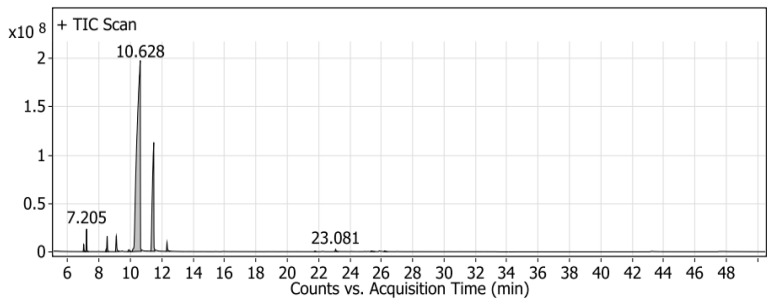
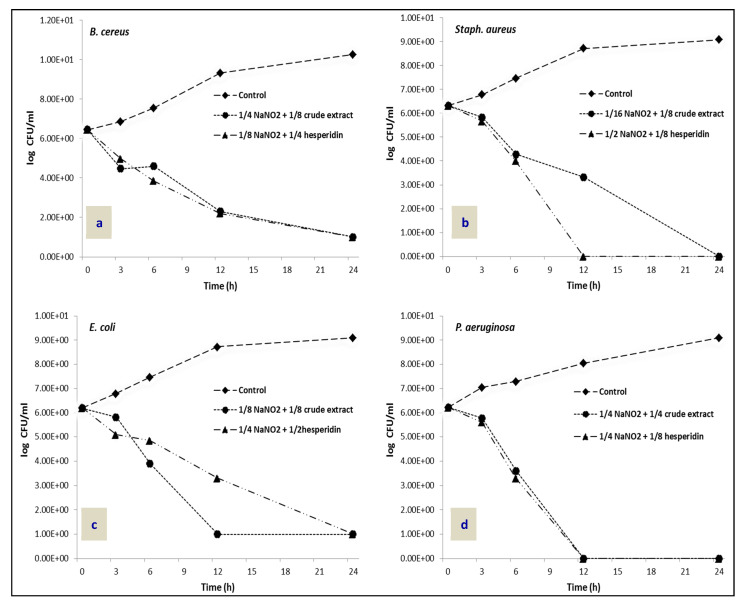
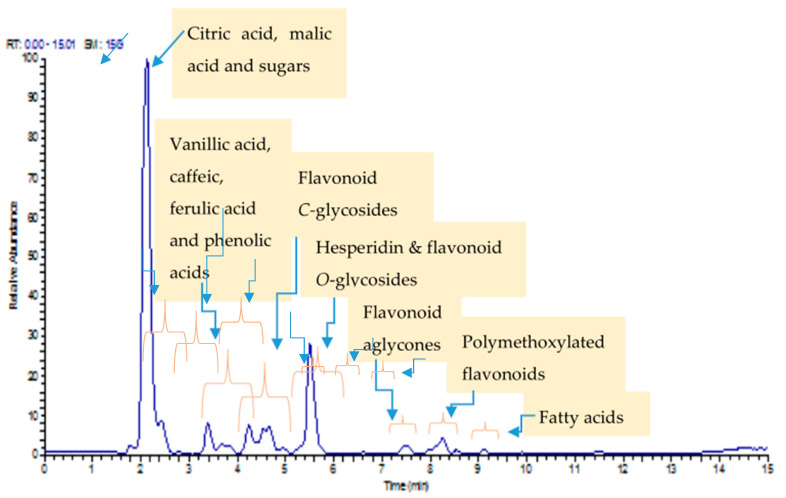
Food preservatives such as NaNO, which are widely used in human food products, undoubtedly affect, to some extent, human organs and health. For this reason, there is a need to reduce the hazards of these chemical preservatives, by replacing them with safe natural bio-preservatives, or adding them to synthetic ones, which provides synergistic and additive effects. The Citrus genus provides a rich source of such bio-preservatives, in addition to the availability of the genus and the low price of citrus fruit crops. In this study, we identify the most abundant flavonoids in citrus fruits (hesperidin) from the polar extract of mandarin peels (agro-waste) by using spectroscopic techniques, as well as limonene from the non-polar portion using GC techniques. Then, we explore the synergistic and additive effects of hesperidin from total mandarin extract with widely used NaNO to create a chemical preservative in food products. The results are promising and show a significant synergistic and additive activity. The combination of mandarin peel extract with NaNO had synergistic antibacterial activity against . , . , . , and . , while hesperidin showed a synergistic effect against . and . and an additive effect against . and . . These results refer to the ability of reducing the concentration of NaNO and replacing it with a safe natural bio-preservative such as hesperidin from total mandarin extract. Moreover, this led to gaining benefits from their biological and nutritive values.
食品防腐剂,如 NaNO,广泛应用于人类食品产品,无疑在某种程度上影响人类器官和健康。出于这个原因,有必要减少这些化学防腐剂的危害,通过用安全的天然生物防腐剂替代它们,或者在合成防腐剂中添加它们,从而提供协同和增效作用。柑橘属植物为这类生物防腐剂提供了丰富的来源,此外,该属植物的可用性和柑橘类水果作物的低价格也是一个优势。在这项研究中,我们使用光谱技术从桔皮(农业废料)的极性提取物中鉴定出柑橘类水果中最丰富的类黄酮(柚皮苷),并使用 GC 技术从非极性部分中鉴定出柠檬烯。然后,我们探索了总桔皮提取物中的柚皮苷与广泛使用的 NaNO 的协同和增效作用,以在食品产品中创建化学防腐剂。结果令人鼓舞,显示出显著的协同和增效活性。桔皮提取物与 NaNO 的组合对 、 、 、 、 和 具有协同抗菌活性,而柚皮苷对 、 具有协同作用,对 、 具有增效作用。这些结果表明,降低 NaNO 的浓度并使用总桔皮提取物中的安全天然生物防腐剂(如柚皮苷)替代它的能力。此外,这使得人们能够从它们的生物和营养价值中获益。