Liu Wan-Sheng, Lu Chen, Mistry Bhavesh V
Department of Animal Science, Center for Reproductive Biology and Health (CRBH), College of Agricultural Sciences, The Pennsylvania State University, 324 Henning Building, University Park, PA, 16802, USA.
Fudan University, Shanghai, People's Republic of China.
Cell Biosci. 2021 Jun 1;11(1):102. doi: 10.1186/s13578-021-00612-6.
Preferentially expressed antigen in melanoma (PRAME) is a cancer/testis antigen (CTA) that is predominantly expressed in normal gametogenic tissues and a variety of tumors. Members of the PRAME gene family encode leucine-rich repeat (LRR) proteins that provide a versatile structural framework for the formation of protein-protein interactions. As a nuclear receptor transcriptional regulator, PRAME has been extensively studied in cancer biology and is believed to play a role in cancer cell proliferation by suppressing retinoic acid (RA) signaling. The role of the PRAME gene family in germline development and spermatogenesis has been recently confirmed by a gene knockout approach. To further understand how PRAME proteins are involved in germ cell development at a subcellular level, we have conducted a systematic immunogold electron microscopy (IEM) analysis on testis sections of adult mice with gene-specific antibodies from two members of the mouse Prame gene family: Pramel1 and Pramex1. Pramel1 is autosomal, while Pramex1 is X-linked, both genes are exclusively expressed in the testis.
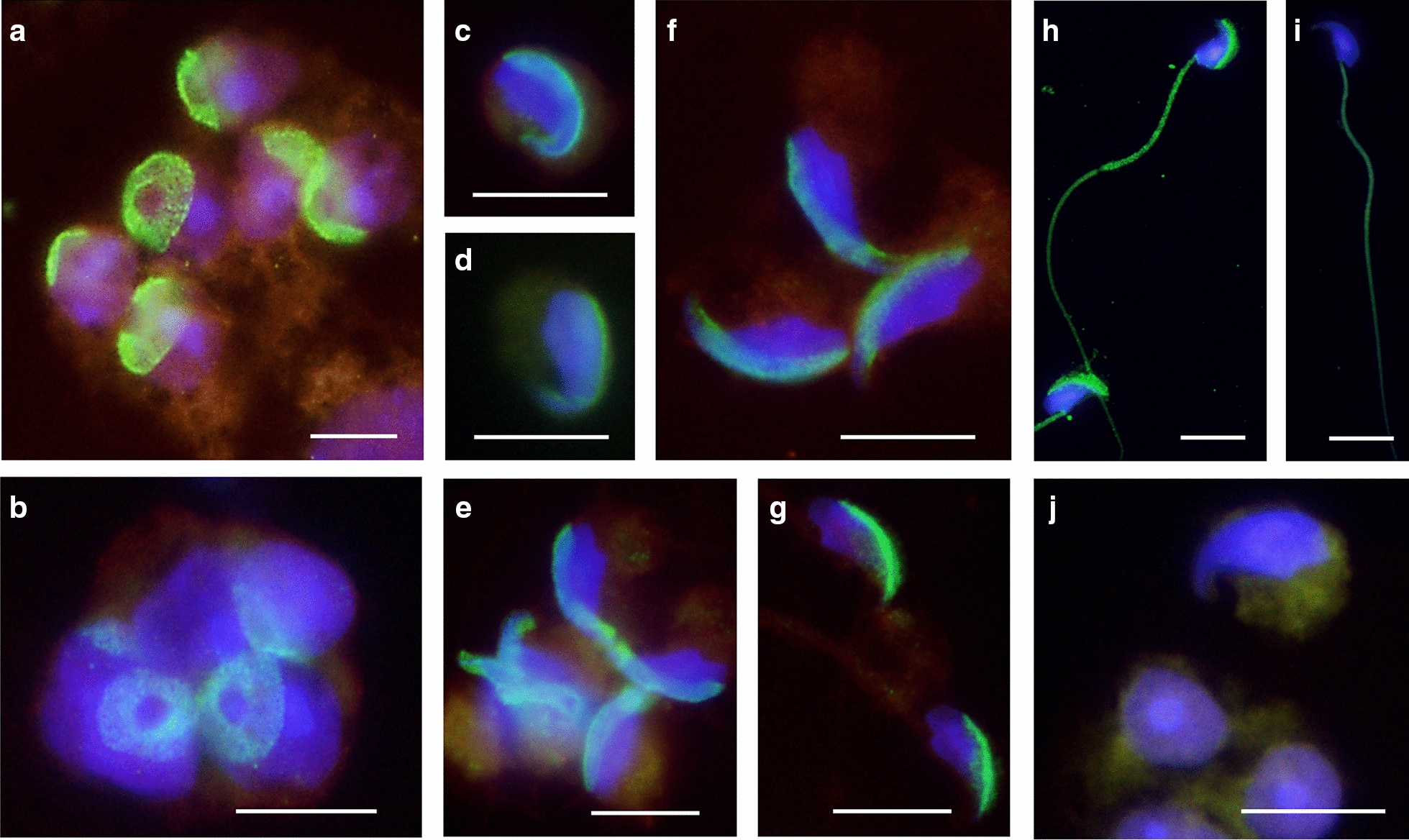
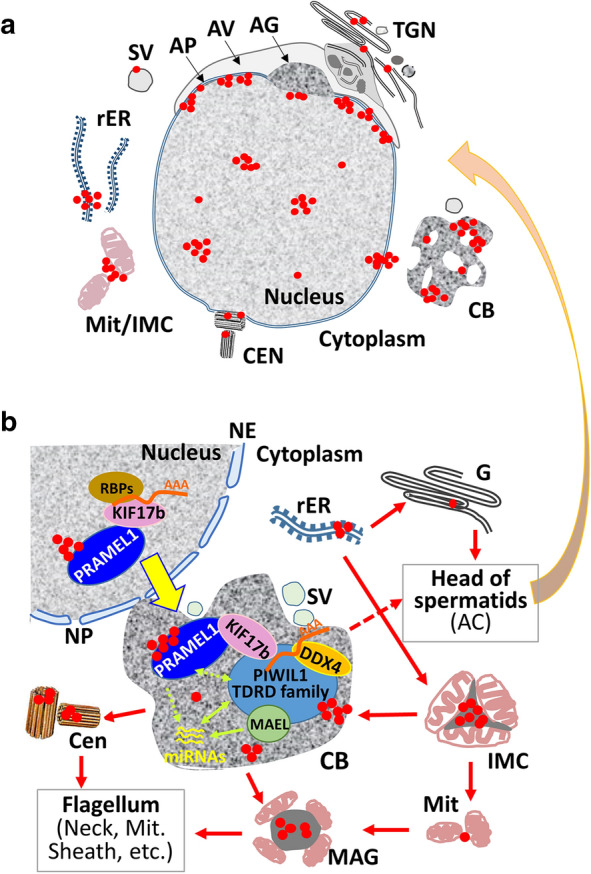
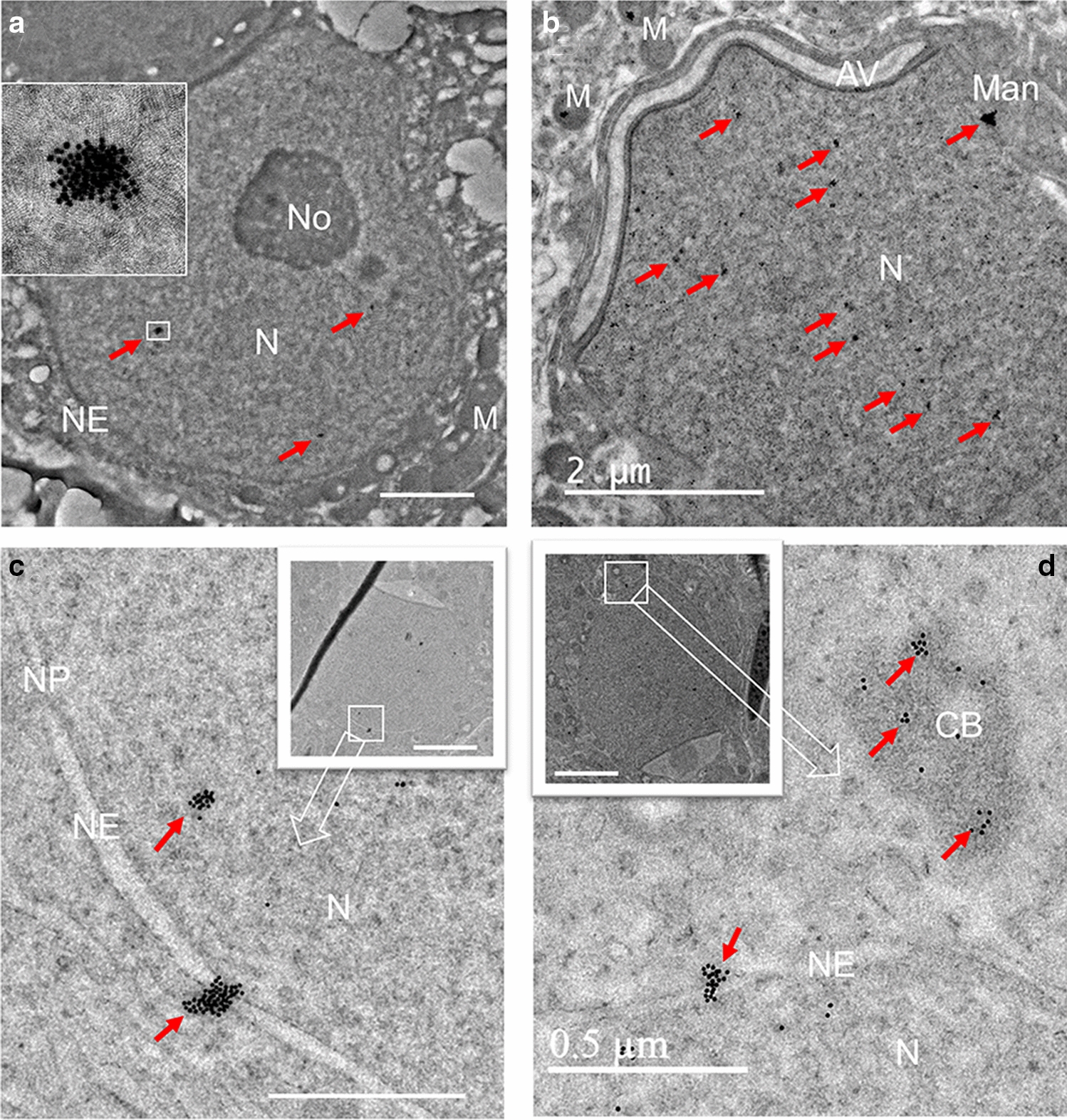
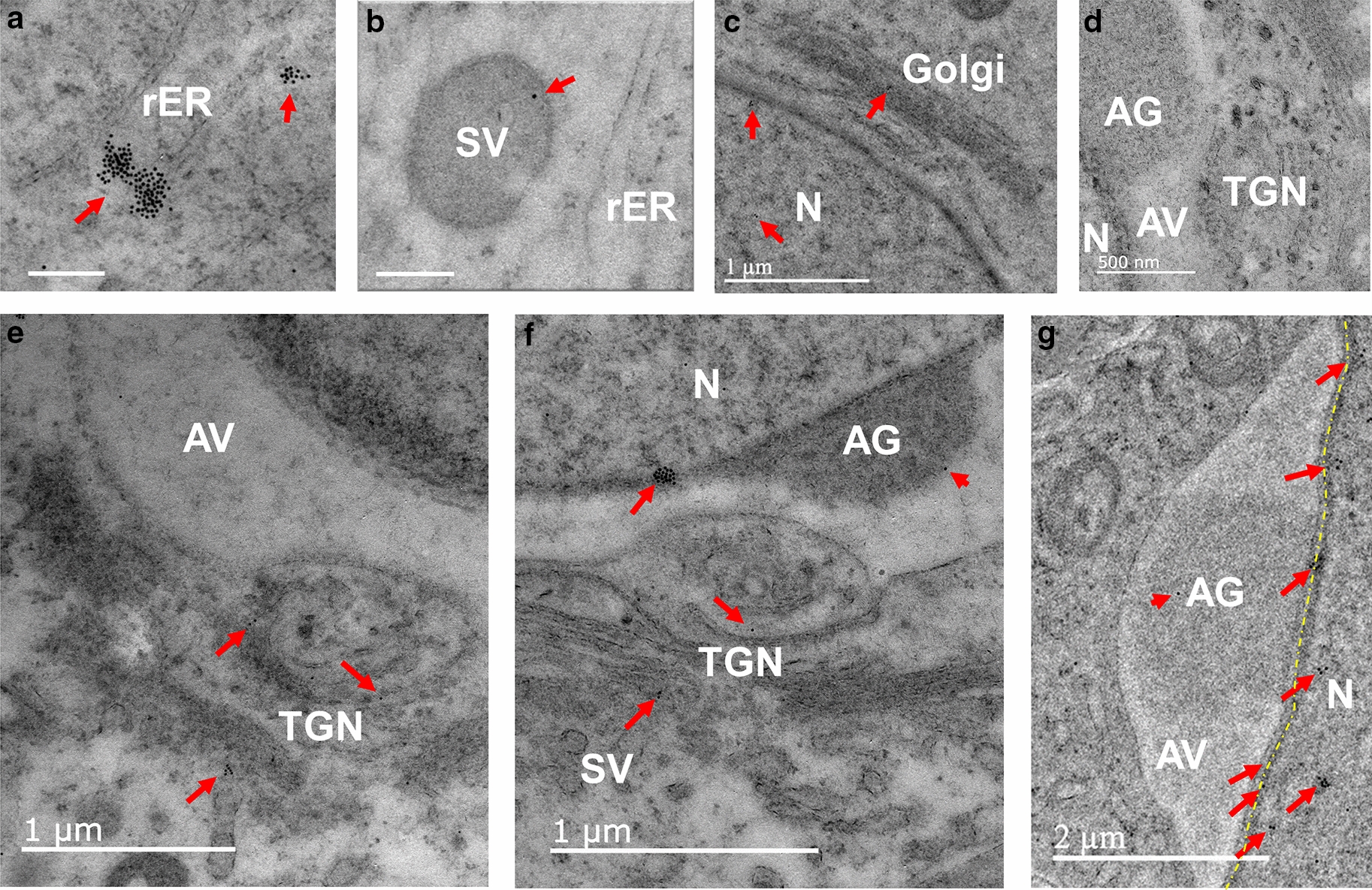
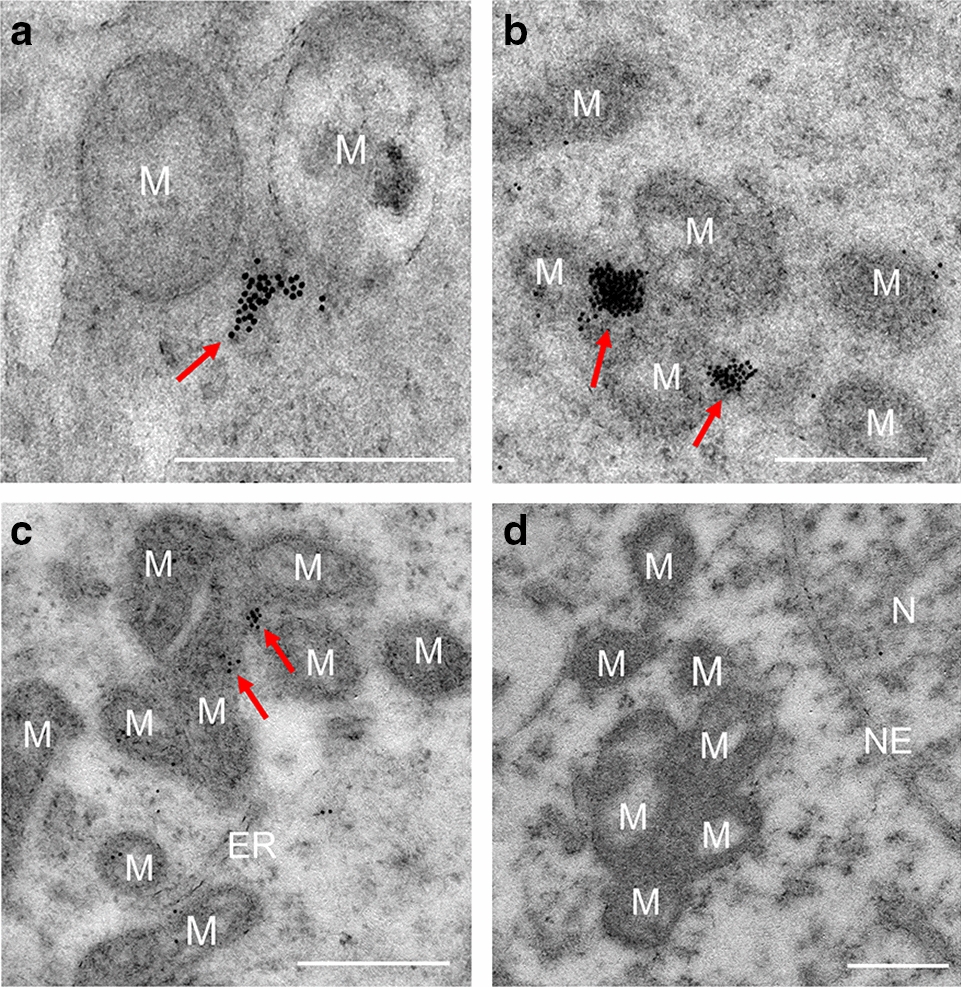
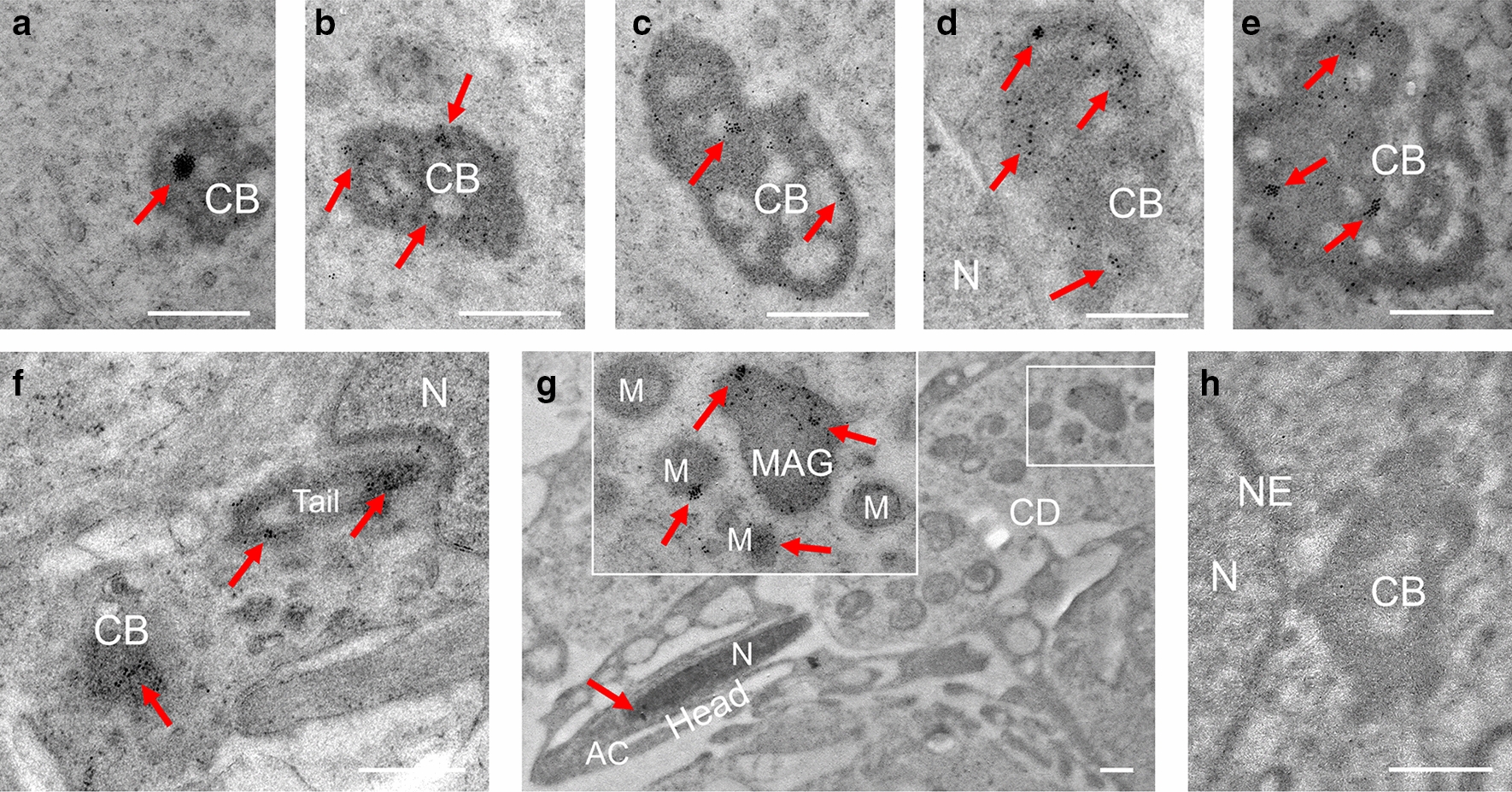
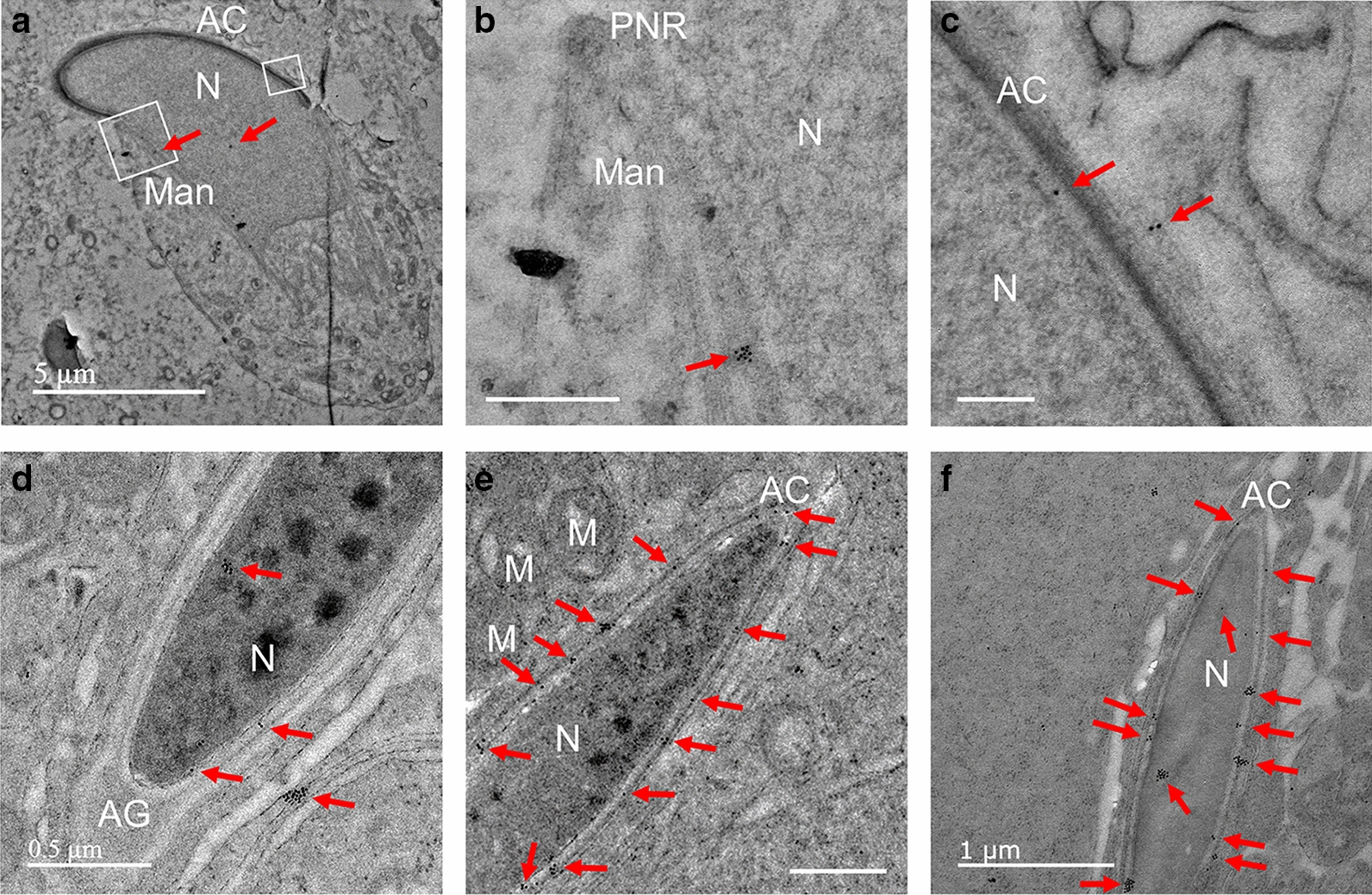
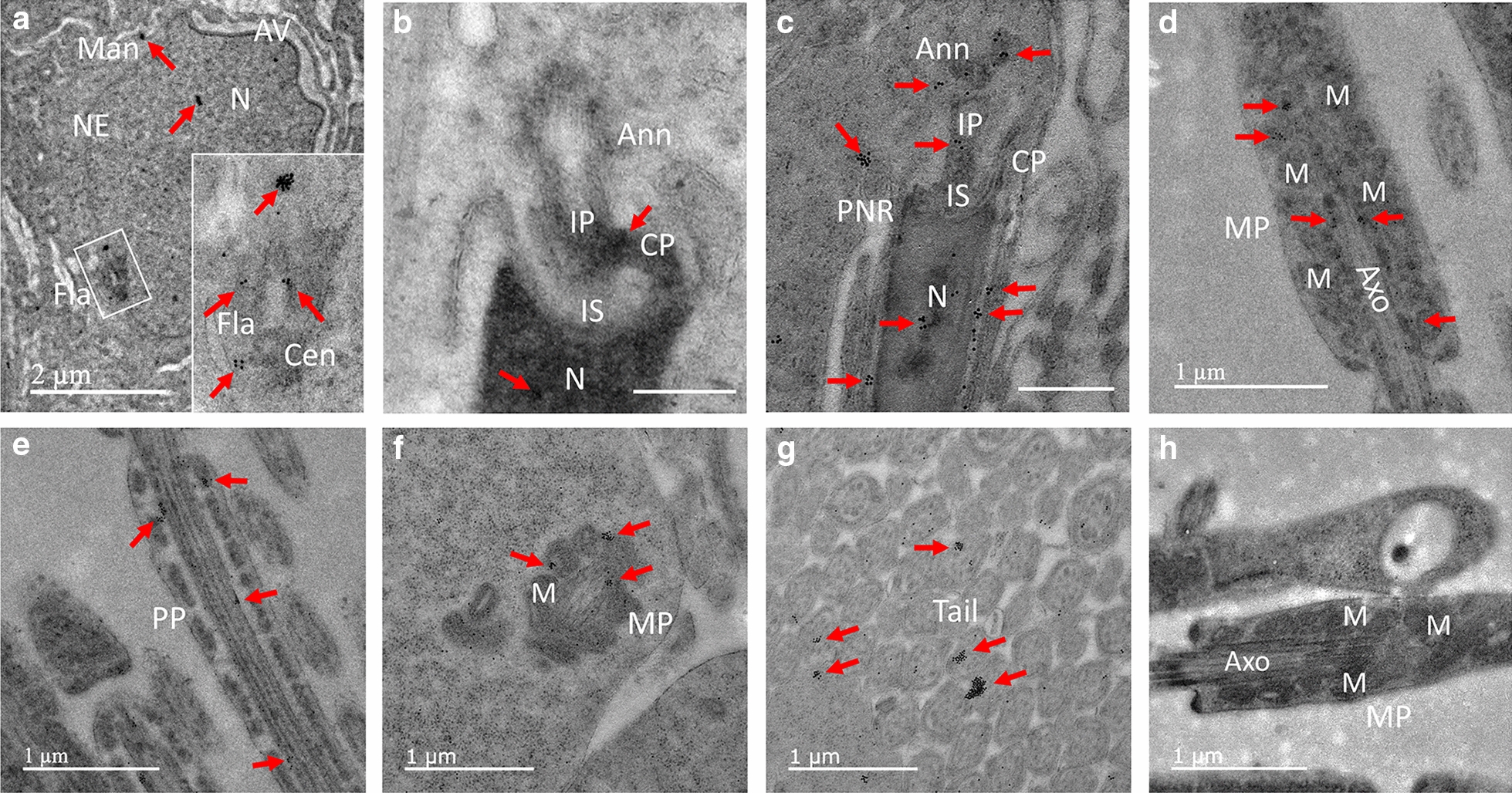
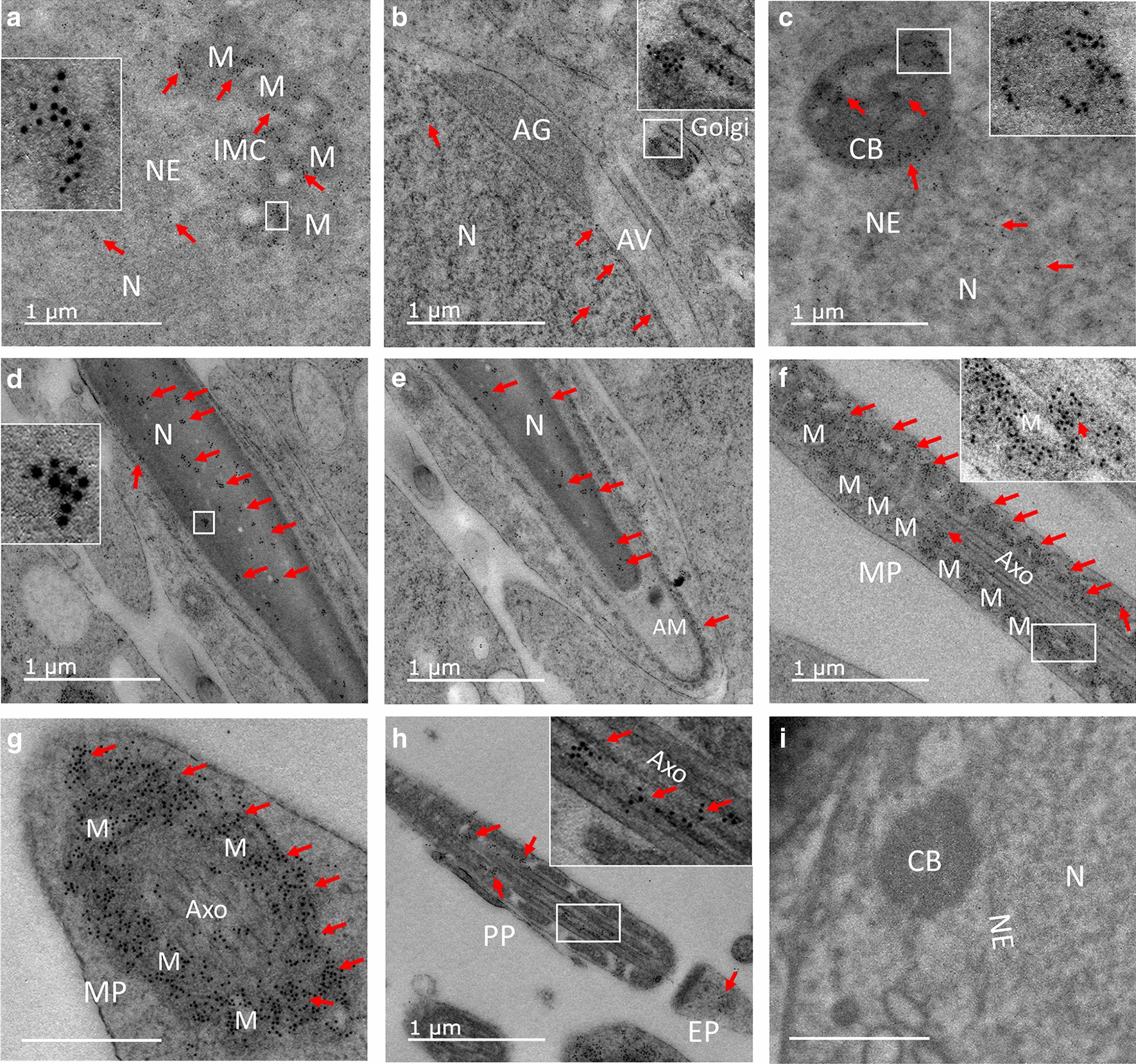
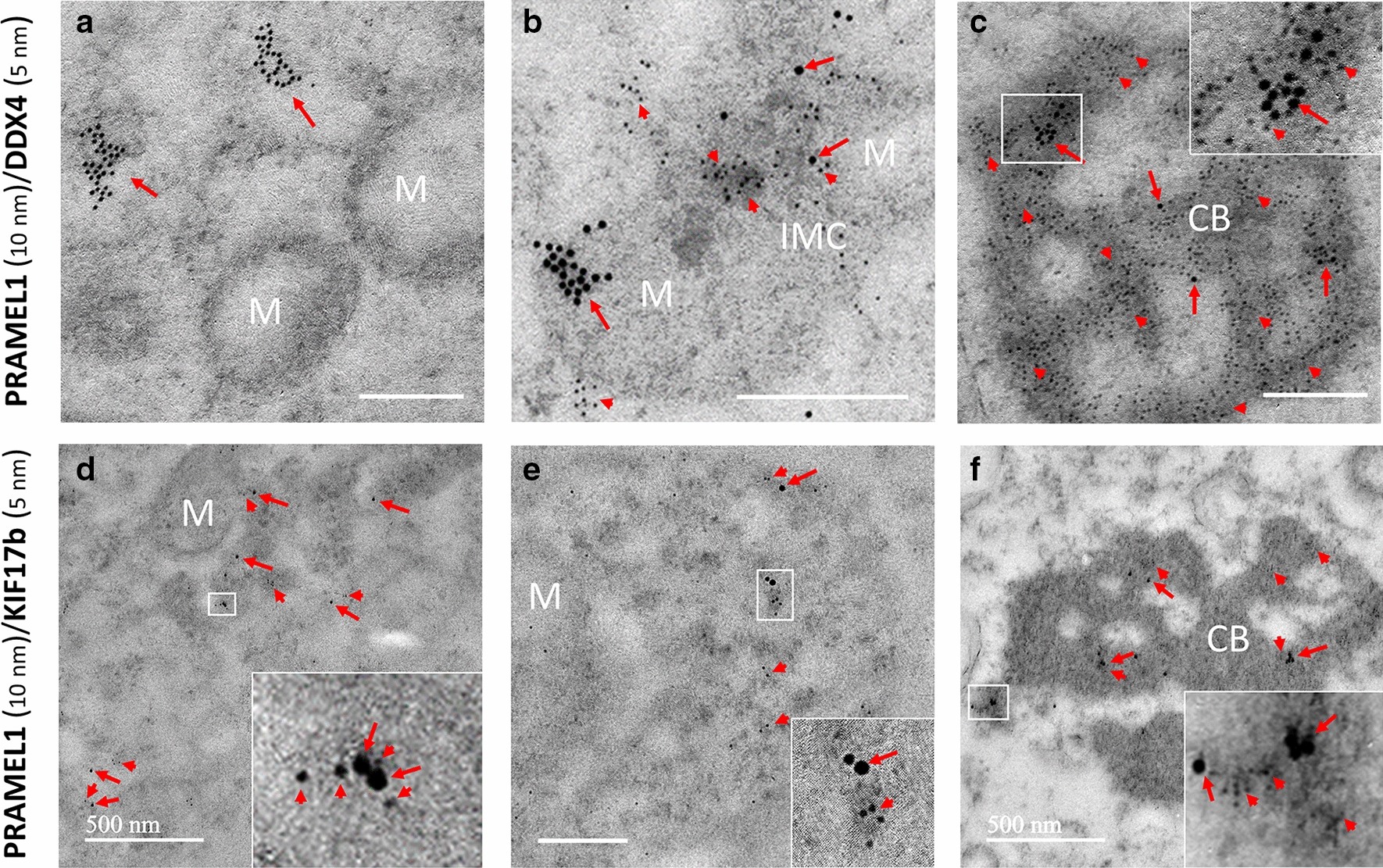
Our IEM data revealed that both PRAMEL1 and PRAMEX1 proteins were localized in various cell organelles in different development stages of spermatogenic cells, including the nucleus, rER, Golgi, mitochondria, germ granules [intermitochondrial cement (IMC) and chromatoid body (CB)], centrioles, manchette, and flagellum. Unlike other germ cell-specific makers, such as DDX4, whose proteins are evenly distributed in the expressed-organelle(s), both PRAMEL1 and PRAMEX1 proteins tend to aggregate together to form clusters of protein complexes. These complexes were highly enriched in the nucleus and cytoplasm (especially in germ granules) of spermatocytes and spermatids. Furthermore, dynamic distribution of the PRAMEL1 protein complexes were observed in the microtubule-based organelles, such as acroplaxome, manchette, and flagellum, as well as in the nuclear envelope and nuclear pore. Dual staining with PRAMEL1 and KIF17B antibodies further revealed that the PRAMEL1 and KIF17B proteins were co-localized in germ granules.
Our IEM data suggest that the PRAMEL1 and PRAMEX1 proteins are not only involved in transcriptional regulation in the nucleus, but may also participate in nucleocytoplasmic transport, and in the formation and function of germ cell-specific organelles during spermatogenesis.
黑色素瘤优先表达抗原(PRAME)是一种癌胚抗原(CTA),主要在正常生精组织和多种肿瘤中表达。PRAME基因家族成员编码富含亮氨酸重复序列(LRR)的蛋白质,为蛋白质-蛋白质相互作用的形成提供了一个通用的结构框架。作为一种核受体转录调节因子,PRAME在癌症生物学中已得到广泛研究,据信它通过抑制视黄酸(RA)信号通路在癌细胞增殖中发挥作用。最近通过基因敲除方法证实了PRAME基因家族在生殖系发育和精子发生中的作用。为了进一步了解PRAME蛋白如何在亚细胞水平参与生殖细胞发育,我们用来自小鼠Prame基因家族两个成员(Pramel1和Pramex1)的基因特异性抗体,对成年小鼠睾丸切片进行了系统的免疫金电子显微镜(IEM)分析。Pramel1是常染色体基因,而Pramex1是X连锁基因,这两个基因都仅在睾丸中表达。
我们的IEM数据显示,PRAMEL1和PRAMEX1蛋白在生精细胞不同发育阶段的各种细胞器中均有定位,包括细胞核、粗面内质网、高尔基体、线粒体、生殖颗粒[线粒体间基质(IMC)和类染色质体(CB)]、中心粒、精子环和鞭毛。与其他生殖细胞特异性标志物不同,如DDX4,其蛋白质均匀分布在表达的细胞器中,而PRAMEL1和PRAMEX1蛋白都倾向于聚集在一起形成蛋白质复合物簇。这些复合物在精母细胞和精子细胞的细胞核和细胞质(尤其是生殖颗粒)中高度富集。此外,在基于微管的细胞器中观察到PRAMEL1蛋白复合物的动态分布,如顶体、精子环和鞭毛,以及核膜和核孔。用PRAMEL1和KIF17B抗体进行双重染色进一步显示,PRAMEL1和KIF17B蛋白共定位于生殖颗粒中。
我们的IEM数据表明,PRAMEL1和PRAMEX1蛋白不仅参与细胞核中的转录调节,还可能参与核质运输,以及精子发生过程中生殖细胞特异性细胞器的形成和功能。