• 文献检索
  • 文档翻译
  • 深度研究
  • 学术资讯
  • Suppr Zotero 插件Zotero 插件
  • 邀请有礼
  • 套餐&价格
  • 历史记录
应用&插件
Suppr Zotero 插件Zotero 插件浏览器插件Mac 客户端Windows 客户端微信小程序
定价
高级版会员购买积分包购买API积分包
服务
文献检索文档翻译深度研究API 文档MCP 服务
关于我们
关于 Suppr公司介绍联系我们用户协议隐私条款
关注我们

Suppr 超能文献

核心技术专利:CN118964589B侵权必究
粤ICP备2023148730 号-1Suppr @ 2026

文献检索

告别复杂PubMed语法,用中文像聊天一样搜索,搜遍4000万医学文献。AI智能推荐,让科研检索更轻松。

立即免费搜索

文件翻译

保留排版,准确专业,支持PDF/Word/PPT等文件格式,支持 12+语言互译。

免费翻译文档

深度研究

AI帮你快速写综述,25分钟生成高质量综述,智能提取关键信息,辅助科研写作。

立即免费体验

一种机器学习算法可预测新冠病毒肺炎患者的住院时长。

A Machine Learning Algorithm Predicts Duration of hospitalization in COVID-19 patients.

作者信息

Ebinger Joseph, Wells Matthew, Ouyang David, Davis Tod, Kaufman Noy, Cheng Susan, Chugh Sumeet

机构信息

Smidt Heart Institute, Cedars-Sinai Medical Center, Los Angeles, CA, USA.

Enterprise Data Intelligence, Cedars-Sinai Medical Center, Los Angeles, CA, USA.

出版信息

Intell Based Med. 2021;5:100035. doi: 10.1016/j.ibmed.2021.100035. Epub 2021 May 27.

DOI:10.1016/j.ibmed.2021.100035
PMID:34075366
原文链接:https://pmc.ncbi.nlm.nih.gov/articles/PMC8156835/
Abstract

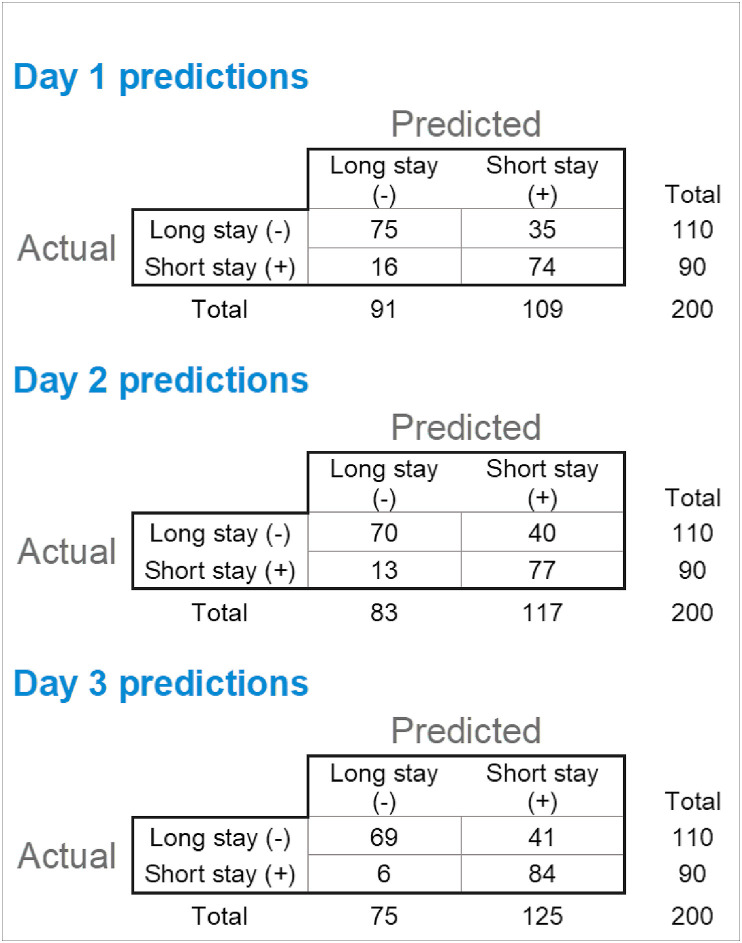
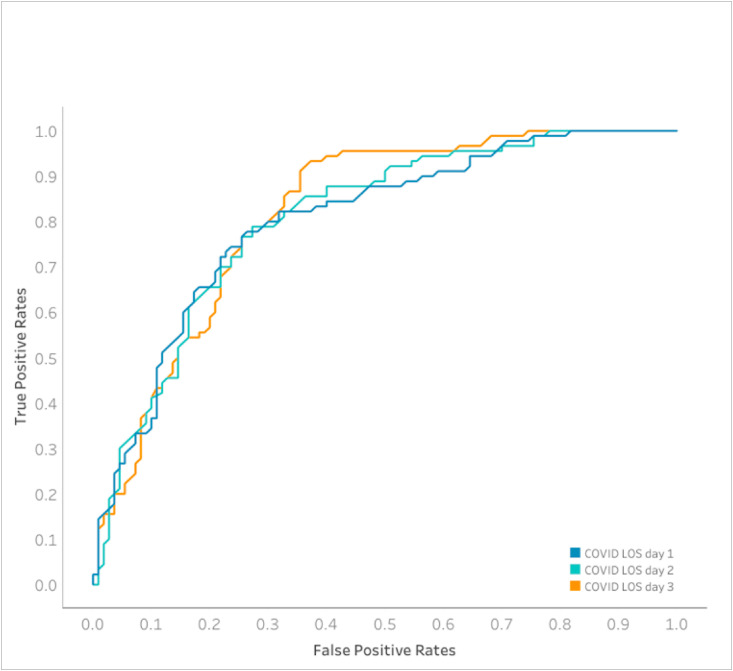
The COVID-19 pandemic has placed unprecedented strain on the healthcare system, particularly hospital bed capacity in the setting of large variations in patient length of stay (LOS). Using electronic health record data from 966 COVID-19 patients at a large academic medical center, we developed three machine learning algorithms to predict the likelihood of prolonged LOS, defined as >8 days. The models included 353 variables and were trained on 80% of the cohort, with 20% used for model validation. The three models were created on hospital days 1, 2 and 3, each including information available at or before that point in time. The models' predictive capabilities improved sequentially over time, reaching an accuracy of 0.765, with an AUC of 0.819 by day 3. These models, developed using readily available data, may help hospital systems prepare for bed capacity needs, and help clinicians counsel patients on their likelihood of prolonged hospitalization.

摘要

新冠疫情给医疗系统带来了前所未有的压力,尤其是在患者住院时长差异很大的情况下,医院床位容量面临巨大挑战。我们利用一家大型学术医疗中心966名新冠患者的电子健康记录数据,开发了三种机器学习算法,以预测住院时长延长(定义为超过8天)的可能性。这些模型包含353个变量,并在该队列80%的数据上进行训练,20%的数据用于模型验证。这三个模型分别在住院第1天、第2天和第3天创建,每个模型都包含在该时间点或之前可用的信息。随着时间的推移,这些模型的预测能力逐步提高,到第3天准确率达到0.765,曲线下面积(AUC)为0.819。这些使用现成数据开发的模型,可能有助于医院系统为床位容量需求做好准备,并帮助临床医生就患者延长住院的可能性向患者提供咨询。
https://cdn.ncbi.nlm.nih.gov/pmc/blobs/459e/8156835/ef75622a7756/gr3_lrg.jpg
https://cdn.ncbi.nlm.nih.gov/pmc/blobs/459e/8156835/6f837944b91e/gr1_lrg.jpg
https://cdn.ncbi.nlm.nih.gov/pmc/blobs/459e/8156835/e707848bc9d9/gr2_lrg.jpg
https://cdn.ncbi.nlm.nih.gov/pmc/blobs/459e/8156835/ef75622a7756/gr3_lrg.jpg
https://cdn.ncbi.nlm.nih.gov/pmc/blobs/459e/8156835/6f837944b91e/gr1_lrg.jpg
https://cdn.ncbi.nlm.nih.gov/pmc/blobs/459e/8156835/e707848bc9d9/gr2_lrg.jpg
https://cdn.ncbi.nlm.nih.gov/pmc/blobs/459e/8156835/ef75622a7756/gr3_lrg.jpg

相似文献

1
A Machine Learning Algorithm Predicts Duration of hospitalization in COVID-19 patients.一种机器学习算法可预测新冠病毒肺炎患者的住院时长。
Intell Based Med. 2021;5:100035. doi: 10.1016/j.ibmed.2021.100035. Epub 2021 May 27.
2
A clinical prediction model based on interpretable machine learning algorithms for prolonged hospital stay in acute ischemic stroke patients: a real-world study.基于可解释机器学习算法的急性缺血性脑卒中患者住院时间延长的临床预测模型:一项真实世界研究。
Front Endocrinol (Lausanne). 2023 Nov 22;14:1165178. doi: 10.3389/fendo.2023.1165178. eCollection 2023.
3
Can Machine-learning Algorithms Predict Early Revision TKA in the Danish Knee Arthroplasty Registry?机器学习算法能否预测丹麦膝关节置换登记处的早期翻修 TKA?
Clin Orthop Relat Res. 2020 Sep;478(9):2088-2101. doi: 10.1097/CORR.0000000000001343.
4
The Development and Validation of Simplified Machine Learning Algorithms to Predict Prognosis of Hospitalized Patients With COVID-19: Multicenter, Retrospective Study.中文译文:简化机器学习算法预测 COVID-19 住院患者预后的开发和验证:多中心回顾性研究。
J Med Internet Res. 2022 Jan 21;24(1):e31549. doi: 10.2196/31549.
5
Recurrent neural network models (CovRNN) for predicting outcomes of patients with COVID-19 on admission to hospital: model development and validation using electronic health record data.用于预测COVID-19患者入院时预后的循环神经网络模型(CovRNN):使用电子健康记录数据进行模型开发和验证
Lancet Digit Health. 2022 Jun;4(6):e415-e425. doi: 10.1016/S2589-7500(22)00049-8. Epub 2022 Apr 21.
6
Predictors of in-hospital length of stay among cardiac patients: A machine learning approach.心脏病人住院时间的预测因素:一种机器学习方法。
Int J Cardiol. 2019 Aug 1;288:140-147. doi: 10.1016/j.ijcard.2019.01.046. Epub 2019 Jan 19.
7
Machine learning algorithms for predicting COVID-19 mortality in Ethiopia.用于预测埃塞俄比亚 COVID-19 死亡率的机器学习算法。
BMC Public Health. 2024 Jun 28;24(1):1728. doi: 10.1186/s12889-024-19196-0.
8
Development and evaluation of a machine learning-based in-hospital COVID-19 disease outcome predictor (CODOP): A multicontinental retrospective study.基于机器学习的院内 COVID-19 疾病转归预测器(CODOP)的开发和评估:一项多大陆回顾性研究。
Elife. 2022 May 17;11:e75985. doi: 10.7554/eLife.75985.
9
Can machine learning models predict prolonged length of hospital stay following primary total knee arthroplasty based on a national patient cohort data?基于全国患者队列数据,机器学习模型能否预测初次全膝关节置换术后住院时间延长?
Arch Orthop Trauma Surg. 2023 Dec;143(12):7185-7193. doi: 10.1007/s00402-023-05013-7. Epub 2023 Aug 17.
10
Early identification of patients admitted to hospital for covid-19 at risk of clinical deterioration: model development and multisite external validation study.因 COVID-19 住院的患者临床恶化风险的早期识别:模型的建立与多中心外部验证研究。
BMJ. 2022 Feb 17;376:e068576. doi: 10.1136/bmj-2021-068576.

引用本文的文献

1
The application of machine learning algorithms for predicting length of stay before and during the COVID-19 pandemic: evidence from Wuhan-area hospitals.机器学习算法在预测COVID-19大流行之前及期间住院时间方面的应用:来自武汉地区医院的证据。
Front Digit Health. 2024 Dec 13;6:1506071. doi: 10.3389/fdgth.2024.1506071. eCollection 2024.
2
Efficient management of pulmonary embolism diagnosis using a two-step interconnected machine learning model based on electronic health records data.基于电子健康记录数据,使用两步互联机器学习模型对肺栓塞诊断进行高效管理。
Health Inf Sci Syst. 2024 Mar 6;12(1):17. doi: 10.1007/s13755-024-00276-9. eCollection 2024 Dec.
3

本文引用的文献

1
Hospital Length of Stay for Patients with Severe COVID-19: Implications for Remdesivir's Value.重症 COVID-19 患者的住院时长:对瑞德西韦价值的启示
Pharmacoecon Open. 2021 Mar;5(1):129-131. doi: 10.1007/s41669-020-00243-6. Epub 2020 Dec 14.
2
COVID-19 length of hospital stay: a systematic review and data synthesis.COVID-19 住院时间:系统评价和数据综合。
BMC Med. 2020 Sep 3;18(1):270. doi: 10.1186/s12916-020-01726-3.
3
Factors associated with hospital admission and critical illness among 5279 people with coronavirus disease 2019 in New York City: prospective cohort study.
Inflammation and Venous Thromboembolism in Hospitalized Patients with COVID-19.
新冠肺炎住院患者的炎症与静脉血栓栓塞症
Diagnostics (Basel). 2023 Nov 19;13(22):3477. doi: 10.3390/diagnostics13223477.
4
Bayesian model averaging for predicting factors associated with length of COVID-19 hospitalization.贝叶斯模型平均法预测与 COVID-19 住院时间相关的因素。
BMC Med Res Methodol. 2023 Jul 6;23(1):163. doi: 10.1186/s12874-023-01981-x.
5
Discharge to post-acute care and other predictors of prolonged length of stay during the initial COVID-19 surge: a single site analysis.在 COVID-19 疫情初期,向急性后期护理和其他预测因素转移与延长住院时间的关系:单站点分析。
Int J Qual Health Care. 2023 Jan 2;35(1). doi: 10.1093/intqhc/mzac098.
6
Machine-learning prediction for hospital length of stay using a French medico-administrative database.使用法国医疗管理数据库对住院时间进行机器学习预测。
J Mark Access Health Policy. 2022 Nov 26;11(1):2149318. doi: 10.1080/20016689.2022.2149318. eCollection 2023.
7
Using machine learning in prediction of ICU admission, mortality, and length of stay in the early stage of admission of COVID-19 patients.在COVID-19患者入院早期使用机器学习预测重症监护病房(ICU)入住率、死亡率和住院时间。
Ann Oper Res. 2022 Sep 29:1-29. doi: 10.1007/s10479-022-04984-x.
8
Associations between the COVID-19 Pandemic and Hospital Infrastructure Adaptation and Planning-A Scoping Review.**标题**:COVID-19 大流行与医院基础设施调整和规划之间的关联:一项范围综述 **摘要**:背景:COVID-19 大流行对全球医疗系统产生了前所未有的压力。本研究旨在通过对已发表文献进行综述,全面了解 COVID-19 大流行对医院基础设施的影响,以及医疗设施为适应 COVID-19 而进行的调整和规划。 方法:检索了 PubMed、Embase、Cochrane 图书馆和 Web of Science 核心合集数据库中截至 2023 年 7 月 1 日的相关文献。采用描述性方法对纳入的文献进行了总结。 结果:共纳入了 24 项研究,涵盖了来自 16 个国家的 137 家医院。研究主要集中在欧洲和北美地区。COVID-19 大流行对医院基础设施的影响包括增加了医院床位、改造和扩建、建立临时医疗设施和负压病房、优化医院布局和流程、加强医院感染控制措施、提高医疗人员防护水平和医疗废物管理。 结论:COVID-19 大流行对全球医院基础设施产生了重大影响,需要不断调整和规划以适应疫情。各国应加强医院基础设施建设和应急准备,以应对未来可能出现的公共卫生危机。
Int J Environ Res Public Health. 2022 Jul 4;19(13):8195. doi: 10.3390/ijerph19138195.
9
A novel explainable COVID-19 diagnosis method by integration of feature selection with random forest.一种通过将特征选择与随机森林相结合的新型可解释性新冠肺炎诊断方法。
Inform Med Unlocked. 2022;30:100941. doi: 10.1016/j.imu.2022.100941. Epub 2022 Apr 6.
10
Predicting SARS-CoV-2 infection duration at hospital admission:a deep learning solution.预测入院时 SARS-CoV-2 感染持续时间:深度学习解决方案。
Med Biol Eng Comput. 2022 Feb;60(2):459-470. doi: 10.1007/s11517-021-02479-8. Epub 2022 Jan 7.
纽约市 5279 例 2019 年冠状病毒病患者住院和重症的相关因素:前瞻性队列研究。
BMJ. 2020 May 22;369:m1966. doi: 10.1136/bmj.m1966.
4
Prognostic value of interleukin-6, C-reactive protein, and procalcitonin in patients with COVID-19.白细胞介素-6、C 反应蛋白和降钙素原对 COVID-19 患者的预后价值。
J Clin Virol. 2020 Jun;127:104370. doi: 10.1016/j.jcv.2020.104370. Epub 2020 Apr 14.
5
Personalized predictions of patient outcomes during and after hospitalization using artificial intelligence.使用人工智能对患者住院期间及出院后的预后进行个性化预测。
NPJ Digit Med. 2020 Apr 3;3:51. doi: 10.1038/s41746-020-0249-z. eCollection 2020.
6
Locally Informed Simulation to Predict Hospital Capacity Needs During the COVID-19 Pandemic.基于局部信息的模拟预测 COVID-19 大流行期间的医院容量需求。
Ann Intern Med. 2020 Jul 7;173(1):21-28. doi: 10.7326/M20-1260. Epub 2020 Apr 7.
7
Clinical Characteristics of Coronavirus Disease 2019 in China.《中国 2019 年冠状病毒病临床特征》
N Engl J Med. 2020 Apr 30;382(18):1708-1720. doi: 10.1056/NEJMoa2002032. Epub 2020 Feb 28.
8
Transparent Reporting of a multivariable prediction model for Individual Prognosis Or Diagnosis (TRIPOD).个体预后或诊断多变量预测模型的透明报告(TRIPOD)。
Ann Intern Med. 2015 May 19;162(10):735-6. doi: 10.7326/L15-5093-2.
9
Predicting length of stay from an electronic patient record system: a primary total knee replacement example.从电子病历系统预测住院时间:以初次全膝关节置换为例。
BMC Med Inform Decis Mak. 2014 Apr 4;14:26. doi: 10.1186/1472-6947-14-26.
10
Prediction of hospital length of stay.住院时间的预测。
Health Serv Res. 1966 Winter;1(3):287-300.