Department of Cardiology, Yulin First People's Hospital and The Sixth Affiliated Hospital of Guangxi Medical University, Yulin 537000, P.R. China.
Department of Cardiology, The First Affiliated Hospital of Guangxi Medical University and Guangxi Key Laboratory Base of Precision Medicine in Cardio-Cerebrovascular Diseases Control and Prevention and Guangxi Clinical Research Center for Cardio-Cerebrovascular Diseases, Nanning 530021, P.R. China.
Aging (Albany NY). 2021 Jun 2;13(11):15638-15658. doi: 10.18632/aging.103842.
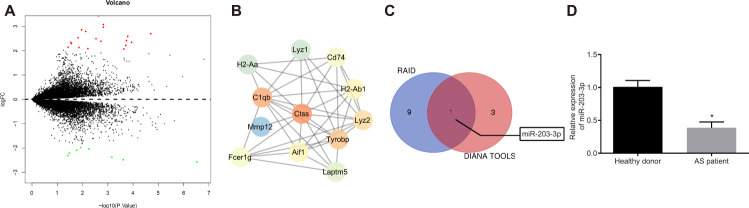
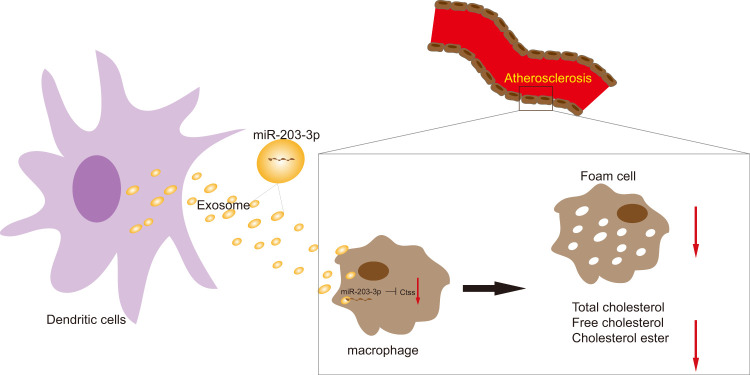
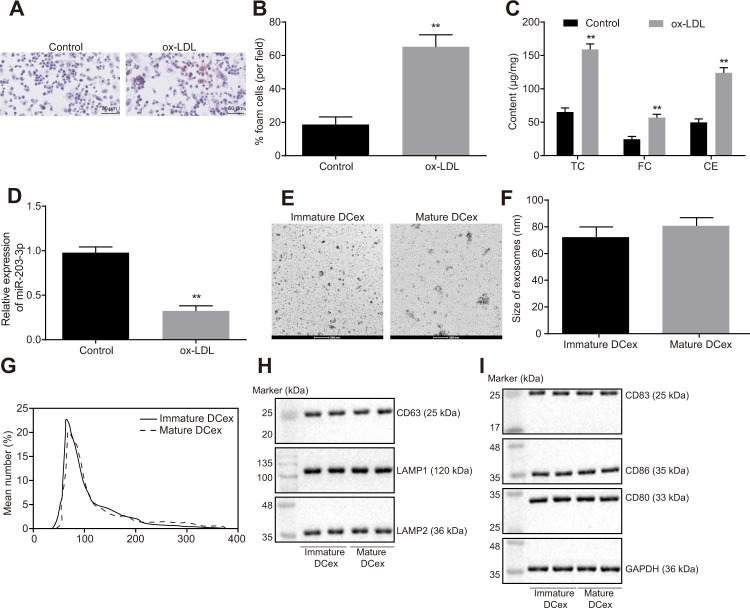
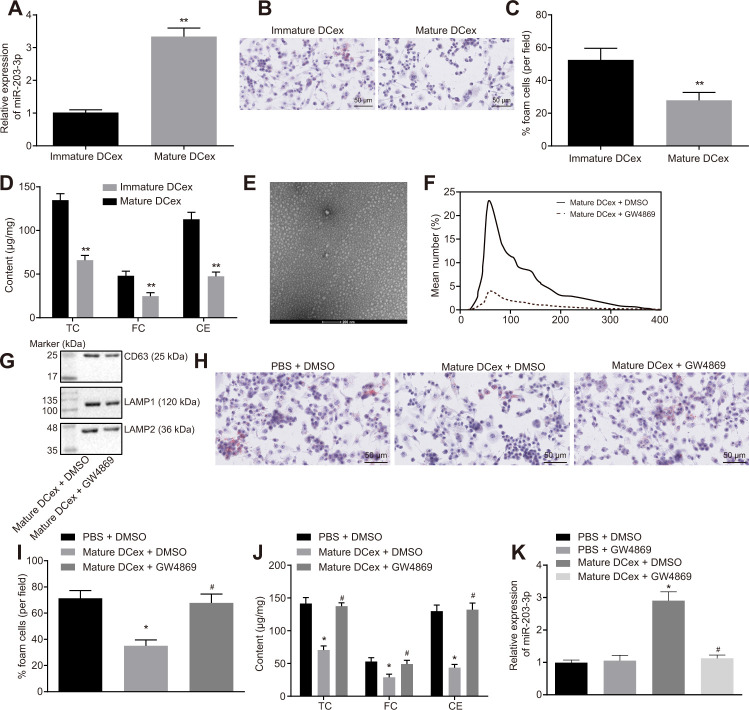
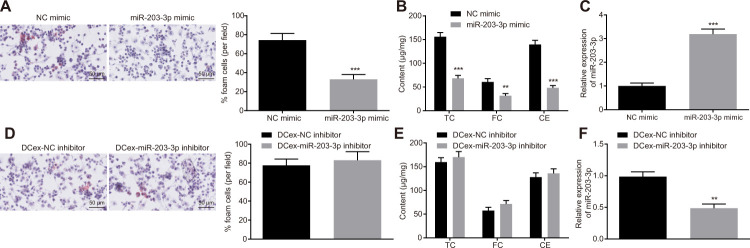
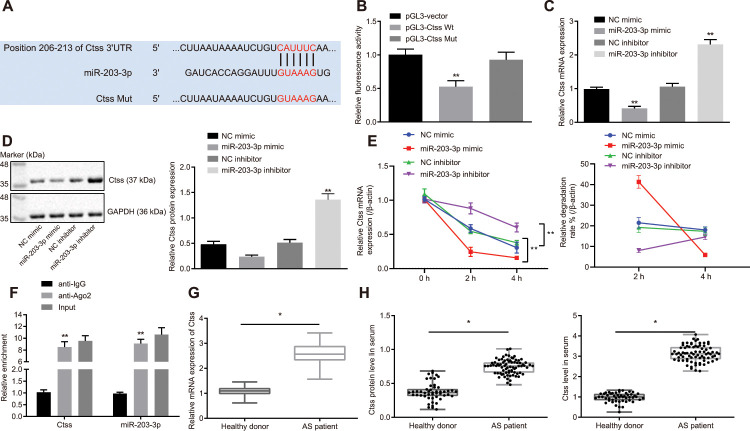
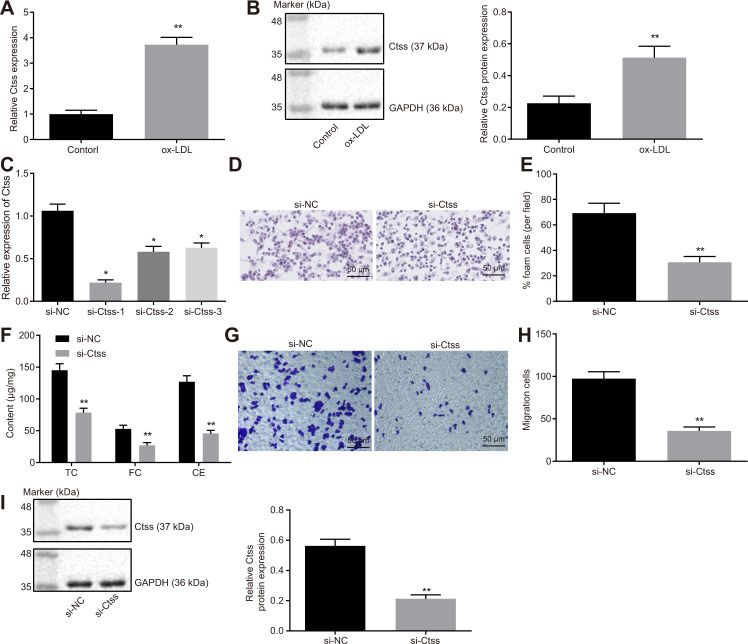
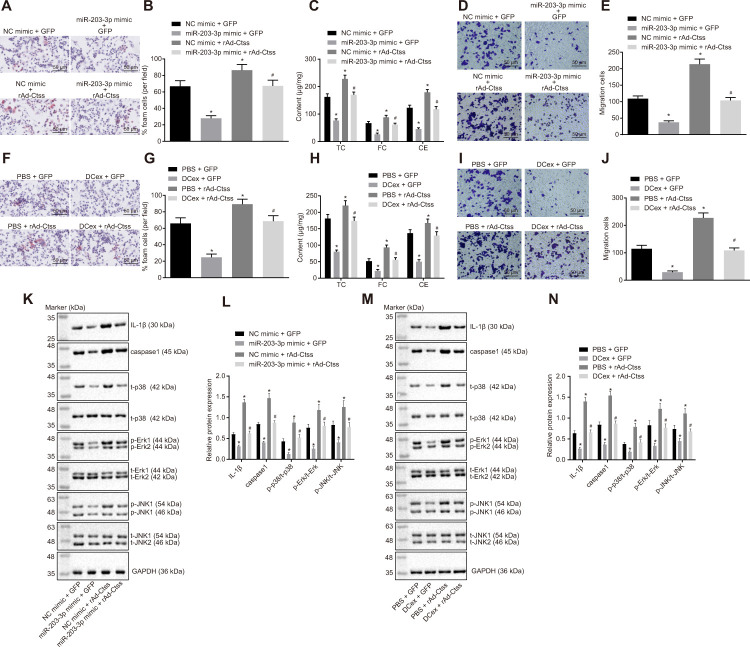
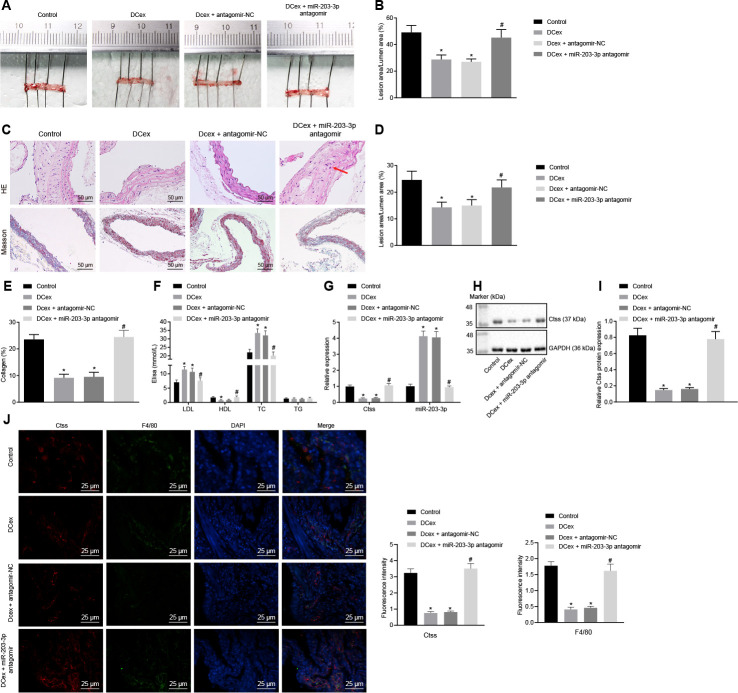
Dendritic cell-derived exosomes have been proven to be efficient adjuvant options for anti-tumor vaccines in cancer immunotherapy. However, their potency in atherosclerosis remains unclear. Here we summarize the association of microRNA-203-3p (miR-203-3p) with dendritic cell-derived exosomes and atherosclerosis. Firstly, dendritic cell-derived exosomes and bone marrow-derived macrophages were isolated, after which expression of miR-203-3p and cathepsin S was determined. After the establishment of atherosclerosis mouse models, gain- and loss-of-function experiments were conducted for the analysis of effects of miR-203-3p and cathepsin S on foam-cell formation, lipid accumulation, collagen deposition and serum total cholesterol. The results found high expression of cathepsin S in atherosclerosis mice and downregulation of miR-203-3p in the serum of atherosclerosis patients and ox-LDL-simulated bone marrow-derived macrophages. Cathepsin S was the target gene of miR-203-3p. miR-203-3p transporting from exosomes to bone marrow-derived macrophages resulted in inhibition of cathepsin S expression and atherosclerosis-related phenotypes in bone marrow-derived macrophages, thus alleviating atherosclerosis in mice, and this process was found to involve the p38/MAPK signaling pathway. These findings provided evidence that the transfer of miR-203-3p by dendritic cell-derived exosomes targeted cathepsin S in bone marrow-derived macrophages to attenuate atherosclerosis progression in mice, serving as a promising clinical target for atherosclerosis.
树突状细胞衍生的外泌体已被证明是癌症免疫治疗中抗肿瘤疫苗的有效佐剂选择。然而,它们在动脉粥样硬化中的功效尚不清楚。在这里,我们总结了 microRNA-203-3p(miR-203-3p)与树突状细胞衍生的外泌体和动脉粥样硬化的关系。首先,分离树突状细胞衍生的外泌体和骨髓来源的巨噬细胞,然后确定 miR-203-3p 和组织蛋白酶 S 的表达。建立动脉粥样硬化小鼠模型后,进行 gain- 和 loss-of-function 实验,分析 miR-203-3p 和组织蛋白酶 S 对泡沫细胞形成、脂质积累、胶原沉积和血清总胆固醇的影响。结果发现,动脉粥样硬化小鼠中组织蛋白酶 S 表达升高,动脉粥样硬化患者和 ox-LDL 模拟的骨髓来源巨噬细胞中血清 miR-203-3p 下调。组织蛋白酶 S 是 miR-203-3p 的靶基因。miR-203-3p 从外泌体转运到骨髓来源的巨噬细胞中,导致组织蛋白酶 S 表达抑制和骨髓来源的巨噬细胞中与动脉粥样硬化相关的表型,从而减轻小鼠的动脉粥样硬化,并且该过程涉及 p38/MAPK 信号通路。这些发现为树突状细胞衍生的外泌体转移 miR-203-3p 靶向骨髓来源的巨噬细胞中的组织蛋白酶 S 以减轻小鼠动脉粥样硬化进展提供了证据,为动脉粥样硬化的临床治疗提供了新的靶点。