Systems Neuroscience Section, Department of Neuroscience, Primate Research Institute, Kyoto University, Inuyama, Aichi, Japan.
Department of Molecular Neuroscience, Graduate School of Medicine, Osaka University, Suita, Osaka, Japan.
PLoS One. 2021 Jun 2;16(6):e0252023. doi: 10.1371/journal.pone.0252023. eCollection 2021.
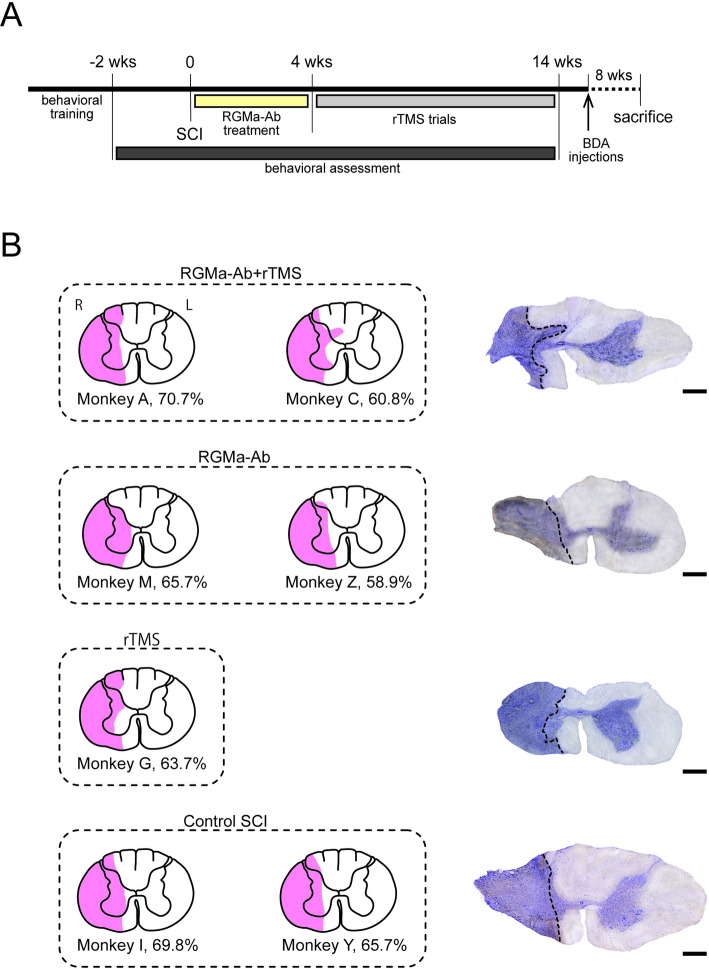
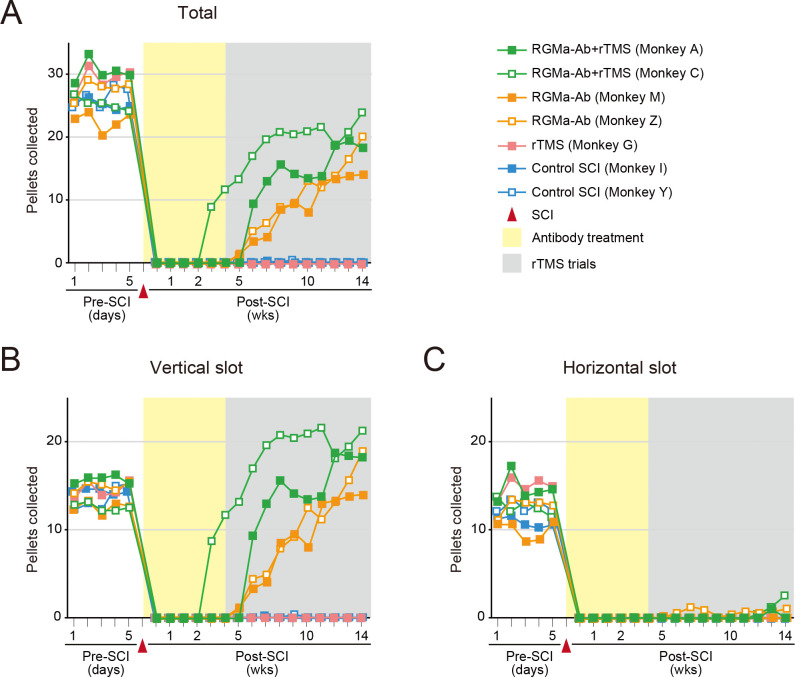
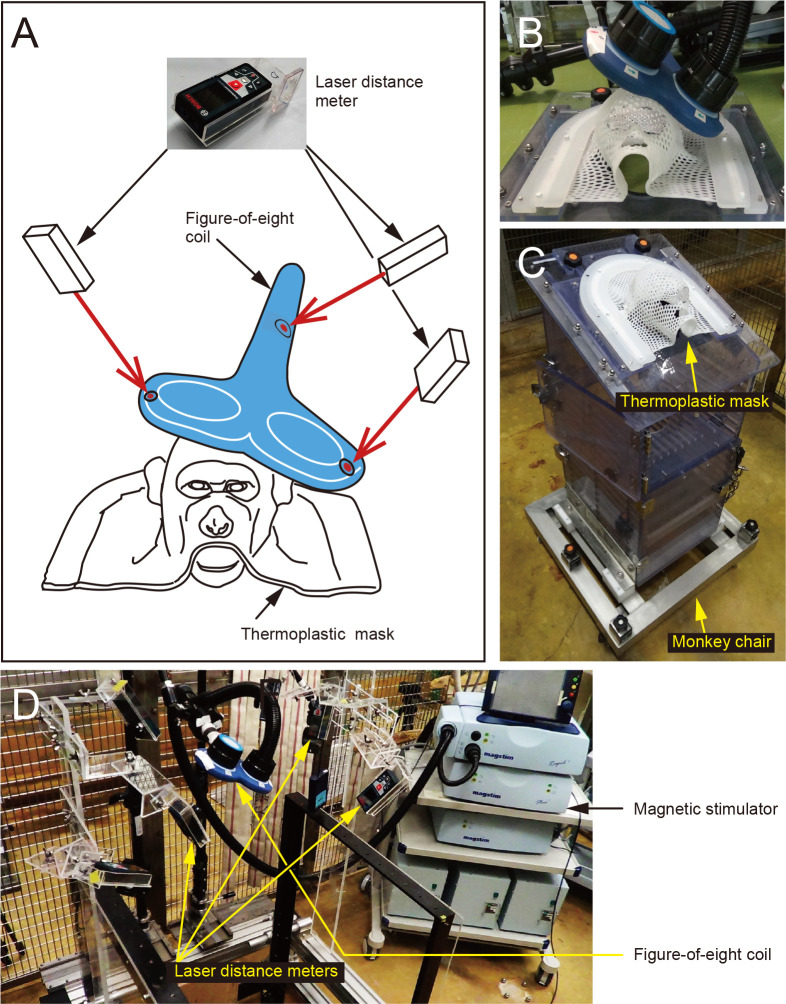
Repetitive transcranial magnetic stimulation (rTMS) targeting the primary motor cortex (MI) is expected to provide a therapeutic impact on spinal cord injury (SCI). On the other hand, treatment with antibody against repulsive guidance molecule-a (RGMa) has been shown to ameliorate motor deficits after SCI in rodents and primates. Facilitating activity of the corticospinal tract (CST) by rTMS following rewiring of CST fibers by anti-RGMa antibody treatment may exert an enhanced effect on motor recovery in a primate model of SCI. To address this issue, we examined whether such a combined therapeutic strategy could contribute to accelerating functional restoration from SCI. In our SCI model, unilateral lesions were made between the C6 and the C7 level. Two macaque monkeys were used for each of the combined therapy and antibody treatment alone, while one monkey was for rTMS alone. The antibody treatment was continuously carried out for four weeks immediately after SCI, and rTMS trials applying a thermoplastic mask and a laser distance meter lasted ten weeks. Behavioral assessment was performed over 14 weeks after SCI to investigate the extent to which motor functions were restored with the antibody treatment and/or rTMS. While rTMS without the preceding antibody treatment produced no discernible sign for functional recovery, a combination of the antibody and rTMS exhibited a greater effect, especially at an early stage of rTMS trials, on restoration of dexterous hand movements. The present results indicate that rTMS combined with anti-RGMa antibody treatment may exert a synergistic effect on motor recovery from SCI.
经颅重复磁刺激(rTMS)作用于初级运动皮层(MI)有望对脊髓损伤(SCI)产生治疗作用。另一方面,抗 repulsive guidance molecule-a(RGMa)抗体治疗已被证明可改善 SCI 啮齿动物和灵长类动物的运动功能障碍。rTMS 可通过抗 RGMa 抗体治疗来重新连接 CST 纤维,从而促进皮质脊髓束(CST)的活性,这可能会在 SCI 的灵长类动物模型中对运动功能恢复产生增强作用。为了解决这个问题,我们研究了这种联合治疗策略是否有助于加速 SCI 的功能恢复。在我们的 SCI 模型中,在 C6 和 C7 水平之间进行单侧损伤。每种联合治疗和单独抗体治疗都使用了两只猕猴,而 rTMS 则使用了一只猕猴。抗体治疗在 SCI 后立即持续进行四周,应用热塑性面罩和激光测距仪进行 rTMS 试验持续十周。在 SCI 后 14 周进行行为评估,以调查抗体治疗和/或 rTMS 恢复运动功能的程度。虽然没有先前的抗体治疗的 rTMS 没有产生明显的功能恢复迹象,但抗体和 rTMS 的联合使用表现出更大的效果,尤其是在 rTMS 试验的早期阶段,对手灵巧运动的恢复效果更为明显。本研究结果表明,rTMS 联合抗 RGMa 抗体治疗可能对 SCI 的运动功能恢复具有协同作用。