Division of Molecular and Cellular Function, School of Biological Sciences, Faculty of Biology, Medicine and Health, The University of Manchester, Manchester, M13 9PT, UK.
Department of Chemistry, Ball State University, Muncie, IN, 47306, USA.
Sci Rep. 2021 Jun 2;11(1):11562. doi: 10.1038/s41598-021-91107-4.
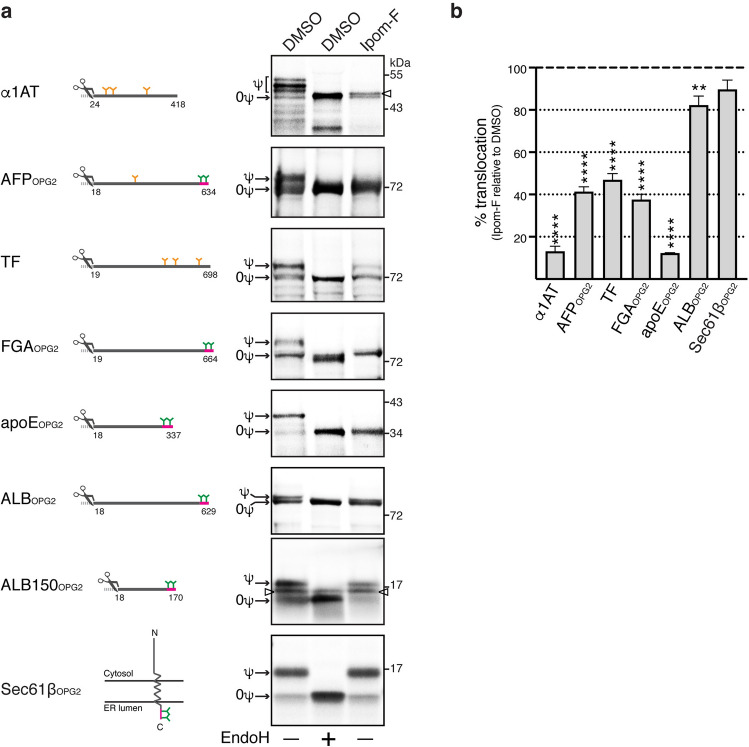
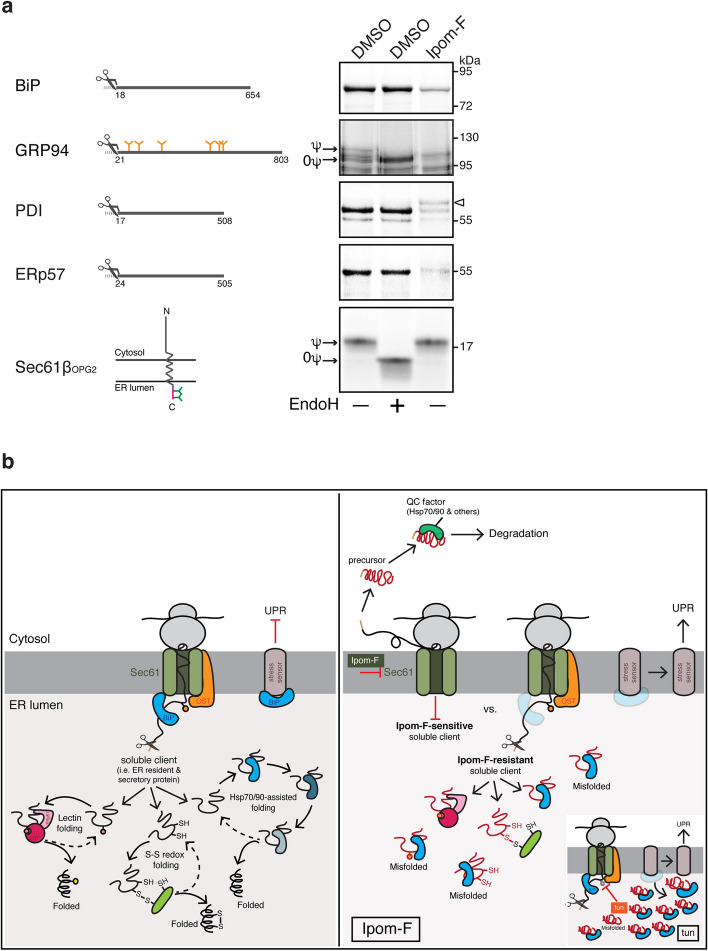
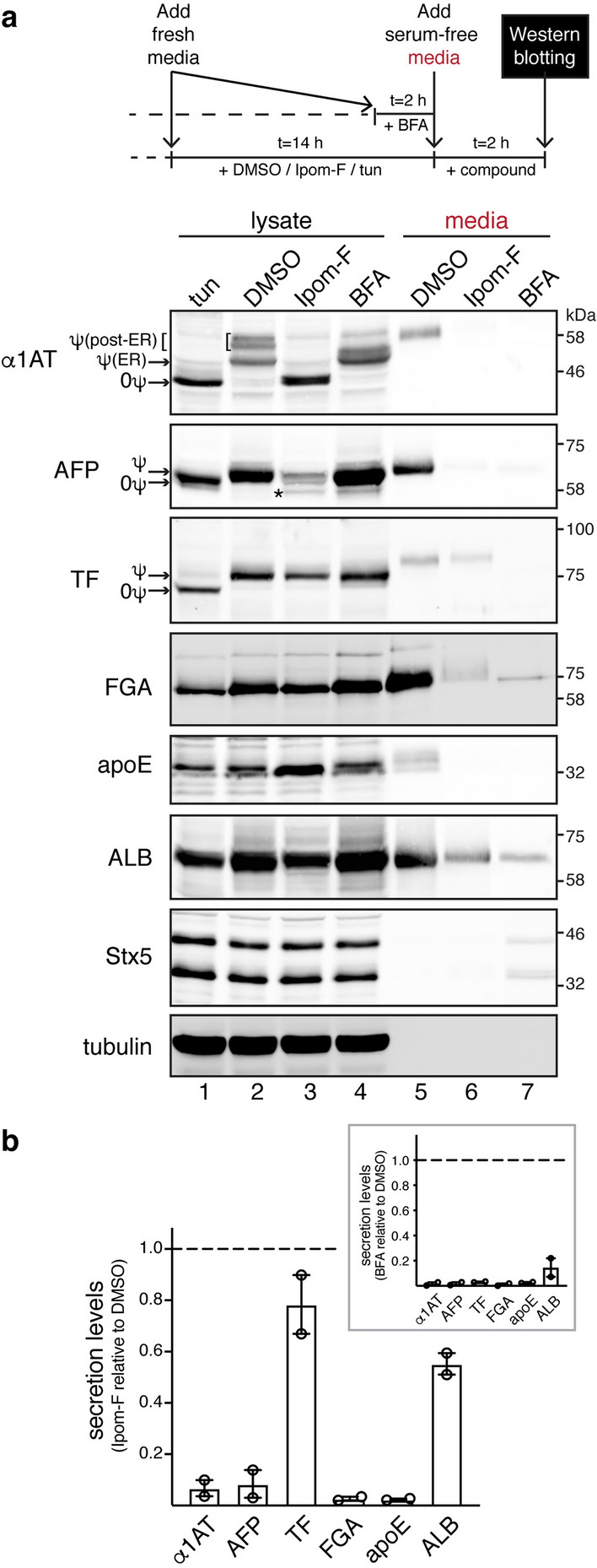
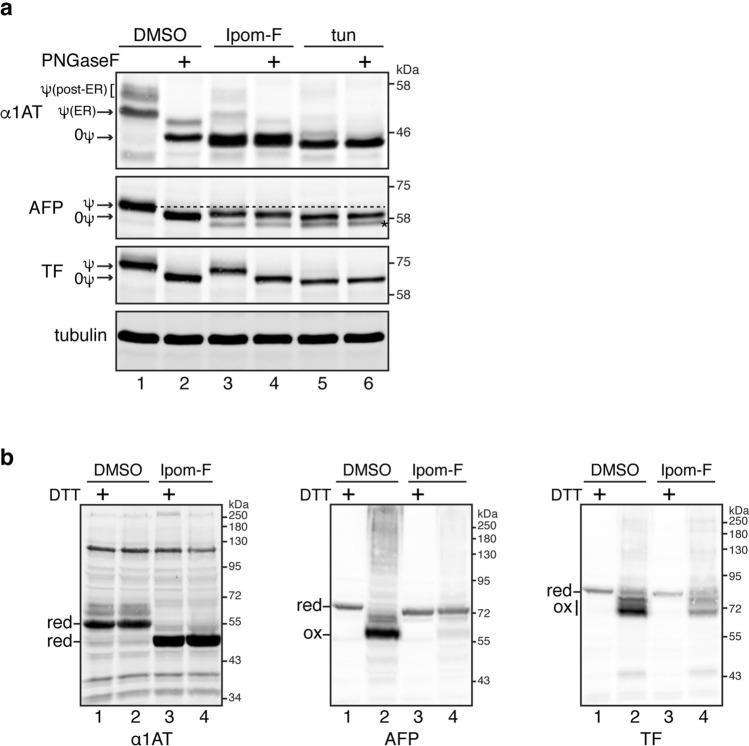
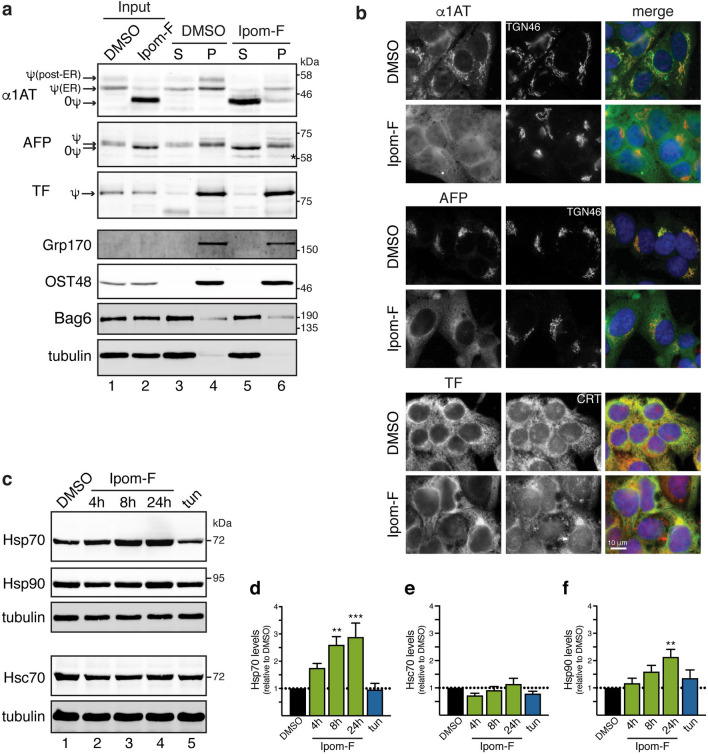
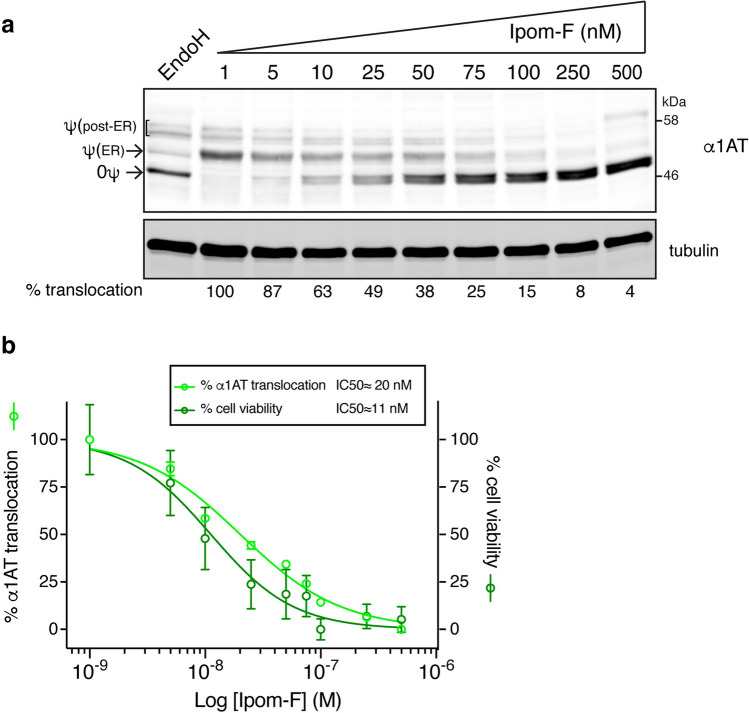
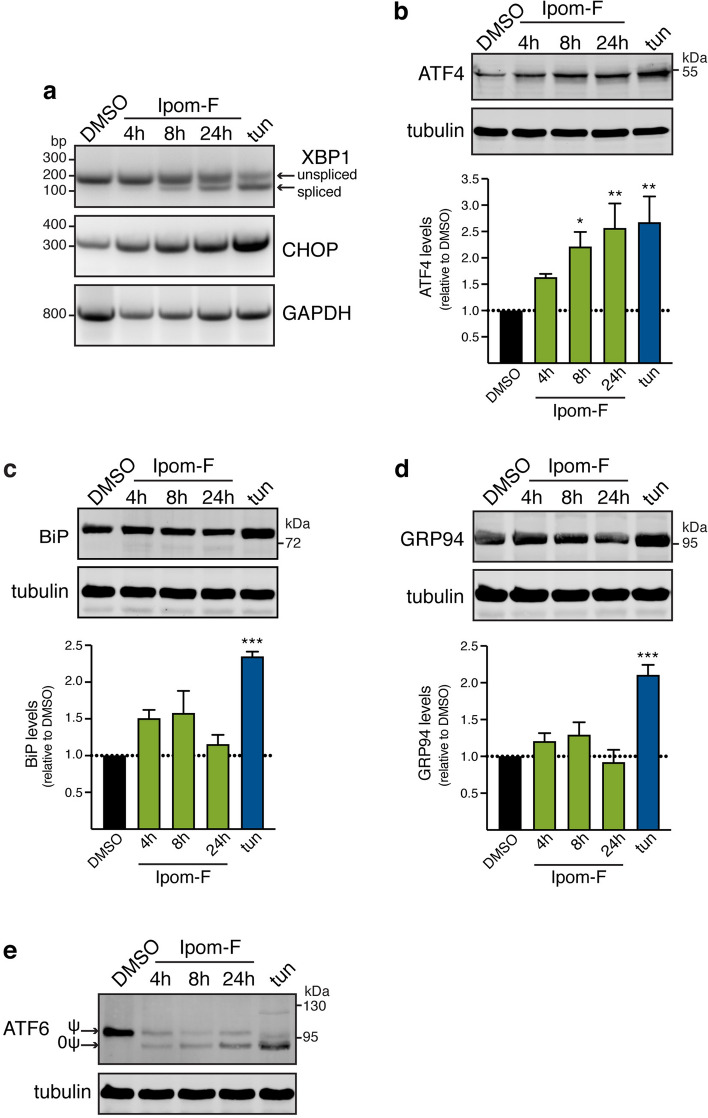
The Sec61 complex translocates nascent polypeptides into and across the membrane of the endoplasmic reticulum (ER), providing access to the secretory pathway. In this study, we show that Ipomoeassin-F (Ipom-F), a selective inhibitor of protein entry into the ER lumen, blocks the in vitro translocation of certain secretory proteins and ER lumenal folding factors whilst barely affecting others such as albumin. The effects of Ipom-F on protein secretion from HepG2 cells are twofold: reduced ER translocation combined, in some cases, with defective ER lumenal folding. This latter issue is most likely a consequence of Ipom-F preventing the cell from replenishing its ER lumenal chaperones. Ipom-F treatment results in two cellular stress responses: firstly, an upregulation of stress-inducible cytosolic chaperones, Hsp70 and Hsp90; secondly, an atypical unfolded protein response (UPR) linked to the Ipom-F-mediated perturbation of ER function. Hence, although levels of spliced XBP1 and CHOP mRNA and ATF4 protein increase with Ipom-F, the accompanying increase in the levels of ER lumenal BiP and GRP94 seen with tunicamycin are not observed. In short, although Ipom-F reduces the biosynthetic load of newly synthesised secretory proteins entering the ER lumen, its effects on the UPR preclude the cell restoring ER homeostasis.
Sec61 复合物将新生多肽易位进入内质网 (ER) 的膜中并穿过该膜,从而使这些多肽能够进入分泌途径。在本研究中,我们表明,Ipomoeassin-F(Ipom-F)是一种选择性的蛋白质进入内质网腔抑制剂,可阻止某些分泌蛋白和内质网腔折叠因子的体外易位,而对其他蛋白质(如白蛋白)的影响则很小。Ipom-F 对 HepG2 细胞中蛋白质分泌的影响有两方面:一方面是内质网易位减少,在某些情况下,内质网腔折叠也有缺陷。后一个问题很可能是由于 Ipom-F 阻止细胞补充内质网腔伴侣蛋白所致。Ipom-F 处理会导致两种细胞应激反应:首先,诱导型胞质热休克蛋白 70(Hsp70)和 Hsp90 等应激诱导型胞质伴侣蛋白上调;其次,与内质网功能的 Ipom-F 介导的扰动相关的非典型未折叠蛋白反应(UPR)。因此,尽管 Ipom-F 处理后 spliced XBP1 和 CHOP mRNA 以及 ATF4 蛋白的水平增加,但与 tunicamycin 引起的内质网腔 BiP 和 GRP94 水平增加不同,Ipom-F 处理后并未观察到这种增加。简而言之,尽管 Ipom-F 减少了进入内质网腔的新合成分泌蛋白的生物合成负荷,但它对 UPR 的影响阻止了细胞恢复内质网的平衡。