Center for Infectious Diseases Research and Experimental Therapeutics (CIDRET), Baylor Research Institute, Dallas, TX, USA.
Quantitative Preclinical and Clinical Sciences Department, Praedicare Inc, Dallas, TX, USA.
Commun Biol. 2021 Jun 2;4(1):664. doi: 10.1038/s42003-021-02184-0.
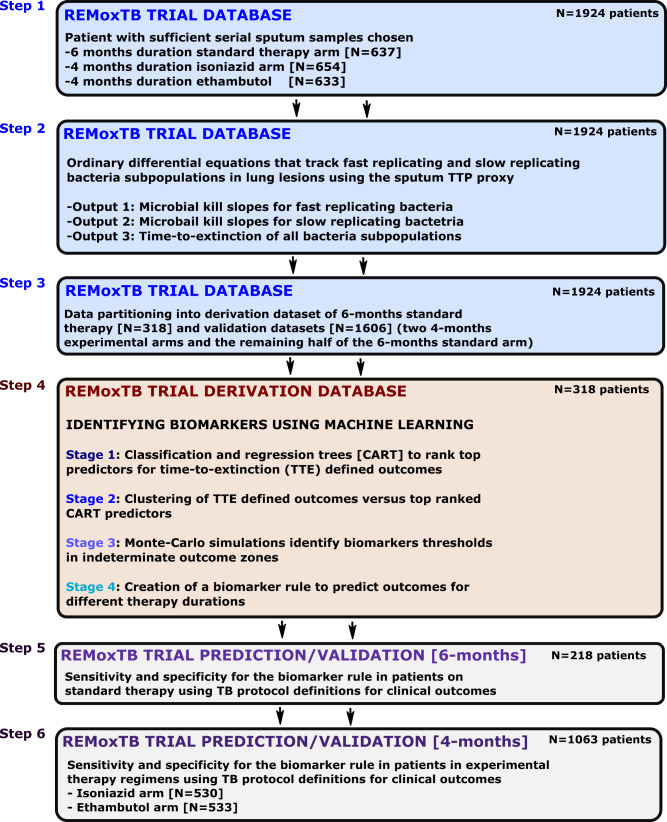
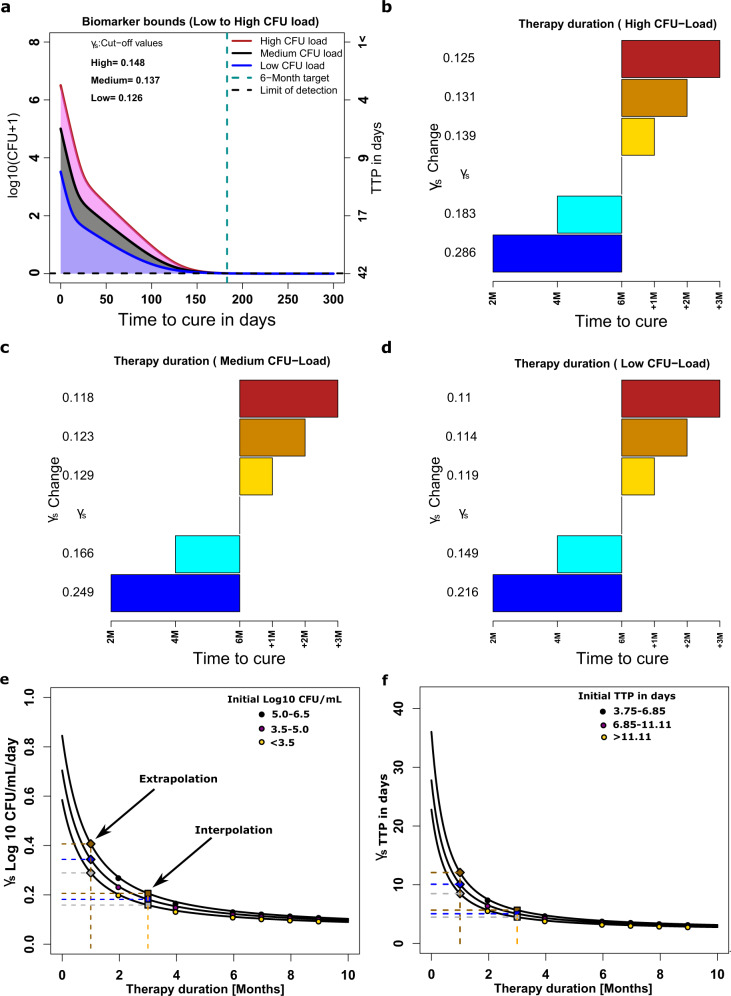
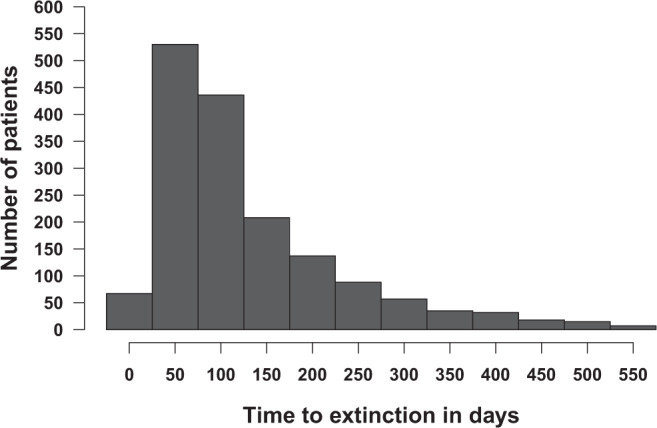
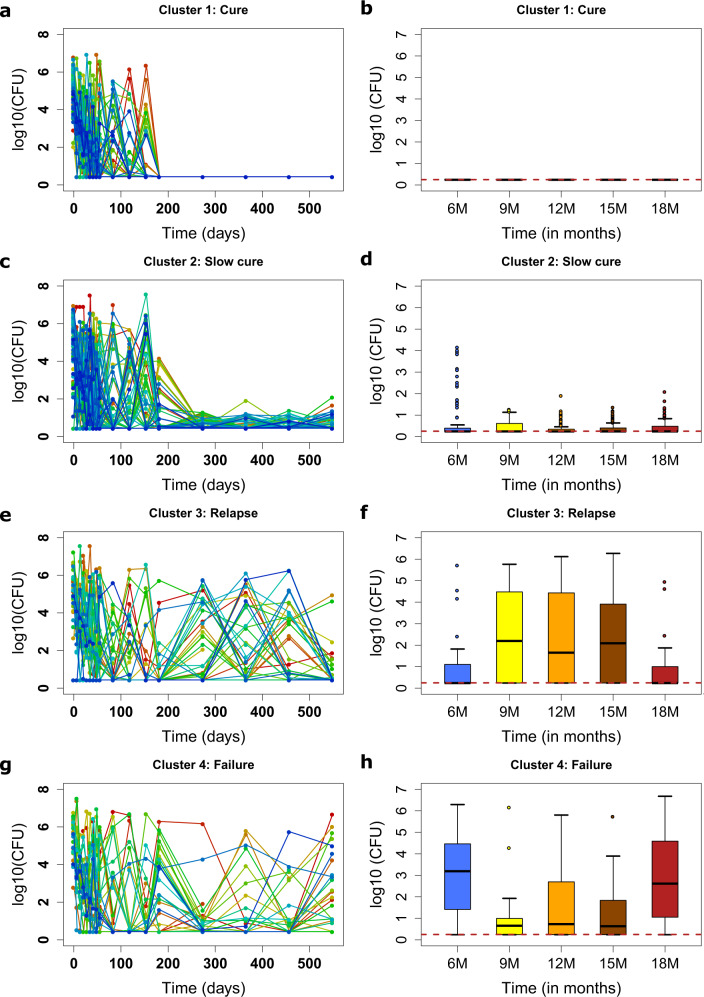
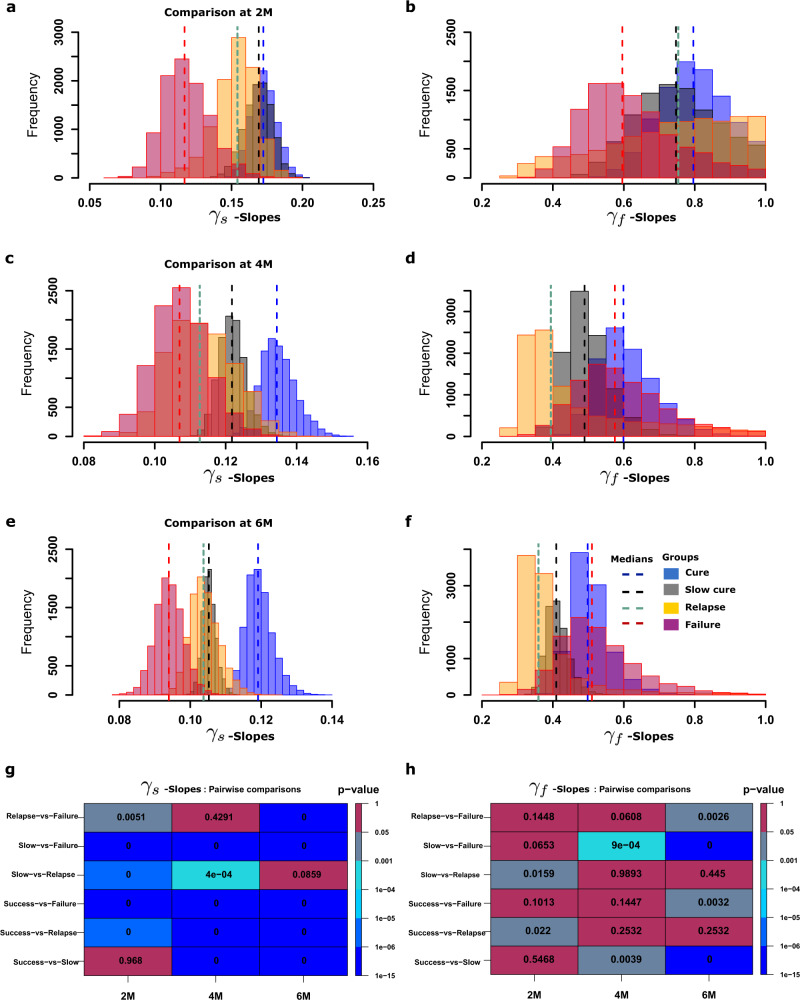
There is an urgent need to discover biomarkers that are predictive of long-term TB treatment outcomes, since treatment is expense and prolonged to document relapse. We used mathematical modeling and machine learning to characterize a predictive biomarker for TB treatment outcomes. We computed bacterial kill rates, γ for fast- and γ for slow/non-replicating bacteria, using patient sputum data to determine treatment duration by computing time-to-extinction of all bacterial subpopulations. We then derived a γslope-based rule using first 8 weeks sputum data, that demonstrated a sensitivity of 92% and a specificity of 89% at predicting relapse-free cure for 2, 3, 4, and 6 months TB regimens. In comparison, current methods (two-month sputum culture conversion and the Extended-EBA) methods performed poorly, with sensitivities less than 34%. These biomarkers will accelerate evaluation of novel TB regimens, aid better clinical trial designs and will allow personalization of therapy duration in routine treatment programs.
目前迫切需要发现能够预测长期结核病治疗结果的生物标志物,因为治疗既昂贵又耗时,需要记录复发情况。我们使用数学建模和机器学习来描述结核病治疗结果的预测生物标志物。我们使用患者的痰液数据计算细菌杀灭率γ(快速杀灭的细菌)和γ(缓慢/非复制的细菌),通过计算所有细菌亚群的灭绝时间来确定治疗持续时间。然后,我们使用前 8 周的痰液数据推导出一个基于γ斜率的规则,该规则在预测 2、3、4 和 6 个月的结核病方案无复发治愈方面,具有 92%的敏感性和 89%的特异性。相比之下,目前的方法(两个月的痰培养转换和扩展 EBA)的敏感性都小于 34%。这些生物标志物将加速评估新的结核病方案,有助于更好地设计临床试验,并允许在常规治疗方案中对治疗持续时间进行个体化。