Wu Songbin, Yang Shaomin, Ou Mingxi, Chen Jiamin, Huang Jiabing, Xiong Donglin, Sun Wuping, Xiao Lizu
Shenzhen Municipal Key Laboratory for Pain Medicine, Department of Pain Medicine, Shenzhen Nanshan People's Hospital, The 6th Affiliated Hospital of Shenzhen University Health Science Center, Shenzhen, China.
Department of Chemistry, University of Science and Technology of China, Hefei, China.
Front Mol Neurosci. 2021 May 17;14:665931. doi: 10.3389/fnmol.2021.665931. eCollection 2021.
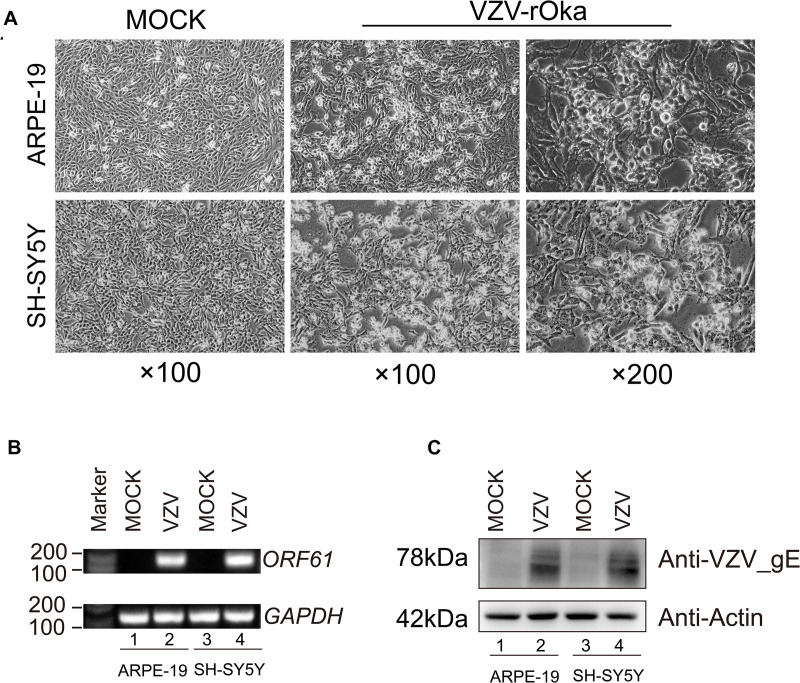
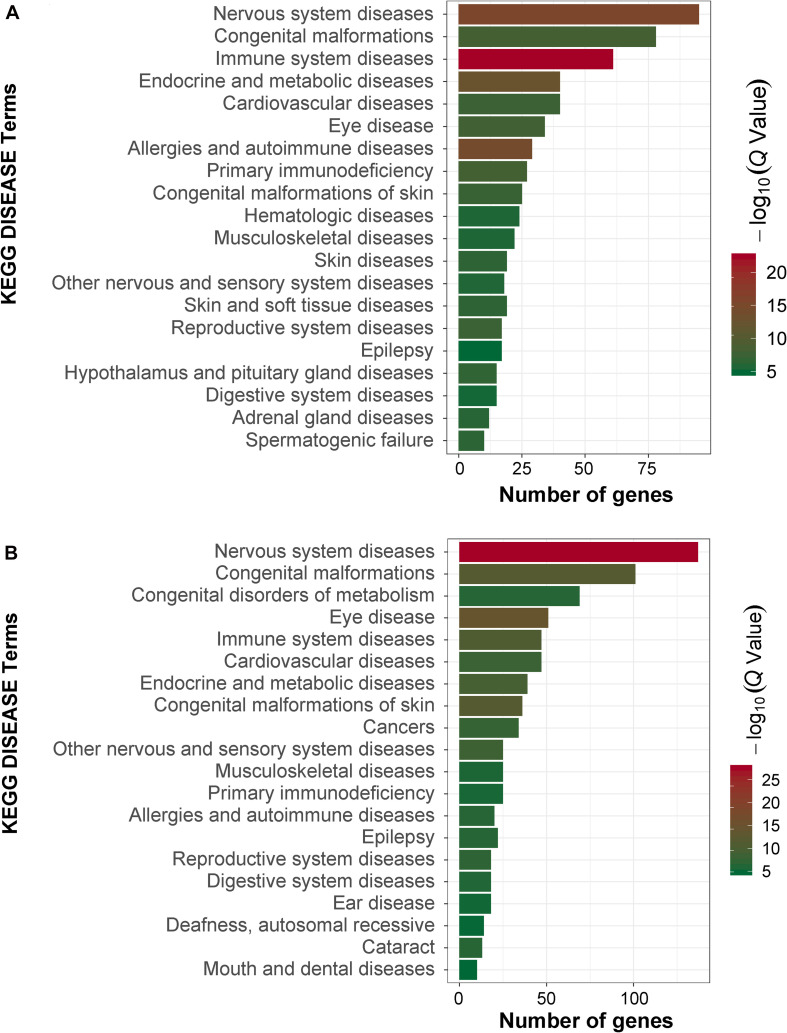
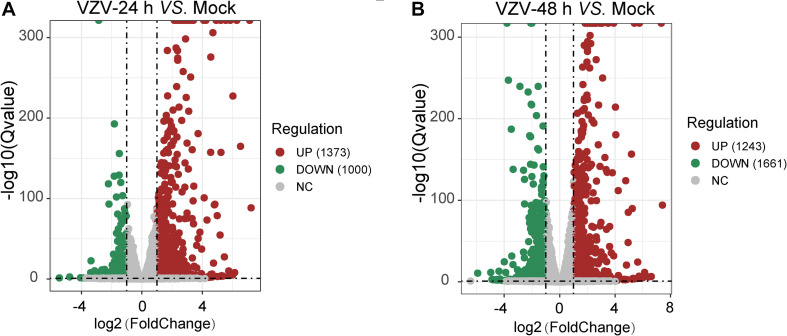
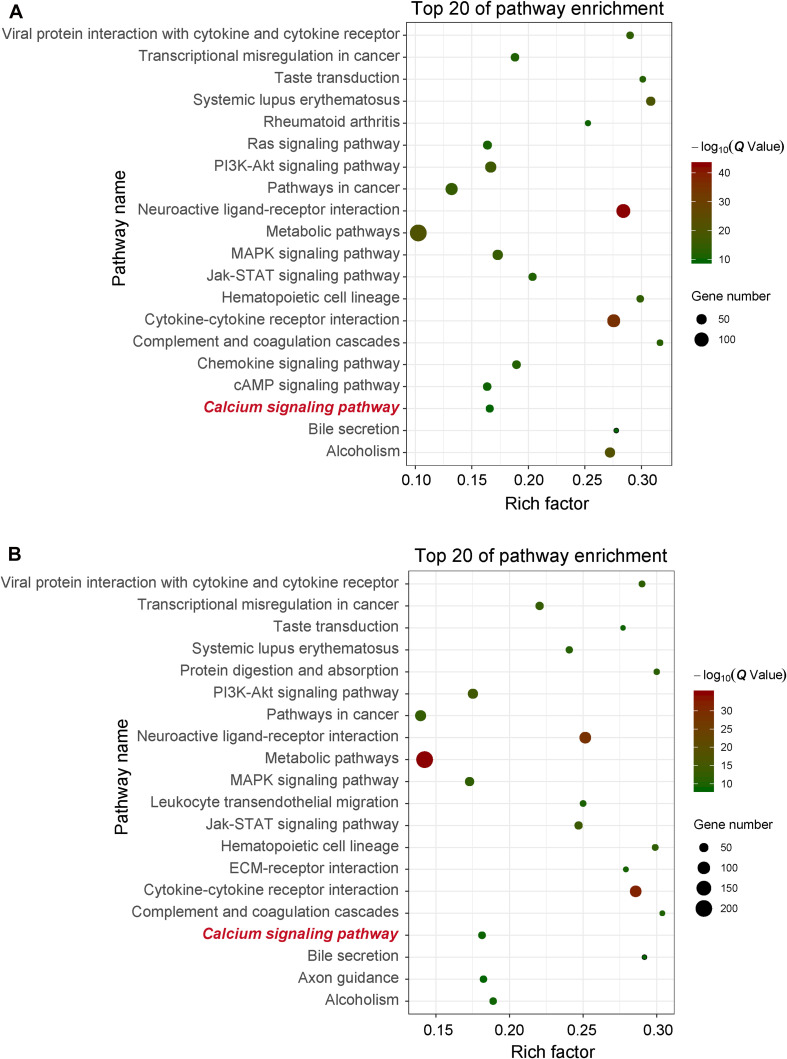
As a typical neuropathic pain, post-herpetic neuralgia (PHN) is a common complication of herpes zoster (HZ), which seriously affects the normal life and work of patients. The unclear pathogenesis and lack of effective drugs make the clinical efficacy of PHN unsatisfactory. Here, we obtained the transcriptome profile of neuroblastoma cells (SH-SY5Y) and DRG in rats infected with varicella zoster virus (VZV) by transcriptome sequencing (RNA-Seq) combined with publicly available gene array data sets. Next, the data processing of the transcriptome map was analyzed using bioinformatics methods, including the screening of differentially expressed genes (DEGs), Gene Ontology (GO), and the Kyoto Encyclopedia of Genes and Genomes (KEGG) analysis. Finally, real-time fluorescent quantitative PCR (qRT-PCR) was used to detect the expression of calcium-related genes, and calcium fluorescent probes and calcium colorimetry were used to evaluate the distribution and content of calcium ions in cells after VZV infection. Transcriptome data analysis (GO and KEGG enrichment analysis) showed that calcium disorder played an important role in SH-SY5Y cells infected by VZV and dorsal root ganglion (DRG) of the PHN rat model. The results of qRT-PCR showed that the expression levels of calcium-related genes , , , , and were significantly upregulated, while the expression levels of , , and were significantly downregulated in SH-SY5Y cells infected with VZV. Our calcium fluorescent probe and calcium colorimetric test results showed that VZV could change the distribution of calcium ions in infected cells and significantly increase the intracellular calcium content. In conclusion, our results revealed that the persistence of calcium disorder caused by VZV in nerve cells might be a crucial cause of herpetic neuralgia, and a potential target for clinical diagnosis and treatment of PHN.
作为一种典型的神经病理性疼痛,带状疱疹后神经痛(PHN)是带状疱疹(HZ)的常见并发症,严重影响患者的正常生活和工作。其发病机制不明且缺乏有效药物,使得PHN的临床疗效不尽人意。在此,我们通过转录组测序(RNA-Seq)并结合公开可用的基因阵列数据集,获得了感染水痘带状疱疹病毒(VZV)的大鼠神经母细胞瘤细胞(SH-SY5Y)和背根神经节(DRG)的转录组图谱。接下来,使用生物信息学方法对转录组图谱进行数据处理,包括差异表达基因(DEG)筛选、基因本体论(GO)和京都基因与基因组百科全书(KEGG)分析。最后,采用实时荧光定量PCR(qRT-PCR)检测钙相关基因的表达,并使用钙荧光探针和钙比色法评估VZV感染后细胞内钙离子的分布和含量。转录组数据分析(GO和KEGG富集分析)表明,钙紊乱在VZV感染的SH-SY5Y细胞和PHN大鼠模型的背根神经节(DRG)中起重要作用。qRT-PCR结果显示,在感染VZV的SH-SY5Y细胞中,钙相关基因 、 、 、 和 的表达水平显著上调,而 、 和 的表达水平显著下调。我们的钙荧光探针和钙比色检测结果表明,VZV可改变感染细胞中钙离子的分布,并显著增加细胞内钙含量。总之,我们的结果表明,VZV在神经细胞中导致的钙紊乱持续存在可能是疱疹性神经痛的关键原因,也是PHN临床诊断和治疗的潜在靶点。