Wu Shasha, Issa Naoum P, Lacy Maureen, Satzer David, Rose Sandra L, Yang Carina W, Collins John M, Liu Xi, Sun Taixin, Towle Vernon L, Nordli Douglas R, Warnke Peter C, Tao James X
Department of Neurology, The University of Chicago, Chicago, IL, United States.
Department of Psychiatry, The University of Chicago, Chicago, IL, United States.
Front Neurol. 2021 May 17;12:654668. doi: 10.3389/fneur.2021.654668. eCollection 2021.
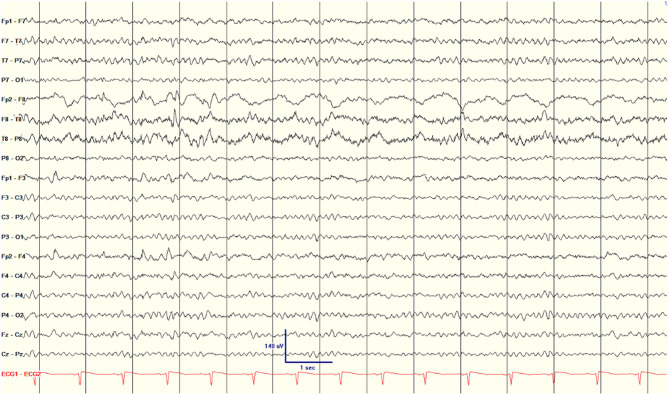
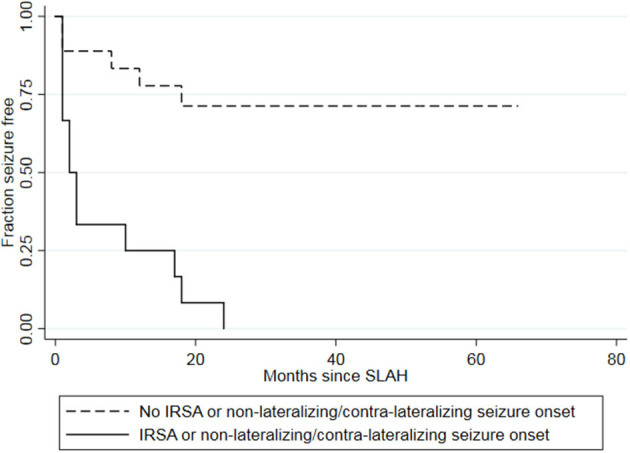
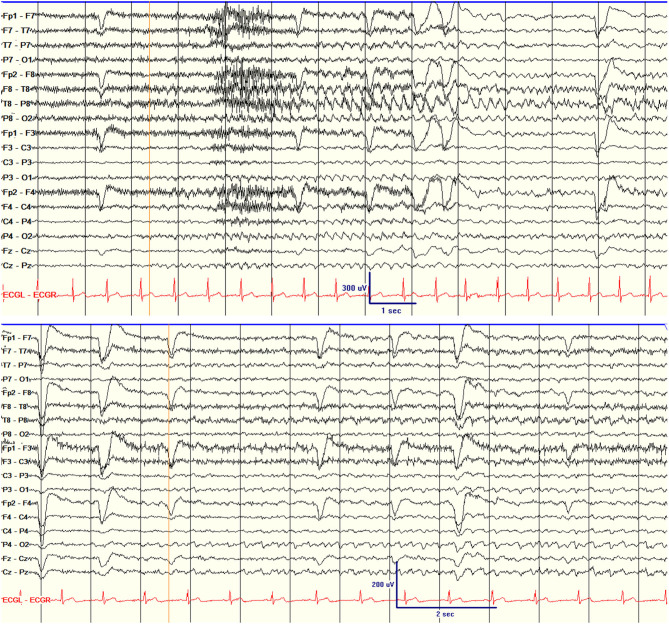
To assess the seizure outcomes of stereotactic laser amygdalohippocampectomy (SLAH) in consecutive patients with mesial temporal lobe epilepsy (mTLE) in a single center and identify scalp EEG and imaging factors in the presurgical evaluation that correlate with post-surgical seizure recurrence. We retrospectively reviewed the medical and EEG records of 30 patients with drug-resistant mTLE who underwent SLAH and had at least 1 year of follow-up. Surgical outcomes were classified using the Engel scale. Univariate hazard ratios were used to evaluate the risk factors associated with seizure recurrence after SLAH. The overall Engel class I outcome after SLAH was 13/30 (43%), with a mean postoperative follow-up of 48.9 ± 17.6 months. Scalp EEG findings of interictal regional slow activity (IRSA) on the side of surgery ( = 4.05, = 0.005) and non-lateralizing or contra-lateralizing seizure onset ( = 4.31, = 0.006) were negatively correlated with postsurgical seizure freedom. Scalp EEG with either one of the above features strongly predicted seizure recurrence after surgery (HR = 7.13, < 0.001) with 100% sensitivity and 71% specificity. Understanding the factors associated with good or poor surgical outcomes can help choose the best candidates for SLAH. Of the variables assessed, scalp EEG findings were the most clearly associated with seizure outcomes after SLAH.
评估在单一中心连续接受立体定向激光杏仁核海马切除术(SLAH)的内侧颞叶癫痫(mTLE)患者的癫痫发作结局,并确定术前评估中与术后癫痫复发相关的头皮脑电图和影像学因素。我们回顾性分析了30例接受SLAH且至少随访1年的药物难治性mTLE患者的医疗和脑电图记录。手术结局采用恩格尔量表进行分类。单变量风险比用于评估SLAH术后癫痫复发的危险因素。SLAH术后总体恩格尔I级结局为13/30(43%),术后平均随访48.9±17.6个月。手术侧发作间期局部慢活动(IRSA)的头皮脑电图表现( = 4.05, = 0.005)以及非定位性或对侧性癫痫发作起始( = 4.31, = 0.006)与术后癫痫发作缓解呈负相关。具有上述任一特征的头皮脑电图强烈预测术后癫痫复发(HR = 7.13, < 0.001),敏感性为100%,特异性为71%。了解与手术结局良好或不良相关的因素有助于选择SLAH的最佳候选者。在评估的变量中,头皮脑电图表现与SLAH术后癫痫发作结局最明显相关。