State Key Laboratory of Agricultural Microbiology, College of Veterinary Medicine, Huazhong Agricultural University, Wuhan, China.
Key Laboratory of Development of Veterinary Diagnostic Products, Ministry of Agriculture of the People's Republic of China, Wuhan, China.
Front Immunol. 2021 May 17;12:623492. doi: 10.3389/fimmu.2021.623492. eCollection 2021.
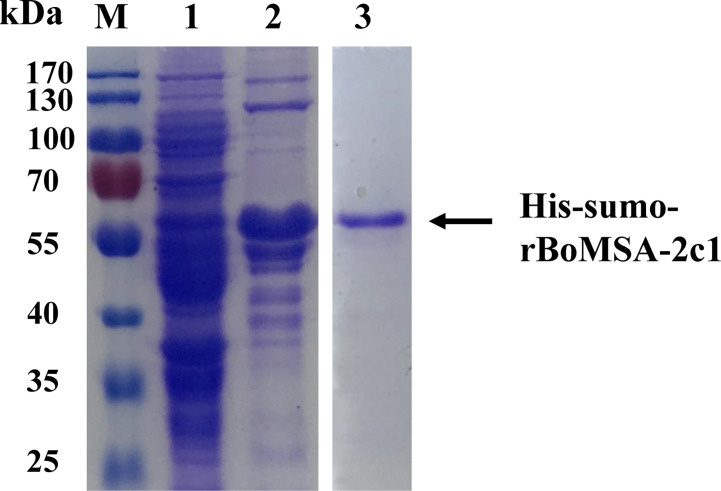
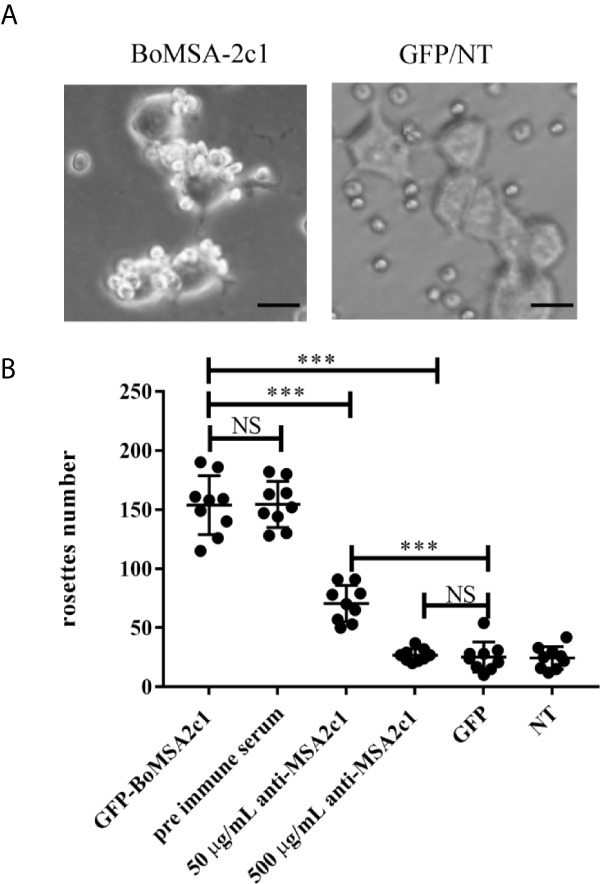
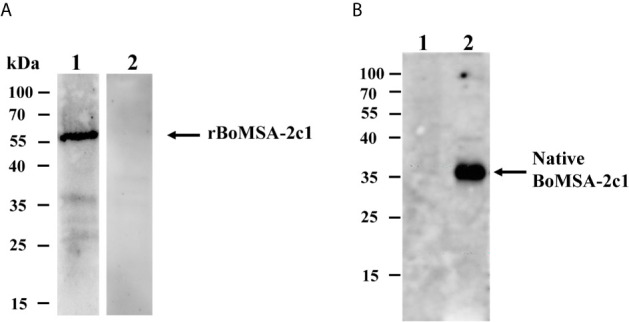
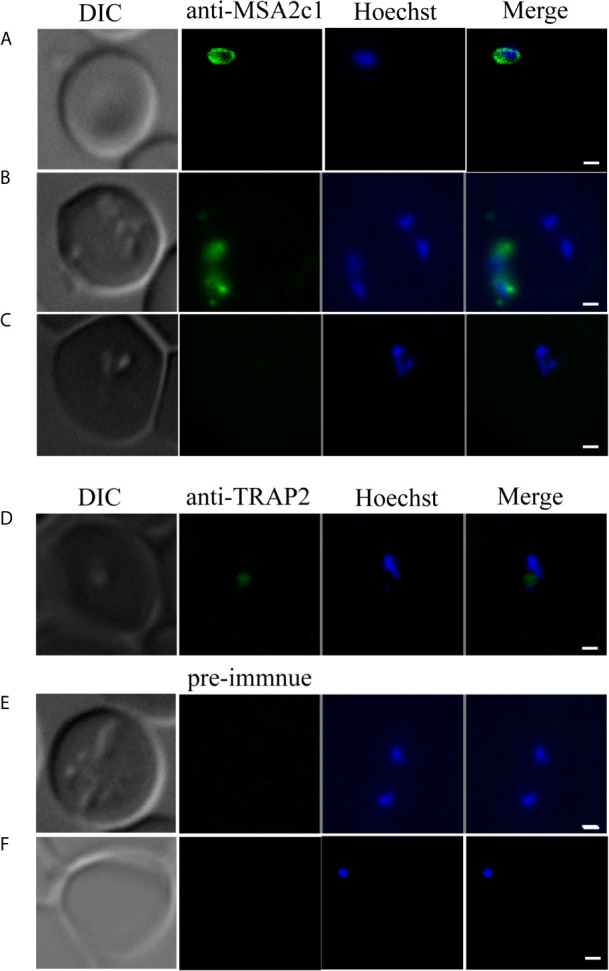
, a major infectious agent of water buffalo hemolytic babesiosis, is transmitted by . However, no effective vaccine is available. Essential antigens that are involved in parasite invasion of host red blood cells (RBCs) are potential vaccine candidates. Therefore, the identification and the conduction of functional studies of essential antigens are highly desirable. Here, we evaluated the function of merozoite surface antigen 2c1 (BoMSA-2c1), which belongs to the variable merozoite surface antigen (VMSA) family in . We developed a polyclonal antiserum against the purified recombinant (r)BoMSA-2c1 protein. Immunofluorescence staining results showed that BoMSA-2c1 was expressed only on extracellular merozoites, whereas the antigen was undetectable in intracellular parasites. RBC binding assays suggested that BoMSA-2c1 specifically bound to buffalo erythrocytes. Cytoadherence assays using a eukaryotic expression system further verified the binding and inhibitory ability of BoMSA-2c1. We found that BoMSA-2c1 with a GPI domain was expressed on the surface of HEK293T cells that bound to water buffalo RBCs, and that the anti-rBoMSA2c1 antibody inhibited this binding. These results indicated that BoMSA-2c1 was involved in mediating initial binding to host erythrocytes of Identification of the occurrence of binding early in the invasion process may facilitate understanding of the growth characteristics, and may help in formulating strategies for the prevention and control of this parasite.
,水牛溶血性边虫病的主要传染因子,由 传播。然而,目前尚无有效的疫苗。参与寄生虫入侵宿主红细胞(RBC)的关键抗原是潜在的疫苗候选物。因此,鉴定和进行关键抗原的功能研究是非常需要的。在这里,我们评估了属于可变裂殖体表面抗原(VMSA)家族的 裂殖体表面抗原 2c1(BoMSA-2c1)在 中的功能。我们针对纯化的重组(r)BoMSA-2c1 蛋白开发了多克隆抗血清。免疫荧光染色结果表明,BoMSA-2c1 仅在细胞外裂殖体上表达,而在细胞内寄生虫中无法检测到该抗原。RBC 结合试验表明 BoMSA-2c1 特异性结合水牛红细胞。使用真核表达系统进行的细胞黏附试验 进一步验证了 BoMSA-2c1 的结合和抑制能力。我们发现具有 GPI 结构域的 BoMSA-2c1 在与水牛 RBC 结合的 HEK293T 细胞表面表达,并且抗-rBoMSA2c1 抗体抑制了这种结合。这些结果表明 BoMSA-2c1 参与介导与宿主红细胞的初始结合。识别入侵过程早期发生的结合可能有助于了解生长特性,并有助于制定预防和控制这种寄生虫的策略。