Laboratory of Molecular and Cellular Immunology, Institute of Molecular Biology National Academy of Sciences of the Republic of Armenia (NAS RA), Yerevan, Armenia.
National Pediatrics Center of Familial Mediterranean Fever "Arabkir" Joint Medical Center- Institute of Child and Adolescent Health, Yerevan, Armenia.
Front Immunol. 2021 May 17;12:672728. doi: 10.3389/fimmu.2021.672728. eCollection 2021.
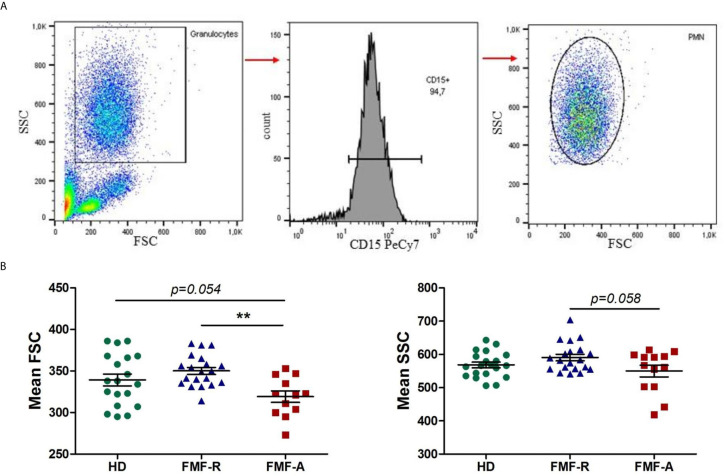
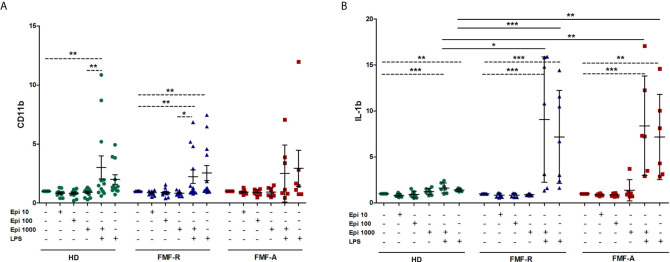
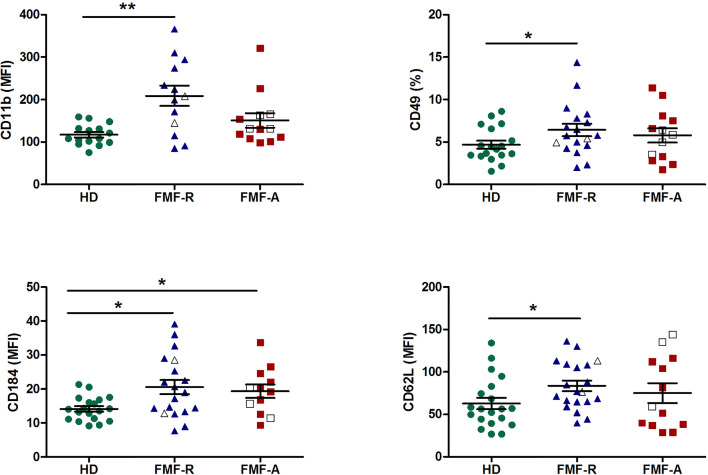
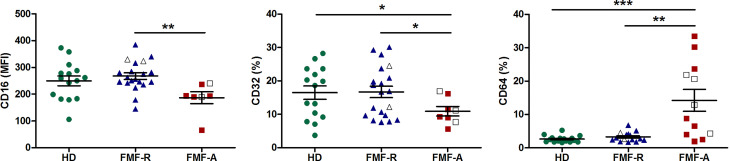
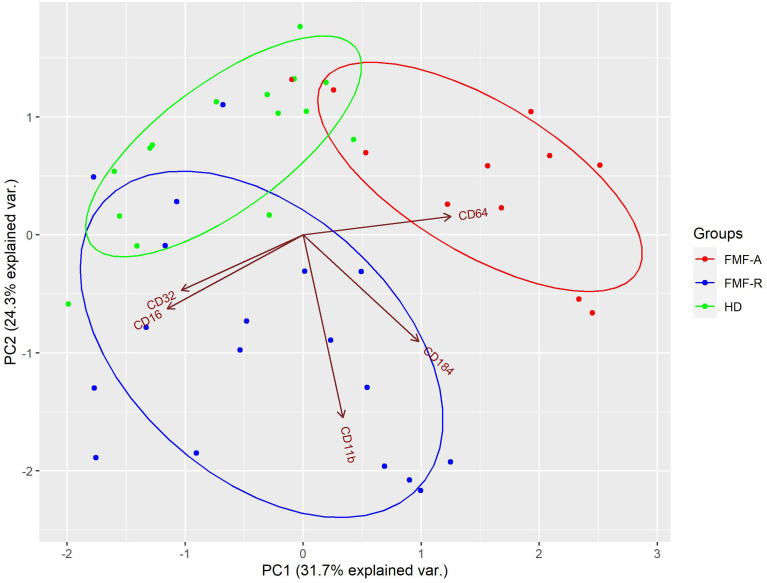
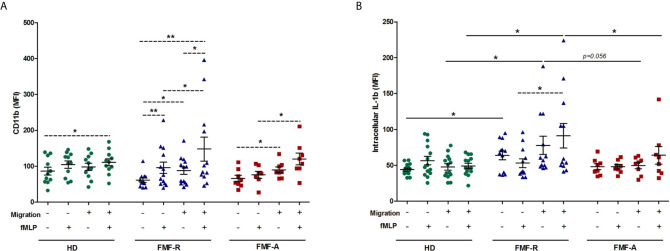
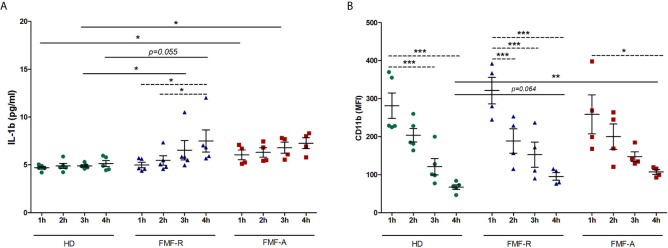
Familial Mediterranean fever (FMF) is caused by pyrin-encoding gene mutations and characterized by the self-limiting periods of intense inflammation, which are mainly mediated by a massive influx of polymorphonuclear neutrophils (PMNs) into the inflamed sites. Perturbation of actin polymerization by different pathogens was shown to activate the pyrin inflammasome. Our aim was to test whether cytoskeletal dynamics in the absence of pathogens may cause abnormal activation of PMNs from FMF patients. We also aimed to characterize immunophenotypes of circulating neutrophils and their functional activity. Circulating PMNs displayed heterogeneity in terms of cell size, granularity and immunophenotypes. Particularly, PMNs from the patients in acute flares (FMF-A) exhibited a characteristic of aged/activated cells (small cell size and granularity, up-regulated CXCR4), while PMNs form the patients in remission period (FMF-R) displayed mixed fresh/aged cell characteristics (normal cell size and granularity, up-regulated CD11b, CD49d, CXCR4, and CD62L). The findings may suggest that sterile tissue-infiltrated PMNs undergo reverse migration back to bone marrow and may explain why these PMNs do not cause immune-mediated tissue damage. A multidirectional expression of FcγRs on neutrophils during acute flares was also noteworthy: up-regulation of FcγRI and down-regulation of FcγRII/FcγRIII. We also observed spontaneous and fMPL-induced activation of PMNs from the patients after transmigration through inserts as seen by the increased expression of CD11b and intracellular expression of IL-1β. Our study suggests heightened sensitivity of mutated pyrin inflammasome towards cytoskeletal modifications in the absence of pathogens.
家族性地中海热(FMF)是由 pyrin 基因编码突变引起的,其特征是剧烈炎症的自限性发作,主要由大量多形核粒细胞(PMN)涌入炎症部位介导。不同病原体对肌动蛋白聚合的干扰被证明可激活 pyrin 炎性体。我们的目的是测试在没有病原体的情况下细胞骨架动力学是否会导致 FMF 患者的 PMN 异常激活。我们还旨在表征循环中性粒细胞的免疫表型及其功能活性。循环 PMN 在细胞大小、颗粒度和免疫表型方面表现出异质性。特别是,急性发作(FMF-A)患者的 PMN 表现出衰老/激活细胞的特征(细胞体积小、颗粒度小、CXCR4 上调),而缓解期(FMF-R)患者的 PMN 表现出新鲜/衰老细胞混合的特征(细胞大小和颗粒度正常,CD11b、CD49d、CXCR4 和 CD62L 上调)。这些发现可能表明无菌组织浸润的 PMN 经历反向迁移回到骨髓,这可以解释为什么这些 PMN 不会引起免疫介导的组织损伤。在急性发作期间,PMN 上 FcγR 的多向表达也值得注意:FcγRI 上调和 FcγRII/FcγRIII 下调。我们还观察到 PMN 穿过插入物后自发和 fMPL 诱导的激活,这表现为 CD11b 表达增加和细胞内 IL-1β表达。我们的研究表明,突变的 pyrin 炎性体对无病原体时细胞骨架修饰的敏感性增加。